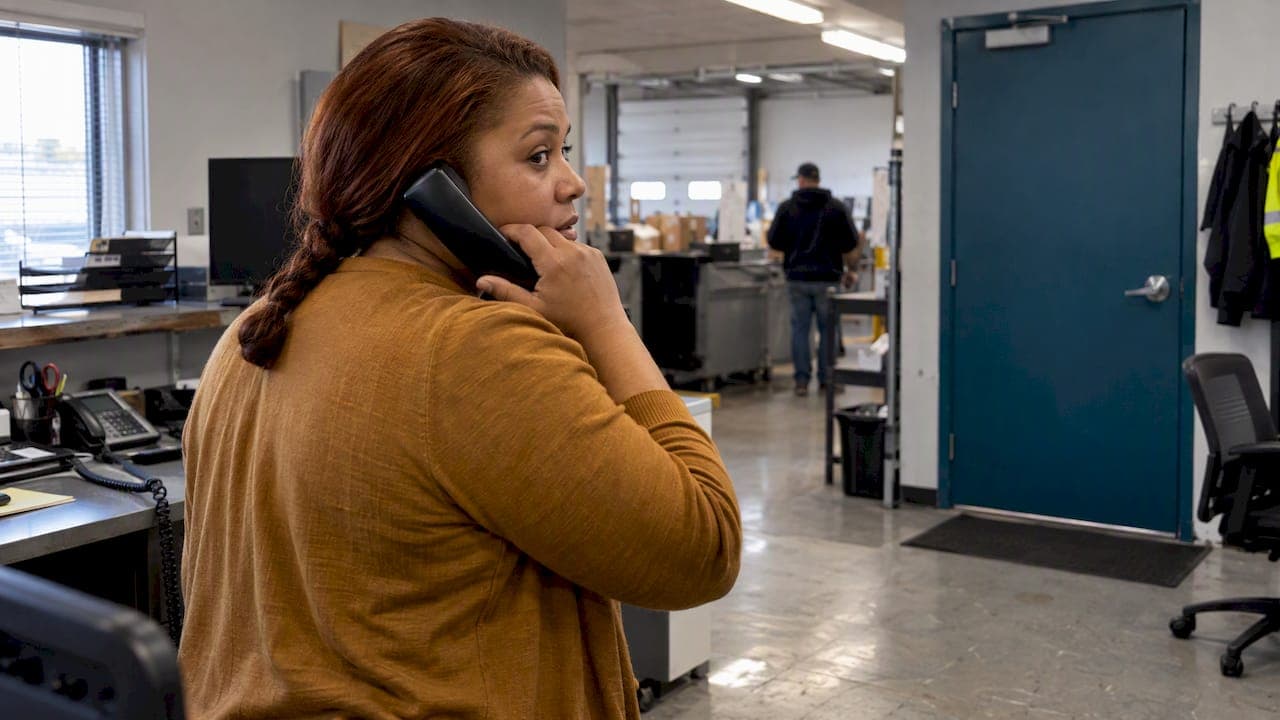
In trucking, speed to lead is the time between a driver showing interest in your job and your first real contact with that driver. Most sales teams measure it in minutes, and driver recruiting works the same way. The first carrier to reach a qualified driver usually gets the conversation, and often the hire. This guide explains how to measure it, what to aim for, and how a FedEx Service Provider can build a response process that holds up on nights and weekends.
TL;DR
- Speed to lead is the gap between a driver's application, call or message and your first human reply. Measure it in minutes, not days.
- Drivers apply to several carriers at once. Research cited by Workato shows that slower responses lower the odds of qualifying a lead, and the logic carries over to driver applicants.
- A fast first contact is only the start. Quick screening, honest job details and follow-up inside 24 hours are what keep a driver from dropping off.
- Set up alerts, message templates and after-hours coverage so every applicant gets a reply, whatever the time.
- Track time to first contact, contact rate, time to hire and 90-day retention together.
Table of Contents
- What speed to lead means in driver recruiting
- Why speed matters more in the current driver market
- What the response-time research says
- Speed to lead is not the same as speed to hire
- How to build a fast response process
- Team drivers need a different approach
- Posting time affects your response load
- What happens after the first call
- Metrics to track
- Our perspective: speed works when the lead is already a fit
- How UCEP supports a faster response
- A one-week plan to cut your response time
- FAQ
- Sources
What speed to lead means in driver recruiting
The term comes from sales. Workato defines it as the average time an organization takes to respond to a qualified prospect from the moment that person becomes an inbound lead. In trucking, the lead is a driver. The trigger can be an application on a job board, a call to a terminal, a text reply to an ad or a form filled out on your site.
The clock starts when the driver acts. It stops when a person, not an auto-reply, speaks or writes to that driver in a way that moves the application forward. An automated "we received your application" email is useful, but it does not count as first contact.
For a FedEx Service Provider, the leads usually fall into four groups:
- Pickup and delivery drivers who want local routes
- CDL-A solo linehaul drivers
- CDL-A team linehaul drivers, who often apply as a pair or need a partner matched
- Experienced FedEx drivers moving between Service Providers
Each group has different timing and different questions. Keep that in mind when you build your process.
Why speed matters more in the current driver market
Drivers have options, and they use them. SambaSafety reported that, according to a Spring survey from the Professional Driver Agency, a record 58.1% of drivers said they were looking for a new job, up from 46.8% a year earlier. A driver who is actively looking is not waiting for your reply. That driver is applying elsewhere.
Turnover adds to the pressure. FreightWaves quoted Tenstreet CEO Tim Crawford saying the average driver is on the market about three times per year. That means the same drivers cycle through your inbox repeatedly, and the carrier that treats them well and quickly the first time is remembered the next time.
The pool is also tight. The same SambaSafety article says federal enforcement actions, including stricter non-domiciled CDL rules, English language proficiency enforcement and the removal of non-compliant training providers, have shrunk the number of eligible drivers. You can read more about the license side in our piece on CDL-A license restrictions in 2026, and about the wider supply problem in why trucking has a driver shortage.
When fewer drivers enter the funnel, each one counts for more. Conversion Interactive Agency's Q1 2026 data report says execution is now the differentiator, and names speed to contact, speed to qualification and speed to scheduling as critical to hitting hiring targets. It also found that fleets using AI lead assist technology saw hires rise 26% year over year in Q1 2026, while fleets without it saw a 16% decline.
You do not need AI to respond quickly. The point of that finding is that response work, done fast and consistently, shows up in hiring numbers.

What the response-time research says
Most published response-time studies come from B2B sales, not trucking. Treat them as a directional guide, not a promise.
The best-known one is a Harvard Business Review analysis of 15,000 unique leads and 100,000 call attempts. Workato summarizes it as showing that your odds of qualifying a lead fall sharply as response time stretches past a few minutes. Workato's own review of 114 B2B companies found that 99% of them took longer than five minutes to respond to an inbound lead, according to its lead routing article. Fast response is a rare habit, which is why it works as an advantage.
Driver recruiting has its own version of the same logic:
- The applicant is at their phone right now, often between shifts or on a break.
- The applicant has probably submitted more than one application.
- Interest fades. An hour later, the driver may be driving, asleep or already talking to someone else.
A recruiting-specific KPI list from Driveteks puts time taken to contact applicants first among the five measures recruiters should watch, ahead of time to hire and cost per hire. That ordering makes sense: everything after it depends on the first contact happening.
Speed to lead is not the same as speed to hire
A fast call that goes badly can do more harm than a slow, good one. One of the top-ranking articles on this topic makes the same point: speed to lead decides who gets the first call, but it does not decide who keeps the driver. Drivers who feel rushed into a job that does not match what was advertised leave early.
So split the process into stages and set a target for each:
| Stage | What happens | Reasonable target |
|---|---|---|
| First contact | A recruiter calls or texts the applicant | Within minutes during staffed hours |
| Qualification | Confirm license class, endorsements, experience, location, availability | Same conversation or same day |
| Compliance steps | Application, driver qualification file items, screening | Start within 24 hours |
| Offer and start | Schedule orientation, confirm route and pay | As fast as compliance allows |
The targets are ours, not an industry standard, so adjust them to your staffing. For the compliance and timeline side, see our guide on how to cut time to hire to 7 to 10 days while staying FMCSA compliant.
How to build a fast response process
1. Know where your leads arrive
List every place a driver can reach you: job board applications, phone calls, text replies, social media messages, referrals and walk-ins at the terminal. Many carriers lose drivers because one channel, usually a social media inbox, is checked once a day.
If you recruit through social media, our one-week Facebook driver recruiting plan shows how to set up the page and the inbox so messages do not sit.
2. Turn on instant alerts
A lead you do not know about is a lead you cannot answer. Send new applications to the phone of whoever is responsible, by text or push notification, not just to an email folder. If you use an applicant tracking system, set a notification for every new applicant. On UCEP, the built-in applicant tracking system keeps applications from your listings in one place, so you are not hunting through separate inboxes.
3. Assign an owner for every hour
Speed fails at handoffs. Decide in writing who answers between 6 a.m. and 6 p.m., who answers evenings, and who covers weekends. Linehaul drivers in particular often look for work at night, after a run. If no one on your team can be on call, a short, personal text that promises a call at a specific time is better than silence.
4. Write your first message in advance
A template saves minutes and keeps the tone consistent. A good first message does three things:
- Names the job the driver applied for (CDL-A team, CDL-A solo linehaul, or pickup and delivery)
- States one concrete fact, such as the terminal location or the schedule
- Asks one easy question, such as when is a good time to talk
We cover wording in detail in 5-minute driver messaging that gets replies.
5. Qualify in one conversation
Ask the questions that decide fit before anything else:
- Which CDL class and endorsements does the driver hold?
- Where does the driver live, and how far is the terminal?
- Is the driver looking for solo, team or local pickup and delivery work?
- When can the driver start?
- What does the driver need in pay and schedule?
If the fit is clear, move straight to the next step. If it is not, say so honestly and, where you can, point the driver to a better match. That builds a reputation that helps later.
6. Follow up inside 24 hours
Drivers who go quiet are not always lost. Set a rule: if you cannot reach a driver, try again with a different channel (call, then text, then email) within the same day and once more the next day. After that, keep the contact for future openings.

Team drivers need a different approach
CDL-A team roles add a second person to the equation. A driver may apply alone and need a partner, or apply as a pair. The first contact should settle which case you are in. Ask whether the partner is already lined up, and speak to both people if you can. Slow handling here is costly because two applications can drop at once. Our guide to team driver recruiting strategies for CDL-A hiring covers pairing, pay structure and outreach.
Posting time affects your response load
Speed to lead works best when you can predict when leads arrive. If you post jobs when applicants are most active and your staff is at their desks, replies come in while you can answer them. We suggest posting Tuesday to Thursday between 8 and 11 a.m. and replying within two hours. Match your posting schedule to your staffing schedule, so a burst of applications does not land at 5 p.m. on a Friday.
What happens after the first call
A quick reply earns you the conversation. What keeps the driver is how the first weeks go. SambaSafety's analysis reports that drivers consistently cite a lack of respect as a top reason for leaving a fleet, second only to pay. Replacement costs keep rising in the current regulatory environment, so a hire who leaves in the first 90 days wastes the effort you put into the response.
Three habits protect the hire:
- Tell the driver the truth about routes, schedule and pay in the first conversation.
- Keep promised callbacks. A missed one early signals how the company works.
- Check in during the first week, then again at 30 and 90 days.
See common driver retention mistakes fleet managers must fix for more.
Metrics to track
You cannot improve a number you do not record. Start with these:
| Metric | How to calculate | Why it matters |
|---|---|---|
| Time to first contact | Minutes from application to first human reply | The core speed to lead number |
| Contact rate | Applicants reached divided by applicants received | Shows how many leads you actually speak to |
| Qualification rate | Qualified applicants divided by applicants reached | Shows the quality of your ad and source |
| Time to hire | Days from application to start date | Shows where the process stalls |
| 90-day retention | Hires still working at day 90 | Shows whether speed cost you fit |
Pull the numbers by job type, because pickup and delivery behaves differently from CDL-A team. Our article on five recruiting metrics tied to 90-day retention explains how to read them together.
Our perspective: speed works when the lead is already a fit
We built UCEP for one audience: Service Providers contracted with FedEx, and the drivers who want to work for them. That focus shapes how we think about speed to lead.
Most of the delay we see in hiring is not slow typing. It is time spent sorting applicants who were never a match: wrong license class, wrong region, or no interest in the route type. When a job board draws applicants who already know the work is FedEx-related and have picked a category (pickup and delivery, CDL-A solo linehaul or CDL-A team linehaul), your first call can skip the basics. That is where the minutes come back.
Our position is practical. Fast response is a process, not a personality trait. Put alerts on the phone, assign coverage, write the template, ask five qualifying questions, and measure the result. A small Service Provider with one recruiter can do this as well as a large one.
We also think speed has to be honest. A driver who hears accurate terms on the first call is more likely to show up for orientation than one who was told what they wanted to hear.
— Aaron
How UCEP supports a faster response
UCEP is a job board and recruiting platform built only for FedEx Service Providers. You post pickup and delivery, CDL-A solo linehaul and CDL-A team linehaul roles, and applications arrive in a built-in applicant tracking system. We state that UCEP gives you targeted reach to 140,000+ FedEx-experienced drivers, and drivers can filter FedEx-related driver jobs by category before they apply.
Pricing is published on the pricing page. There is a Complimentary Trial Listing for new recruiters and a Standard Monthly Plan at $99 per month. Start with the trial, post one role, and measure your time to first contact on real applicants.
A one-week plan to cut your response time
- Day 1: Record your current time to first contact for the last 20 applicants. Use your tracking system or call logs.
- Day 2: Set instant alerts for every channel and name an owner for each time block.
- Day 3: Write first-contact templates for each job type, plus one for team drivers.
- Day 4: Write your five qualifying questions on a one-page card for every recruiter.
- Day 5: Set the follow-up rule: three attempts across call, text and email within two days.
- Day 6: Post or refresh your listings so their timing matches your staffed hours.
- Day 7: Review results, compare to Day 1 and adjust coverage.
If the Day 1 figure is in hours or days, the biggest gain will come from alerts and coverage, not from new tools. For wider timelines, see how to hire linehaul drivers fast.
FAQ
What does speed to lead mean in trucking?
It is the time between a driver applying or inquiring and your first personal response. Carriers and Service Providers use it to measure how quickly recruiters act on new applicants. A shorter time generally means more drivers reached and more hires started.
How fast should I respond to a driver applicant?
As fast as you reliably can, and in minutes during staffed hours. The sales research behind the five-minute rule is from B2B leads, not drivers, so treat it as a target to work toward. Outside staffed hours, send a personal text that names a callback time and then keep that time.
Does responding faster mean I should hire faster?
No. Speed to lead is about first contact. Hiring still requires qualification and the compliance steps that apply to your drivers. Fast contact followed by careful screening gives you better hires than a rushed offer.
What should I measure besides response time?
Track contact rate, qualification rate, time to hire and 90-day retention. Driveteks lists time to contact first among its recruiter KPIs, followed by time to hire, cost per hire, offer acceptance and application quality. Together they show whether faster replies lead to drivers who stay.
Sources
- Speed to Lead Explained: Definition and 4 Ways to Improve It, Workato
- B2B Lead Response Times: What We Learned from 114 Companies, Workato
- 4 Salesforce integrations that can help you route leads seamlessly, Workato
- The Current State of Driver Recruitment and Retention, SambaSafety
- Hiring trends and what to expect from the driver market in 2025, FreightWaves
- Q1 2026 Driver Recruiting & Retention Data, Conversion Interactive Agency
- 5 Key Performance Indicators Driver Recruiters Must Know, Driveteks