
The single most effective way to improve driver lead quality is to combine targeted sourcing with a short, role-based early screening pipeline, while enforcing FMCSA Clearinghouse and DOT pre-employment testing rules as fixed steps, not afterthoughts. Posting on a platform built for FedEx-experienced drivers, such as UCEP, narrows the pool before screening even starts. Compliance checks are not optional filters. They are required steps that also happen to remove unqualified candidates early.
TL;DR:
- Posting with specific pay ranges, route details, and clear requirements reduces unqualified applicants and attracts more suitable drivers.
- Conducting quick pre-screen calls and automated CDL validation filters streamline the hiring process and decrease time spent on low-fit candidates.
- Mandatory compliance steps such as Clearinghouse full queries and DOT drug tests should be sequenced after initial screening to ensure legal and operational efficiency.
- Sourcing drivers from niche channels with FedEx experience yields higher quality leads than broad job boards, especially when combined with targeted referral programs.
- Using automated scoring tools for experience, MVR risk, and compliance flags helps prioritize applicants but must exclude protected characteristics to remain legally compliant.
Table of Contents
- Priority Checklist: The Top 6 Tactical Changes to Raise Lead Quality Today
- Screening and Compliance Essentials Every Recruiter Must Follow
- Sourcing and Job-Posting Tactics That Attract Hire-Ready Drivers
- Early Screening Workflow and Metrics: How to Triage Leads Fast
- Analysis of Key Driver Qualifications and Skills That Define High-Quality Leads
- Techniques for Leveraging Driver Referral Programs to Improve Lead Quality
- Integration of Technology Like AI-Driven Recruitment Tools for Lead Scoring and Filtering
- Best Practices for Ongoing Communication and Engagement to Keep Leads Warm
- Metrics for Post-Hire Performance Tracking to Refine Lead Quality Definitions
- Publisher Perspective: Why UCEP Built Its Workflow Around Quality, Not Volume
- How UCEP Helps You Improve Driver Lead Quality
- Sources
- FAQ
Priority Checklist: The Top 6 Tactical Changes to Raise Lead Quality Today
You can improve lead quality within days by tightening the front end of your hiring funnel. These six changes target the two biggest sources of waste: vague job posts and screening that happens too late.
- Rewrite job posts with specifics. List pay ranges, route types, minimum years of experience, and any hard requirements like Hazmat or TWIC. Clear expectations discourage applicants who would not qualify anyway.
- Post where relevant drivers already look. Niche channels focused on FedEx-related roles, scheduled during high-response windows, draw more qualified traffic than broad job boards.
- Add automated initial filters. Validate CDL state and number format, pull a basic MVR snapshot, and require a few qualifying yes/no questions before an application is considered complete.
- Run a short pre-screen call. A 5 to 10 minute phone or virtual conversation confirms intent, availability, and basic qualifications before you invest in deeper checks.
- Sequence compliance checks after early screens. Save the Clearinghouse full query, PSP request, and DOT pre-employment drug test for candidates who pass the first two filters, but treat these steps as mandatory, not conditional.
- Score every lead immediately. Use a simple five-field scorecard covering experience match, MVR risk, Clearinghouse or PSP flags, availability and intent, and pay alignment.
None of these changes require new software. They require a sequence: filter first, screen briefly, then verify. Service Providers that skip straight to compliance checks on every applicant waste time on candidates who would have self-selected out with a clearer job post or a five-minute call.
Screening and Compliance Essentials Every Recruiter Must Follow
Screening improves lead quality only when it happens in the right order and follows the rules that govern driver hiring. Skipping a step, or doing it too early, creates legal exposure and can slow down hiring instead of speeding it up.
- Clearinghouse full query is mandatory before hire. FMCSA requires employers to run a pre-employment full query of the Drug & Alcohol Clearinghouse for every prospective CDL driver, and the driver must give electronic consent before that query runs. If the driver's record changes within 30 days of the query, a follow-on query is required.
- A negative drug test result comes before driving. FMCSA's pre-employment testing rule under §382.301 requires a verified negative result before a CDL driver operates a commercial motor vehicle. Drivers who have been out of a random testing pool for more than 30 days must be retested.
- PSP adds crash and inspection history. The Pre-Employment Screening Program gives employers a driver's crash data from the previous five years and inspection data from the previous three years, but only after the driver provides written or electronic consent and the employer holds an account agreement.
- Disability-related questions wait until after the offer. EEOC guidance prohibits medical questions and exams before a conditional job offer, and any selection procedure must be job-related and consistent with business necessity.
- Background reports require FCRA consent and disclosure. Written consent, proper disclosures, and adverse-action notices are required whenever a third-party background report factors into a hiring decision.
FMCSA data shows the Clearinghouse full query and the DOT pre-employment drug test are both required steps before a CDL driver can be permitted to drive, per §382.701(a) and §382.301. Building these into a fixed sequence, rather than treating them as paperwork to catch up on later, keeps hiring both compliant and efficient. For a full walkthrough of testing timing, see this CDL drug testing requirements guide.
Sourcing and Job-Posting Tactics That Attract Hire-Ready Drivers
Where you post matters as much as how you screen. Broad marketplaces surface volume, but niche boards built around FedEx Service Provider roles surface drivers who already understand the work, the equipment, and the expectations.
- Lead with the specifics that matter to drivers. A strong post includes a clear headline, a pay range, route and shift details, must-have credentials, and a short line on what success in the role looks like.
- Keep the application flow short. A concise form with a few qualifying fields filters out low-intent applicants without discouraging qualified ones.
- Use filtering messages, not generic outreach. A short message asking for CDL state and number, recent mileage, and terminal experience does more filtering work than a long job description.
- Time posts for response windows. Posting on days and times when driver job seekers are actively browsing, and responding within hours rather than days, raises the share of applicants who are still available and interested. UCEP's posting timing guidance covers this in detail.
- Add required-format uploads where appropriate. Asking for a license photo or endorsement documentation at the application step filters out applicants who are not actually ready to move forward.
Pro Tip: A job post that lists a specific pay range and route type will draw fewer applicants overall, but a higher share of them will be qualified.
For posting templates and examples tailored to team driver roles, see this guide on CDL-A team driver recruiting. For a full list of application form fields that reduce unqualified submissions, see FMCSA-compliant form field groups.
Early Screening Workflow and Metrics: How to Triage Leads Fast
A workflow only works if it is fast enough to use on every applicant. The goal is to spend the least amount of recruiter time on the applicants least likely to convert.
- Inbound filter (automated). CDL validation, MVR snapshot, and a few qualifying yes/no questions happen the moment an application is submitted.
- Phone pre-screen (5 to 10 minutes). Confirm intent, availability, route preference, and basic qualifications before committing to deeper checks.
- Targeted compliance checks. Clearinghouse full query, PSP request, and DOT pre-employment drug test run only on candidates who pass the first two steps.
- Conditional offer and final tests. Medical and any remaining checks happen after the offer, per EEOC timing rules.
A simple scorecard keeps scoring consistent across recruiters:
- Relevant CDL experience: 30%
- MVR risk: 20%
- Clearinghouse or PSP flags: 20%
- Availability and intent: 15%
- Pay alignment: 15%
Track a small set of metrics to know whether the funnel is actually improving: the qualified rate after the initial filter, time to first contact, the percentage of candidates passing pre-employment checks, and 90-day retention for hires. Running simple A/B tests on posting copy or screening fields, then comparing the qualified applicant share between versions, tells you which changes are worth keeping. Document red flags consistently, and distinguish between candidates who need a conditional path, such as a SAP return-to-duty process, and those who should be disqualified outright. The common hiring mistakes guide covers several red-flag patterns recruiters miss.
Analysis of Key Driver Qualifications and Skills That Define High-Quality Leads
A high-quality driver lead is not just someone with a valid CDL. It is someone whose experience, record, and availability match the specific role.
For linehaul and CDL-A team positions, relevant experience means recent miles in similar equipment and familiarity with over-the-road scheduling. For pickup and delivery roles, the relevant skill set shifts toward local route knowledge, customer-facing habits, and comfort with frequent stops. SHRM's research on hiring outcomes identifies relevant experience as the top factor recruiters weigh when evaluating candidates, ahead of general credentials.
A clean MVR matters more than a long resume. A driver with three years of experience and a spotless record is a stronger lead than one with ten years and a pattern of moving violations. Endorsements matter only when they match the role: a Hazmat endorsement is a plus for a tanker route and irrelevant for most P&D positions.
Overqualified and underqualified candidates both carry risk. The same SHRM research notes that hiring someone significantly overqualified for a role often leads to early turnover, while underqualified hires struggle to meet performance standards. The goal of screening is not to find the most experienced driver available. It is to find the driver whose experience, availability, and pay expectations line up with the specific seat you are filling.
Techniques for Leveraging Driver Referral Programs to Improve Lead Quality
Referrals from current drivers tend to produce stronger leads than open postings, because the referring driver already understands the job and is vouching for someone they believe can do it.
A referral program works best when it is specific about what qualifies for a bonus. Vague programs that reward any submitted name attract low-quality referrals just as easily as a poorly written job post attracts low-quality applicants. Tying the bonus to a milestone, such as the referred driver completing 90 days, keeps incentives aligned with retention rather than volume.
Ask current drivers to refer people they have actually worked with, not just anyone with a CDL. A referral from a driver who worked alongside the candidate on a similar route carries more signal than a name pulled from a general contact list.
Make the referral process itself easy to use. A driver who has to fill out a long form to refer a friend will often skip it. A short link or a text-based submission removes friction and increases the number of referrals that actually get submitted.
Track referral quality the same way you track other sourcing channels. Compare the qualified rate and 90-day retention of referred hires against other sources. If referrals consistently outperform job board applicants, it is worth increasing the referral bonus or promoting the program more visibly to current drivers.

Integration of Technology Like AI-Driven Recruitment Tools for Lead Scoring and Filtering
Technology helps most when it handles the repetitive parts of screening, freeing recruiters to spend time on the calls and decisions that actually require judgment.
Automated tools can validate a CDL number format, flag missing endorsements, and apply a basic MVR risk score the moment an application arrives. This is the same inbound filter described earlier in the screening workflow, just automated instead of manual. The value is speed: a filter that runs in seconds means a recruiter's first outreach can happen the same day an application comes in.

Lead scoring tools can apply a version of the five-field scorecard automatically, ranking applicants so recruiters call the strongest candidates first. This does not replace the phone pre-screen. It simply decides who gets called first when there are more applicants than time to call them.
Be careful about what a scoring tool is allowed to weigh. Any automated filter that factors in age, disability status, or other protected characteristics creates legal risk under EEOC rules, regardless of whether a human or a system made the decision. Tools should score job-related factors only: experience, MVR data, availability, and pay alignment.
Technology is a filter, not a decision-maker. The phone pre-screen and the compliance checks still require a person to confirm intent and verify documentation.
Best Practices for Ongoing Communication and Engagement to Keep Leads Warm
A qualified lead who goes cold is a wasted lead. Drivers who apply to multiple companies at once will often take whichever offer responds first and communicates clearly.
Respond within hours, not days. A candidate who submits an application on a Tuesday morning and does not hear back until Thursday has likely already talked to another recruiter. Fast response is one of the simplest ways to protect the quality you already screened for.
Set expectations at every step. Tell the candidate what happens next, roughly how long each step takes, and what they need to do in the meantime. A candidate who understands the process is less likely to disengage out of confusion.
Use short, direct check-ins rather than long update emails. A text or brief call confirming next steps keeps the candidate engaged without feeling like a sales pitch.
Be transparent about compliance timing. If a Clearinghouse query or drug test result takes a few days, tell the candidate that up front. Candidates who understand why there is a wait are more likely to stay engaged than those left wondering why the process has stalled.
Metrics for Post-Hire Performance Tracking to Refine Lead Quality Definitions
Lead quality is only a useful concept if it predicts something that matters after hire. Tracking post-hire outcomes tells you whether your screening criteria are actually working.
Retention at 90 days is the clearest signal. A sourcing channel or screening step that produces hires who stay past the first three months is doing its job. A channel that produces hires who leave within weeks needs a closer look, even if it generates plenty of applicants.
Safety and compliance events after hire matter too. Preventable incidents, HOS violations, or repeated late deliveries can point back to gaps in the original screening criteria, such as an MVR threshold set too loosely or a pre-screen question that was not asking the right thing.
Compare outcomes by source. If drivers sourced through referrals or a niche board consistently outperform those sourced through broad job boards, that is a reason to shift budget and posting effort toward the channels that work.
Feed these findings back into your scorecard. If pay alignment turns out to predict retention better than expected, or if a specific experience threshold barely matters, adjust the weights. Lead quality criteria should change as you learn what actually predicts a good hire, not stay fixed from the first version you wrote.
Publisher Perspective: Why UCEP Built Its Workflow Around Quality, Not Volume
UCEP works exclusively with FedEx Service Providers and FedEx-experienced drivers, which shaped a clear view: a shorter list of relevant applicants beats a long list of unqualified ones every time. Service Providers who added a five-minute pre-screen before running Clearinghouse and PSP checks consistently reported spending less time on candidates who were never going to pass. The lesson holds across roles: screen for fit first, verify compliance second, and never skip either step.
— Aaron
How UCEP Helps You Improve Driver Lead Quality
UCEP gives you direct access to FedEx-experienced drivers instead of a general applicant pool, which is the sourcing half of the workflow described above. The platform's streamlined application flow and built-in scorecard tools support the screening half, so qualified candidates surface faster and low-intent applicants filter out earlier.
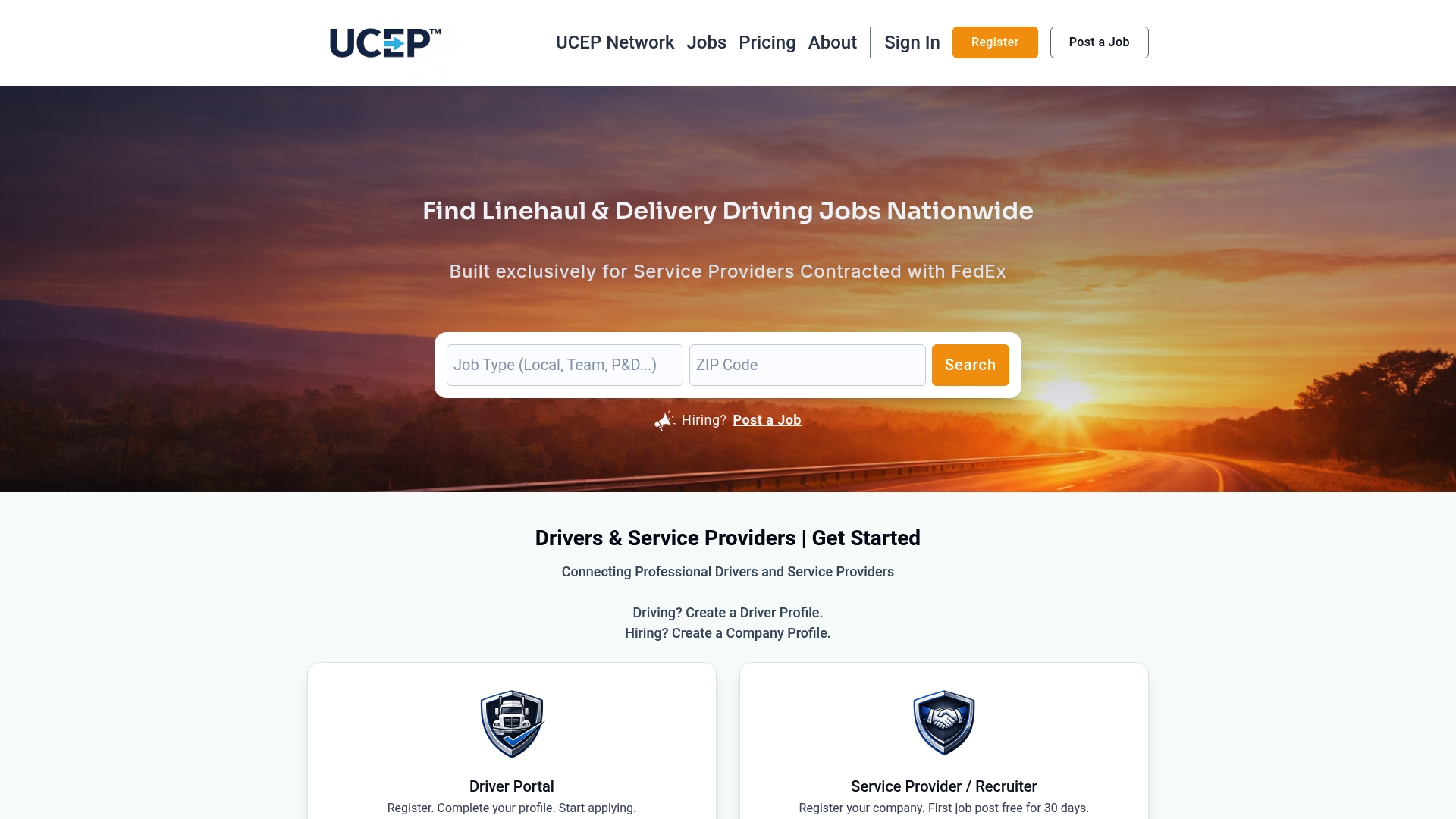
- Post pickup and delivery, CDL-A solo, or CDL-A team linehaul roles directly to drivers already familiar with FedEx operations.
- Use employer directories and applicant tracking tools built into the platform to manage leads without extra software.
- Start with a trial listing or consider a monthly plan to experience how targeted reach may affect applicant quality.
| Plan | Description |
|---|---|
| Trial Listing | A trial option to test targeted reach. |
| Monthly Plan | An option for ongoing job postings across driver categories |
Check current pricing or post a job directly to start reaching FedEx-experienced drivers today.
Sources
- Drug & Alcohol Clearinghouse: Pre-employment investigations after Jan 6, 2023
- Pre-Employment testing | FMCSA
- EEOC enforcement guidance on pre-employment disability-related questions and medical exams
- SHRM research: Over- and underqualified hiring report
- Pre-Employment Screening Program (PSP) PIA | DOT
For risk management context on why strict screening protects your business beyond compliance, see this guide on trucking risk management.
FAQ
What is the fastest way to improve driver lead quality?
Rewrite job posts with specific pay ranges, routes, and requirements, then add a short phone pre-screen before running compliance checks. This combination filters out low-intent applicants within days without any new software.
Does the FMCSA Clearinghouse query need driver consent?
Yes. FMCSA requires electronic consent from the driver before an employer can run a pre-employment full query, and a follow-on query is required if the record changes within 30 days.
Can I ask medical or disability-related questions before a job offer?
No. EEOC guidance requires that disability-related questions and medical exams wait until after a conditional job offer, and any screening step must be job-related.
What does the PSP program provide during hiring?
The Pre-Employment Screening Program gives employers a driver's crash history from the previous five years and inspection history from the previous three years, once the driver provides consent.
How much does UCEP cost for posting driver jobs?
UCEP offers a Complimentary Trial Listing and a Standard Monthly Plan at $99 per month for ongoing job postings across pickup and delivery, CDL-A solo, and CDL-A team linehaul categories.