
The most common mistakes hiring CDL drivers involve skipping compliance steps, rushing the screening process, and relying on familiarity over objective vetting. These errors expose your company to FMCSA fines, higher insurance premiums, and driver turnover that compounds over time. Driver qualification (DQ) file errors alone can trigger federal audits and put your operating authority at risk. This guide covers the specific hiring mistakes that cost transportation companies the most, and what to do instead.
1. Common compliance failures that create the biggest hiring risks
Compliance errors are the most expensive category of CDL driver hiring mistakes. FMCSA fines start at $16,000 per violation when a carrier hires a driver without completing mandatory background checks or pre-employment drug testing. That number adds up fast when multiple drivers are onboarded without proper documentation.
The most frequent compliance gaps include:
- Skipping or using a non-DOT-regulated drug test before dispatch
- Incomplete DQ files missing MVR reviews, medical certificates, or employment verification
- Failing to verify CDL endorsements relevant to the assigned route or cargo
- Not contacting all previous employers from the past three years for safety performance history
FMCSA requires documented attempts to contact every employer a driver worked for in the previous three years. Missing even one documented attempt is a file deficiency that auditors flag. FMCSA auditors randomly pull five to ten DQ files during compliance reviews, and a single missing document can trigger a deeper investigation that puts your operating authority in jeopardy.
Pro Tip: Assign one person specifically to DQ file assembly and keep that role separate from the recruiter handling candidate engagement. Mixing those duties is a direct path to paperwork errors and compliance misses.

2. Using generic applications instead of DOT-compliant forms
Generic HR applications that lack required fields for accident history, license denial, or employment history create audit risks from the first document in the file. This is one of the most overlooked common CDL job application mistakes because it happens before the driver even starts.
DOT-compliant driver applications must include specific fields that standard HR software does not generate by default. If your application form does not ask about prior license denials, traffic convictions, or accidents in the past three years, your DQ file is already incomplete. Audit failures tied to application deficiencies are preventable with the right forms from day one.
3. Skipping PSP and Drug and Alcohol Clearinghouse queries
The Pre-Employment Screening Program (PSP) and the FMCSA Drug and Alcohol Clearinghouse are two of the most important tools in CDL driver screening. Skipping either one is a hiring CDL driver error that creates both compliance exposure and safety risk.
PSP reports pull a driver's five-year crash history and three-year inspection history directly from FMCSA records. The Clearinghouse reveals active drug and alcohol violations that a driver may not disclose voluntarily. Both queries are required under federal regulations for covered positions. Running them early in the process, before you invest time in interviews or orientation, prevents wasted effort on candidates who are not hireable.
4. Letting drivers start before drug test results are confirmed
Pre-employment drug tests must be DOT-regulated, and negative results must be verified before a driver is dispatched. Allowing a driver to begin work before confirmed results are in hand is one of the most cited FMCSA violations, and it carries significant fines.
This mistake often happens when a hiring manager is under pressure to fill a seat quickly. The logic is understandable: the driver seems qualified, the load needs to move, and the test is probably going to come back clean. That reasoning does not hold up in a federal audit. The rule is clear, and the documentation requirement is non-negotiable.
5. Rushing the process and creating late-stage rejections
Rushing interviews and hiring before verifying insurability and compliance does not speed up the process. It slows it down by creating late-stage rejections after you have already invested time in orientation, paperwork, and training.
The correct sequence for efficient CDL driver recruitment is:
- Verify insurability and MVR history before scheduling a formal interview
- Run PSP and Clearinghouse queries as early as legally permitted
- Confirm CDL class and endorsements match the role requirements
- Complete the DOT drug test and receive confirmed results before dispatch
- Finalize DQ file documentation before the driver's first day
Early verification of insurability and accident records prevents wasted time on non-hireable candidates. Speed in recruitment should come from fast candidate engagement, not from compressing or skipping compliance steps.
Pro Tip: Contact candidates within 24 hours of application to maintain momentum. Then slow down for screening. Fast engagement combined with disciplined compliance vetting produces better outcomes than rushing both.
6. Falling into the familiarity trap
Hiring family members or acquaintances without proper vetting results in higher training costs and poor performance. This pattern, sometimes called the familiarity trap, is one of the most consistent recruitment mistakes for truck drivers across small and mid-size carriers.
The risks of familiarity-based hiring include:
- Skipping background checks because you "know" the person
- Overlooking MVR red flags out of personal loyalty
- Difficulty enforcing performance standards with someone you have a personal relationship with
- Higher likelihood of incomplete DQ files because the process feels informal
Familiarity bias also narrows your candidate pool unnecessarily. The trucking industry's driver shortage makes it critical to recruit from the broadest qualified pool available. Limiting yourself to known contacts reduces your options and increases the risk of a bad hire.
7. Failing to communicate job expectations up front
Candidates disengage when job expectations regarding workload, environment, and customer interaction are unclear from the start. This leads to early turnover, which is one of the most expensive outcomes of a flawed hiring process.
Be specific about route type, schedule, home time, load requirements, and any customer-facing responsibilities before a driver accepts an offer. Drivers who accept a role with a clear understanding of what it involves are significantly more likely to stay past the 90-day mark. Misaligned expectations at hire are a leading cause of voluntary turnover in the first year.
8. Ignoring the impact of poor CSA scores on your hiring pool
Companies with poor BASIC CSA scores pay 20 to 40 percent higher insurance premiums, and one bad hire can affect your safety record for up to two years. This creates a compounding problem: poor hiring decisions damage your CSA scores, which raises your costs, which makes it harder to attract quality drivers.
Experienced CDL drivers actively check carrier safety ratings before accepting positions. A carrier with visible CSA score problems will lose qualified applicants to competitors with cleaner records. Protecting your BASIC scores is not just a compliance issue. It is a direct recruiting advantage.
9. Comparing common pitfalls to best practices
The table below summarizes the most frequent CDL driver selection issues alongside the corrective action for each.
| Common pitfall | Best practice |
|---|---|
| Skipping DOT drug test or using non-compliant form | Use only DOT-regulated tests; confirm negative results before dispatch |
| Incomplete DQ files missing MVR or employment verification | Build a DQ file checklist and assign one person to own file completion |
| Hiring based on familiarity without objective vetting | Apply the same screening process to every candidate regardless of relationship |
| Rushing compliance to fill a seat faster | Engage candidates quickly, then screen thoroughly before any offer |
| Unclear job expectations at the offer stage | Communicate route type, schedule, and workload details before acceptance |
| Using generic HR application forms | Use DOT-compliant driver applications with all required FMCSA fields |
Each of these pitfalls has a direct, documented cost. Addressing them systematically is the most reliable way to reduce hiring CDL driver errors and protect your operating authority.
Key takeaways
Avoiding common mistakes when hiring CDL drivers requires compliance-first screening, early candidate engagement, and clear communication of job expectations before any offer is made.
| Point | Details |
|---|---|
| Compliance comes first | FMCSA fines start at $16,000 per violation; complete all DQ file requirements before dispatch. |
| Screen early, not late | Verify MVR, insurability, and Clearinghouse status before investing time in interviews. |
| Avoid familiarity bias | Apply identical vetting to every candidate, including known contacts and referrals. |
| Communicate expectations clearly | Drivers who understand the role before accepting are far more likely to stay past 90 days. |
| Separate recruiting from compliance | Assign DQ file assembly to a dedicated person to reduce errors and missed documentation. |
What I've learned about where CDL hiring actually breaks down
After working closely with transportation hiring managers across FedEx Service Provider networks, the pattern I see most often is not ignorance of the rules. It is process fragmentation. The recruiter is focused on filling the seat. The compliance person is buried in paperwork. Nobody owns the handoff between the two, and that gap is where violations happen.
The fix is not complicated. It is a checklist, a clear owner for each step, and a firm rule that no driver gets dispatched without a complete file. The carriers that execute this consistently are the ones with clean audits and lower turnover. They also tend to have better CSA scores, which feeds back into lower insurance costs and a stronger reputation with drivers.
The other thing I would push back on is the idea that speed and compliance are in conflict. They are not. Separating recruiting from DQ file assembly actually speeds up the process because each person is focused on their lane. The recruiter moves fast on engagement. The compliance team moves fast on documentation. Both functions run in parallel instead of one person trying to do both and doing neither well.
If you are managing CDL driver recruitment for a FedEx Service Provider, the niche job boards built for your network will consistently outperform general platforms on candidate quality. That is not a preference. It is a function of audience alignment.
— Aaron
How Ucep helps you hire CDL drivers the right way
Ucep is built exclusively for FedEx Service Providers recruiting CDL drivers for linehaul, CDL-A team, CDL-A solo, and pickup and delivery roles. The platform connects you with drivers who are already familiar with the FedEx network, which reduces the time spent screening candidates who are not a fit for the environment.
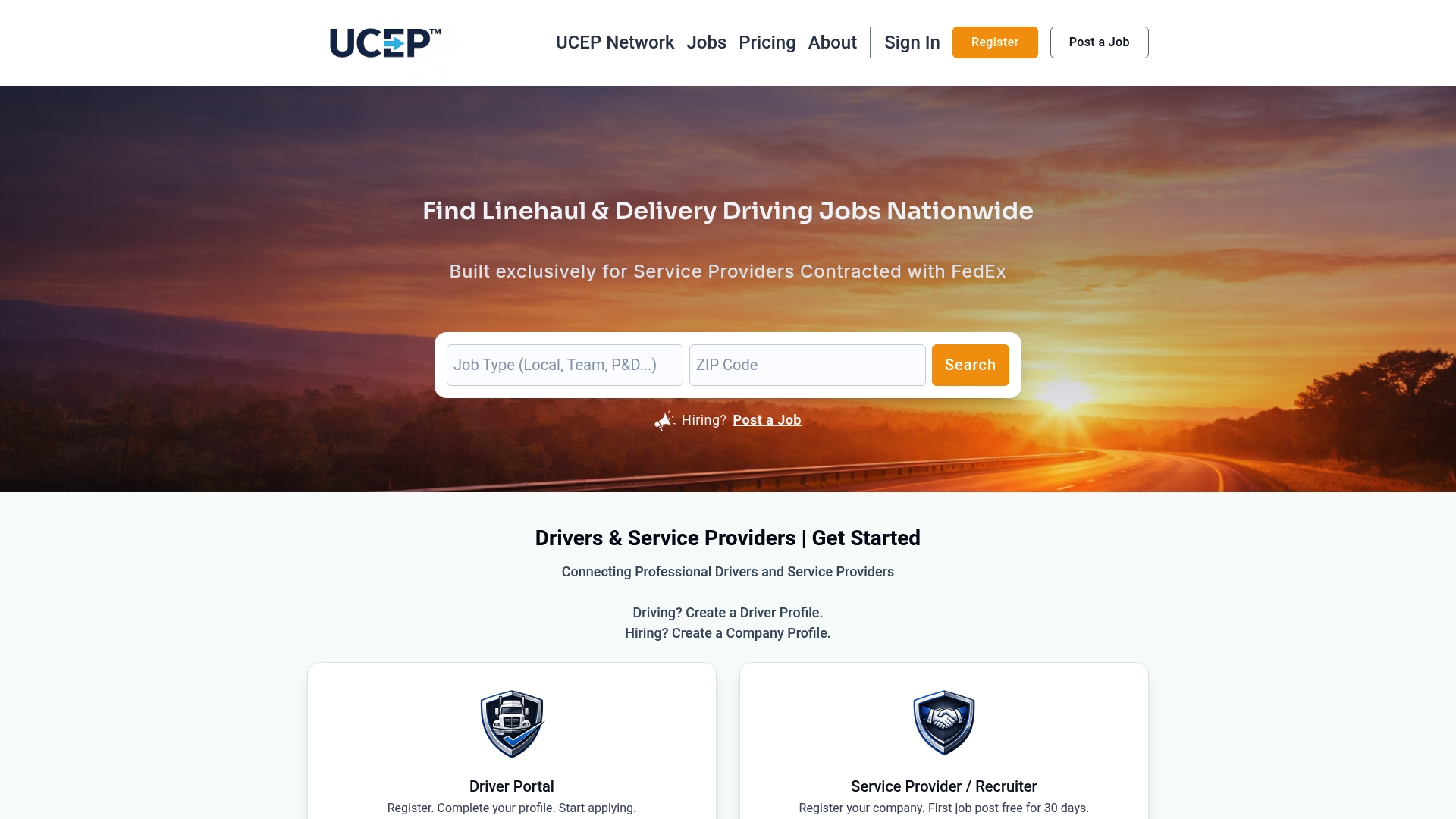
When you post on Ucep, your listings reach a focused audience of qualified CDL drivers actively looking for FedEx-related opportunities. That means fewer unqualified applicants, less time spent on early-stage screening, and a shorter path to a complete, compliant hire. Visit Ucep's driver job board to post your open CDL roles and connect with candidates who are ready to work.
FAQ
What are the most common CDL hiring compliance mistakes?
The most common compliance mistakes include incomplete DQ files, using non-DOT drug tests, and failing to verify previous employer safety records. FMCSA fines start at $16,000 per violation for these errors.
How does a bad CDL hire affect insurance costs?
Poor BASIC CSA scores from a bad hire can raise insurance premiums by 20 to 40 percent and affect your safety record for up to two years.
What is a driver qualification file and what must it include?
A DQ file is the required FMCSA documentation package for each CDL driver. It must include a completed DOT application, MVR review, medical certificate, drug test results, and verified employment history for the past three years.
Should I hire a driver I know personally without full vetting?
No. Hiring acquaintances without proper vetting consistently results in higher training costs and performance problems. Apply the same screening process to every candidate regardless of your relationship.
How do I speed up CDL hiring without cutting compliance corners?
Engage candidates within 24 hours of application to maintain momentum, then run compliance checks in parallel rather than sequentially. Early insurability and MVR verification eliminates non-hireable candidates before you invest time in interviews or orientation.