
Post on Tuesday, Wednesday, or Thursday morning, ideally between 8 and 11 AM local time. That single scheduling change, paired with a fast response to applicants, moves more qualified Sprinter van drivers into your pipeline than any other timing decision you'll make. Timing gets attention, but a two-hour response window is what actually converts that attention into a hire. Set your next posting for a Tuesday morning slot, and build a response process around it before you publish.
TL;DR:
- Posting jobs early in the week, especially Tuesday mornings, significantly boosts applicant engagement and increases qualified driver pipelines.
- Scheduling posts between 8 and 11 AM local time across regions maximizes visibility and matches drivers' browsing habits early in their workweek.
- Using multiple platforms with channel-specific timing, such as niche boards in the morning and social media in the evening, improves applicant quality and volume.
- Starting recruitment 6 to 8 weeks before peak season reduces costs by avoiding rush fees and allows sufficient screening and onboarding time.
- Fast response times within two hours are crucial for converting applications into hires, often outweighing the effects of post timing.
Table of Contents
- Best Time to Post Trucking Jobs: Days and Windows That Work
- Match Your Posting Schedule to the Platform
- When to Start Hiring Before Peak Season
- Writing Job Posts That Turn Views Into Applications
- Metrics That Tell You If Your Schedule Is Working
- A Niche Board's View on Timing and Response Speed
- Start Reaching FedEx-Experienced Drivers Today
- Sources
- FAQ
Best Time to Post Trucking Jobs: Days and Windows That Work
Recruiter data across industries points to the same pattern: midweek mornings outperform every other slot for job-post engagement and applications. That holds for trucking, where drivers often check job boards during downtime at truck stops, terminals, or home time early in the week.
The strongest window is Tuesday through Thursday, 8 to 11 AM local time. A secondary window opens in the early evening, roughly 5 to 7 PM, when drivers are off the road and browsing on phones. Aggregated engagement data consistently ranks midweek mornings above weekend or late-Friday posting for job and business content.
Why does this window work so well for trucking specifically? Drivers who are actively looking tend to search early in the week, right after a home-time reset, before they commit to another dispatch cycle. Friday afternoon and weekend posts get buried by Monday, competing with a fresh batch of new listings.
A few scheduling rules keep this working in your favor:
- Set posts to go live Tuesday morning whenever your schedule allows it.
- Avoid publishing late Friday or over the weekend, when visibility drops and postings sit stale by Monday.
- If you recruit across time zones, schedule by each region's local morning rather than one national time.
- Refresh or "bump" listings midweek instead of letting them sit untouched for weeks.
None of this replaces a fast follow-up. A perfectly timed post still needs a recruiter ready to answer the phone.
Match Your Posting Schedule to the Platform
Job boards, social feeds, and niche CDL boards don't peak at the same time, and treating them identically wastes reach. Each channel has its own rhythm, and platform-specific data shows those rhythms differ enough to matter for scheduling.
- General and niche job boards: early-week mornings, Tuesday through Thursday, 8 to 11 AM.
- Facebook trucking groups: evenings on weekdays and weekend mornings, when off-duty drivers scroll casually.
- LinkedIn: late afternoon on weekdays, closer to when logistics managers and dispatchers check feeds between calls.
- Short-form video (TikTok, Instagram Reels): evenings and weekends, when drivers are relaxed and more likely to watch a recruiting clip start to finish.
Running two or three channels at once, rather than one, gives you both volume and quality. Niche trucking boards tend to deliver higher-quality CDL applicants, while larger general boards bring in volume you can filter down. A multiposting approach that pairs one niche board with one high-volume board and one free community channel tends to outperform relying on a single source. Check each platform's own analytics after a few weeks and shift budget toward whichever channel actually produces qualified applicants, not just clicks.
When to Start Hiring Before Peak Season
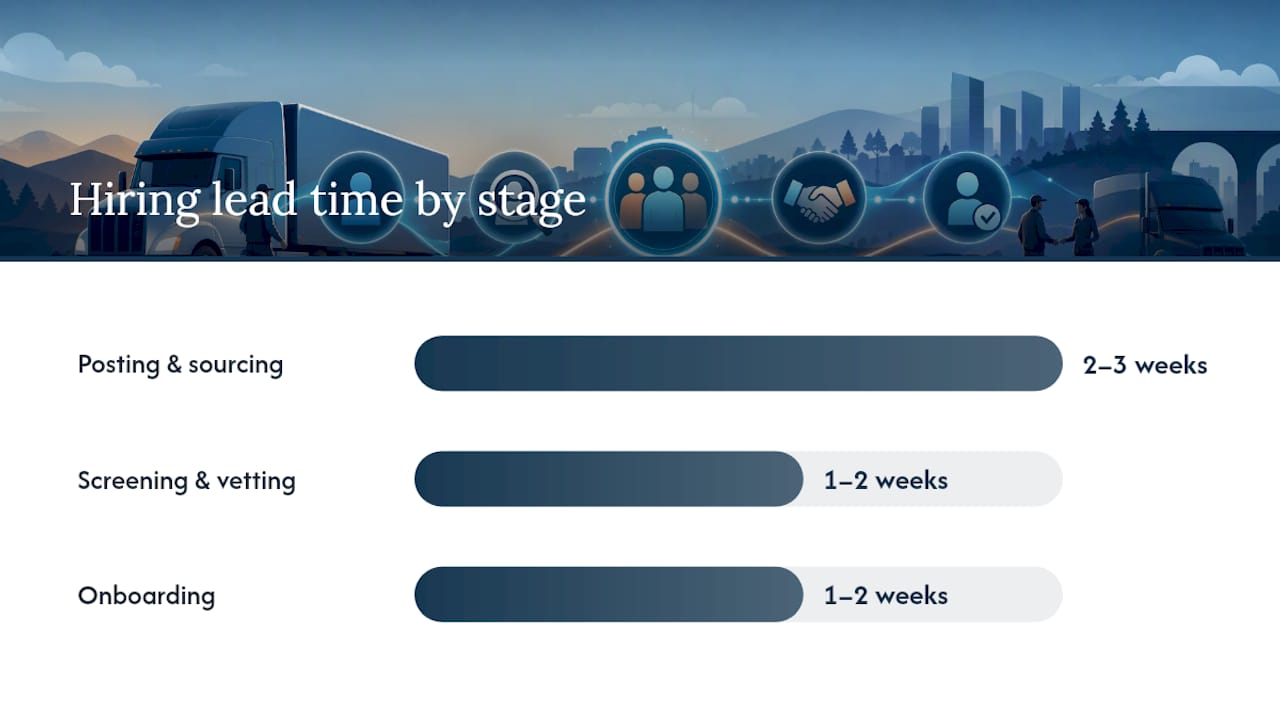
Waiting until peak season is underway to post jobs is the most expensive mistake in seasonal hiring. Recruiters who start sourcing 6 to 8 weeks before peak demand fill seats at normal rates.
That lead time has to cover three stages, not just posting:
- Posting and sourcing (2 to 3 weeks): get listings live across your channel mix and start collecting applications.
- Screening and vetting (1 to 2 weeks): verify CDL status, run background checks, confirm equipment fit.
- Onboarding (1 to 2 weeks): paperwork, orientation, and route or terminal assignment.
For seasonal spikes tied to produce season, construction demand, or the holiday freight surge, count backward from your peak start date and open roles at the 6 to 8 week mark. Some carriers build a driver bench as early as January and February, ahead of spring surges, which avoids the premium rates that come with reactive hiring.
Writing Job Posts That Turn Views Into Applications
Timing gets a driver to open your listing. What's in the first few lines decides whether they apply. Job posts that lead with real numbers, exact pay, home time, and equipment convert significantly better than listings that hide behind phrases like "competitive pay" or "great benefits." Concrete, specific copy consistently outperforms vague language, especially on mobile, where drivers scan fast and skip anything that reads like filler.

Your title should function like a search query a driver would actually type. Including specific pay info, home time, and equipment details tells a driver everything they need to know before they click.
Keep the post itself tight:
- Lead with pay, home time, and equipment type in the title and first 150 words.
- Target 400 to 600 words total. Longer posts lose readers before they reach the apply button.
- Keep the application under five minutes. Each additional required step cuts completion by roughly 20%.
- Use short bullets for requirements instead of dense paragraphs.
Pro Tip: Run two versions of the same posting with different pay phrasing, "$0.62 CPM" versus "up to $1,500/week," and compare which one pulls more qualified applicants over a two-week window before committing to one format everywhere.
Practitioners who've dug into what actually reduces time-to-hire tend to agree the biggest lift comes from fixing the post itself and the follow-up call, not from chasing marginal, minute-level timing tweaks.
Metrics That Tell You If Your Schedule Is Working
Guessing at posting times is a starting point, not a long-term strategy. Track a few specific numbers, and let them tell you when to adjust.
- View-to-apply rate: aim for 5 to 10%. Below that, the post itself likely needs rewriting, not just a new time slot.
- Cost per qualified applicant: track this per channel, not just per post, so you know which platform earns its budget.
- Response SLA compliance: measure what percentage of applicants get a call or text within two hours of applying.
- Time-to-fill: track from post date to accepted offer, and compare across seasons and channels.
Run a simple two-week test: pick two or three time slots, post identical listings, and compare qualified applicants and response outcomes rather than raw view counts. When results conflict, prioritize response speed and applicant quality overreach. A post that gets fewer views but more qualified, fast-responding applicants beats one that racks up impressions and goes nowhere. Reviewing recruiting metrics that predict retention alongside time-to-fill gives a fuller picture than tracking applications alone.
A Niche Board's View on Timing and Response Speed
Recruiting for FedEx service providers narrows the channel question considerably. Drivers searching for linehaul, CDL-A team, CDL-A solo, or pickup and delivery roles tied to FedEx aren't browsing general boards the same way. A targeted platform built around that specific hiring pool changes which channels and messaging actually work.
Multiposting across a focused set of categories, rather than one broad listing, tends to reduce both time and cost to hire. Listings for companies like Stat Trucking show how targeted categories and applicant workflows speed up discovery for drivers already familiar with FedEz-related work. Service providers who schedule postings for Tuesday mornings, then pair that with a short application and a two-hour response commitment, consistently move candidates through the pipeline faster than those relying on timing alone.
— Aaron
Start Reaching FedEx-Experienced Drivers Today
Ucep gives you access to a pool of over 140,000 FedEx-experienced drivers, something a general job board simply can't offer, because it wasn't built for this specific hiring pool. That focus is the real advantage: instead of sorting through applicants who've never touched a FedEx route, you're posting directly into a driver base that already understands linehaul, CDL-A team, CDL-A solo, and pickup and delivery work.
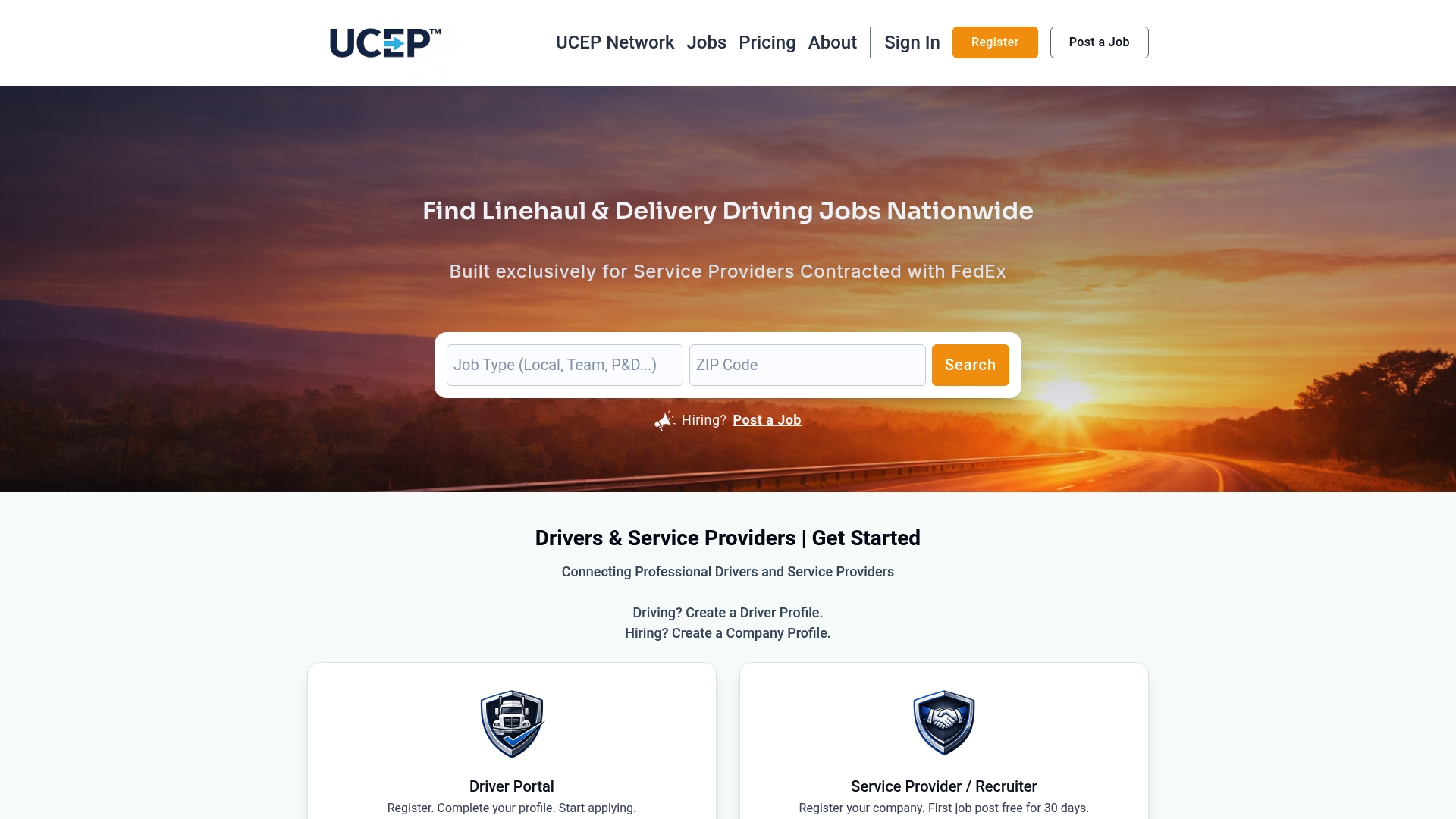
The Complimentary Trial Listing lets you test a posting before committing to anything. The Standard Monthly Plan supports multiposting across targeted driver categories. Current pricing details are available on the pricing page, allowing you to apply the midweek morning window and fast-response habits covered above without juggling multiple platforms. Start your trial listing today and schedule your first post for the next Tuesday morning slot.
Sources
FAQ
What Is the Best Day to Post a Trucking Job?
Tuesday through Thursday consistently outperforms Monday, Friday, and weekends for job-post engagement. Midweek mornings capture drivers browsing during downtime early in the week, before listings get buried under a fresh batch.
What Time of Day Gets the Most Applications?
The strongest window runs from 8 to 11 AM local time, with a secondary peak between 5 and 7 PM. Drivers tend to search job boards right after home time or during evening downtime at a terminal or truck stop.
How Fast Should I Respond to a Trucking Job Applicant?
Aim to make contact within two hours of application. Response speed is one of the strongest predictors of whether an applicant completes the hiring process, often outweighing where or when the job was posted.
How Far in Advance Should I Post Jobs Before Peak Season?
Start sourcing 6 to 8 weeks before your expected peak. Waiting until the surge hits typically raises hiring costs by 20 to 30% due to rushed screening and premium pay.
Does Ucep Help With Posting Timing for FedEx Driver Roles?
Ucep's job categories target FedEx-experienced drivers specifically, which narrows the timing and channel questions to a focused audience rather than a general labor pool. The Standard Monthly Plan supports multiposting across those categories for $99 per month.