
Seasonal hiring spikes in trucking are defined as short-term surges in driver and logistics staff recruitment triggered by predictable increases in freight volume. These spikes follow a clear pattern: holiday retail demand, agricultural harvests, and e-commerce peak periods all create temporary gaps between available drivers and the loads that need to move. The U.S. Bureau of Labor Statistics recorded over 308,000 open positions in transportation and warehousing during peak seasons. That number tells you the scale of the problem. For business owners and HR managers, understanding why seasonal hiring spikes in trucking happen is the first step toward building a workforce plan that actually holds up under pressure.
What seasonal events and demand cycles cause trucking hiring spikes?
Freight volume in trucking does not rise and fall randomly. It follows the calendar, and experienced HR managers know exactly which months will test their capacity.
The holiday shipping window is the most intense pressure point. Retail orders surge from october through december as consumers buy gifts, stores restock shelves, and e-commerce platforms fulfill record order volumes. Carriers need more drivers fast, and the lead time to recruit, screen, and onboard a CDL-A driver is not short. Companies that wait until november to post jobs are already behind.
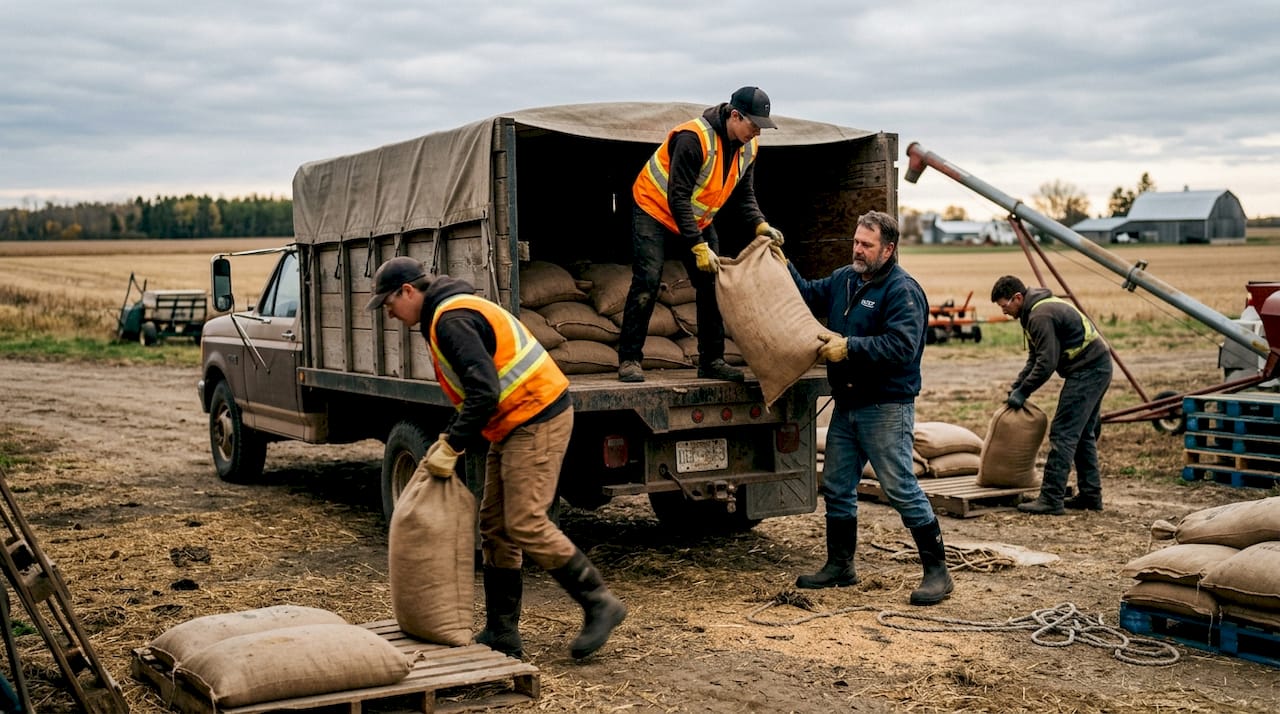
Agricultural harvest cycles create a second, often overlooked pressure point. Grain, produce, and perishable freight spike regionally depending on crop calendars. In the Midwest, fall grain harvests drive demand for flatbed and hopper-bottom drivers. In California and Florida, produce seasons create refrigerated freight surges that can last weeks. These regional spikes hit smaller carriers especially hard because they lack the driver bench depth to absorb sudden volume increases.
E-commerce has reshaped the traditional peak season model. Last-mile delivery demand now spikes during major retail promotions like back-to-school sales in august and major online shopping events in the fall. The result is that freight market volatility during these events forces carriers to hire temporary labor quickly or lose freight contracts.
Key seasonal demand drivers include:
- Holiday retail surge: october through december drives the largest single hiring spike across all trucking segments.
- Agricultural harvests: regional crop calendars create predictable but geographically concentrated demand spikes.
- Back-to-school and promotional events: august and fall retail promotions add a secondary peak that many carriers underestimate.
- Post-holiday returns: january creates a reverse logistics surge that requires continued staffing above baseline levels.
- Weather disruptions: winter weather events sideline drivers and equipment, prompting emergency temporary hiring to cover gaps.
Understanding these cycles lets you build a recruitment calendar instead of reacting to each spike as if it were a surprise.
How do labor market conditions and regulatory pressures impact seasonal hiring?
The driver pool is smaller than it was three years ago. Nearly 115,000 fewer trucking jobs have existed since early 2023, tightening the available driver pool at exactly the moment when seasonal demand requires expansion. That contraction means you are competing for a shrinking group of qualified candidates every time a peak season arrives.
Regulatory requirements add another layer of difficulty. CDL-A licensing, medical certification, and Drug and Alcohol Clearinghouse compliance all filter out candidates who might otherwise fill open seats. The Federal Motor Carrier Safety Administration's clearinghouse requirements mean that a driver with a prior violation may be ineligible to drive, even if they hold a valid license. Each compliance check takes time, and time is the one resource you do not have during a hiring spike.
Operating costs compound the problem. Fuel price spikes, insurance increases, and equipment maintenance costs all reduce the margin carriers have to offer competitive pay packages. When your cost base rises and your driver pool shrinks, seasonal recruitment becomes a bidding contest you may not win.
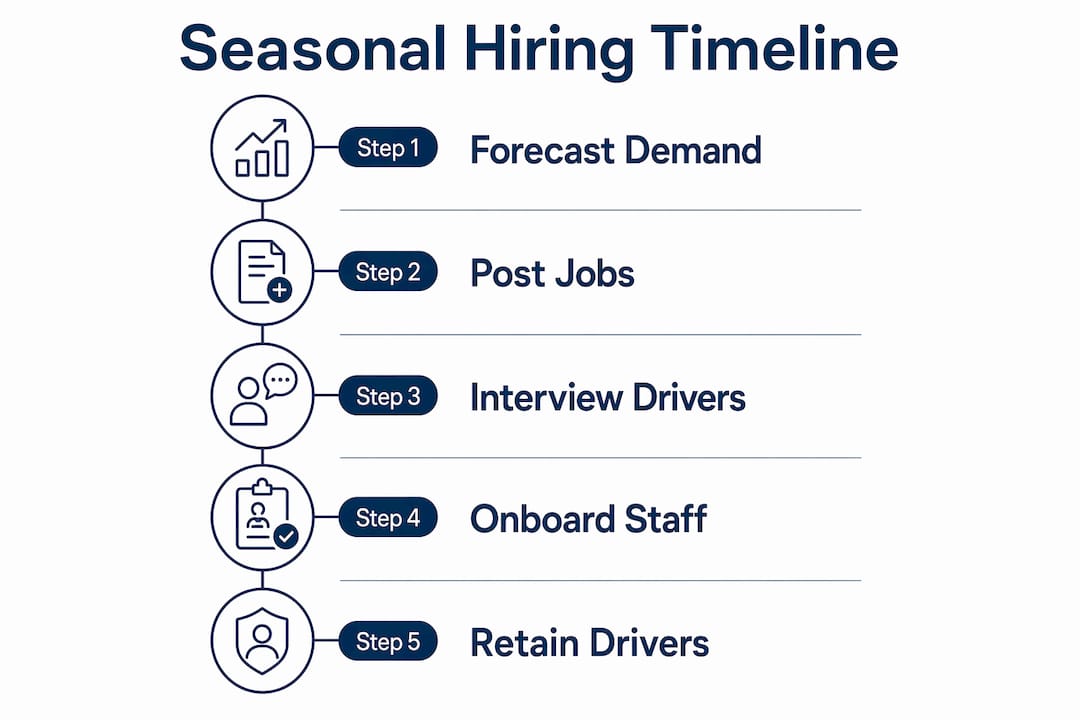
Here is a practical sequence for managing these constraints:
- Audit your CDL pipeline quarterly. Know how many drivers in your network are within 90 days of a medical certificate renewal or license expiration. Losing a driver to a paperwork lapse during peak season is preventable.
- Post jobs 60–90 days before your peak window. The best recruiting months for many industries start in january and february. Trucking peak seasons require even earlier action.
- Use targeted recruiting channels. Niche job boards focused on CDL drivers deliver better candidate quality than general platforms. The ROI of niche job boards is measurable: fewer unqualified applicants, faster time to fill.
- Pre-screen for clearinghouse compliance. Run Drug and Alcohol Clearinghouse queries before extending offers to avoid last-minute disqualifications.
- Build relationships with driving schools. New CDL graduates entering the market in spring and summer can be onboarded and trained before your fall peak arrives.
Pro Tip: Set a recurring calendar reminder for 90 days before each known seasonal peak. Use that date as your hard deadline for posting open positions, not your target hire date.
What retention challenges arise during peak hiring seasons?
Hiring a driver during a peak season is only half the problem. Keeping that driver through the end of the surge is the harder task. Driver turnover costs carriers approximately $13,000 per departure, and a spring 2026 survey found that a record 58.1% of drivers were actively looking for new jobs. Those two facts together describe a retention crisis that peaks exactly when you can least afford it.
Drivers leave during high-demand periods for predictable reasons. Dispatch communication breaks down when volume spikes. Home time promises get broken when loads pile up. Equipment that was "good enough" in slow season becomes a daily frustration when drivers are running hard. Each of these friction points accelerates the decision to leave.
Retention tactics that address these root causes include:
- Consistent home time commitments: Drivers who know their schedule in advance are less likely to leave for a competitor offering the same pay but better predictability.
- Transparent load planning: Share load forecasts with drivers so they understand what the next two weeks look like. Uncertainty is a driver's biggest stressor.
- Equipment quality standards: Assign newer or better-maintained equipment to your highest-tenure drivers during peak seasons. It signals respect and reduces breakdown-related frustration.
- Direct communication from dispatch: Drivers who feel ignored by dispatch are far more likely to answer a recruiter's call. A daily check-in during peak periods costs nothing and reduces turnover.
- Driver experience beyond pay: Carriers who prioritize communication, fair treatment, and professional respect retain drivers at higher rates than those relying on sign-on bonuses alone.
Pro Tip: Conduct a brief exit interview with every driver who leaves during a peak season. The patterns you find in those conversations will tell you exactly where your retention strategy is failing.
Driver mental health and burnout are real factors in peak season attrition. Resources on driver burnout and home time show that carriers who acknowledge these pressures and build policies around them see lower turnover rates than those who treat peak season as a temporary inconvenience.
How do trucking businesses manage seasonal workforce fluctuations?
Managing a seasonal workforce in trucking requires planning that starts months before the first load spike arrives. The companies that handle peak seasons well do not improvise. They build a workforce model that accounts for both permanent and temporary staffing needs.
Temporary and seasonal support roles are a critical part of this model. Seasonal dispatchers, dock workers, and load planners allow carriers to scale throughput without adding permanent headcount. These roles absorb the administrative and operational load that spikes during peak periods, freeing your permanent staff to focus on service quality. The 2026 spot rate environment, with rate increases driven by tightened carrier supply and events like Roadcheck Week, makes this kind of workforce flexibility a financial necessity, not just an operational preference.
| Workforce type | Best use case | Planning lead time |
|---|---|---|
| Permanent CDL-A drivers | Core freight lanes, consistent volume | Ongoing recruitment |
| Seasonal CDL-A drivers | Holiday and harvest peak coverage | 60–90 days before peak |
| Temporary dispatchers | Volume overflow, administrative surge | 30–45 days before peak |
| Seasonal yard workers | Dock and staging support during surges | 30 days before peak |
| Contract load planners | Demand forecasting and route optimization | 45–60 days before peak |
Demand forecasting is the foundation of this model. Review your freight data from the prior two years and identify the exact weeks when volume exceeded your baseline capacity. Use those dates to set your hiring targets and your posting schedule. Carriers who treat seasonal hiring as a data-driven process fill positions faster and at lower cost than those who rely on gut instinct.
Key Takeaways
Seasonal hiring spikes in trucking are predictable, and carriers who plan 60–90 days ahead, prioritize driver retention, and use targeted recruiting channels consistently outperform those who react to each peak as a new crisis.
| Point | Details |
|---|---|
| Spikes follow the calendar | Holiday retail, agricultural harvests, and e-commerce events drive the largest hiring surges. |
| Driver pool is shrinking | Nearly 115,000 fewer trucking jobs since early 2023 means fewer candidates available during each peak. |
| Turnover is expensive | Each driver departure costs approximately $13,000, making retention as important as recruitment. |
| Retention requires more than pay | Drivers prioritize communication, home time, and fair treatment over sign-on bonuses. |
| Temporary roles extend capacity | Seasonal dispatchers and yard workers allow carriers to scale without adding permanent headcount. |
What I've learned about seasonal hiring after watching carriers repeat the same mistakes
The pattern I see most often is this: a carrier has a strong Q3, freight picks up in october, and suddenly they are 10 drivers short with no pipeline. They post jobs in a panic, offer inflated sign-on bonuses, and hire whoever responds fastest. By january, half those drivers are gone, and the carrier is back to square one with a depleted budget and a damaged reputation in the driver market.
The carriers who avoid this cycle share one habit. They treat their driver pipeline the way a good operations manager treats equipment maintenance: as a continuous process, not a crisis response. They post jobs in july for a november peak. They stay in contact with former drivers who left on good terms. They track their own turnover data and know exactly which routes and which dispatchers produce the highest attrition.
The 2026 labor market makes this discipline more urgent than it has been in years. Regulatory tightening, slower job growth, and rising operating costs mean that the margin for error in seasonal hiring is essentially zero. A carrier who loses three drivers in october to a competitor offering better home time is not just short-staffed for the holidays. They are paying $39,000 in replacement costs at the worst possible moment.
The uncomfortable truth is that most seasonal hiring problems are retention problems in disguise. If your drivers were staying, you would not need to hire as many new ones each peak season. Fix the retention problem first, and the hiring problem gets smaller every year.
— Aaron
Ucep connects FedEx service providers with qualified drivers
Seasonal hiring pressure is real, and the driver shortage makes every peak season harder to staff. Ucep is built specifically for FedEx service providers who need qualified CDL-A drivers for linehaul, team, solo, and pickup and delivery roles.
Ucep gives you access to a focused network of professional drivers actively looking for FedEx-related opportunities. You can also read service provider reviews to benchmark your hiring practices against carriers who are successfully managing seasonal demand. Whether you are planning for a fall peak or filling an immediate gap, Ucep puts your open positions in front of the right candidates without the noise of a general job board.
FAQ
Why does trucking hiring spike in the fall?
Fall trucking hiring spikes because holiday retail demand and agricultural harvests both peak between october and december, creating a simultaneous surge in freight volume that requires more drivers than most carriers keep on staff year-round.
What is the cost of losing a driver during peak season?
Driver turnover costs carriers approximately $13,000 per departure. Losing drivers during a peak season compounds that cost because replacement hiring is slower and more expensive when competition for candidates is highest.
How early should trucking companies start seasonal recruiting?
Carriers should post seasonal driver positions 60–90 days before their expected peak window. Hiring managers in many industries begin recruiting in january and february, so trucking companies targeting a fall peak should start no later than august.
What roles beyond drivers should carriers hire seasonally?
Seasonal dispatchers, dock workers, and load planners all support peak-season throughput without requiring CDL credentials. These roles reduce the operational burden on permanent staff and help carriers maintain service levels during volume surges.
How does the current driver shortage affect seasonal hiring?
Nearly 115,000 fewer trucking jobs have existed since early 2023, shrinking the available driver pool. That contraction means carriers face more competition for fewer qualified candidates during every peak season, making early recruitment and strong retention practices the only reliable response.
Recommended
- Trucking and Severe Summer Weather | Safety Tips for Drivers - United Contractor Employment Portal
- Safe Delivery Driving Summer 2026 | Reduce Delivery Risk - United Contractor Employment Portal
- Why Targeted Job Boards Deliver Better ROI for Service Providers Hiring Drivers - United Contractor Employment Portal
- Driver Jobs for Service Providers Contracted with FedEx | UCEP