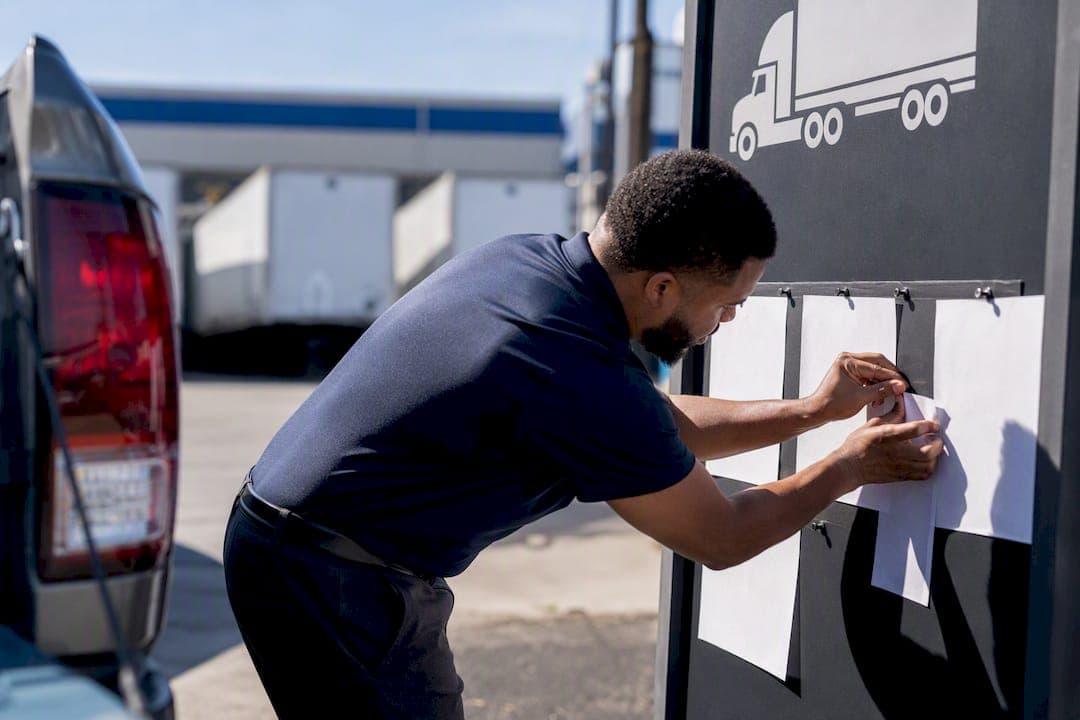
Post carrier openings on a niche board built for CDL hiring first, then use a broad job marketplace only if you need extra applicant volume. A carrier-focused board like UCEP filters candidates by CDL class, route type, and endorsements before they ever apply, which means fewer unqualified resumes and faster time-to-hire for Service Providers contracted with FedEx. If your opening is urgent and you need raw applicant volume immediately, add a general job marketplace as a secondary channel, not your primary one.
Three signals tell you a channel is worth your budget:
- Targeting: Can you filter or tag by CDL-A, run type, and home time, or does every post look identical regardless of role?
- Applicant quality: Do you get drivers who match your equipment and endorsements, or a flood of unrelated resumes?
- Employer tools: Does the platform give you an applicant tracking system, terminal directories, or alerts, or just a blank text box?
The rest of this guide breaks down each channel category, how to choose between them, and how to write a post that actually converts drivers into applicants.
Key Takeaways
Carrier hiring works best when employers post on a CDL-specific board first and reserve broad marketplaces for volume overflow.
| Point | Details |
|---|---|
| Lead with niche boards | Post CDL-A, linehaul, and P&D roles on a carrier-specific board before adding a general marketplace. |
| Fix the post before the channel | Pay, home time, run type, and equipment need to be explicit before you choose where to distribute it. |
| Track qualified-application ratio | Total applicants matter less than the share who actually meet CDL class and endorsement requirements. |
| Mix channels for urgent volume | Pair a niche board with a broad marketplace only when a terminal has multiple open seats and a hard deadline. |
| UCEP fits FedEx contractor hiring | UCEP's CDL filtering, terminal directories, and driver alerts target Service Providers hiring linehaul, CDL-A, and P&D drivers specifically. |
Table of Contents
- Best Job Posting Sites for Carriers, by Channel Type
- How Do You Choose Where to Post a Carrier Job?
- What Should a Carrier Job Post Actually Say?
- Which Niche Channels Reach Drivers Fastest?
- How Long Does It Take to Fill a Carrier Role?
- What Makes UCEP a Reliable Choice for FedEx Contractor Hiring?
- Why the "Post Everywhere" Approach to Carrier Hiring Fails
- Post Your Next Carrier Opening on a Board Built for FedEx Contractors
- Sources
Best Job Posting Sites for Carriers, by Channel Type
Not every job board solves the same hiring problem. A CDL-A team opening in Ohio and a linehaul role out of a Texas terminal need different channels, sometimes different combinations of channels. Here's how the major categories stack up.
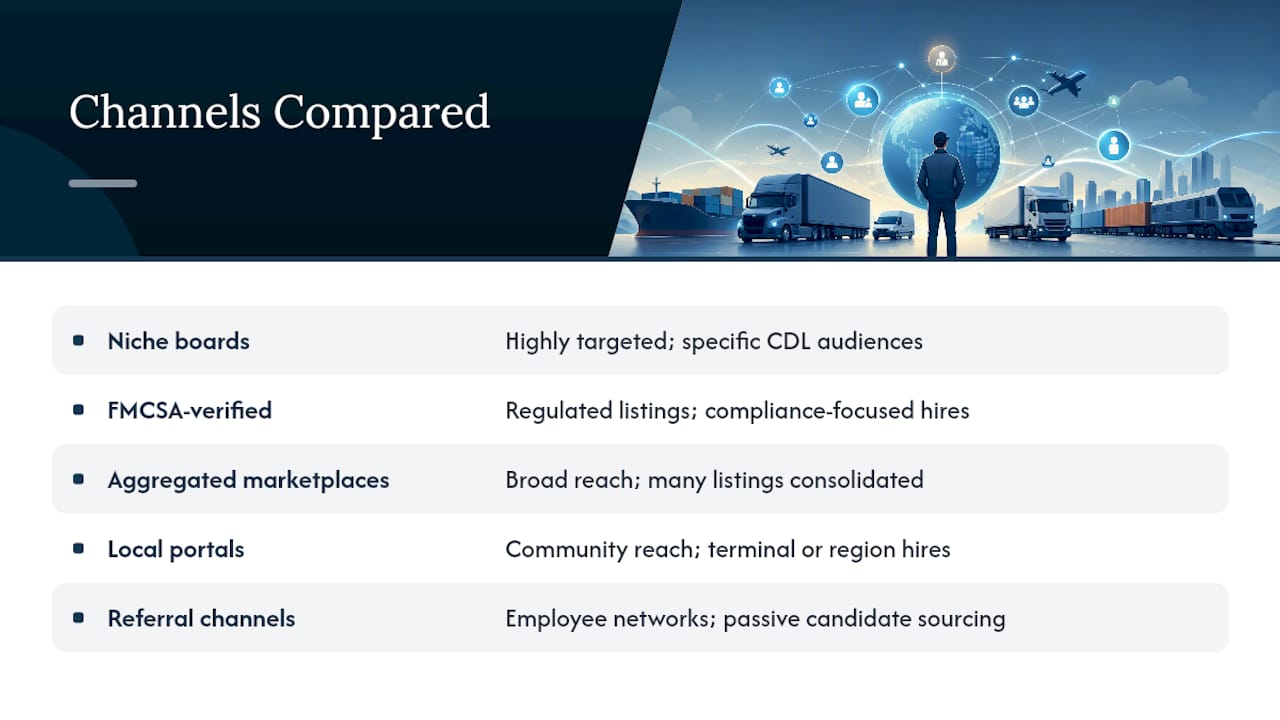
Niche carrier boards
Carrier-specific boards exist because generic job sites treat a truck driver posting the same way they'd treat a retail cashier listing: a title, a location, a pay range, and little else. Niche boards build fields around what actually matters to drivers and dispatchers, run type, equipment class, terminal location, and endorsement requirements.
UCEP falls into this category, built exclusively for Service Providers contracted with FedEx hiring for linehaul, CDL-A team, CDL-A solo, and pickup-and-delivery roles. Because the platform is scoped to one hiring context, every applicant already understands the FedEx contractor structure before they click apply, which cuts down on the "wait, what is this job exactly" conversations recruiters dread. UCEP also gives employers a built-in applicant tracking system, employer and terminal directories, and targeted driver alerts, so a posting reaches drivers actively searching for that specific type of route.
Other carrier-specific boards, like ClassAJobs411, let carriers post Class A and B openings with fields for run type, equipment, pay, and hiring ZIP code, and they do it for free. The tradeoff is scope. A free general trucking board pulls from a wider pool but without the FedEx contractor context UCEP builds in.
Carrier directories and FMCSA-linked listings
Some platforms verify carriers against Federal Motor Carrier Safety Administration data before surfacing their listings, which raises the trust bar for drivers browsing openings. Platforms built around FMCSA-verified or pay-verified data, an approach used by boards like LMDR, reduce the spam and lowball offers that make drivers wary of trucking job boards in general. If your recruiting has been getting ignored because drivers assume every posting is too good to be true, a verified listing can restore some of that credibility.

Aggregated job marketplaces
Broad job engines exist for a reason: volume. When you need forty applicants by Friday because three trucks sit empty at a terminal, a general marketplace casts the widest net. U.S. News recommends pairing large general job boards with niche, industry-specific boards precisely because neither one alone covers the full funnel. The marketplace brings scale; the niche board brings match quality. Money's roundup of employer-focused job posting sites sorts platforms by hiring need, best overall, best for local hiring, best for professional roles, which is a useful mental model even outside their specific picks. Map your open role to a need first, then pick the channel that matches it.
Local and regional carrier portals, CDL graduate networks
Terminal-based hiring benefits from geography-specific channels. A regional portal tied to a metro area or a partnership with a CDL training school puts your posting in front of drivers who already live near your terminal or just finished their license. New CDL graduates are a distinct applicant pool: they need a first opportunity, they're often flexible on route type, and they respond well to postings that spell out training support and mentorship.
Driver communities and referral channels
Referral programs and driver social groups cost little and carry high trust, since a recommendation from a working driver lands differently than a cold job ad. These channels rarely produce volume, but the applicants they do produce tend to convert at a higher rate because someone already vouched for the employer.
Pro Tip: Run one niche board and one broad marketplace simultaneously for thirty days, then compare qualified-applicant ratios before renewing either subscription.
How Do You Choose Where to Post a Carrier Job?
Selecting a posting channel comes down to matching your role's specifics against what each platform actually lets you communicate. Before you commit budget, check whether the channel supports these criteria:
- CDL class and endorsement targeting (Class A, hazmat, tanker)
- Run type (linehaul, regional, local P&D, team versus solo)
- Home time expectations (daily, weekly, over-the-road)
- Equipment type and age
- Pay transparency (mileage rate, hourly, or flat run pay, shown up front)
- ATS integration, so applications flow into your existing hiring workflow
- Geographic radius controls around your terminal
- Expected candidate flow (volume versus curated quality)
There's a real tradeoff between volume and signal quality. A board that produces 200 applicants a week sounds appealing until you realize 180 of them lack the right endorsement. A niche board that produces twenty applicants, all CDL-A with the right experience, usually beats the bigger number on actual cost-per-hire. Speed matters too: if you need a driver in a seat within two weeks, weigh channels by how fast they historically produce a qualified applicant, not just total post-to-apply time.
Before signing up for any posting package, run through this checklist:
- Does the platform let me filter by CDL class and endorsement?
- Can I specify run type and home time in a structured field, not just free text?
- Is pay transparency required or optional on this platform?
- Does it integrate with the ATS or spreadsheet I already use?
- Can I target a specific geographic radius around my terminal?
- What's the pricing model, per-post, monthly subscription, or featured placement?
- Does the platform verify carriers or drivers in any way?
- What's the typical time-to-first-applicant for a role like mine?
Answering these eight questions before you buy prevents the most common mistake employers make: paying for volume when they actually needed targeting, or paying for a premium tier when a basic niche listing would have done the job.
What Should a Carrier Job Post Actually Say?
Drivers scan job postings the way recruiters scan resumes: fast, and looking for a reason to keep reading or bail. A post that buries pay and home time below three paragraphs of company history loses candidates before they reach the apply button. Postings that include granular route and equipment data reduce time-to-hire because drivers self-select earlier, meaning fewer unqualified clicks and fewer calls from candidates who quit the conversation once they hear the real pay structure.
Every carrier job post needs these fields, in roughly this order of importance to a driver:
- Pay structure: mileage rate, hourly, or per-run, stated as a number, not "competitive"
- Home time: daily, weekly, or over-the-road, stated explicitly
- Run type: linehaul, regional, local pickup and delivery, team or solo
- Equipment: make, age range, and any notable features (APU, automatic transmission)
- Endorsements required: hazmat, tanker, doubles/triples
- Terminal or ZIP code: drivers filter by proximity before anything else
- Application method: a direct link or a phone number, not a generic "email your resume to HR"
Formatting matters as much as content. Lead with pay and home time in the first two lines. Use short bullets for duties and requirements instead of dense paragraphs. Make the apply button or link the most visible element on the page, since a driver who has to hunt for how to apply will usually just move to the next tab.
Screening transparency cuts both ways. If you require a clean MVR for the last three years or a minimum of two years of verifiable OTR experience, say so in the post itself. It feels counterintuitive to add friction, but a driver who doesn't meet the bar self-selects out before applying, which saves your recruiting team from screening calls that end in disappointment on both sides. Boards that let carriers post structured fields for run type, equipment, and pay exist specifically to support this kind of upfront filtering, rather than making applicants discover the details three steps into a phone screen.
Which Niche Channels Reach Drivers Fastest?
Beyond the major categories, a handful of targeted tactics consistently outperform a generic post-and-wait approach.
FMCSA-verified job catalogs surface listings tied to a carrier's actual safety record, which builds trust with drivers wary of scam postings. CDL-specific boards built around endorsement and class filtering put your role in front of drivers who already narrowed their search to match. Terminal-based boards tied to a specific hub or metro area work well for local P&D roles where commute radius matters more than route prestige. Vocational school partnerships put your opening in front of CDL graduates before they even start job hunting broadly. Driver referral programs turn your current fleet into a recruiting channel, often the cheapest cost-per-hire you'll find.
On the tactical side:
- Route-targeted postings that specify the exact lane or terminal, not just "regional driver needed"
- Geo-radius terminal ads that only show to drivers within a set commute distance
- Sponsored listings placed directly through CDL training schools
- Hiring events, virtual or in-person, timed around a training school's graduation cycle
Mix niche channels with broader marketplaces when a single terminal has multiple open seats and a hard deadline. For one or two openings with flexible timing, a niche board alone, paired with a referral push, usually gets there without the added spend.
How Long Does It Take to Fill a Carrier Role?
Timeline expectations vary sharply by channel. Niche carrier boards with structured CDL fields tend to produce a first qualified applicant faster than broad marketplaces, because the applicant pool has already self-filtered by the time they click apply. Referral channels move fastest of all when they work, but they don't scale on demand.
Pricing models generally break into three shapes: per-post fees, flat-rate subscriptions covering unlimited postings for a set period, and featured or sponsored placements that cost more but surface higher in search results. Cost-per-hire is the number that actually matters, calculated as total spend on a channel divided by the number of hires it produced, not the number of applicants.
| Metric | What to track |
|---|---|
| Applications per post | Total applicants generated by a single listing over its active window. |
| Qualified-application ratio | Share of applicants who meet CDL class, endorsement, and experience requirements. |
| Time-to-fill | Days from posting live to signed offer accepted. |
| Cost-per-hire | Total channel spend divided by completed hires, not raw applicant count. |
| Source-of-hire attribution | Which channel produced the driver who was actually hired, tracked through your ATS. |
Review these numbers monthly, not quarterly. A channel that looked strong in its first two weeks can quietly stop converting, and driver hiring moves too fast for a slow feedback loop.
What Makes UCEP a Reliable Choice for FedEx Contractor Hiring?
UCEP was built around one hiring context: Service Providers contracted with FedEx who need CDL-A team, CDL-A solo, linehaul, and pickup-and-delivery drivers. That focus shows up in the features employers actually use day to day.
- CDL filtering that matches drivers to your specific class and endorsement requirements
- Terminal directories that let drivers and employers orient around physical hiring locations
- Targeted driver alerts that notify qualified candidates when a matching role goes live
- A built-in applicant tracking system so postings flow directly into your hiring pipeline
- Employer and driver internal reviews that add a layer of trust on both sides
When a posting includes the exact route type, terminal, and equipment a driver is looking for, that driver applies already knowing the job fits. Fewer mismatched applicants means recruiting teams spend their time on candidates worth calling back.
An employer running three open linehaul seats and struggling with unqualified applicants from a general marketplace can shift that same spend toward a platform where every applicant already understands the FedEx contractor structure, which typically shows up as a shorter applicant-to-interview pipeline.
Aaron covers recruiting and hiring strategy for the transportation industry.
Why the "Post Everywhere" Approach to Carrier Hiring Fails
Most hiring advice treats job boards as interchangeable, post to more sites, get more applicants, problem solved. That logic breaks down completely for carrier hiring. A CDL-A team role has almost nothing in common with a warehouse posting, yet general job board roundups group them together anyway. Long aggregated lists of "top job sites" dilute the very signal employers need most: match quality.
The conventional advice, cast the widest net, optimizes for the wrong variable. Employers don't actually want more applicants. They want fewer applicants who are already qualified. That's a targeting problem, not a volume problem, and a generic marketplace can't solve it because it wasn't built to.
What should you prioritize first? Get your posting fields right, pay, home time, run type, equipment, before you touch a single distribution channel. A perfectly targeted post on the wrong board still underperforms a mediocre post on a board full of the right drivers. Fix the message, then pick the channel built for the audience you're actually trying to reach.
— Aaron
Post Your Next Carrier Opening on a Board Built for FedEx Contractors
UCEP gives Service Providers contracted with FedEx something a general job board can't: a hiring pool that already understands the contractor structure before they apply. Instead of sorting through resumes from drivers unfamiliar with FedEx-specific routes and requirements, you post once and reach candidates who searched specifically for linehaul, CDL-A team, CDL-A solo, or pickup-and-delivery roles within that world.
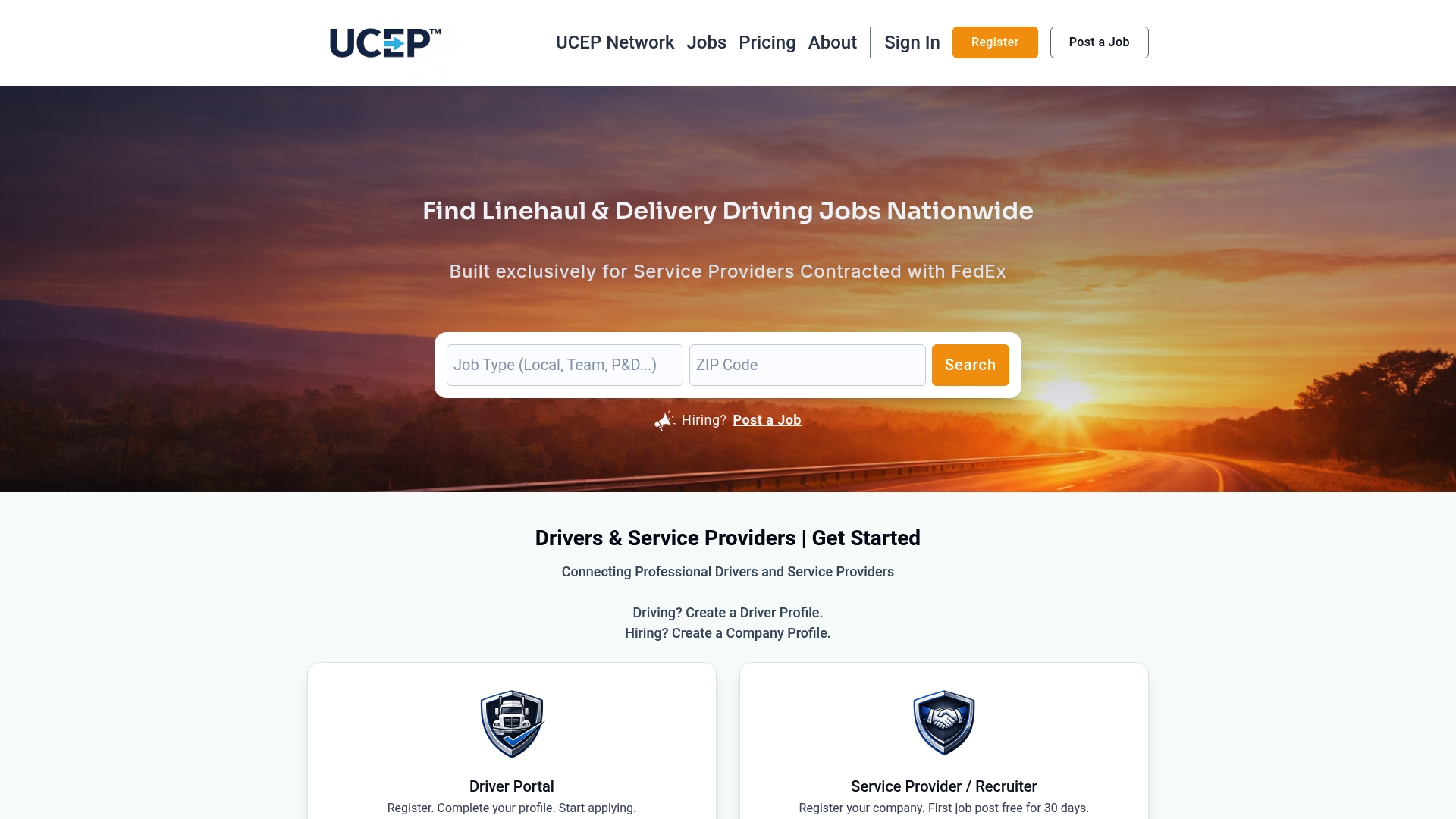
The platform's terminal directories and employer profile pages let you show drivers exactly where they'd be working before they click apply, which cuts down on the mismatch calls that eat up a recruiter's week. Combine that with the built-in applicant tracking system, and every application lands somewhere you can actually act on it instead of getting lost in an inbox.
If you're managing hiring for multiple terminals or coordinating with a payroll or operations partner, tools like fleet service partners can help round out the operational side while UCEP handles recruiting. Ready to post your first opening? Set up your employer profile on UCEP and get your CDL-A or linehaul role in front of drivers who are already looking.
Sources
- Best Job Search Sites | Careers | U.S. News
- 7 Best Job Posting Sites for Employers of August 2026 | Money