
Niche job boards are specialized platforms that connect employers with candidates in a specific industry or role, and they consistently outperform general boards on the metrics that matter most to transportation logistics recruiters. Specialized platforms deliver up to 3x higher application-to-hire ratios compared to high-volume general sites. For FedEx Service Providers hiring CDL-A drivers, linehaul operators, and pickup and delivery specialists, that difference is not a minor efficiency gain. It changes how fast you fill seats and how much you spend doing it. Understanding why niche job boards outperform general boards is the first step toward building a sourcing strategy that actually works in 2026.
Why niche job boards outperform general boards on candidate quality
The core problem with general job boards is volume without relevance. Up to 42% of applicants on general platforms are unqualified for the roles they apply to. That means your recruiting team spends a significant portion of its time screening out people who never should have applied in the first place.
Niche boards solve this through two mechanisms: contextual filters and candidate intent. Industry-specific filters on specialized platforms require applicants to meet defined criteria before submitting. A CDL-A driver board, for example, may require applicants to confirm license class, years of experience, and endorsements before their application goes through. General boards rarely enforce these gates.

Candidate intent is the more powerful of the two. Candidates on niche boards self-select into specialized professional ecosystems. A driver who visits a transportation-focused job board is actively looking for driving work, not casually browsing every open position in their zip code. That intent produces better match quality before you ever open a resume.
The practical result for transportation logistics recruiters is a shorter, cleaner applicant pool. You review fewer resumes, conduct fewer screening calls, and move qualified candidates to interviews faster. For roles with specific certification requirements like CDL-A or hazmat endorsements, that filtering effect is especially valuable.
- Contextual filters block unqualified submissions at the point of application
- License and endorsement fields confirm CDL class before a resume reaches your inbox
- Industry-specific job categories prevent mismatched applications from general job seekers
- Self-selecting candidates arrive with genuine interest in transportation roles
Pro Tip: Set minimum qualification gates directly in your job posting on niche platforms. Requiring applicants to confirm CDL class and years of OTR experience in the application form cuts screening time before you read a single resume.
How specialized platforms cut cost-per-hire and speed up hiring
Recruiting speed and cost are directly connected. The longer a driver seat stays empty, the more it costs in lost revenue and operational strain. Recruiters using niche boards report 72% faster hiring and a 38% reduction in cost-per-hire compared to general platform sourcing.
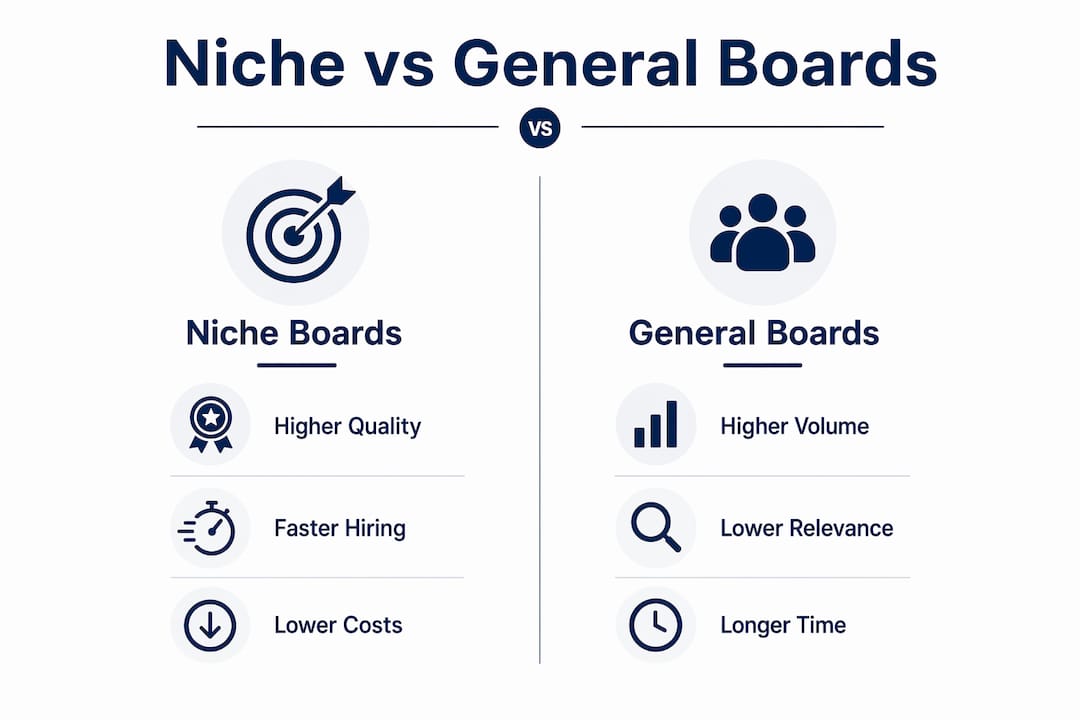
The 38% cost reduction surprises many recruiters who assume niche boards are more expensive. Listing fees on specialized platforms can run higher than general boards. But total cost-per-hire drops because recruiters spend far less time screening irrelevant resumes. When you factor in recruiter hours, the math consistently favors niche platforms.
Here is how the efficiency gains stack up across the hiring funnel:
- Fewer unqualified applications arrive, so initial screening takes less time per open role.
- Higher intent candidates move through phone screens faster because they already understand the role requirements.
- Better match quality reduces the number of interviews needed before an offer is extended.
- Lower offer rejection rates result from candidates who applied specifically for that type of driving role.
- Faster onboarding follows because candidates with the right credentials require less remedial paperwork.
The 72% faster hiring figure reflects the compounding effect of all five stages. Each step in the funnel moves quicker when the candidate pool is pre-filtered for relevance.
Tracking source-to-hire conversion, not application volume, reveals the true ROI of niche platforms. A general board that delivers 300 applications but produces two hires is less efficient than a niche board that delivers 40 applications and produces eight hires.
Source-to-hire data is the metric that makes this visible. Recruiters who measure only volume consistently underestimate what specialized boards deliver.
Pro Tip: Pull source-to-hire conversion rates from your ATS every 30 days. Compare niche board sources against general board sources using hires per 100 applications, not total applications received.
Do niche boards attract passive driver candidates too?
Passive candidates are drivers who are not actively job searching but would consider a better opportunity. General job boards rarely reach them because passive candidates do not browse general boards. Niche boards function as community hubs with industry news, forums, and career resources that draw transportation professionals even when they are not actively applying.
A driver who visits a transportation-focused platform to read about regulatory changes or check pay rate benchmarks is exposed to your job posting in a context where they are already thinking about their career. That context makes them far more likely to engage than a driver who stumbles across your posting between searches for unrelated jobs.
Posting on a niche board also sends a signal about your company. Niche job board postings communicate that your organization understands and respects the industry. For FedEx Service Providers competing for experienced CDL-A drivers, that perception matters. Drivers talk to other drivers. A company that shows up consistently on platforms built for their profession builds recognition over time.
"Appearing on the right platform tells candidates you know their world. That credibility is hard to build through general boards and easy to lose by ignoring the places where professionals actually spend their time."
The community effect also means your posting stays visible longer. General boards cycle listings quickly as new volume floods in. Niche platforms with smaller, more engaged audiences give your posting more sustained exposure to the right people.
- Industry forums and news keep transportation professionals returning to niche platforms regularly
- Career resources attract drivers at every stage, including those not actively searching
- Sustained posting visibility results from lower overall listing volume on specialized sites
- Employer brand recognition builds through consistent presence in a focused professional community
How to build a hybrid recruiting strategy using niche boards
A hybrid approach uses niche boards for quality and general platforms for scale. The two are not mutually exclusive, but they serve different functions in your sourcing mix. Niche boards should anchor your strategy for specialized roles like CDL-A linehaul and team driving. General boards can supplement for high-volume, lower-barrier positions where speed matters more than precision.
The key is selecting two or three niche boards aligned with transportation and driver hiring rather than spreading budget across too many platforms. Overreliance on a single niche source creates fragility. If one platform changes its pricing or audience, your pipeline stalls. Diversifying across two or three specialized sites protects you while keeping your candidate pool focused.
Track these metrics for every source in your mix:
| Metric | What it tells you |
|---|---|
| Applications per posting | Volume of interest from each source |
| Qualified application rate | Percentage meeting minimum role requirements |
| Time-to-fill by source | How fast each platform moves candidates to hire |
| Cost-per-hire by source | Total spend divided by hires from that source |
| Offer acceptance rate | Quality of match between candidate and role |
Ucep is built specifically for FedEx Service Providers recruiting drivers, which makes it a natural anchor for this kind of niche-first strategy. The platform filters for CDL-A solo, CDL-A team, linehaul, and pickup and delivery roles, so the candidates you see have already self-selected into the FedEx contractor ecosystem. You can compare job board performance across your sourcing mix using source-to-hire data to confirm where your best hires actually come from.
Pro Tip: Run a 90-day pilot with one niche board alongside your current general board spend. Track qualified application rate and time-to-fill separately for each source. The data will tell you where to shift budget.
Key Takeaways
Niche job boards outperform general boards because they deliver higher candidate quality, faster hiring, and lower total cost-per-hire through specialized filtering, candidate intent, and community engagement.
| Point | Details |
|---|---|
| Candidate quality advantage | Niche boards reduce unqualified applications by using contextual filters and attracting self-selecting candidates. |
| Speed and cost efficiency | Specialized platforms produce 72% faster hires and 38% lower cost-per-hire than general boards. |
| Passive candidate access | Community features on niche boards draw passive candidates who never visit general job sites. |
| Employer brand signal | Posting on niche platforms communicates industry expertise and builds recognition with experienced drivers. |
| Hybrid strategy anchoring | Use two or three niche boards for quality roles and supplement with general platforms for scale. |
What I've learned about niche boards after years in transportation recruiting
Recruiters who dismiss niche boards as a niche expense are measuring the wrong thing. They see a higher listing fee and stop there. They do not see the recruiter hours saved, the screening calls avoided, or the faster time-to-fill that compounds across every open role in a quarter.
The transportation driver market is not a general labor market. CDL-A drivers have specific credentials, specific expectations, and specific places they look for work. Posting exclusively on general boards and hoping qualified drivers find you is a passive strategy in a market that rewards active, targeted sourcing.
The community effect is the piece most recruiters underestimate. Drivers who regularly visit transportation-focused platforms are more informed, more engaged, and more likely to evaluate your posting seriously. That engagement shows up in offer acceptance rates and 90-day retention, not just application counts.
The pitfall I see most often is treating niche boards as a one-time experiment rather than a consistent channel. Consistency builds employer brand recognition. A Service Provider that posts regularly on a driver-focused platform becomes familiar to candidates over time. That familiarity reduces friction at every stage of the hiring conversation.
Shift your measurement from volume to source-to-hire conversion and the case for niche boards becomes obvious in your own data.
— Aaron
Ucep connects FedEx service providers with qualified drivers
Ucep is a niche job board built exclusively for FedEx Service Providers. It focuses on CDL-A solo, CDL-A team, linehaul, and pickup and delivery roles, so every candidate on the platform is already oriented toward FedEx contractor work.
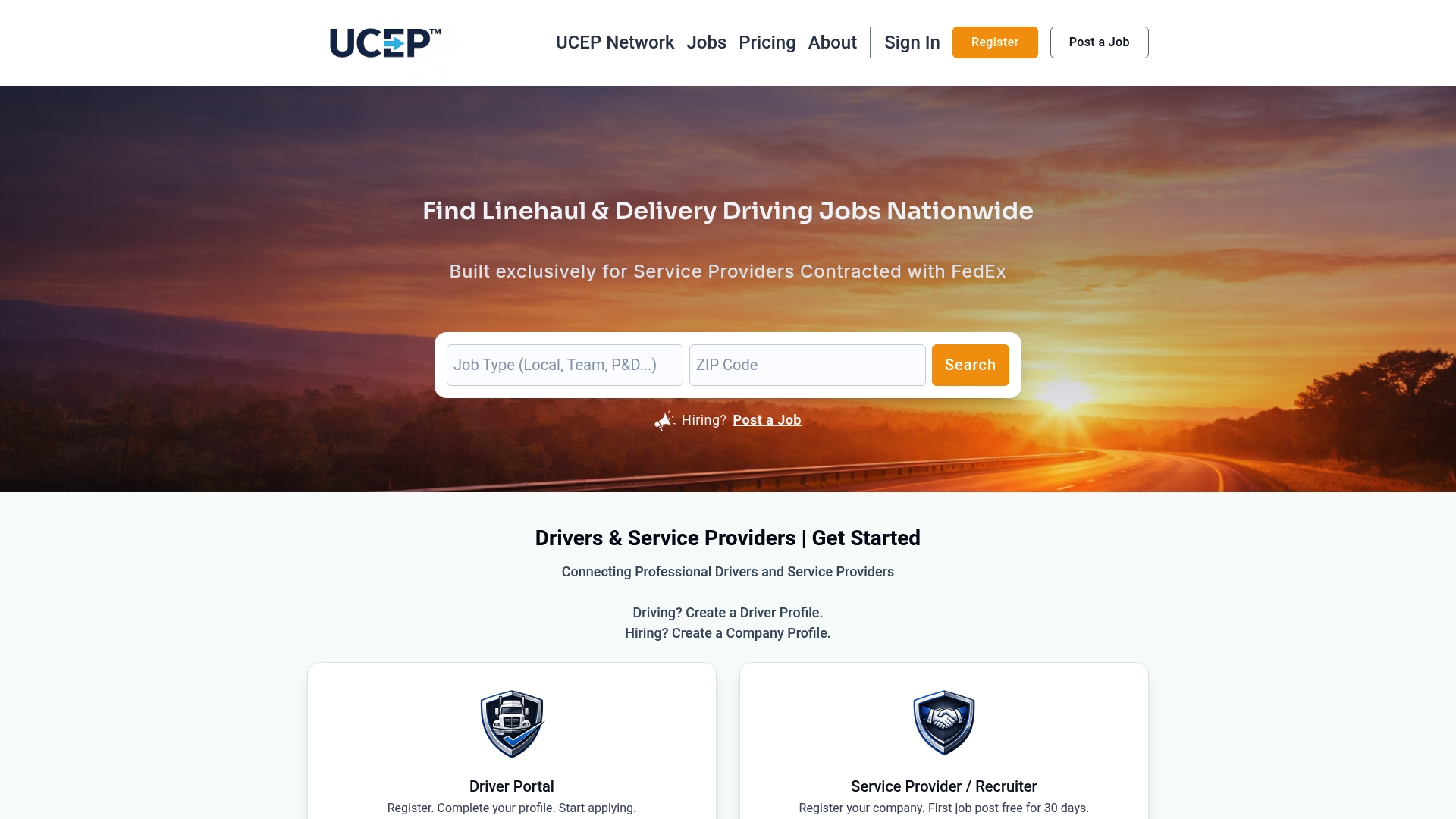
Recruiters using Ucep skip the noise that comes with general boards. The platform's driver-focused filters mean your postings reach candidates who meet the baseline requirements before you spend time on outreach. You can browse companies hiring drivers to see active demand across the network, or review service provider profiles to understand how other operators are positioning themselves to attract top candidates. For Service Providers ready to post, listing a role on Ucep puts your opening in front of the right drivers without the volume problem that comes with general platforms.
FAQ
Why do niche job boards produce better hires than general boards?
Niche boards attract candidates who self-select into a specific industry, which raises match quality before screening begins. Candidate intent and relevancy are the primary advantages over volume-driven general platforms.
How much faster is hiring through a niche board?
Recruiters using specialized platforms report 72% faster hiring compared to general board sourcing, driven by fewer unqualified applicants and higher funnel conversion rates.
Are niche job boards more expensive than general boards?
Listing fees on niche boards can be higher, but total cost-per-hire drops 38% because recruiters spend less time screening irrelevant resumes. The net cost is lower, not higher.
What metrics should I track to compare niche and general board performance?
Track qualified application rate, time-to-fill, and cost-per-hire by source. Source-to-hire conversion data reveals the true efficiency of each platform in your recruiting mix.
How does Ucep differ from a general job board for driver recruiting?
Ucep is built exclusively for FedEx Service Providers, so every posting and candidate on the platform is specific to CDL-A and delivery driver roles within the FedEx contractor network. General boards do not filter for this context.
Recommended
- Why Targeted Job Boards Deliver Better ROI for Service Providers Hiring Drivers - United Contractor Employment Portal
- How UCEP Helps FedEx Service Providers Find Better Driver Candidates - United Contractor Employment Portal
- Driver Jobs for Service Providers Contracted with FedEx | UCEP
- Why Niche Job Boards Give High-Volume Recruiters an Edge | UCEP - United Contractor Employment Portal