
Team driver recruiting strategies are the targeted, multi-channel methods logistics recruiters use to find, screen, and retain qualified CDL-A drivers for team operations. Filling team driver seats is harder than solo roles because you need two compatible, qualified drivers available at the same time. The most effective approaches combine niche job boards like CDLjobs.com and Truckers Report, structured referral programs with tiered bonuses, ATS automation for compliance, and a company culture that drivers actually want to stay in. This guide covers each method with specific steps, platform comparisons, and workflow recommendations built for logistics hiring managers working in 2026.
What are the most effective channels for recruiting CDL-A team drivers?
Niche boards outperform general platforms when candidate quality matters more than raw volume. Indeed delivers the highest volume of CDL applicants, but niche boards like CDLjobs.com and Truckers Report consistently produce better-qualified candidates with relevant experience. That distinction matters when you are hiring for team runs, where both drivers must hold active CDL-A credentials and meet Hours of Service requirements simultaneously.
The table below compares the main sourcing channels by cost, candidate quality, and best-fit use case:
| Platform | Estimated Cost | Candidate Quality | Best For |
|---|---|---|---|
| Indeed (Sponsored) | $5–$25 per application | Moderate | High-volume sourcing |
| CDLjobs.com | $250–$500 per listing | High | Targeted CDL-A hiring |
| Truckers Report | $250–$500 per listing | High | Experienced drivers |
| Facebook Groups/Jobs | Low to free | Variable | Local and regional roles |
| CDL school partnerships | Low overhead | High (entry-level) | Pipeline development |
Beyond job boards, social media plays a real role in team driver recruitment platforms. Facebook Groups focused on trucking and regional freight communities give recruiters direct access to active drivers who are not browsing job boards. These groups work best for regional or dedicated lane openings where location specificity matters.
Partnering with CDL training schools and veterans' transition programs like the Helmets to Hardhats program creates a reliable pipeline of new and disciplined candidates. These partnerships provide access to both entry-level graduates and experienced drivers with structured work habits. Union halls are another underused channel for volume hiring when you need experienced drivers quickly.

Pro Tip: Listings with real pay ranges receive 30–50% more applications than those without. Post on Monday through Wednesday, include photos or video of your equipment, and respond to applicants within two hours. Speed of response is a direct competitive advantage in a tight driver market.
How to design a high-ROI employee referral program for team drivers
Referral drivers perform better, stay longer, and cost less to hire than candidates sourced from job boards. Referral programs rank as the single most cost-effective investment for driver recruiting ROI, particularly in small to mid-size fleets where culture and word-of-mouth carry significant weight.
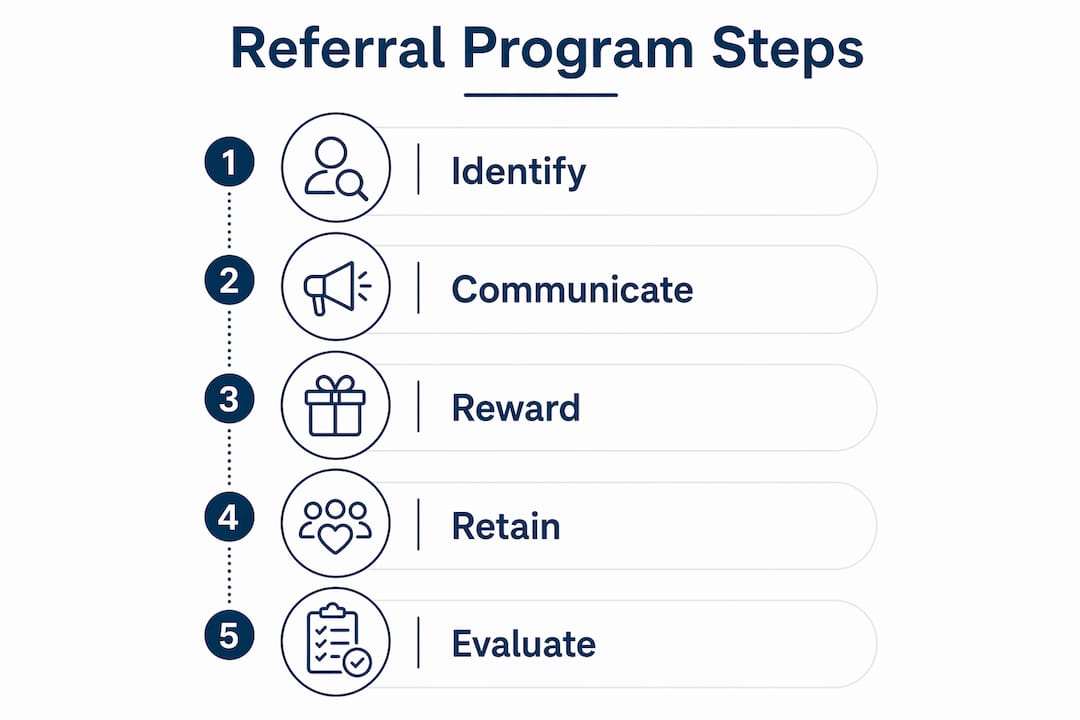
The structure of the bonus matters as much as the amount. Referral bonuses between $500 and $1,500 paid in installments at 90 and 180 days produce the best results. Paying the full bonus upfront removes the retention incentive for the referring driver. Splitting the payout ties the reward to the new hire actually staying, which filters out low-quality referrals from the start.
Here is a step-by-step process for building and running an effective referral program:
- Set the bonus amount and structure. Choose a total bonus between $500 and $1,500 based on your fleet size and hiring budget. Split it into two payments: one at 90 days and one at 180 days of the referred driver's employment.
- Announce the program clearly. Use driver meetings, text messages, and posted notices in your terminal or dispatch area. Drivers need to know the program exists and how it works before they will participate.
- Simplify the submission process. Give drivers a one-page form or a text-based submission option. Friction kills participation. The easier you make it to refer someone, the more referrals you will receive.
- Track every referral in your ATS or a shared spreadsheet. Assign each referral a status and keep the referring driver updated on progress. Silence after a referral discourages future participation.
- Pay on time, without exceptions. Late or missed bonus payments destroy program credibility faster than any other factor. Set calendar reminders for every payout milestone.
- Recognize top referrers publicly. A brief mention at a driver meeting or a note on a bulletin board costs nothing and reinforces the behavior you want.
Pro Tip: Tie the second installment to the 180-day mark specifically because that window covers the highest-risk period for early turnover. Drivers who reach six months are significantly more likely to stay long term, so the payout timing aligns your financial incentive with your retention goal.
How company culture and communication influence driver retention
Drivers prioritize respect, predictable home time, and transparent pay over marginal pay increases. This is one of the most consistent findings in driver recruitment research, and it directly affects how you should position your company to candidates. A $0.02 per mile pay bump will not offset a culture where drivers feel ignored or misled.
Driver recruitment now mirrors consumer marketing. Candidates research your company before they apply. They read reviews on Google and trucking forums, watch equipment videos, and ask other drivers about your management style. Every touchpoint, from your job listing to your first phone call, functions as a brand signal. Recruiters who treat candidate interactions as branding opportunities reduce early dropout rates significantly.
Concrete actions that improve culture and communication include:
- Publish transparent pay structures. Show base pay, team mileage rates, fuel surcharge splits, and any bonus conditions in writing before the first interview.
- Set realistic home time expectations. If your team drivers are out 10 days at a stretch, say so clearly. Drivers who feel misled about home time leave within the first 90 days at a disproportionate rate.
- Create a feedback loop. A monthly check-in call or a short digital survey gives drivers a channel to raise concerns before they become resignation reasons.
- Avoid slogans without substance. Phrases like "family culture" or "driver-first company" mean nothing without supporting policies. Authentic culture demonstration through scheduling practices and respectful communication carries far more weight than marketing language.
The logistics industry trends in 2026 are increasing pressure on service providers to retain experienced drivers. Companies that invest in communication infrastructure now will have a measurable retention advantage as competition for qualified CDL-A drivers intensifies.
What role does ATS automation play in team driver recruiting workflows?
An applicant tracking system built for logistics does more than organize resumes. Top ATS platforms for CDL hiring automate CDL verification, MVR checks, FMCSA Clearinghouse queries, and drug test scheduling in parallel rather than sequentially. Running these compliance steps simultaneously instead of one after another can cut time-to-offer by several days, which matters when qualified team drivers are fielding multiple offers at once.
Mobile-friendly applications with parallel compliance checks reduce candidate dropout during the screening process. A driver who has to mail documents or wait a week for a callback will accept another offer. Short mobile applications that capture CDL data quickly and trigger automated next steps keep candidates engaged through the process.
Key ATS features to prioritize for CDL-A team driver hiring:
- CDL class and endorsement verification integrated directly into the application form
- Automated MVR and Clearinghouse ordering triggered at the conditional offer stage
- Drug test scheduling integration with third-party collection sites
- Document storage with audit trails for DOT compliance documentation
- Pipeline stage visibility so recruiters can see where every candidate stands in real time
Platforms like Workable, Greenhouse, and Jobvite each offer logistics-compatible workflows, though none are built exclusively for CDL hiring. Manual background checks outside an ATS create compliance gaps and documentation delays that expose your operation to audit risk. Integrating these steps into a single system protects both your hiring speed and your regulatory standing.
How to build an active talent pipeline for long-term team driver hiring
A talent pipeline is the pool of qualified, pre-engaged candidates you can contact before a seat opens. Recruiters who build pipelines hire faster, pay less per hire, and experience fewer operational disruptions than those who start sourcing from scratch each time a driver leaves.
Follow these steps to build and maintain an active pipeline:
- Re-engage past applicants every 60 to 90 days. Drivers who applied but were not hired, or who declined an offer, are warm leads. A short message asking if their situation has changed costs nothing and often produces hires.
- Establish formal partnerships with two or three CDL training schools. Attend their job fairs, offer to speak to graduating classes, and provide a point of contact for placement coordinators. These partnerships give you access to new CDL holders before they commit to another carrier.
- Connect with veterans' transition programs and union halls. These sources produce disciplined, reliable candidates with structured work experience. Programs like the DOL's Transition Assistance Program place veterans with CDL credentials into civilian driving roles.
- Use a CRM or your ATS to track pipeline contacts. Log every interaction, note the driver's availability window, and set follow-up reminders. Untracked pipelines decay quickly.
- Implement a structured onboarding program. Structured onboarding improves retention by up to 82% and the first 90 days carry the highest turnover risk. A program that includes equipment orientation, policy review, mentor assignment, and scheduled check-ins reduces early exits significantly.
- Conduct quarterly pipeline audits. Review your sourcing channels, cost per hire, time to fill, and 90-day retention rates. Adjust your channel mix based on what the data shows, not assumptions.
Understanding what it takes to succeed as a team driver helps recruiters screen for the right fit from the start, which reduces pipeline waste and improves first-year retention.
Key takeaways
Effective team driver recruiting requires combining targeted sourcing channels, structured referral programs, ATS automation, and a culture of transparent communication to reduce turnover and improve candidate quality.
| Point | Details |
|---|---|
| Use niche job boards | CDLjobs.com and Truckers Report yield higher-quality CDL-A candidates than general platforms. |
| Structure referral bonuses | Pay $500–$1,500 in installments at 90 and 180 days to tie rewards to retention. |
| Automate compliance steps | ATS platforms that run CDL verification, MVR, and Clearinghouse checks in parallel cut time-to-offer. |
| Lead with transparency | Drivers research your reputation before applying; honest pay and home time details reduce early dropout. |
| Build a proactive pipeline | Re-engage past applicants, partner with CDL schools, and audit your pipeline quarterly to avoid hiring droughts. |
What I've learned about recruiting team drivers in 2026
The biggest shift I have observed in driver recruiting over the past few years is that the candidate now holds more information than the recruiter expects. Drivers talk to each other. They check your Google reviews before they call back. They know what your competitors pay. Recruiters who still lead with vague "competitive pay" language and generic benefit lists are losing candidates to companies that simply publish their numbers upfront.
Speed is the second factor most recruiters underestimate. A qualified CDL-A team driver who submits an application on Monday morning and does not hear back by Monday afternoon is likely talking to someone else by Tuesday. The companies winning in this market are not necessarily offering the highest pay. They are responding faster, communicating more clearly, and making the application process easier on a mobile device.
The third thing I would push back on is the assumption that culture is a soft factor. Turnover in the first 90 days is almost always a culture or expectation mismatch, not a pay problem. Drivers who leave quickly usually say the job was not what they were told it would be. That is a recruiter and onboarding failure, not a compensation failure. Fix the communication before you raise the bonus.
Technology and personal contact are not competing approaches. The best recruiting operations use ATS automation to handle compliance and pipeline tracking, then use the time saved to make more personal calls, follow up faster, and build real relationships with candidates. Niche job boards give high-volume recruiters an edge precisely because they reduce noise and let you focus that personal attention on drivers who are actually qualified.
— Aaron
How Ucep supports your team driver recruiting efforts
Ucep is a dedicated recruiting platform built exclusively for Service Providers contracted with FedEx, covering CDL-A team, CDL-A solo, linehaul, and pickup and delivery roles. If you are a recruiter or hiring manager sourcing team drivers for FedEx-contracted operations, Ucep removes the noise of general job boards and connects you with drivers who are specifically looking for these roles.
You can browse vetted service provider profiles to assess partners, explore the full Ucep network for sourcing support, or view the current list of companies hiring CDL drivers to see how other service providers are positioning their openings. Ucep also helps you improve candidate quality by focusing exclusively on the FedEx service provider market, where driver fit and route familiarity matter most.
FAQ
What are team driver recruiting strategies?
Team driver recruiting strategies are structured, multi-channel approaches logistics recruiters use to attract, screen, and retain CDL-A drivers for team operations. They typically include niche job boards, employee referral programs, ATS automation, and culture-focused retention practices.
Which job boards work best for CDL-A team driver hiring?
CDLjobs.com and Truckers Report consistently produce higher-quality CDL-A candidates than general platforms like Indeed, though Indeed delivers the highest application volume. Listings with real pay ranges receive 30–50% more applications regardless of platform.
How much should a driver referral bonus be?
Referral bonuses between $500 and $1,500 deliver the best ROI when paid in two installments at 90 and 180 days of the referred driver's employment. This structure ties the reward to retention and discourages low-quality referrals.
How does an ATS improve CDL-A driver recruiting?
An ATS built for logistics automates CDL verification, MVR checks, Clearinghouse queries, and drug test scheduling in parallel, which shortens time-to-offer and reduces compliance gaps. Mobile-friendly applications further reduce candidate dropout during screening.
Why do team drivers leave within the first 90 days?
Early turnover is most often caused by a mismatch between what drivers were told during recruiting and what the job actually involves. Transparent communication about pay, home time, and route expectations during the hiring process is the most direct way to reduce 90-day attrition.