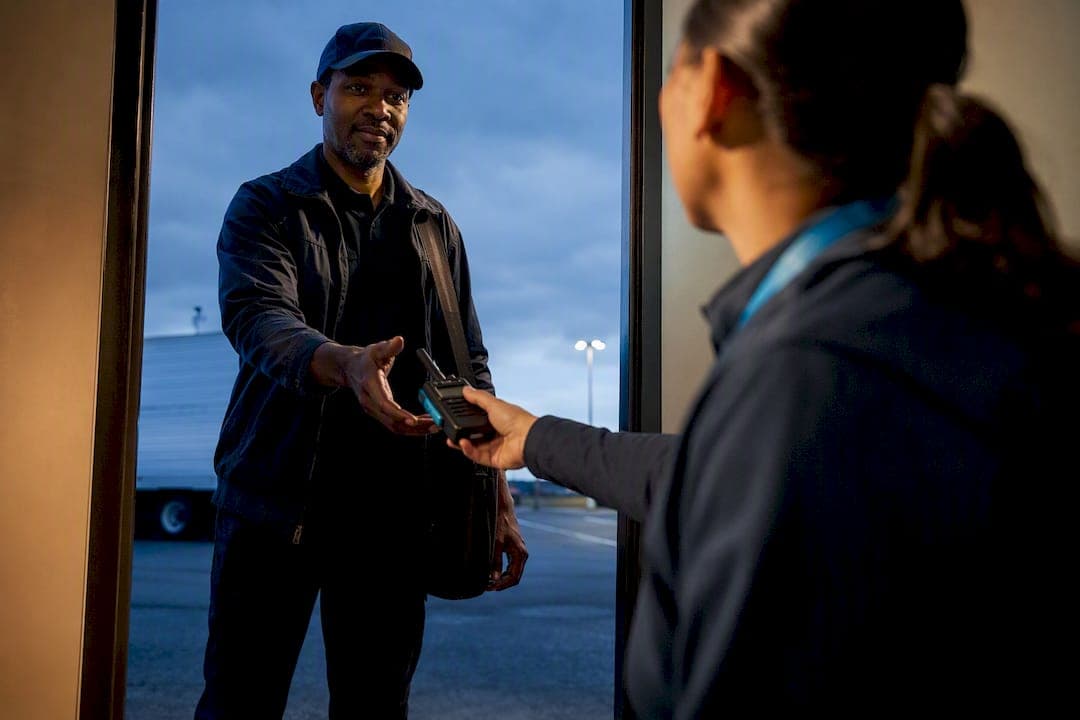
The fastest way to reduce driver no shows is to fix five points in the hiring pipeline: compress offer-to-seat time, deliver a realistic job preview with real pay math, run a reputation check before you make the offer, build a structured 30/60/90 onboarding cadence, and put pay transparency in writing before Day 1. Confirmation and reminder fixes show results in 2 to 4 weeks; full onboarding gains build over 8 to 12 weeks.
TL;DR:
- Confirmed logistics details, layered communication, and a designated onboarding owner significantly reduce driver no-shows within the first week.
- Conducting reputation checks about attendance and abandonment after safety checks uncovers behavioral risks that traditional screening misses.
- Structured 30/60/90 onboarding with weekly check-ins and clear pay expectations increases first-year retention by up to 60 percent.
- Implementing a 48-72 hour confirmation window with multi-channel reminders and seat-release rules cuts same-day no-shows within two to four weeks.
- Building a backup driver pool and establishing real-time communication support prevent last-minute cancellations and shorten response times.
Table of Contents
- What Immediate Steps Reduce No-Shows This Week?
- Why Standard Screening Misses No-Show Risk
- Building a 90-Day Onboarding Plan That Sticks
- Pay and Scheduling Designs That Remove Uncertainty
- How Do Confirmation Workflows Stop Same-Day No-Shows?
- What KPIs Prove Your No-Show Fixes Are Working?
- Implementing Flexible Scheduling and Shift Swaps
- Giving Drivers a Real Point of Contact for Last-Minute Issues
- Backup Driver Pools for Same-Day Coverage
- Getting Past Categories: What Drivers Actually Tell You
- Using Mobile Apps and Automated Notifications
- What Aaron at UCEP Has Learned From Watching This Play Out
- Hire FedEx-Experienced Drivers Without the Guessing
- Sources
- FAQ
What Immediate Steps Reduce No-Shows This Week?
You don't need a new hiring system to see movement. You need to remove the gaps where candidates lose momentum or start doubting the offer. The Truckingrecruiting frames this as a speed and communication problem first, not a compensation problem.
Start with these five moves:
- Compress offer-to-seat. Run Clearinghouse and MVR checks in parallel instead of sequentially, and lock a firm orientation date before paperwork is fully signed.
- Confirm logistics in writing. Travel, lodging, orientation start time, and first pay date should all be spelled out, not implied.
- Send layered confirmations. A text, an email, and a phone call between offer acceptance and Day 1 catch people before they drift.
- Hand over a one-page job preview. Real pay math and home-time commitments, not a recruiting pitch.
- Name one onboarding owner. A single point of contact from offer through first dispatch closes the coordination gaps that cause silent drop-offs.
Why Standard Screening Misses No-Show Risk
MVR, PSP, Clearinghouse, and DAC reports tell you about safety violations, crashes, and drug and alcohol history. None of them tell you whether a driver has a pattern of skipping orientation or abandoning a truck mid-route. That's a blind spot most Service Providers don't realize they have until it costs them a seat.
The fix is a reputation layer, run after required checks clear and before you extend the offer:
- Ask the candidate's most recent carrier directly about attendance and any abandonment incidents, framed as a standard reference check.
- Use plain permission language: "We verify employment history and attendance record with previous employers as part of our hiring process."
- Document every response, including a "no comment" or refusal to answer, since that pattern itself is informative.
- Treat two or more unexplained no-shows at a prior carrier as a flag worth a direct conversation, not an automatic disqualifier.
The driver no-show playbook points out that required records rarely capture attendance or abandonment behavior at all, which is exactly why this step gets skipped and exactly why it matters.
Pro Tip: Keep the reputation check conversational and reciprocal. Recruiters who share a bit about the new lane or schedule first tend to get more candid answers about the candidate's history in return.
Building a 90-Day Onboarding Plan That Sticks
A driver who no-shows on day 12 usually showed warning signs on day one. Structured onboarding with daily Week 1 check-ins and formal 30/60/90 reviews raises first-year retention by 40 to 60% compared to a sign-and-dispatch approach.
Before arrival:
- Confirm the DQ file, ELD credentials, fuel card, and first load are ready.
- Schedule the first pay review so nobody is guessing about their first settlement.
On Day 1:
- Make a live welcome call, not a recorded voicemail.
- Walk through the equipment together.
- Put the home-time promise in writing, signed by both sides.
Through the first month:
- Week 1: brief daily check-ins, five minutes is enough, to catch problems before they become resignations.
- Weeks 2 through 4: shift to mid-week check-ins and run the first pay-accuracy audit against what was promised at hire.
- 30/60/90 reviews: formal sit-downs that cover attendance incentives, any pay corrections, and a real conversation about career path, not just a box-checking form.
Our 90-day onboarding checklist breaks this cadence down further if you want templates for each check-in. Small fleet guidance also stresses starting the drug test and Clearinghouse queries immediately after offer acceptance, since that turnaround often decides whether the DQ file is ready before the first dispatch date.
Pay and Scheduling Designs That Remove Uncertainty
Most no-shows aren't about money. They're about not trusting the money. A candidate who can't predict their paycheck will assume the worst and disappear rather than ask.
Show pay math before the offer, not after. Walk the candidate through a sample week, stops paid, fuel surcharge if applicable, and net take-home, so the first real settlement matches what they expected.
A few proven design levers:
- Daily minimum guarantees (an example figure used industry-wide is $160/day) convert stop-count variability from a risk into a floor.
- Tiered per-stop pay rewards volume without punishing a slow route day.
- Attendance and seasonal bonuses, commonly $50 to $100 per week for perfect attendance or $75 to $150 monthly, give drivers a reason to show up on a rough morning.
- Predictable days off with a simple time-off request process, so drivers aren't forced to no-show just to handle a personal matter.
- Low-cost benefits, like a health stipend or PTO after a 90-day probation, that signal the job is stable past the first paycheck.
A daily minimum often does more for retention than an across-the-board rate hike, because it removes the anxiety of a bad day rather than just paying more for an average one.
How Do Confirmation Workflows Stop Same-Day No-Shows?
Same-day no-shows are usually a communication failure, not a change of heart. Fixing confirmation timing alone produces measurable drops within 2 to 4 weeks.
- Set a 48 to 72 hour confirmation cutoff and require explicit acceptance, not silence as consent.
- Send an SMS reminder at 48 hours, an email at 24 hours, and a phone call the morning of orientation.
- Include a logistics checklist in every reminder: parking, exact check-in location, a live contact number, and lodging details if travel is involved.
- Build a seat-release rule for non-response, so a phantom hold doesn't block a seat another driver could fill.
Pro Tip: Route the morning-of call through the same onboarding owner who handled the offer. A familiar voice gets a callback faster than a number the driver doesn't recognize.
What KPIs Prove Your No-Show Fixes Are Working?
Track these numbers monthly, not quarterly, or you'll miss the early signal that something's off:
- No-show rate, split by offer-to-orientation and orientation-to-first-dispatch, since they usually have different causes.
- First-30-day attrition, which tells you whether onboarding is holding.
- Onboarding completion accuracy, meaning how often the DQ file, ELD, and pay setup were actually ready on time.
- Pay dispute volume, an early warning sign for broken promises.
Categorize every no-show incident by root cause and assign a corrective owner, not just a note in a spreadsheet. Run a monthly review to update recruiting scripts, job previews, and onboarding checklists based on what that data shows. If you want to test before rolling changes fleet-wide, pick two terminals, implement three changes, and measure the impact over 60 days.
Implementing Flexible Scheduling and Shift Swaps
Rigid schedules push drivers toward silent no-shows instead of honest conversations. A driver with a sick kid or a car in the shop who has no legitimate way to swap a shift often just doesn't show up, because asking feels like it will cost them the route.
Build a peer-to-peer swap system with dispatcher approval as a safety net, not a bottleneck. Drivers post a shift they need covered, a qualified peer picks it up, and dispatch confirms the swap meets hours-of-service and route-familiarity requirements before it's final. This works especially well on pickup and delivery routes with overlapping territories, where more than one driver already knows the stops.
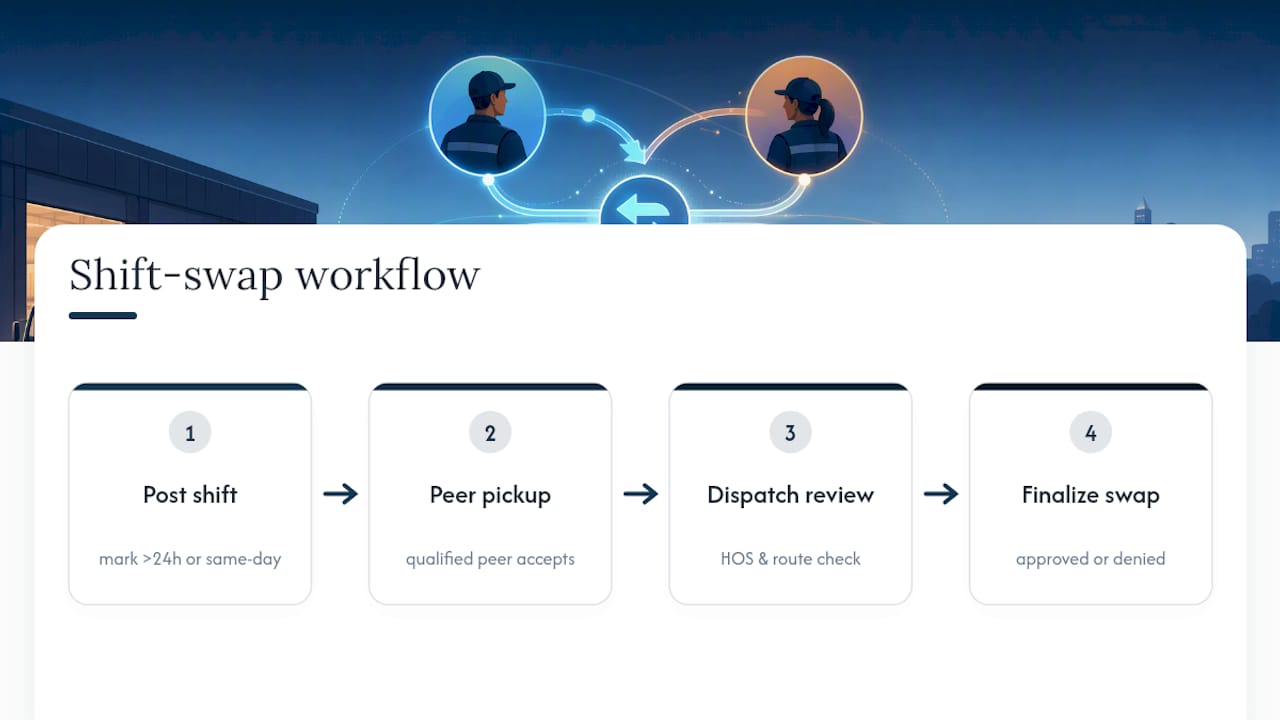
Publish the rule in writing during onboarding: swaps requested more than 24 hours out get approved fast; same-day swaps go through the onboarding owner or dispatcher directly rather than a driver group chat. That single rule prevents most of the confusion that turns a legitimate scheduling conflict into an unexplained no-show.
For CDL linehaul roles where swaps are harder because of route certifications, build a smaller pool of cross-trained backup drivers who can legally run that same lane. It costs more to maintain than a pickup and delivery swap pool, but it closes the same gap: a driver with a real conflict has an outlet other than silence.
Giving Drivers a Real Point of Contact for Last-Minute Issues
A driver whose truck won't start at 4:00 AM and who has no idea who to call will often just go back to bed. That's not a discipline problem. It's a support gap.
Every Service Provider running multiple routes needs a dedicated contact number that's staffed, or at minimum monitored, during actual dispatch hours, not just business hours. This doesn't need to be a call center. For smaller operations, it can be the onboarding owner's direct line during the first 90 days, then a rotating dispatcher line after that.
The point of contact needs authority to make small decisions on the spot: approve a late start, redirect to a nearby terminal for a mechanical issue, or confirm a swap in real time. A hotline that just takes messages and promises a callback later loses the driver's trust the first time it's used.
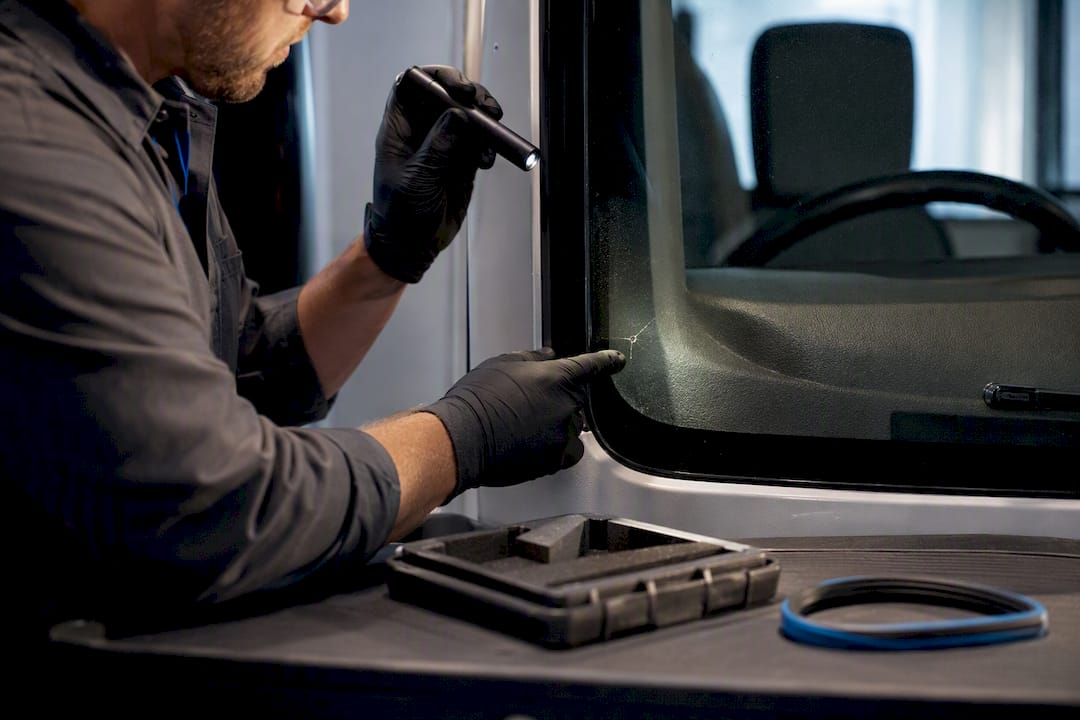
Equipment issues deserve their own fast track. A cracked windshield or a warning light shouldn't sideline a route for a day if there's a pre-approved vendor list ready to go; semi truck windshield replacement alone can run from a few hundred dollars to over a thousand depending on the glass and calibration required, and knowing that cost and timeline in advance keeps a driver moving instead of stuck waiting on approval.
Backup Driver Pools for Same-Day Coverage
No matter how good your prevention system is, some no-shows will still happen. What separates a Service Provider that absorbs the hit from one that loses a customer is whether a backup driver exists before the call comes in.
Build a rotating pool of drivers who've agreed in advance to pick up open routes on short notice, usually in exchange for a per-fill bonus or first pick of overtime hours. Two or three backup drivers per ten active routes is a reasonable starting ratio for pickup and delivery operations; CDL linehaul lanes typically need a smaller, route-certified pool given the licensing and hours-of-service constraints.
Keep the pool warm. A backup driver who hasn't run a route in three months isn't really a backup, they're a stranger to the customers and stops on that lane. Rotate pool members through live routes periodically so the coverage is real, not theoretical.
Pair the backup pool with a fast internal notification. If dispatch doesn't know about a no-show until 20 minutes before the route starts, even a strong backup pool won't save the day. That's a scheduling and communication fix, not a staffing fix, and it belongs in the same conversation as your confirmation workflow.
Getting Past Categories: What Drivers Actually Tell You
Categorizing no-shows by reason (illness, transportation, family emergency, no reason given) tells you what happened. It doesn't tell you why it keeps happening to the same terminal, the same shift, or the same job type.
Qualitative feedback fills that gap. A short, low-pressure exit or stay interview with drivers who've had a near-miss no-show, meaning they called in late but showed, uncovers patterns a category label never will. Maybe the parking situation at one terminal makes drivers arrive stressed and late. Maybe a specific dispatcher's tone during the confirmation call is driving hesitation.
Run this as a five-minute conversation, not a survey nobody fills out. Ask two questions: what almost made you miss this shift, and what would have made showing up easier. Log the answers verbatim where possible, then look for repeated language across drivers, not just repeated categories.
This kind of root cause work pairs naturally with the common first-year CDL driver challenges that show up during Week 1 and Month 1 check-ins. The same conversations that catch onboarding friction early also surface the quiet reasons behind late no-shows before they become a pattern.
Using Mobile Apps and Automated Notifications
Manual confirmation calls don't scale past a handful of new hires a month. Automated multi-channel reminders do the heavy lifting so your onboarding owner isn't manually texting every driver on the roster every single week.
A basic notification stack covers three jobs: automated SMS and email reminders on the 48 and 24 hour cutoffs described earlier, a two-way channel for drivers to confirm or flag a problem without calling anyone, and a dispatcher-facing dashboard that flags non-responses early enough to trigger the seat-release rule instead of finding out at start time.
Mobile apps built for driver communication also support the swap and backup-pool systems described above, letting a driver post an open shift or accept a fill from their phone instead of a phone tree. The technology matters less than the discipline behind it: automated reminders only work if someone is watching the non-response flags and acting on them the same day, not the same week.
What Aaron at UCEP Has Learned From Watching This Play Out
Service Providers rarely lose drivers over one bad decision. They lose them over five small broken promises stacked on top of each other. The recruiters who fix offer-to-seat speed and pay transparency first, before touching bonuses or apps, see the fastest movement. Try it: run this checklist in two terminals for 30 days and track no-show rate against 30-day retention.
— Aaron
Hire FedEx-Experienced Drivers Without the Guessing
Ucep is built specifically for FedEx-contracted Service Providers, which means every candidate you reach through it already understands the pay structure, the route expectations, and the compliance standards this article just walked through. That specialization gives you a targeted pool of FedEx-experienced drivers instead of a general trucking job board where you're screening out mismatched applicants one by one.
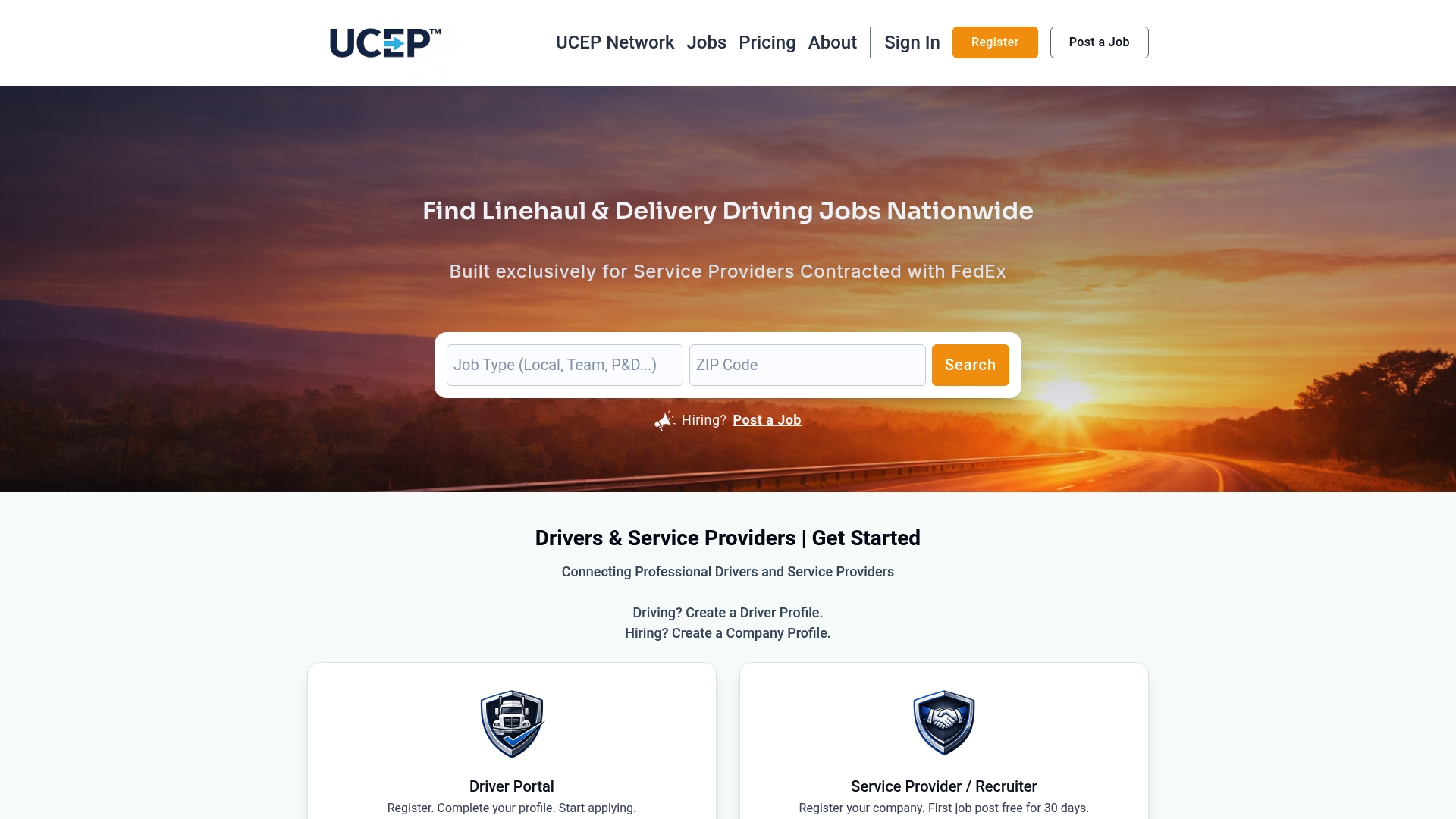
Faster access to the right candidates means a shorter offer-to-seat window, one of the highest-leverage fixes for reducing no-shows. Employer directories, applicant tracking systems, and targeted driver alerts can help move qualified candidates from application to confirmed start date without coordination gaps that cause silent drop-offs. Browse open pickup and delivery, CDL-A solo, and CDL-A team linehaul roles to see the current candidate pool, or start with a Complimentary Trial Listing to test the platform before committing to the Standard Monthly Plan at $99 per month.
Sources
For deeper detail on onboarding cadence, DOT screening, and confirmation workflows, see the FleetWage retention guide and the O Trucking onboarding checklist.
- How to retain newly hired drivers and reduce early-tenure turnover | FleetOwner
- Driver Retention Guide for FedEx ISP Contractors (2026) | FleetWage
- Cut Driver No-Shows & Truck Abandonment: A Playbook
FAQ
How Long Does It Take to Reduce Driver No-Shows?
Confirmation and communication fixes typically show measurable results within 2 to 4 weeks, while structured onboarding gains build over 8 to 12 weeks.
What's the Single Biggest Cause of Driver No-Shows?
Broken promises about pay, home time, or lane assignment made during recruiting drive most early no-shows, which is why realistic job previews matter more than most recruiters expect.
Do MVR and Clearinghouse Checks Catch No-Show Risk?
No. Those checks cover safety violations and drug and alcohol history, not attendance or truck-abandonment history, which is why a separate reputation check before the offer closes that gap.
How Much Does a Daily Minimum Guarantee Help Retention?
Daily minimums, often cited around $160 per day, remove pay anxiety on slow stop-count days and tend to outperform an across-the-board rate increase for the same cost.
Can UCEP Help Reduce No-Shows Directly?
Ucep won't run your onboarding calls for you, but its targeted pool of FedEx-experienced drivers and faster application workflows shorten offer-to-seat time, one of the highest-leverage fixes for preventing no-shows before they happen.