
Posting FedEx driving jobs effectively is defined as the practice of crafting specific, transparent job listings that communicate pay, schedule, equipment, and operational realities upfront to attract qualified CDL drivers and reduce costly turnover. Service providers contracted with FedEx operate as independent businesses, which means your recruiting results depend entirely on the quality of your job postings and where you place them. Generic ads produce generic applicants. This guide gives you a structured approach to writing, distributing, and aligning your job postings with the operational realities drivers will actually experience on the job.
What should FedEx driving job posts include for maximum effectiveness?
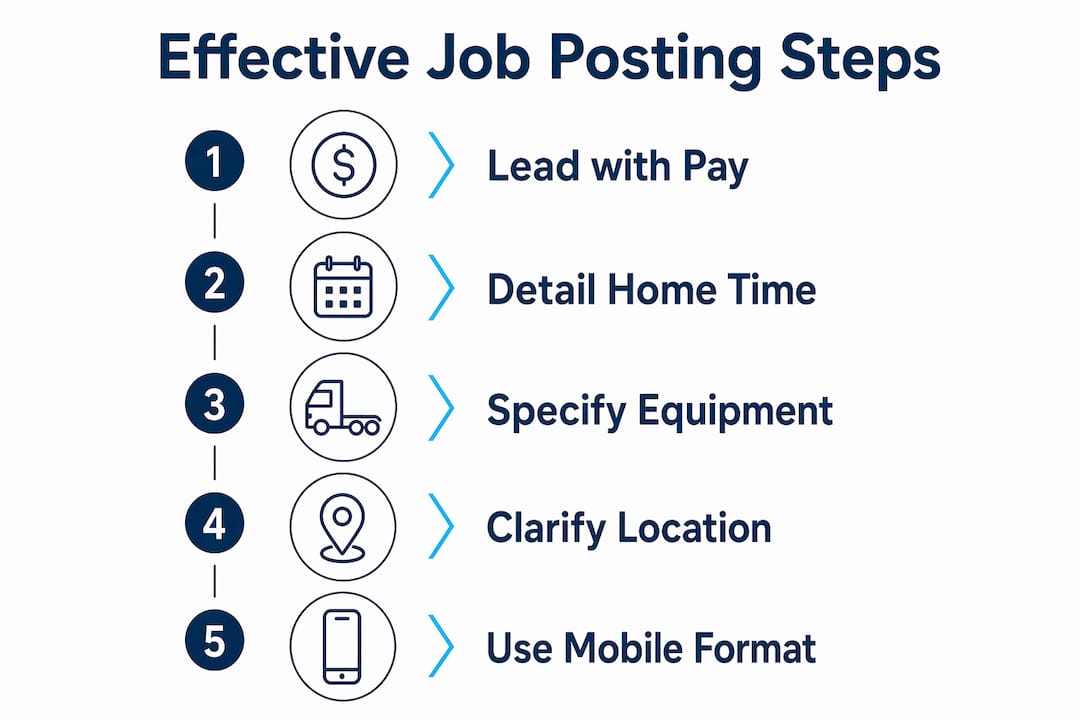
The most effective FedEx driver job postings lead with four pieces of information: pay, home time, equipment, and location. 70% of drivers browse job postings on mobile devices and disengage immediately if pay or home time details are buried. That means your top information must appear in the first 150 words of every posting.
Pay structure: be specific
Vague pay language is the single fastest way to lose a qualified applicant. Job postings with specific pay ranges generate 30–50% more applications than those using phrases like "competitive pay." State the exact CPM rate, daily rate, or stop-based pay structure. Then explain how experience, endorsements, or performance bonuses affect earnings. Drivers want to calculate their weekly take-home before they apply. Give them the numbers to do it.

Headline formula that works
Structured headlines that combine pay, equipment type, lane or route, and location consistently outperform generic titles. A headline like "CDL-A Solo Driver | $1,400/Week | Regional Lanes | Dallas, TX" tells a driver everything they need to decide whether to click. A headline like "Truck Driver Needed" tells them nothing.
Here is a checklist of what every FedEx driving job post must include:
- Pay: Exact CPM, daily, or stop-based rate with bonus structure explained
- Home time: Specific schedule (example: "Home every Friday evening through Sunday noon")
- Equipment: Make, model year, and whether the truck is maintained by the company
- Route type: Regional, linehaul, pickup and delivery, or CDL-A team
- CDL requirements: Class A or B, endorsements required, minimum experience in years
- Application process: Clear, simple steps with a direct contact or apply link
Pro Tip: Write your posting as if the driver is reading it on a phone while sitting in a truck stop parking lot. Short paragraphs, bullet points, and bold labels for key details will keep them reading instead of scrolling past.
Mobile-friendly formatting with short paragraphs and bullet points improves both applicant quality and completion rates. Walls of text signal disorganization to experienced drivers.
Which recruitment channels yield the best FedEx driver candidates?
Posting on a single general job board is not a recruiting strategy. Overreliance on large job boards like Indeed underestimates the value of localized and specialized channels that produce better-fit candidates for FedEx contractor roles. Spread your postings across multiple channels and track which ones convert.
Here are the channels that consistently produce qualified FedEx driver applicants in 2026:
- CDL-specific job boards: Sites like CDLjobs.com and TruckersReport attract drivers who are actively looking for commercial driving work. These platforms draw a more targeted audience than general employment sites.
- Niche contractor portals: Ucep is built exclusively for FedEx service providers and connects your posting directly to drivers who understand the contractor model. This improves candidate fit from the first application.
- CDL schools and training programs: Local CDL schools maintain job boards and placement programs. Posting there reaches newly licensed drivers before they commit to another employer.
- Referral networks: Your current drivers know other drivers. A structured referral bonus program turns your existing workforce into a recruiting channel. Referral networks consistently produce higher-quality candidates than cold job board applications.
- Facebook trucking groups and local classifieds: Regional Facebook groups for CDL drivers and local classifieds reach drivers who are not actively job hunting but are open to better opportunities.
- Your company website: A dedicated careers page with your current openings builds credibility and gives drivers a place to learn about your operation before applying.
Allocate your advertising budget based on conversion data, not assumptions. Track applications, interviews, and hires by source. Shift spending toward the channels that produce drivers who stay past 90 days. That metric matters more than raw application volume. You can also review niche board ROI data to benchmark your channel performance against other FedEx service providers.
How do realistic job postings reduce turnover and improve retention?
Treating recruiting as an operational system, not just a marketing exercise, is the defining difference between service providers with stable driver pools and those in constant hiring mode. Turnover is a direct financial cost. Every driver who leaves in the first 60 days represents recruiting spend, training time, and lost route coverage.
The fix starts in the job posting itself. Here is what operational alignment looks like in practice:
- Dispatch communication: Describe how dispatch works. Do drivers receive routes the night before or morning of? Is there a dedicated dispatcher or a shared line? Drivers who know what to expect on day one are less likely to quit by week three.
- Equipment maintenance: State who handles repairs and how quickly. A driver who finds out on day five that they are responsible for coordinating their own truck repairs will not stay long if that was not disclosed upfront.
- Pay transparency: Pay structure clarity is non-negotiable. Drivers who misunderstand how their pay is calculated are among the highest early-churn risks. Spell out exactly how stop counts, mileage, and bonuses translate to a weekly paycheck.
- Onboarding support: Early onboarding support including 30/60/90-day check-ins and mentoring reduces early turnover. Mention this in your posting. It signals that you invest in your drivers, which attracts candidates who plan to stay.
- Realistic expectations: Do not describe the role as easier or more flexible than it is. Overpromising creates mismatched hires. A driver who applies knowing the full picture is a driver who stays.
Pro Tip: Before publishing a new job posting, have one of your current drivers read it. Ask them if it accurately describes the job. If they say no, revise it before it goes live.
| Posting Element | Impact on Retention |
|---|---|
| Specific pay structure | Reduces early churn from pay misunderstandings |
| Accurate home time schedule | Prevents schedule-related resignations in first 30 days |
| Equipment and maintenance details | Sets realistic daily expectations for drivers |
| Onboarding support mentioned | Attracts candidates who plan to stay long term |
| Dispatch process described | Reduces first-week surprises that lead to early exits |
Structured onboarding and realistic job posts reduce turnover risk most sharply in the first 90 days. That window is where most mismatched hires exit, and where your recruiting investment is most at risk.
What common mistakes drive away qualified FedEx driver applicants?
Most FedEx driving job postings fail for the same predictable reasons. Recognizing these mistakes lets you fix them before they cost you qualified candidates.
- Vague pay language: "Competitive pay" and "pay based on experience" tell a driver nothing. Experienced CDL drivers skip these postings entirely because they have seen too many that overpromise and underdeliver.
- Buried home time details: If a driver has to read six paragraphs to find out when they get home, they will not read six paragraphs. Home time goes in the first section, every time.
- Copy-pasted generic descriptions: Generic copy-paste job ads repel qualified applicants who can immediately tell the posting was not written for the actual role. Write each posting for the specific route, equipment, and schedule you are hiring for.
- Missing CDL requirements: Failing to specify whether you need a Class A or Class B license, what endorsements are required, and how many years of experience you expect wastes everyone's time. Unqualified applicants apply. Qualified ones move on.
- Complicated application processes: A multi-step application with a lengthy form, required account creation, and no clear timeline will lose drivers at the first friction point. Make applying take less than five minutes.
- Desktop-only formatting: Long paragraphs with no visual breaks are unreadable on a phone screen. Format every posting for mobile first.
A job posting is often the first impression a driver has of your operation. A disorganized, vague, or generic posting signals a disorganized, vague, or generic employer. Specificity and professionalism in your ad attract drivers who take their work seriously.
You can review what it takes to succeed as a FedEx team driver to better understand what qualified candidates are actually looking for before they apply.
Key takeaways
Posting FedEx driving jobs effectively requires specific pay, accurate operational details, and multi-channel distribution to attract qualified drivers and reduce early turnover.
| Point | Details |
|---|---|
| Lead with pay and home time | Place exact pay rates and schedule details in the first 150 words of every posting. |
| Use CDL-specific channels | Platforms like Ucep and CDLjobs.com produce better-fit candidates than general job boards. |
| Align postings with operations | Describe dispatch, equipment, and onboarding accurately to reduce mismatched hires. |
| Avoid vague language | Replace "competitive pay" with exact figures to generate 30–50% more applications. |
| Format for mobile | Use short paragraphs and bullet points so drivers can read your posting on any device. |
What i have learned about posting FedEx driver jobs that actually work
After working closely with FedEx service providers across multiple contracting environments, the pattern is consistent. The operations with the lowest turnover are not the ones paying the most. They are the ones whose job postings match what drivers actually experience on day one.
The most common mistake I see is treating the job posting as a marketing document instead of an operational agreement. Recruiters write what they think will attract applicants. What actually works is writing what is true. Drivers talk to each other. A posting that overpromises gets you one hire and a bad reputation in the local CDL community.
The second lesson is that posting frequency matters less than posting quality. One well-written, accurate, mobile-formatted posting on Ucep and CDLjobs.com will outperform five vague postings spread across general boards. Concentrate your effort on fewer, better placements.
Finally, treat your job posting as a living document. Review it every 60 days. If your pay structure changed, update the posting. If your equipment fleet changed, update the posting. Drivers who apply based on outdated information become drivers who quit based on unmet expectations. Keeping your postings current is one of the lowest-effort, highest-impact things you can do for retention. You can also track how the broader FedEx Network 2.0 changes affect what drivers expect from service provider roles, and adjust your postings accordingly.
— Aaron
How Ucep helps you post FedEx driving jobs and find better candidates
Ucep is built exclusively for FedEx service providers. Every driver on the platform is looking for FedEx-related work, which means your posting reaches candidates who already understand the contractor model and the demands of the role.
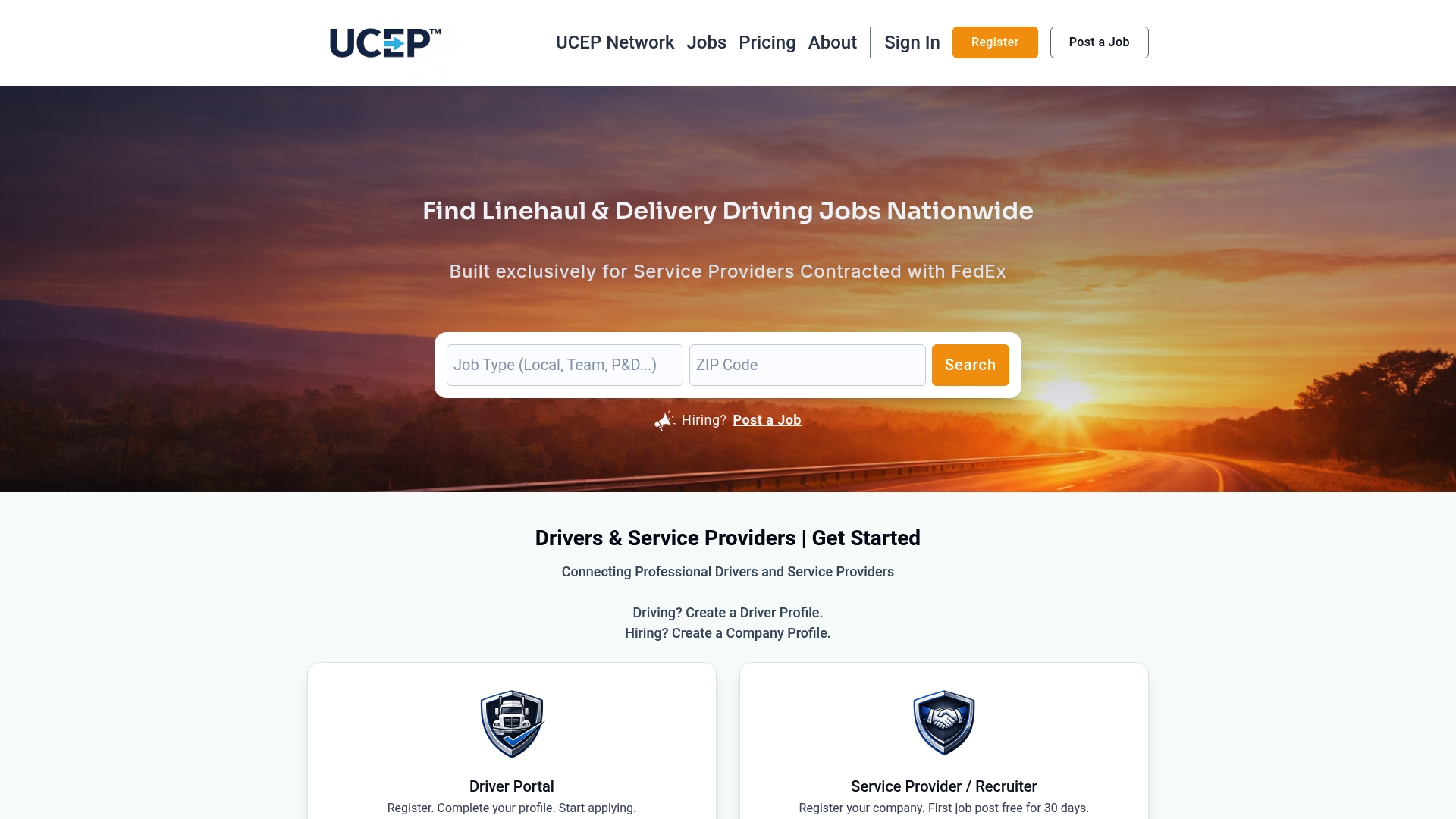
When you post a job on Ucep, your listing reaches a focused pool of CDL-A drivers across linehaul, team, solo, and pickup and delivery roles. You are not competing with warehouse jobs or local delivery gigs for attention. You are in front of drivers who want exactly what you are offering. Read what other service providers say about their hiring results on the platform, and see whether Ucep fits your recruiting workflow.
FAQ
What information should appear first in a FedEx driving job post?
Pay rate, home time schedule, equipment type, and route location should appear in the first 150 words. Drivers browsing on mobile disengage immediately if these details are buried.
How much do specific pay ranges improve FedEx driver applications?
Job postings with specific pay ranges generate 30–50% more applications than postings using vague language like "competitive pay." State the exact CPM, daily, or stop-based rate.
Which job boards work best for finding FedEx driver candidates?
CDL-specific platforms like Ucep, CDLjobs.com, and TruckersReport produce better-fit candidates than general boards. CDL schools and driver referral programs also yield high-quality applicants.
How do job postings affect FedEx driver retention?
Postings that accurately describe pay structure, dispatch processes, and onboarding support reduce mismatched hires. Structured onboarding combined with realistic job posts lowers turnover risk most sharply in the first 90 days.
How often should FedEx service providers update their job postings?
Review and update every posting at least every 60 days. Any change to pay, equipment, or scheduling must be reflected immediately to avoid mismatched expectations and early driver exits.