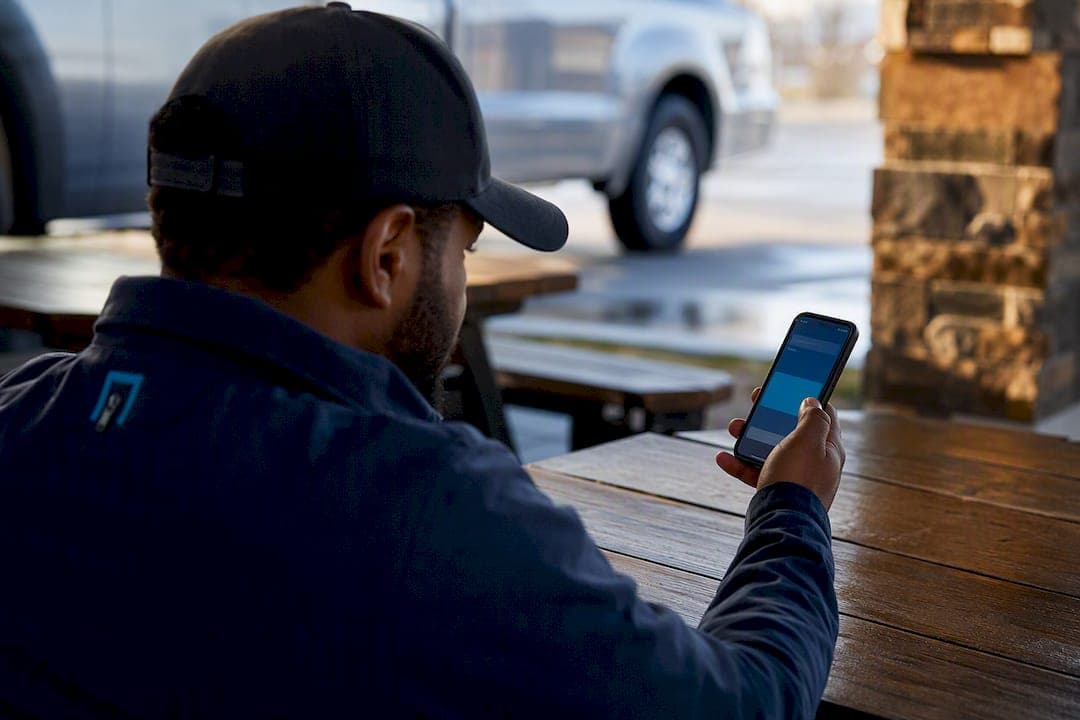
Effective candidate messaging for drivers puts exact pay and home time in the first line, gives one clear call to action, and sends the driver to an application that finishes in under five minutes. Anything longer or vaguer loses the reply before the driver finishes reading. Track every response against the role so no lead goes cold.
TL;DR:
- Highlighting exact pay and home time in the first 150 words increases application volume, especially on mobile, and should be included in all messaging channels.
- Timing outreach between mid-morning to mid-afternoon yields higher response rates because drivers are more likely to check their phones during breaks.
- Personalized messages referencing driver-specific experience, endorsements, or previous applications improve reply rates and build trust with candidates.
- Sequential multi-channel follow-ups—text, email, then call—match driver engagement patterns and increase the likelihood of conversion.
- Tracking response metrics, testing one variable at a time, and focusing on clear, direct calls to action are essential for optimizing recruitment campaigns.
Table of Contents
- What Makes Driver Messaging Actually Work
- Channel-Specific Templates: SMS, Email, Social, and Job Posts
- How to Build an Application Flow Drivers Actually Finish
- Segmented Messaging by Driver Type
- Measuring What Your Messaging Actually Produces
- Personalizing Messages to the Driver in Front of You
- Subject Lines and Hooks That Match Driver Personas
- Follow-Up Sequences That Keep Drivers Engaged
- Staying Compliant While Messaging Drivers
- Combining SMS, Email, and Phone Without Overwhelming Candidates
- Handling Common Driver Objections in Your Messaging
- What a Real Campaign Structure Looks Like
- Post Roles Where FedEx-Experienced Drivers Already Look
- Sources
- FAQ
What Makes Driver Messaging Actually Work
Drivers scan messages the same way they scan a job board: fast, on a phone, often between stops. Your outreach either answers their two biggest questions in the first line or gets ignored.
Put exact pay and home time up front. Whether you're offering CPM, a percentage, or a salary range, name it. Job postings with specific pay and exact home time in the first 150 words get materially higher application volumes than listings that bury the number or skip it entirely. A driver scanning on a mobile screen decides in seconds whether your role is worth a reply, and a vague line like "competitive pay" reads as a red flag, not an invitation.
Beyond pay and home time, a few rules separate messages that convert from messages that get deleted:
- Keep the message to one idea and one action. Don't ask the driver to call, text, and click a link in the same message.
- Personalize to what you know. If a driver holds a hazmat endorsement or has five years OTR experience, say so.
- Time your outreach around driving schedules, not office hours.
- Strip the initial apply form down to essentials. Every extra field is a reason to abandon.
- Use real equipment photos and driver testimonials instead of stock imagery or generic copy.
Timing matters more than most recruiters assume. Early morning and late night hit drivers mid drive or mid sleep. Mid-morning and mid-afternoon windows consistently produce better response, because drivers are more likely to be on a break and checking a phone rather than behind the wheel.
Pro Tip: Test one variable at a time. If you change the pay format and the CTA in the same message, you won't know which one moved the response rate.
Channel-Specific Templates: SMS, Email, Social, and Job Posts
Each channel needs its own structure. A template built for email will underperform on SMS, and a job post headline that works on a board will fall flat as a text message.
- SMS. Keep it to one or two short sentences: the driver's name, a fit signal, and one clear action. Example: "Hi Marcus, saw your 3 years OTR experience. We have a regional CDL-A run paying $0.62/mile with weekly home time. Reply YES for details." Send during mid-morning or mid-afternoon windows for the best odds of a reply.
- Email. Use a subject line formula that leads with the outcome: "$1,400/week + Home Every Weekend, Regional CDL-A." The first two or three lines of the body should repeat pay and home time before anything else, since most drivers only read the preview pane on a phone.
- Social ads. Pair a headline built around pay and schedule with a 30 to 60 second day-in-the-life video and real equipment photos. Authentic, driver-filmed clips consistently outperform polished corporate videos for organic reach, because they read as credible rather than staged.
- Job posts. Write a searchable title that names the CDL class and route type, such as "CDL-A Solo Linehaul Driver, Regional Routes." Put pay, home time, and equipment inside the first 150 words, and keep the full post in the 400 to 600 word range recruiters see convert best.
A reusable job description template can save your team from rebuilding this structure every time a new role opens.
How to Build an Application Flow Drivers Actually Finish
The application itself is where most of your outreach effort gets wasted. A message that gets a reply is worthless if the apply form drives the candidate away.
Collect only what you need to start a conversation: name, phone number, CDL class, and years of experience. Application abandonment climbs the longer the form runs, so anything beyond those four fields belongs later in the process, not on the first screen.
A few workflow habits keep replies from disappearing once they come in:
- Offer phone and text apply options alongside any web form, and make phone numbers clickable links on mobile.
- Route every reply through a tracking email address or ATS field tied to the specific job, so a recruiter juggling five open roles doesn't lose track of which candidate answered which post.
- Assign a recruiter to triage new replies in real time, or automate reply parsing where your systems allow it.
- Aim for a response within one business hour. A compliant application form that captures the right fields up front makes that fast turnaround realistic.
Segmented Messaging by Driver Type
A generic ad that tries to appeal to every driver type usually appeals to none of them. Tailoring the hook to the segment consistently improves conversion and lowers cost per hire, because each type of driver is solving for a different priority.
- OTR: Lead with equipment specs, guaranteed weekly miles, and a specific home-time cadence.
- Regional: Emphasize predictable lanes and a consistent weekly schedule over raw mileage.
- Flatbed: Highlight securement training, tarping pay premiums, and skill-based pay tiers.
- Reefer: Focus on cab comfort, predictable routes, and maintenance support for temperature-controlled loads.
- Hazmat: Foreground safety programs and any hazmat sign-on incentive, since endorsement holders weigh risk heavily. A driver's guide to trucking endorsements can help you frame that conversation accurately.
Measuring What Your Messaging Actually Produces
Four numbers tell you whether a message is working: response rate, view-to-apply rate, apply-to-hire conversion, and time-to-fill. Track all four by channel and by segment, not as one blended average.
Run small A/B tests before rolling any change out broadly:
- Explicit pay figure versus vague "competitive pay" language.
- A call-to-action asking for a phone call versus one linking to a short apply form.
- A real truck photo versus stock imagery.
Quick test framework: Run each test for a fixed window, ideally one to two recruiting cycles, and only roll out the winner once the lift is large enough that you'd trust it with a second batch of candidates. A one or two percentage point wobble over three days isn't a signal, it's noise.
Personalizing Messages to the Driver in Front of You
Segment-level tailoring covers the broad strokes. Personalization is what happens on top of that, message by message, driver by driver.
Start with what you already know before you write anything. If a driver applied to a similar linehaul role last year, reference that history instead of starting from zero. If their resume shows a specific endorsement, name it in the first line rather than making them scroll to find out whether the role uses it.
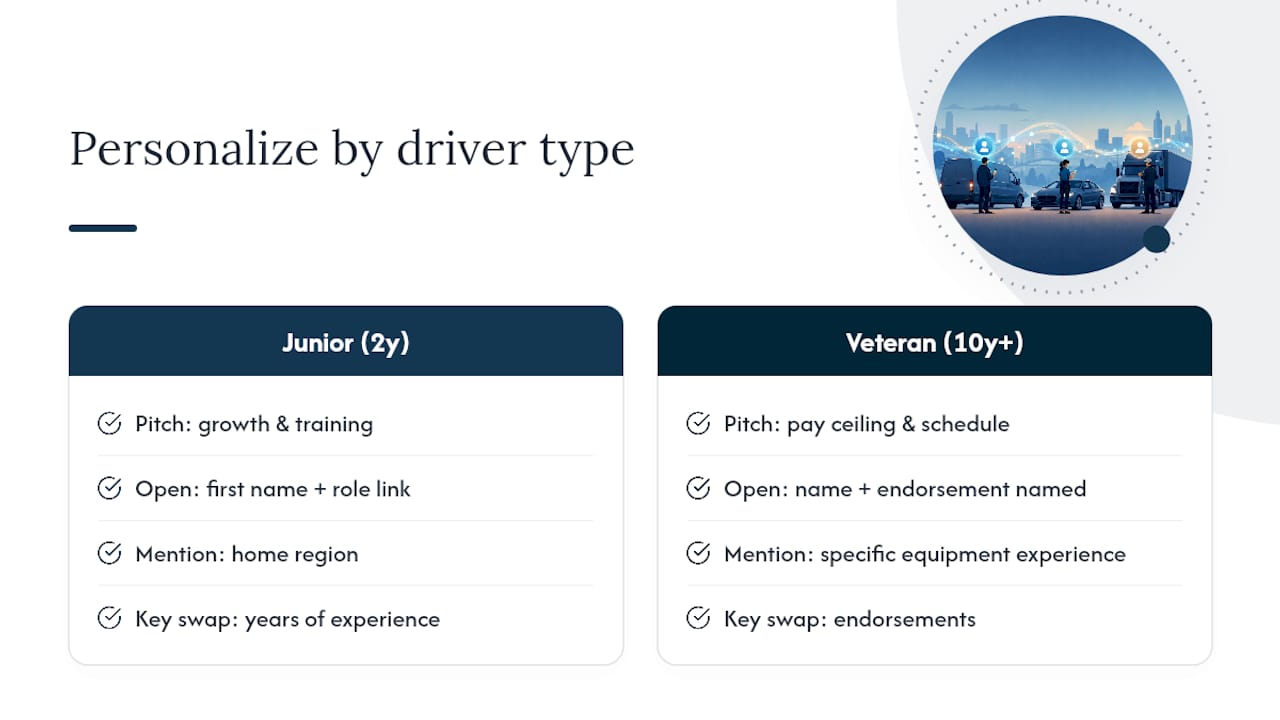
Small details change how a message reads. Using a driver's first name is table stakes at this point, but referencing their specific equipment experience, their home base region, or their current employer's route type signals that a real person reviewed their application rather than a mail merge. That distinction shows up in reply rates, because drivers who feel like a number tend to act like they've been treated as one.
Build a short set of message variants tied to experience tiers. A driver with two years of experience and a clean record needs a different pitch than a ten-year veteran with a hazmat endorsement, even for the identical role. The first driver may respond to growth and training support; the second wants pay ceiling and schedule control spelled out immediately.
Keep personalization mechanical enough to scale. A recruiter juggling forty open conversations can't hand-write every message, but a template with three or four swappable variables (name, endorsement, home region, years of experience) gets most of the benefit without the manual load.
Subject Lines and Hooks That Match Driver Personas
A subject line has one job: get the message opened. For drivers, that means leading with the number that matters to their specific situation, not a generic tagline.
For OTR drivers chasing miles, a hook like "3,000+ Miles/Week, Newer Equipment" outperforms anything built around company culture or mission language. For a driver prioritizing family time, "Home Every Weekend, Guaranteed" beats a pay-first headline every time, because it answers the question they actually have.
Regional drivers respond to schedule certainty phrased plainly: "Same Route, Same Days Off, Every Week." Flatbed drivers, who already know their work carries a skill premium, respond to hooks that name the premium directly: "Tarping Pay + $2,000 Sign-On for Flatbed CDL-A." Reefer drivers, often weighing comfort and predictability against slightly lower mileage pay, respond well to "Newer Reefer Fleet, No-Touch Freight."
Hazmat drivers are a different case. Their hook needs to acknowledge the endorsement specifically rather than treating it as a footnote: "Hazmat Endorsed? $3,000 Sign-On Waiting." Skipping straight past the credential to a generic pitch wastes the one detail that makes that candidate different from everyone else in your pipeline.
Across every persona, the losing pattern is the same: a subject line built around the company ("Join Our Team Today") instead of the driver's actual priority. Drivers don't open messages to learn about your company. They open messages that answer their own question first.
Follow-Up Sequences That Keep Drivers Engaged
A single message rarely closes a driver. Most candidates need two or three touches before they commit to an application, and the sequence matters as much as any individual message.
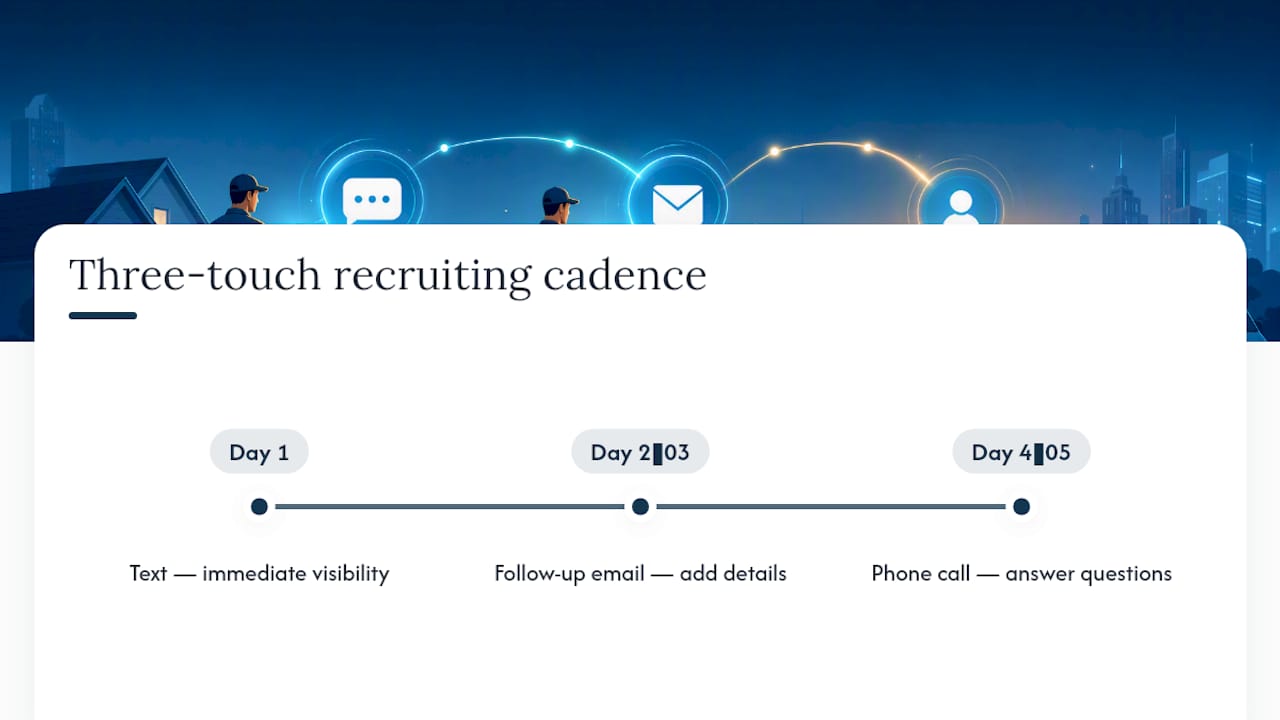
The most effective pattern starts with a text for immediate visibility, follows with a short email that keeps the offer warm, and closes with a phone call once the driver has shown interest. This text, email, call cadence works because it matches how drivers actually engage: SMS gets opened fast, email holds detail a driver can revisit, and a phone call answers questions text can't.
Space the sequence so it doesn't read as pressure. A same-day text followed by a same-day email feels like spam. A text on day one, a follow-up email on day two or three if there's no reply, and a call on day four or five if the driver engaged but didn't apply, respects both the driver's time and their decision-making pace.
Each follow-up should add something new rather than repeating the first message. If the initial text led with pay, the follow-up email might expand on equipment or benefits. If the driver clicked the apply link but didn't finish it, the next touch should reference that specific action: "Noticed you started an application. Anything I can answer before you finish it?" That kind of specificity signals attention, not automation, even when the sequence itself runs on a system.
Staying Compliant While Messaging Drivers
Text message outreach to drivers falls under the Telephone Consumer Protection Act, which governs how and when businesses can contact consumers by SMS and automated calls. Get documented consent before adding a driver to a text campaign, and always include a clear opt-out instruction such as "Reply STOP to unsubscribe."
Timing rules matter beyond response optimization. Avoid sending texts or making calls outside reasonable hours, and never text a number that has opted out or requested no contact, even if that number is still active in an older list. Keep a record of consent and opt-out requests for every candidate you message, since this protects your organization if a complaint ever surfaces.
Data handling deserves the same care. Store phone numbers and personal details only as long as needed for recruiting, and limit who on your team can access candidate contact information. If your service provider works with an outside vendor for texting or calling campaigns, confirm that vendor's practices meet the same consent and retention standards you'd apply internally, since liability for TCPA violations doesn't disappear just because a third party sent the message.
Combining SMS, Email, and Phone Without Overwhelming Candidates
Multi-channel messaging works best when each channel has a distinct job rather than repeating the same content three times. Text is for speed and immediate attention. Email is for detail a driver might want to reread. Phone is for closing, once a driver has shown genuine interest.
The most common mistake is running all three channels in parallel instead of in sequence, which lands a driver with a text, an email, and a voicemail within the same hour and reads as aggressive rather than helpful. A coordinated cadence that respects a driver's schedule keeps engagement high without creating that overwhelmed feeling.
Attribution matters here too. Use a short apply link with a tracking parameter so you know whether a given applicant came from a text campaign, a social ad, or a job board post. Without that attribution, you can't tell which channel is actually producing hires versus which one is just producing noise, and your A/B tests lose most of their value.
Recruiters running high volume should also standardize handoffs between channels. If a text goes unanswered for 48 hours, the system or the recruiter should automatically queue the follow-up email rather than leaving that decision to memory. The channels work as a relay, not three separate races toward the same finish line.
Handling Common Driver Objections in Your Messaging
Every driver segment has a short list of objections that show up again and again, and messaging that never addresses them just gets ignored by the drivers who have those exact concerns.
Pay uncertainty is the most common one. If your rate depends on freight volume or lane, say that plainly rather than posting a flat number that turns out to be aspirational once the driver starts. A range with context ("$0.58 to $0.68/mile depending on lane, average driver runs $0.63") reads as honest instead of evasive.
Home time is the second major objection, especially for OTR roles. If your guarantee has conditions, state them in the same line as the guarantee itself. "Home every weekend, barring weather delays" builds more trust than an unconditional promise a driver has learned to distrust from other recruiters.
Equipment age and maintenance come up constantly with reefer and flatbed drivers, who deal with more mechanical variables than a dry van driver. Naming your average fleet age or your maintenance turnaround time head-on, before a driver has to ask, removes a reason to keep scrolling.
Finally, drivers switching from another carrier often worry about a gap in pay or benefits during the transition. Addressing that directly in a follow-up message, even briefly, often moves a hesitant candidate further than another round of pay-focused messaging ever will.
What a Real Campaign Structure Looks Like
A workable sequence: SMS first, with a short apply link, followed by a recruiter phone call once the driver clicks through. That order respects how drivers actually engage. The lesson recruiters keep relearning is that speed on the follow-up matters more than polish on the first message. A driver who applies and waits three days for a call has usually already accepted another offer. Your own results will vary by lane and role, so track your numbers and adjust the cadence accordingly.
— Aaron
Post Roles Where FedEx-Experienced Drivers Already Look
Ucep exists because generic job boards make FedEx service providers compete for attention against every other freight company in the country. There is a focused audience of FedEx-experienced drivers, so pickup and delivery, CDL-A solo, and CDL-A team linehaul listings reach candidates who already understand the work instead of starting from zero.
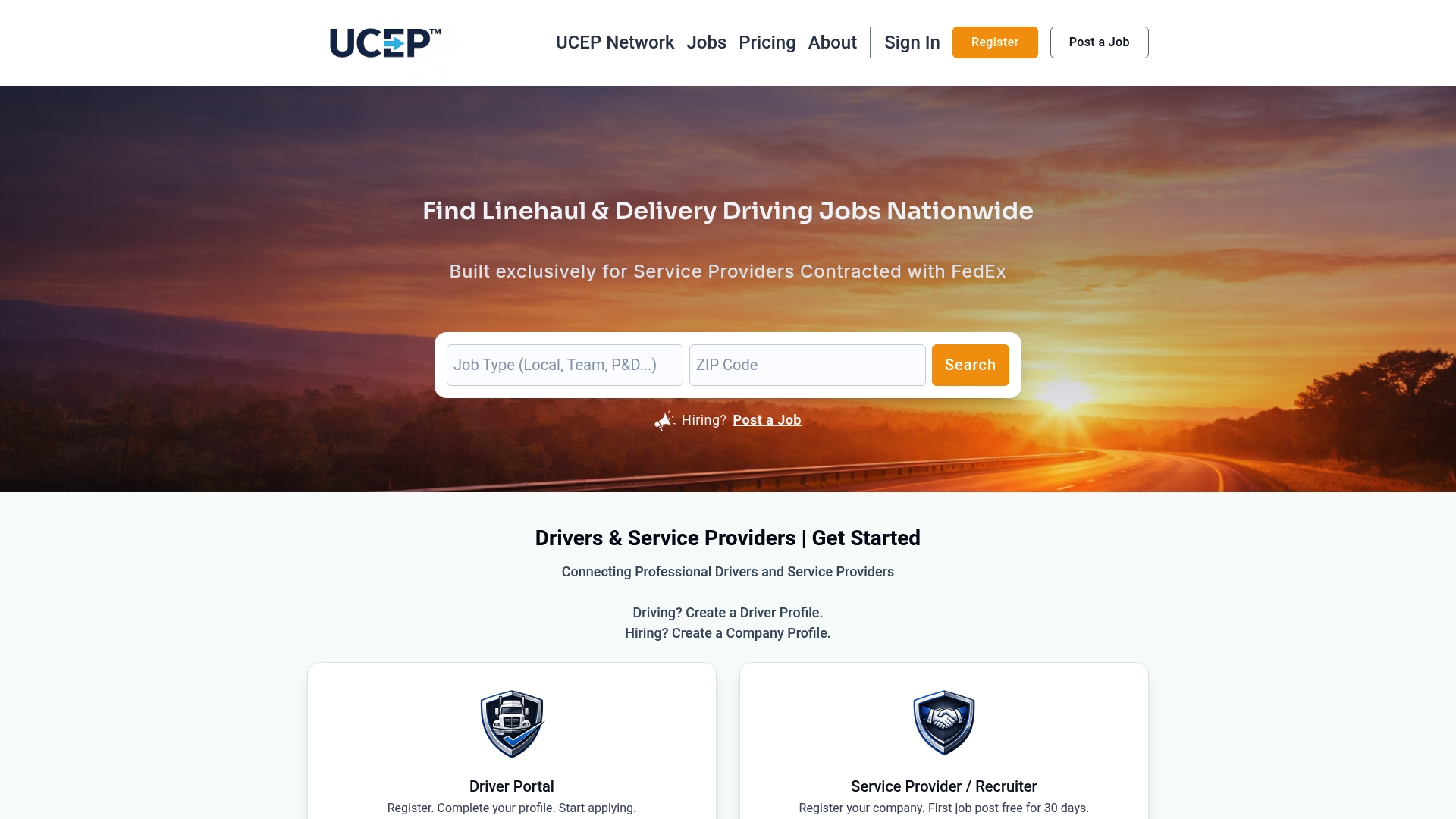
Getting started costs nothing to try. The Complimentary Trial Listing lets you post a role and see how the templates in this guide perform with an audience that already knows FedEx service provider work, before you commit to the Standard Monthly Plan at $99 per month. If you're ready to test one of the SMS templates above alongside a live listing, browse the current driver job categories and post your first role today.
Sources
For deeper guidance beyond this playbook, see team driver recruiting strategies for CDL-A team roles, a job description template for faster posting, and an endorsement career guide for hazmat and specialized messaging context.
- Truck Driver Job Posting: Write One That Converts (2026) | O Trucking
- Why Driver Reach Out? The Key to Effective Driver Recruitment - CDL Driver & Logistics Recruiting Center
- Flatbed, Hazmat, Reefer: How to Tailor Your Driver Campaigns by Segment | Advantage.ai
FAQ
What Should the First Line of a Driver Message Say?
The first line should state exact pay and home time, since job postings that lead with both get meaningfully higher application volumes than vague listings. Skip company background and mission statements until after those two facts.
When Is the Best Time to Text Driver Candidates?
Mid-morning and mid-afternoon windows tend to produce better response than early morning, late night, or during typical driving hours. Drivers are more likely to be on a break and checking their phone during those windows rather than behind the wheel.
How Long Should a Driver Application Take to Complete?
Keep the initial application under five minutes and limit the required fields to name, phone number, CDL class, and years of experience. Longer forms increase abandonment, so save detailed questions for after the first contact.
Does UCEP Charge for Posting Driver Jobs?
UCEP offers a Complimentary Trial Listing with no published price, and a Standard Monthly Plan at $99 per month for ongoing postings. Both plans are built specifically for FedEx service providers hiring CDL-A and pickup and delivery drivers.
Is Texting Driver Candidates Legal?
Text outreach to driver candidates falls under the Telephone Consumer Protection Act, which requires documented consent and a clear opt-out option in every message. Recruiters should keep consent records and avoid contacting numbers that have opted out.