
An employer value proposition (EVP) is the promise you make to employees about what they get in return for their work, and what you expect from them. For a FedEx Service Provider, it is the answer a driver wants before applying: what is the pay, when am I home, what equipment will I run, and will this company keep its word? This guide shows how to build that answer, prove it, and communicate it.
TL;DR
- An EVP is the reciprocal "give and get" between employer and employee. Employer branding is how you tell that story.
- In trucking, the evidence points to pay, home time, schedule predictability, equipment quality and management quality as the core of the offer.
- Build the EVP from driver input: interviews, surveys and exit feedback, not from a brainstorm in the office.
- Only promise what operations can deliver, then track retention, qualified applicants and time-to-fill.
- Publish the same offer in your job posts, directories and onboarding so drivers see one consistent story.
Table of Contents
- What an employer value proposition is
- Why an EVP matters in trucking
- What drivers value in an employment offer
- How to build your EVP step by step
- Substantiate every promise
- Communicate the EVP where drivers look
- Measure whether it works
- Put your EVP in front of FedEx drivers
- FAQ
- Sources
What an employer value proposition is
An EVP describes what an employer wants to be known for: the experience, environment, programs and rewards that set it apart, plus what the company expects from people in return, according to Aon. Gallagher frames it as a "give and get" with transactional elements, such as compensation and benefits, and emotional elements, such as culture and growth.
For a Service Provider, the transactional side is concrete: cents per mile or hourly rate, route type, benefits, pay cycle. The emotional side is just as real: how dispatch treats drivers, whether a manager answers the phone, whether the schedule you posted is the one drivers work.
EVP versus employer brand
The two terms are often mixed up. Employer brand is the reputation and perceived experience of your company as a workplace. The EVP defines the value provided to employees and what the employer expects back, as Symphony Talent explains. Aon describes employer branding as the way you tell a consistent story about your EVP in words, visuals, style and tone.
A simple way to hold it: the EVP is the product, the employer brand is how the product is described and perceived. If the product is weak, better messaging only widens the gap between what drivers read and what they experience. For more on this in a hiring context, see our employer brand playbook for hiring drivers.
Why an EVP matters in trucking
Turnover is expensive in this industry. A peer-reviewed study of driver job dissatisfaction notes that reported replacement costs ranged from $2,200 to $21,000, and that turnover can affect customer service and safety performance.
The rates are high too. Netradyne, citing ATRI's 2025 operational costs update, reports a sector-weighted average driver turnover rate of 48.0% in 2024, up from 46.6% in 2023, with LTL carriers averaging about 20.8%.
A clear, honest EVP does two jobs. It helps the right drivers choose you, and it sets expectations so fewer leave after the first few weeks. Many exits trace back to a gap between what was promised and what was delivered. Our guide to driver retention mistakes fleet managers must fix covers those gaps in detail. The wider hiring pressure is covered in why trucking has a driver shortage.
What drivers value in an employment offer
General EVP frameworks list familiar components. Gartner names competitive compensation, comprehensive benefits, growth opportunities, positive culture, work-life balance, aligned values and a clear career path. Gallagher's list adds purpose, success, empowerment, collaboration, wellbeing and security.
Trucking research narrows the list. The study by Wygal, Voss, Hargis and Nadler found that driver job satisfaction related to compensation, management quality, equipment quality, home time and wait time. Home time and its effect on families were the most frequently mentioned reasons for elevated turnover, and drivers look for regular, predictable schedules.

Pay still matters, but it is not the whole decision. A SIOP article on a 2025 conjoint study of 4,315 employees found that compensation and benefits were the most important factor across regions, yet carried only a little over one-third of decision weight. Flexibility, growth, sustainability, workload and belonging made up the rest. That sample was global and not limited to drivers, so treat it as a pattern to test with your own fleet.
A driver-focused EVP checklist
| Pillar | What drivers want to know | What you can state |
|---|---|---|
| Pay | How it is calculated and when it arrives | Rate structure, pay cycle, bonuses, settlement process |
| Home time | How often, how predictable | Typical schedule, route type, notice for changes |
| Equipment | What they will drive | Vehicle age range, maintenance routine |
| Management | Who they report to | Dispatch contact, response expectations |
| Growth | Where the role leads | Paths from pickup and delivery to linehaul, solo to team |
| Security | Whether the work is steady | Contract stability, route consistency |
Pay details are also a legal matter in some states. Our overview of pay transparency laws for trucking explains what employers and drivers should know before posting a range. For setting the number itself, see how to set competitive driver compensation for FedEx SPs.
Flexibility is a draw for many contract drivers, which we cover in why contract drivers prefer flexible schedules. Linehaul roles carry their own appeal, outlined in the linehaul driver lifestyle benefits guide.
The same principle applies to professional driving beyond freight. A piece on what chauffeurs do and how they are trained shows that professional standards, training and respect for the driver's craft shape how drivers see an employer. Training and standards belong in your offer too.
How to build your EVP step by step
- Assign an owner. One person, usually the owner or operations manager, is responsible for the EVP and for keeping it accurate.
- Listen to drivers first. Challenger Motor Freight interviewed top internal employees and surveyed its whole driver fleet, then used the results to build a culture-improvement roadmap. A small Service Provider can do the same with a one-page survey and a few conversations in the terminal.
- Ask what keeps people and what makes them leave. Include current drivers, recent hires and, where possible, former drivers.
- List what you can deliver today. Mark each promise as true now, true soon or not yet. Publish only the first group.
- Define your values in driver terms. FleetOwner reports that K&J Trucking's values were developed by its team and centered on doing the right thing, going the extra mile for drivers, owning decisions and mistakes, and serving the community. Values written with drivers read as real. Values written for a poster do not.
- State the reciprocal side. Say what you expect: credentials, safe driving, on-time performance, communication.
- Write it in one short statement and a supporting list. One or two sentences for the headline, then the pillars above with specifics.
An example structure
A statement for a pickup and delivery operation might read: "Predictable routes, weekly pay on a set day, and a dispatcher who answers. In return, we ask for safe, on-time service and clear communication." Replace each element with what is true for your business. The example is a template, not a claim about any company.
Substantiate every promise
Drivers have heard promises before. Evidence is what separates an EVP from a slogan.
- Pay: show the rate structure and a sample week of pay, within what the law and your contracts allow.
- Home time: publish the typical schedule and how you handle changes.
- Equipment: describe the maintenance routine and how defects are reported and fixed.
- Safety: explain the training, the onboarding and how incidents are reviewed.
- Advancement: name the actual steps drivers have taken inside your operation.
A 2026 Cisive trucking case describes "kept promises" indicators covering current credentials, preventable-accident prevention, hours-of-service compliance and equipment care, with the employer held to reciprocal service and equipment promises. The idea transfers well: write down what each side owes, then check both sides.
Communicate the EVP where drivers look
Map the path a driver takes. The Smaply trucking case maps the journey through awareness, investigation, interest and application, using persona research and stage-specific storylines. It reports more applications and a growing CDL-school waitlist.
Practical channels for a Service Provider:
- Job posts. Lead with pay, schedule and route type. Put the reciprocal expectations near the end.
- Company profile. Keep the description, terminals and benefits current on the job boards drivers use.
- Driver voices. Aon suggests letting employees tell the employer story through social posts, job ads, videos or internal channels, since personal experience shows what the company is really like.
- Onboarding. Repeat the same promises in the first week so the experience matches the posting.
- Offer conversations. Drivers should be able to ask the right questions. Our list of questions to ask before accepting a job offer shows what they will bring. Be ready to answer each one.
Terms that restrict drivers also shape perception. Review non-compete agreements in trucking so your paperwork supports the story you tell.
If you hire both solo and team drivers, tailor the message. The solo vs team hiring differences are real, and a single generic pitch will miss one group.
Measure whether it works
Gartner recommends measuring EVP effectiveness with retention rates, engagement surveys, productivity metrics, employee feedback, employer-brand perception, qualified applicants and time-to-fill. A report on employer brand measurement groups the metrics into attraction, retention and engagement: time-to-hire, career-page clicks and offers; referrals, turnover and promotion; and satisfaction scores and reviews.
A small operation does not need all of them. Start with four:
- Qualified applications per posting.
- Days from posting to start date.
- Ninety-day driver retention.
- Referrals from current drivers.
Review them every quarter. If applications rise but ninety-day retention falls, the message is outrunning the experience. Adjust the operation or the promise.
Our perspective
We see the EVP as a practical tool, not a branding exercise. FedEx Service Providers compete for the same pool of experienced drivers, and drivers compare offers on pay, schedule, equipment and how they are treated. The Service Providers who state those things plainly give drivers what they need to decide.
That is why UCEP is built around one audience. Our platform is designed for FedEx-related roles: CDL-A team, CDL-A solo, linehaul, and pickup and delivery. Employer profiles, terminal directories and driver reviews give your EVP a visible home, and a built-in applicant tracking system helps you follow up with the drivers who respond to it. We position UCEP as the only recruitment platform dedicated exclusively to FedEx Service Providers, with targeted reach to 140,000+ FedEx-experienced drivers.
Write the offer down, keep it true, and put it where FedEx drivers already search.
Aaron
Put your EVP in front of FedEx drivers
Once your EVP is written, it needs a place to be seen. UCEP lets Service Providers post pickup and delivery, CDL-A solo and CDL-A team linehaul roles and manage a company profile in one focused place.
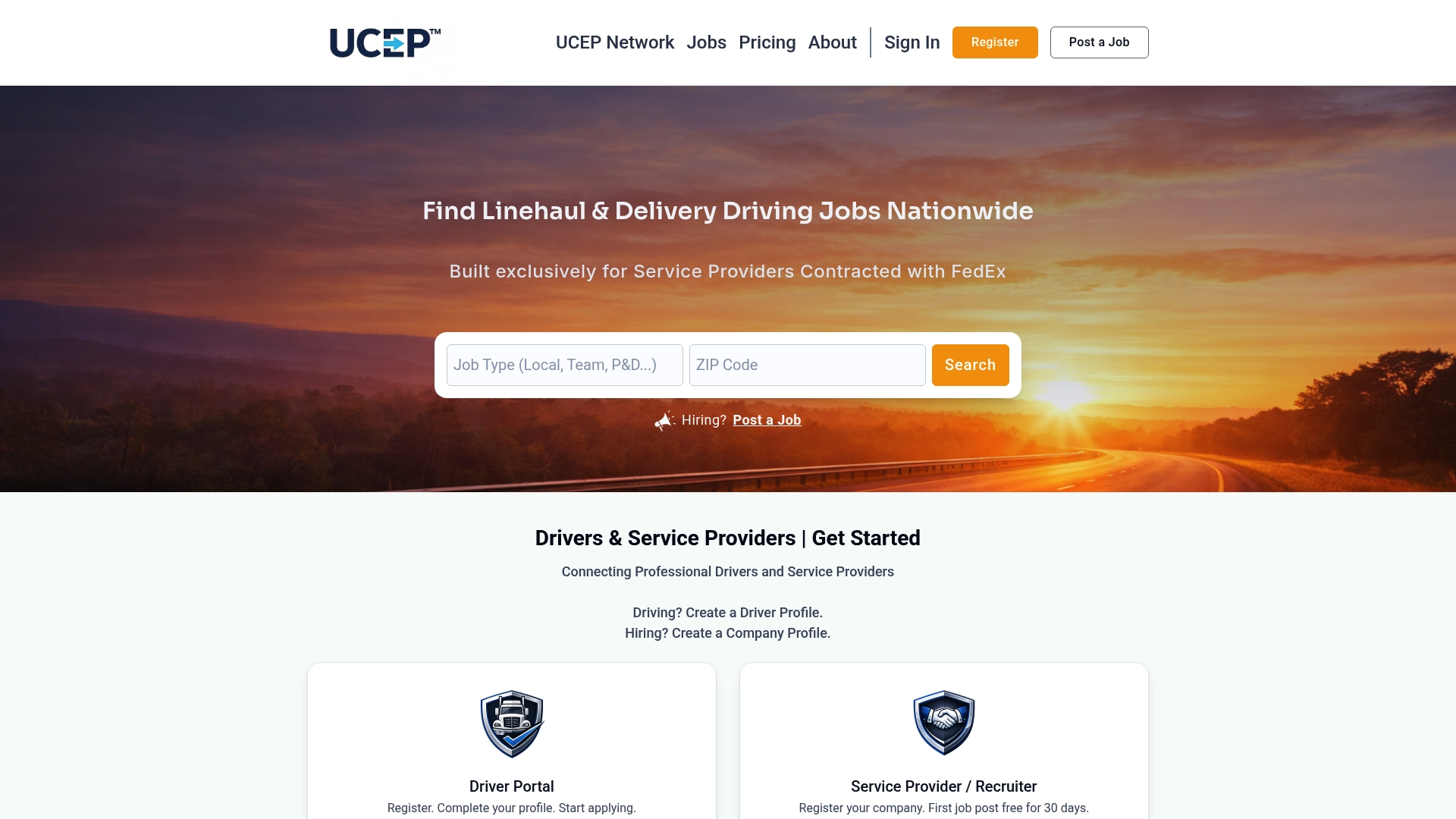
New recruiters can start with a Complimentary Trial Listing. The Standard Monthly Plan is $99 per month. See both on the UCEP pricing page.
FAQ
What is the difference between an employer value proposition and employer branding?
The EVP is the value you offer employees and what you expect in return. Employer branding is how you communicate that story and the reputation that results. A strong EVP gives the brand something true to say.
What are the main parts of an EVP?
Common components include compensation, benefits, growth opportunities, culture, work-life balance, values and a clear career path. For drivers, research points most strongly to pay, home time, schedule predictability, equipment and management quality.
How often should I update my EVP?
Review it at least once a year and whenever pay, routes or schedules change. Check it against driver feedback each quarter so the statement always matches the daily experience.
Does a small Service Provider need an EVP?
Yes. Any employer already has one, written or not. Writing it down lets you control what candidates read and gives dispatchers and managers one consistent answer to give.
Sources
- Creating a Compelling Employment Value Proposition (Aon)
- Communicating Your Employee Value Proposition (Gallagher)
- EVP vs. employer brand (Symphony Talent)
- Assessing Causes of Driver Job Dissatisfaction (MDPI)
- How to Improve Truck Driver Retention (Netradyne)
- Redefining the Employee Value Proposition (Gartner)
- Deciphering the Employee Value Proposition (SIOP)
- Best Fleets to Drive For winners (FleetOwner)
- Building a trucking culture drivers want to join (Cisive)
- Case study: recruiting and retaining truck drivers (Smaply)
- The State of Employer Brand 2023
- Chauffeur training standards