
A non-compete agreement in trucking is a contract clause that restricts a driver or contractor from working for competing carriers, soliciting clients, or operating in certain markets after their contract ends. These clauses appear in independent contractor agreements, lease agreements, and employment contracts across the trucking industry. Regulatory bodies like the Federal Trade Commission (FTC) in the United States and Canada's federal labor authorities have both moved to limit how broadly companies can enforce these restrictions. Understanding what is a non-compete in trucking, and what makes one enforceable, is the first step to protecting your career and income.
What are the typical components of a trucking non-compete agreement?
Non-compete clauses in trucking contracts share several common elements. Knowing what to look for before you sign puts you in a much stronger position.
- Duration: Most clauses restrict work with competitors for a set period after the contract ends, typically six to twelve months. Restrictions beyond one year are harder for employers to defend in court.
- Geographic scope: Some clauses limit where you can work, such as within a specific state or region. Overly broad geographic restrictions covering entire countries are frequently challenged and struck down.
- Non-solicitation: These clauses prevent you from contacting or working with clients, brokers, or shippers you served under the previous contract. They are separate from non-compete clauses but often appear alongside them.
- Exclusivity requirements: Some contracts require you to haul exclusively for one carrier during the contract term, limiting your ability to work with multiple brokers or shippers simultaneously.
- Affiliate restrictions: Watch for language that bars you from working not just with direct clients but with their affiliates. Overbroad affiliate clauses are often used as scare tactics and are frequently unenforceable.
The practical impact of these components is real. A non-solicitation clause can cut off your most reliable freight relationships. An exclusivity clause can prevent you from filling your truck with loads from multiple sources, directly reducing your revenue.
Pro Tip: Read every definition in the contract carefully. "Competitor" and "client" are often defined so broadly that they cover companies you have never worked with. Ask for specific, narrow definitions before signing.

How do laws and regulations affect the enforceability of trucking non-competes?
The legal landscape for non-compete agreements in trucking has shifted significantly in recent years. Both U.S. and Canadian authorities have moved to restrict how these clauses work.
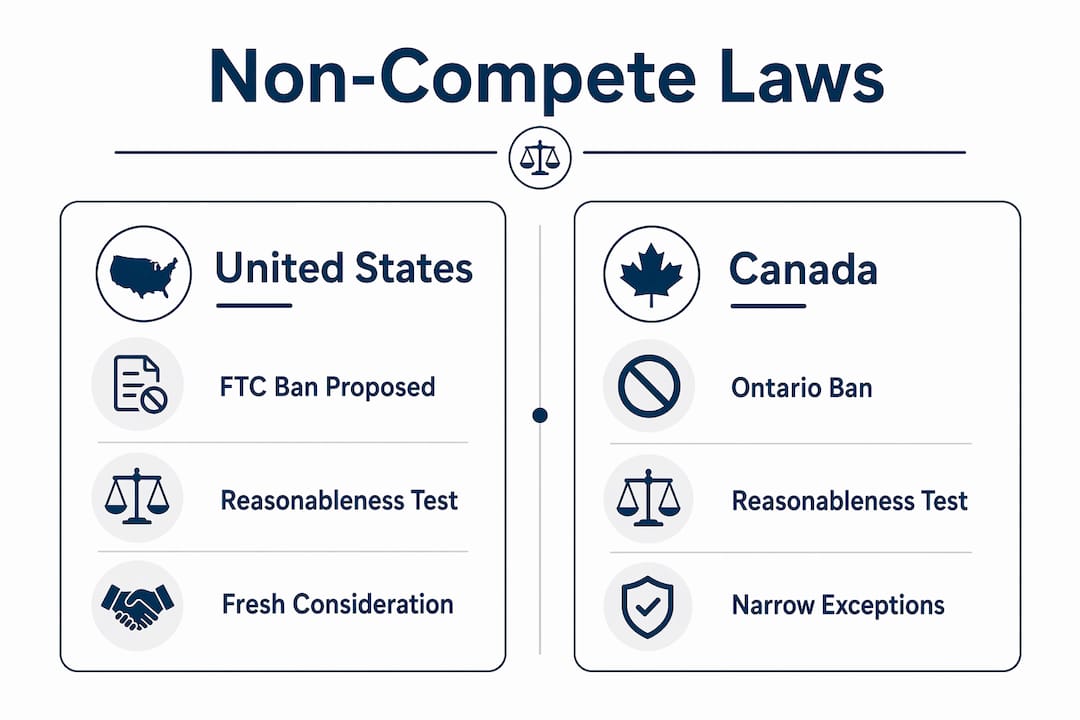
The FTC proposed a near-total ban on non-compete agreements for most U.S. workers, signaling federal concern about how broadly these restrictions suppress wages and limit job mobility. Removing non-compete restrictions can increase wages by over $500 annually and encourage new business formation. That figure reflects the real cost these clauses impose on workers who cannot freely move to better opportunities.
In Canada, Ontario banned non-compete clauses for provincially regulated employees as of October 25, 2021, with narrow exceptions for executives and business sellers. Canada's federal government announced amendments in late 2025 to extend similar restrictions to federally regulated trucking companies, with changes expected to take effect in 2026. That covers a significant portion of the long-haul trucking sector.
Courts in both countries apply a "reasonableness" test to non-compete clauses. A clause must be reasonable in duration, geographic scope, and the business interest it protects. Lifetime financial penalties such as a 10% revenue tithe for breaching a non-compete are viewed by courts as illegal attempts to stifle competition, not legitimate damages.
| Jurisdiction | Current status | Key exception |
|---|---|---|
| United States (federal) | FTC proposed broad ban; enforcement varies by state | Senior executives may still face valid restrictions |
| Ontario, Canada | Non-competes banned for most employees since October 2021 | Business sale agreements and executives |
| Federal Canada (trucking) | Amendments announced late 2025, expected 2026 | Details pending final regulation |
| Most U.S. states | Enforceability depends on reasonableness test | Varies widely by state law |
One legal requirement that catches many drivers off guard is the "fresh consideration" rule. Employers cannot impose new non-compete restrictions on existing employees without offering something of value in return, such as a raise, bonus, or promotion. Simply adding a clause to an existing contract mid-employment does not make it binding.
What are the practical effects of non-competes on trucking careers and earnings?
Non-compete clauses create concrete, measurable limits on what you can earn and where you can work. The effects go beyond inconvenience.
- Broker and shipper restrictions: A non-solicitation clause can block you from working with the brokers or shippers you built relationships with, forcing you to start from scratch after leaving a carrier.
- Market entry barriers: If you want to start your own trucking business or become an owner-operator, a non-compete clause can legally prevent you from serving the clients you know best for months or years.
- Wage suppression: Approximately 18% of U.S. workers are covered by non-compete agreements. The wage data shows these restrictions directly reduce what workers can earn by limiting their ability to move to better-paying positions.
- Factoring complications: If you use freight factoring services, some non-compete clauses restrict which factoring companies you can work with, tying your cash flow to a single provider.
- Blacklisting risk: Carriers have misrepresented driver employment status on mandatory industry registries, effectively blocking drivers from being hired elsewhere. This practice is illegal, but it happens.
The career impact compounds over time. A driver locked out of their best freight lanes or broker relationships for twelve months loses not just income but market position. Clients move on. Relationships cool. The cost is not just financial.
How can truck drivers protect their rights when facing non-compete agreements?
You have more leverage than most carriers want you to believe. The key is acting before you sign, not after.
- Negotiate before signing. Large carriers often present take-it-or-leave-it contracts, but compensation and termination terms can be negotiated if you address them before signing. Once you sign, your options narrow significantly.
- Flag geographic and duration red flags. Non-compete clauses restricting work within a region for 6–12 months post-termination are considered major red flags by industry experts. Push back on any clause that covers a broad region or lasts longer than six months.
- Demand narrow definitions. Ask the carrier to define "competitor," "client," and "affiliate" specifically. Vague definitions give employers room to enforce the clause far beyond what you agreed to.
- Check for fresh consideration. If a carrier tries to add a non-compete clause to your existing contract without offering a raise or bonus, that clause is likely unenforceable. Do not sign an amendment without receiving something of value in return.
- Contest illegal penalties. If a contract includes lifetime revenue penalties or other punitive financial clauses for breach, those provisions are legally vulnerable. Courts treat them as attempts to stifle competition rather than legitimate contract terms.
- Get legal advice. A trucking attorney can review a contract in one to two hours and identify clauses that would not survive a court challenge. That cost is small compared to the career risk of signing a bad agreement.
Pro Tip: Ask the carrier to remove any clause that restricts work with "affiliates" of clients. Courts regularly strike these down, but they can still cost you time and legal fees to fight. Getting them removed before signing is far easier.
Key Takeaways
Non-compete agreements in trucking are enforceable only when they are reasonable in scope, duration, and purpose. Drivers who negotiate before signing and understand their legal rights face far fewer career restrictions.
| Point | Details |
|---|---|
| Definition matters | A non-compete restricts post-contract work; a non-solicitation restricts client contact. Know which clause you are signing. |
| Legal landscape is shifting | Ontario banned non-competes in 2021; U.S. federal action and Canadian federal amendments are both in motion as of 2026. |
| Fresh consideration is required | Carriers cannot add new non-compete restrictions mid-contract without offering a raise, bonus, or other tangible benefit. |
| Overbroad clauses are often unenforceable | Affiliate restrictions and lifetime revenue penalties are regularly struck down by courts. |
| Negotiate before signing | Contract terms are negotiable before you sign. After signing, your options to challenge them shrink considerably. |
Non-competes in trucking: what I've seen drivers get wrong
The biggest mistake I see drivers make is treating a non-compete clause as a fixed, immovable part of the contract. Carriers present these agreements as standard, and most drivers sign without asking a single question. That assumption costs people real money and real career opportunities.
The second mistake is assuming that because a clause is in the contract, it is automatically enforceable. Courts throw out overbroad non-competes regularly. A clause covering an entire country for two years, or one that imposes a lifetime revenue penalty, is not going to hold up. The problem is that most drivers do not find this out until they are already in a legal dispute, which is expensive and stressful even when you win.
My advice is straightforward: read the contract, flag anything that restricts where or for whom you can work after the contract ends, and ask a trucking attorney to review it before you sign. The regulatory environment in both the U.S. and Canada is moving toward stronger driver protections. That shift gives you more leverage than you had five years ago. Use it.
— Aaron
Ucep connects drivers with transparent employers
Knowing your rights around non-compete agreements is only part of the picture. Finding carriers and service providers who offer fair, clear contracts matters just as much.
Ucep is a job board and recruiting platform built exclusively for FedEx Service Providers and the drivers who work with them. You can browse service provider reviews to see how other drivers rate their experience with specific companies before you commit to a contract. Ucep also lists companies actively hiring drivers across linehaul, CDL-A team, CDL-A solo, and pickup and delivery roles nationwide. When you know what a company's contracts look like before you apply, you start the negotiation from a much stronger position.
FAQ
What is a non-compete clause in a trucking contract?
A non-compete clause is a contract provision that restricts a driver or contractor from working for competing carriers or soliciting clients after their contract ends. These clauses typically specify a duration and geographic area.
Are non-compete agreements enforceable for truck drivers?
Enforceability depends on the jurisdiction and the reasonableness of the clause. Ontario banned non-competes for most employees in 2021, and U.S. courts regularly strike down clauses that are too broad in scope or duration.
Can a carrier add a non-compete clause to my existing contract?
A carrier cannot enforce new non-compete or non-solicitation restrictions on an existing employee without offering fresh consideration, such as a raise or bonus, in return.
What makes a non-compete clause unenforceable?
Courts strike down clauses that are unreasonably broad in geographic scope, duration, or the business interest they protect. Lifetime revenue penalties and restrictions covering affiliates rather than direct clients are also frequently ruled unenforceable.
How do I protect myself from a bad non-compete in trucking?
Negotiate before signing, ask for narrow definitions of "competitor" and "client," and have a trucking attorney review the contract. Addressing these terms before you sign is far more effective than contesting them after.
Recommended
- Construction Zone Safety for Truck Drivers | Work Zone Safety Tips - United Contractor Employment Portal
- Life in the Miles: Truck Driver Mental Health, Home Time, and Burnout - United Contractor Employment Portal
- Trucking and Severe Summer Weather | Safety Tips for Drivers - United Contractor Employment Portal
- What It Takes to Succeed as a Team Driver for Service Providers Contracted with FedEx | UCEP Meta description - United Contractor Employment Portal