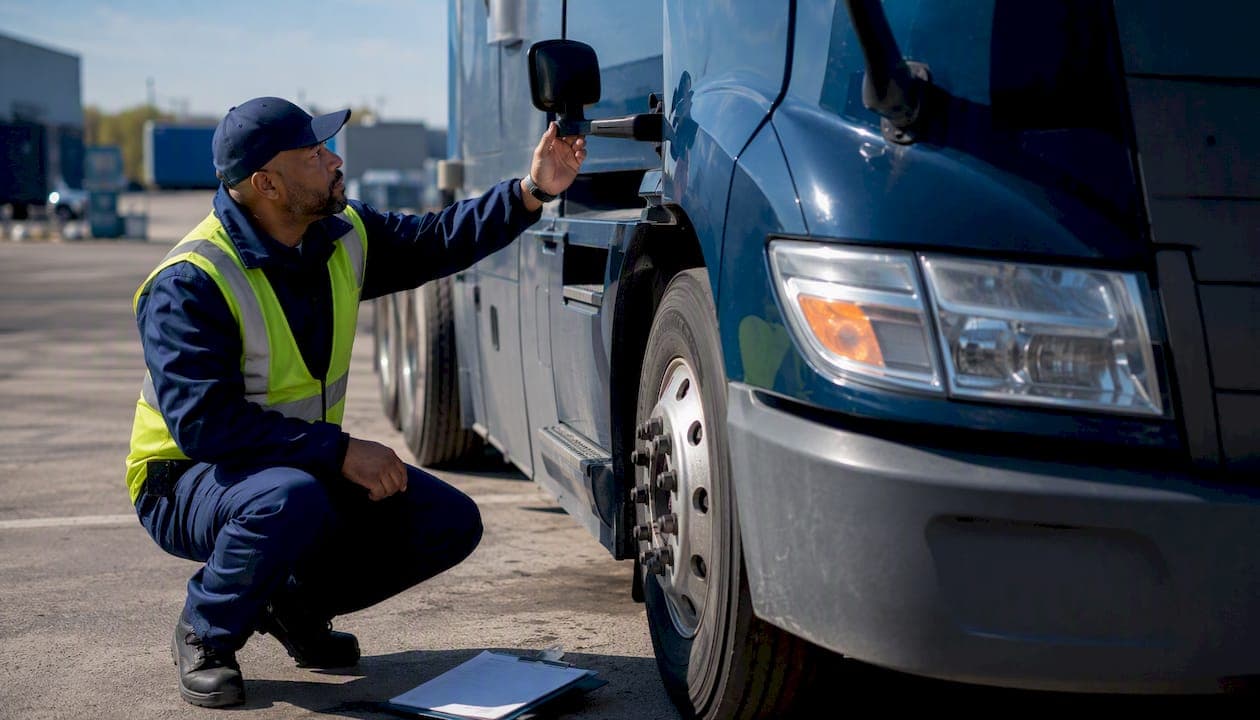
Truck driver job titles tell you three things at a glance: how far you'll drive, what you'll haul, and how you'll get paid. O*NET lists reported titles including Over-the-Road Driver, Line Haul Driver, and Semi Truck Driver, all under the heavy and tractor-trailer occupation code 53-3032.00, which covers combinations of trucks with a gross vehicle weight of at least 26,001 pounds and typically requires a commercial driver's license. The BLS and FMCSA round out the authoritative picture on duties, wages, and federal regulation. Ucep tracks these roles daily across FedEx-contracted service providers nationwide.
Here are the core truck driver job titles and what each one signals:
- Over-the-Road (OTR) Driver — Long-haul routes, often 2–3 weeks out, home time is infrequent.
- Regional Driver — Routes within a defined multi-state zone; typically home weekly.
- Local Driver — Daily routes within a metro area; home every night.
- Linehaul Driver — Moves freight between terminals, often on fixed overnight runs.
- Dry Van Driver — Pulls an enclosed trailer; the most common freight type, no special endorsement required.
- Flatbed Driver — Hauls open loads (steel, lumber, machinery); requires load securement skills.
- Tanker Driver — Transports liquids or gases; Tanker (N) endorsement required, HAZMAT (H) often added.
- Refrigerated/Reefer Driver — Temperature-controlled cargo; monitors trailer temp throughout the run.
- Intermodal Driver — Moves shipping containers between rail yards, ports, and distribution centers.
- LTL Driver — Less-than-truckload; multiple stops, frequent loading and unloading.
- Dedicated Driver — Assigned to a single customer's freight on a consistent route and schedule.
- Car Hauler — Transports vehicles on an auto-transport trailer. Requires specialized loading skills.
- Livestock Hauler — Moves live animals; regulated by USDA and requires careful handling knowledge.
- Owner-Operator — Drives their own truck; responsible for all operating costs and business decisions.
Key Takeaways
Truck driver job titles fall into three layers: operational scope (local, regional, OTR), cargo specialty (flatbed, tanker, reefer, dry van), and business model (company driver, owner-operator, lease contractor). Matching all three layers to your experience and goals is the fastest way to find the right posting.
| Point | Details |
|---|---|
| Scope determines home time | Local means home daily; regional means home weekly; OTR means home every 2–3 weeks. |
| Cargo type drives endorsements | Tanker roles require N endorsement; HAZMAT cargo requires H; doubles/triples require T. |
| Business model shapes risk | Company drivers carry low risk; owner-operators pay all operating costs from gross revenue. |
| CDL class is the first filter | CDL-A covers tractor-trailer combinations; CDL-B covers straight trucks; CDL-C covers smaller HAZMAT or passenger vehicles. |
| Ucep for FedEx-related roles | Ucep lists linehaul, CDL-A solo, CDL-A team, and P&D openings from FedEx-contracted service providers nationwide. |
Table of Contents
- What do local, regional, and OTR driver titles actually mean for your schedule?
- Specialized hauling roles: what cargo type tells you about skills and endorsements
- How function-based titles like LTL, linehaul, and P&D describe the job differently
- Company driver vs. owner-operator vs. lease contractor: what the title won't tell you
- How CDL classes and endorsements map to job titles
- What affects truck driver pay and what the data shows
- How to read a truck driver job posting and spot what actually matters
- How to write your truck driver job title on a resume and LinkedIn
- How this guide was built and where to verify the details
- What hiring teams actually look for beyond the job title
- Ucep connects drivers with FedEx-contracted service provider jobs nationwide
- Sources
What do local, regional, and OTR driver titles actually mean for your schedule?
These three labels are the first filter you should apply to any job posting. They describe operational scope, and they directly determine how often you sleep in your own bed.
Local drivers work within a single metro area or a tight radius, typically under 150 miles from the terminal. Shifts are usually daytime, and you're home every night. Pay structures here tend to be hourly or stop-based rather than per-mile, which matters when you're evaluating total weekly earnings.
Regional drivers cover a defined multi-state zone, usually within a 500-mile radius. Most regional positions offer weekly home time, sometimes two or three days. Pay is commonly a mix of mileage rate and stop pay, and equipment tends to be day cabs or sleeper trucks depending on the carrier.
OTR (over-the-road) drivers run long-haul lanes across the country. Home time is typically every few weeks, though this can vary depending on the position. Sleeper berths are standard. Mileage pay dominates, and total annual miles are higher, which is why OTR often produces the largest gross pay among the three configurations.
Key home-time differences at a glance:
- Local: Home daily; hourly or stop pay; day cabs; metro routes.
- Regional: Home weekly; mileage plus stop pay; mix of day cabs and sleepers; multi-state lanes.
- OTR: Home every 2–3 weeks; mileage pay; sleeper trucks; cross-country freight.
Pro Tip: If a posting says "regional" but lists a 700-mile average run, ask the recruiter for the actual lane map before you apply. The label and the reality don't always match.
Specialized hauling roles: what cargo type tells you about skills and endorsements
Cargo and trailer type are the second major axis of trucking job positions. The DOT Dictionary of Occupational Titles describes core heavy-driver tasks including load securement, vehicle inspection, and cargo handling, all of which vary significantly by specialty. Industry employer guidance confirms the breadth of roles available to CDL holders across these specialties.
Dry Van Driver hauls general freight in a sealed 53-foot trailer. No special endorsement is required beyond CDL-A. It's the highest-volume freight type and the most common entry point for new CDL holders.
Flatbed Driver loads and secures open cargo: steel coils, lumber, construction equipment, and oversized freight. Load securement is a daily skill, and many carriers require a flatbed-specific orientation. No endorsement is mandated by federal regulation, but experience with chains, binders, and tarps is non-negotiable.
Tanker Driver moves liquid or gaseous cargo in a tank trailer. The Tanker (N) endorsement is federally required. When the cargo is hazardous, the HAZMAT (H) endorsement is added. Liquid surge during braking makes tanker driving physically demanding and requires specific training.

Refrigerated/Reefer Driver maintains temperature-controlled loads: produce, pharmaceuticals, and frozen goods. No endorsement beyond CDL-A is required, but monitoring trailer temperature and understanding reefer unit operation are daily responsibilities.
Intermodal Driver moves ISO shipping containers between rail yards, ports, and warehouses. Chassis handling and yard navigation are the key skills. No specialty endorsement is required, but familiarity with container locks and port security procedures matters.
Car Hauler loads and transports vehicles on an auto-transport trailer. Securing cars without damage is the primary skill. Some carriers require a specific auto-transport orientation.
Livestock Hauler transports live animals under USDA regulations. Drivers must understand animal welfare requirements and loading procedures. This is a niche role with a smaller pool of carriers.
Common endorsements tied to specialty titles:
- N (Tanker): Required for tank vehicles carrying liquids or gases.
- H (HAZMAT): Required for hazardous materials; requires TSA background check and fingerprinting.
- T (Doubles/Triples): Required to pull double or triple trailers.
- P (Passenger): Required for vehicles carrying 16 or more passengers.
- S (School Bus): Required specifically for school bus operations.
Pro Tip: When a job posting lists "load securement experience preferred," that's a flatbed signal even if the title just says "CDL-A Driver." Read the requirements section, not just the title.
How function-based titles like LTL, linehaul, and P&D describe the job differently
Some trucking industry job titles describe what the freight does, not what the trailer looks like. These function-focused labels tell you about stops, loading responsibilities, and daily structure.
LTL (Less-Than-Truckload) Driver picks up and delivers partial loads from multiple shippers on a single run. Expect frequent stops, dock work, and interaction with customers or warehouse staff. LTL carriers include regional freight networks where drivers handle both pickup and delivery legs.
FTL (Full-Truckload) Driver moves a single shipper's freight from origin to destination without intermediate stops. The work is simpler operationally but demands longer continuous driving. Most OTR and dedicated roles are FTL.
Linehaul Driver moves freight between terminals on fixed lanes, typically overnight. O*NET notes that "linehaul" and "OTR" are sometimes used interchangeably by recruiters, but linehaul more precisely means terminal-to-terminal freight movement on a predictable schedule. Night shifts and drop-and-hook freight are common. Ucep lists linehaul roles specifically for FedEx-contracted service providers.
Pickup and Delivery (P&D) Driver handles the first and last mile: collecting packages from a hub and delivering them to businesses or residences. O*NET's Light Truck Drivers profile lists Delivery Driver and Route Driver as common titles in this function. CDL-B or CDL-A may be required depending on vehicle size.
Driver-Sales Representative combines driving with customer-facing sales duties, common in beverage distribution and food service. Pay often includes a base plus commission.
Route Driver follows a fixed, recurring delivery sequence, common in bread, snack, or beverage distribution. Consistency and customer relationship management are the core skills.
Which function fits you:
- Prefer frequent interaction and variety: LTL or P&D.
- Prefer predictable miles and minimal stops: FTL, linehaul, or dedicated.
- Want to combine driving with sales: driver-sales roles at distributors or retailers.
Company driver vs. owner-operator vs. lease contractor: what the title won't tell you
The job title rarely tells you who owns the truck or who pays for fuel. That distinction shapes your entire financial picture.
Company Driver is employed directly by a carrier. The company owns the truck, pays for fuel, maintenance, and insurance, and provides benefits (health, 401k, paid time off) depending on the employer. Pay is typically per mile, hourly, or a combination. Risk is low; upside is capped.
Owner-Operator owns or finances their own truck and operates as an independent business. They contract with brokers or carriers for freight. Gross revenue per mile is higher, but the driver pays all operating costs: fuel, maintenance, insurance, permits, and empty miles. Per the DOT occupational guidance, advertised per-mile rates must be evaluated against realistic operating costs before accepting any contract.
Lease/Contractor Driver leases a truck from a carrier and operates under that carrier's authority. This sits between company driver and full owner-operator. The driver has more control than a company driver but carries more cost and risk than a fully employed driver.
| Business Model | Pay Shape | Benefits | Who Pays Operating Costs | Risk Level |
|---|---|---|---|---|
| Company Driver | Per mile, hourly, or salary | Often included | Carrier | Low |
| Owner-Operator | Gross revenue minus all costs | Self-funded | Driver | High |
| Lease/Contractor | Per mile minus lease deductions | Rarely included | Shared or driver | Medium |
Watch for these pay traps: per-mile rates that exclude empty miles, lease agreements where deductions reduce net pay below company-driver levels, and fuel surcharge structures that don't fully offset pump prices.
How CDL classes and endorsements map to job titles
CDL class is the first hard filter in any job posting. FMCSA sets the federal standards; states administer testing and issuance.
- CDL-A: Required for combination vehicles (tractor-trailer) with a GCWR over 26,001 lbs where the towed unit exceeds 10,001 lbs. Covers OTR, linehaul, flatbed, tanker, reefer, intermodal, car hauler, and dedicated roles.
- CDL-B: Required for single vehicles over 26,001 lbs not towing a heavy trailer. Covers straight trucks, box trucks, and some P&D roles.
- CDL-C: Required for vehicles under 26,001 lbs carrying hazardous materials or 16+ passengers. Covers some HAZMAT delivery and passenger transport roles.
For a deeper breakdown of CDL class requirements and how to qualify, the CDL-A requirements guide on Ucep's blog covers the entry path step by step.
Endorsement cheat sheet:
| Endorsement | Code | Required For |
|---|---|---|
| Tanker | N | Tank vehicles (liquids/gases) |
| HAZMAT | H | Hazardous materials transport |
| Doubles/Triples | T | Double or triple trailer combinations |
| Passenger | P | Vehicles with 16+ passengers |
| School Bus | S | School bus operations |
| Tank + HAZMAT | X | Combined tanker/HAZMAT loads |
What to check in every job posting before applying:
- CDL class required (A, B, or C).
- Endorsements listed as required vs. preferred.
- Drug screening and background check requirements.
- Clean MVR requirement (typically 3 years, sometimes 5).
- Hours-of-service expectations (70-hour/8-day cycle vs. 60-hour/7-day).
- Whether orientation is paid and how long it runs.
What affects truck driver pay and what the data shows
Pay in trucking is driven by miles, cargo type, endorsements, and business model, not by title alone. The BLS occupational summary for heavy and tractor-trailer truck drivers provides wage and outlook data for this occupation; consult it directly for current median wage figures, as pay benchmarks shift with fuel costs, freight demand, and regional labor markets.
The BLS transportation and warehousing sector data shows this industry as one of the larger employers in the U.S. economy, with consistent demand driven by freight volume and driver turnover.
The main factors that move pay up or down:
- Miles driven: Mileage pay rewards high-volume OTR and linehaul runs more than local stop-heavy routes.
- Endorsements: Tanker and HAZMAT endorsements typically command a pay premium over dry van at the same carrier.
- Experience: Most carriers tier pay by years of verifiable driving experience and safety record.
- Cargo type: Specialized freight (hazardous materials, oversized loads, temperature-controlled) generally pays more than general dry freight.
- Business model: Owner-operators can earn more gross revenue per mile but carry all operating costs.
- Employer type: Private fleets (retailers, manufacturers) often pay more than for-hire carriers but may have stricter requirements.
Stat to check: The BLS Occupational Outlook Handbook page for heavy and tractor-trailer truck drivers includes median annual wages and projected job growth. Review it before salary negotiations.
For regional demand signals, ProjectionsCentral aggregates state-level occupational projections that can help you gauge where hiring is concentrated in your target market.
How to read a truck driver job posting and spot what actually matters
The job title is a starting point. The requirements section is where the real job lives. Here's what to scan immediately when you open a posting.
Scan this first:
- CDL class (A, B, or C) and whether it's required or preferred.
- Endorsements listed and whether they're required on day one or can be obtained after hire.
- Home time language: "weekly home time" vs. "home time varies" vs. a specific number of days.
- Pay model: cents per mile, hourly, stop pay, or a combination.
- Equipment age and brand (newer trucks reduce breakdown risk on OTR runs).
- Terminal or home base location (affects your actual commute to start a shift).
- Layover policy and whether layover pay is included.
Wording signals to know:
- "Linehaul" usually means terminal-to-terminal, often nights, drop-and-hook freight.
- "Dedicated" means a fixed customer account with consistent miles and predictable schedule.
- "OTR" means extended time away; if home time isn't specified, ask before applying.
- "Team driver" means you share a truck with a co-driver and run nearly continuously.
- Titles like "Senior CDL Driver" or "Lead CDL Driver" may include non-driving responsibilities such as mentoring or terminal duties; verify during the interview.
Red flags to watch for:
- Vague home-time language with no specific days or frequency.
- Unpaid orientation that runs more than two days without clear explanation.
- Pay model that only mentions loaded miles (ask about empty-mile compensation).
- No mention of equipment age or maintenance policy for owner-operator or lease roles.
Questions to ask the recruiter:
- "What is the average weekly miles for this lane, and how are empty miles compensated?"
- "Can you describe the home-time schedule for the last three months on this account?"
- "Is orientation paid, and what does the first 30 days look like for a new hire?"
For a closer look at how employers write CDL job descriptions, the Workstream ATS template shows the qualification and responsibility language recruiters use.
How to write your truck driver job title on a resume and LinkedIn
Your resume headline and job title line need to match the language the recruiter typed into their ATS search. Generic titles get filtered out. Specific ones get read.
Resume bullet examples:
- "CDL-A OTR Driver | 48-state dry van | 120,000+ annual miles | 0 preventable accidents (3 years)"
- "Regional Flatbed Driver | load securement certified | steel and lumber freight | home weekly"
- "Linehaul Driver | drop-and-hook | terminal-to-terminal | CDL-A with Tanker (N) endorsement"
- "Pickup and Delivery Driver | CDL-B | 30–40 stops daily | 99% on-time delivery rate"
- "Dedicated Driver | single-customer account | consistent weekly miles | clean MVR (5 years)"
- "Owner-Operator | CDL-A | dry van and reefer | leased to carrier | 500,000+ lifetime miles"
- "Tanker Driver | CDL-A with N and H endorsements | chemical and fuel transport | HAZMAT certified"
- "Intermodal Driver | container chassis | port and rail yard experience | CDL-A"
For a full resume update process aligned with ATS filters, the truck driver resume guide on Ucep's blog walks through each section.
LinkedIn headline examples:
- "CDL-A OTR Driver | Dry Van & Reefer | 48 States | Clean MVR | Open to Dedicated Roles"
- "Tanker Driver | CDL-A + N + H Endorsements | HAZMAT Certified | Regional & OTR"
- "Entry-Level CDL-A Driver | Recent Graduate | Seeking Linehaul or Dedicated Position"
- "Owner-Operator | CDL-A | 10 Years Experience | Dry Van | Open to Lease or Contract"
If you have both linehaul and OTR experience, use "Linehaul Driver (OTR)" in your title line so both keywords appear in recruiter searches. The O*NET Light Truck Drivers profile lists Delivery Driver and Route Driver as recognized titles for smaller-vehicle roles, so use those exact terms if your experience is in P&D or route work.
For career progression examples that show how drivers move between these titles over time, the CDL career growth guide on Ucep covers realistic advancement paths from entry-level to specialized and owner-operator roles.
How this guide was built and where to verify the details
This guide draws on four authoritative sources and one specialized platform.
- O*NET (53-3032.00): Provided sample reported job titles, occupation definitions, and task-level descriptions for heavy and tractor-trailer drivers.
- BLS Occupational Outlook Handbook: Supplied wage context, job outlook framing, and work environment notes.
- FMCSA: The primary federal reference for CDL class definitions and endorsement requirements; always verify current regulatory requirements directly with FMCSA, as rules can change.
- DOT Dictionary of Occupational Titles: Provided concrete task examples including cargo securing, vehicle inspection, and log maintenance.
- Ucep: A dedicated job board for FedEx-contracted service providers, used to ground the linehaul, CDL-A solo, CDL-A team, and P&D role descriptions in active job market context.
Two important limitations to keep in mind: endorsement processing timelines vary by state, and employer-specific title phrasing can differ from the standard O*NET labels. Always confirm requirements with the hiring employer and check your state's DMV for endorsement testing schedules.
What hiring teams actually look for beyond the job title
Titles are shorthand. What moves a candidate from the pile to the phone screen is something more specific.
Recruiters scanning CDL applications look first at endorsements, then at MVR history, then at verifiable run history. A resume that leads with "CDL-A Driver" and buries the HAZMAT endorsement on page two loses to a resume that opens with "CDL-A | H + N Endorsements | Clean MVR (5 years)" in the headline. The title is the hook; the credentials are the close.
The advice from Workstream's ATS guidance is consistent with what experienced recruiters report: endorsements and a clean MVR matter more than a senior-sounding title. "Lead CDL Driver" with a spotty record loses to "CDL-A Driver" with five clean years and documented miles.
One realist note on pay negotiation: if you hold a Tanker or HAZMAT endorsement and the posting doesn't specify a pay premium for it, ask directly. Endorsements cost you time and money to obtain; they should be reflected in your rate. Most carriers have a pay scale for endorsements; they just don't always advertise it.
Quick action checklist before you apply to any role:
- Update your resume headline to match the exact title in the posting.
- Confirm all endorsements are current and listed prominently.
- Pull a 2-year run log or employment history to share with the recruiter on request.
- Verify your MVR is clean and know your record before the recruiter pulls it.
Ucep connects drivers with FedEx-contracted service provider jobs nationwide
Ucep is built specifically for drivers seeking linehaul, CDL-A solo, CDL-A team, and pickup and delivery roles with FedEx-contracted service providers. Instead of sorting through generic job boards, you get a focused platform where every listing is relevant to your CDL and the type of work described in this guide.
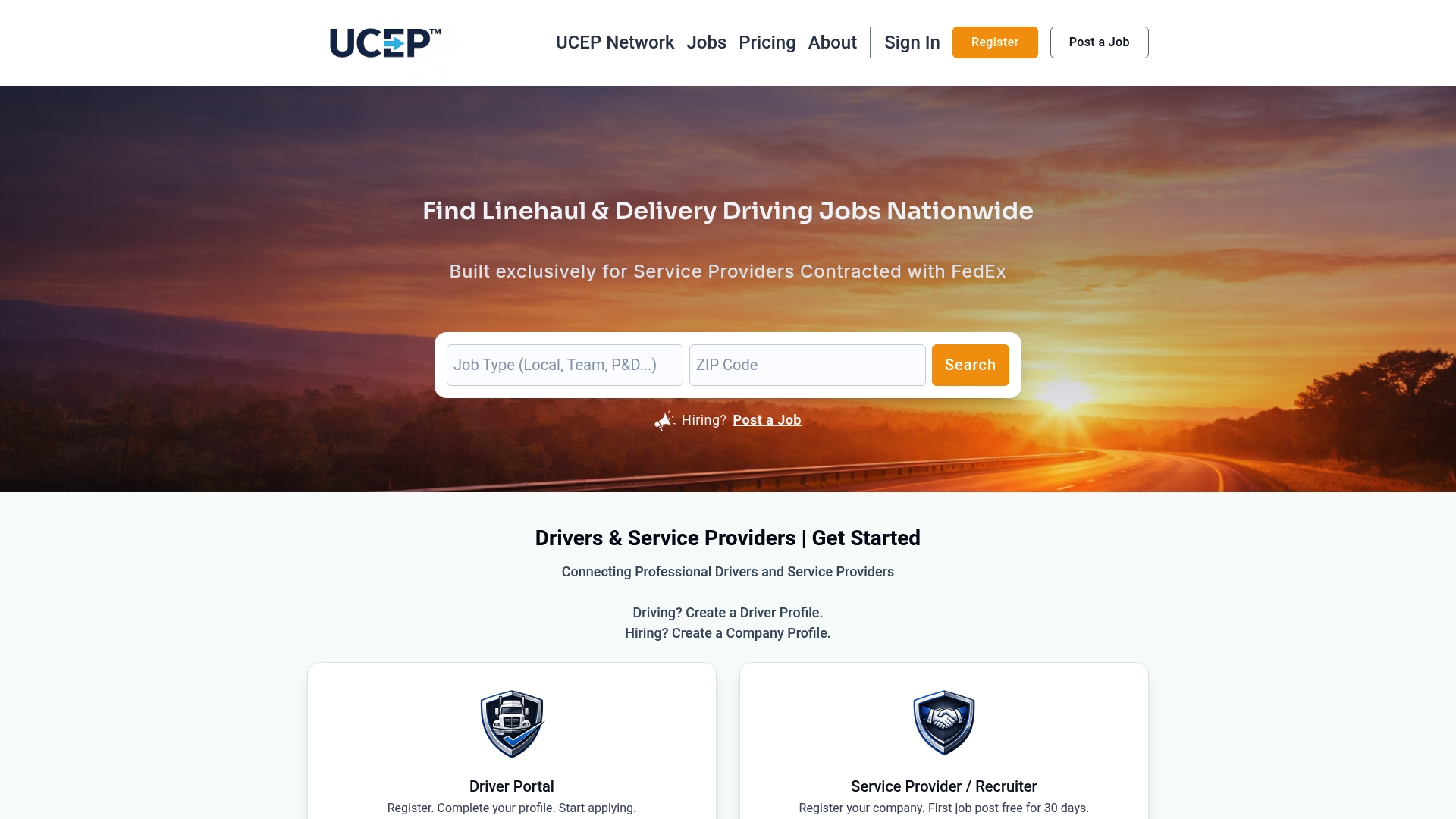
Filter openings by CDL class, endorsement requirements, and home-time preference. Browse the employer and terminal directories to research service providers before you apply. Set up driver alerts so matching titles reach you as soon as they post. Manage your applications in one place with built-in tracking tools.
Active listings from service providers like Four Leaf Recruiting and Revolution Recruiting LLC are live on the platform now. Search current openings at Ucep and filter by the title and endorsements that match your profile.
Sources
- 53-3032.00 - Heavy and Tractor-Trailer Truck Drivers
- Heavy and tractor-trailer truck drivers — BLS
- Federal Motor Carrier Safety Administration
- What can you do with a CDL? 12 jobs ideas for CDL holders