
Updating a truck driver resume means replacing vague job descriptions with verified credentials, measurable safety records, and technology proficiencies that modern applicant tracking systems (ATS) recognize. Recruiters and ATS platforms used by logistics companies screen specifically for CDL class, endorsements, equipment type, and compliance data before a human ever reads your application. Tools like ResumeAdapter and ResumeGenius provide 2026-ready templates built around these requirements. This guide walks you through every section of your resume, from the summary to work history, so your application reflects your actual qualifications and passes the filters that stand between you and a callback.
What does a 2026 truck driver resume need to pass ATS?
ATS systems screen specifically for CDL class, endorsements, DOT compliance, equipment type, and annual miles. That means a resume listing "experienced driver with a clean record" tells the software almost nothing. You need to replace every vague phrase with a specific, verifiable credential.
Here is what your updated resume must include:
- CDL class and all endorsements up front. List your CDL-A, CDL-B, or CDL-C designation in your header or summary. Add every endorsement you hold: Hazmat (H), Tanker (N), Doubles/Triples (T), Passenger (P), or School Bus (S). Recruiters searching for an HazMat-endorsed driver will not find you if the endorsement is buried or abbreviated inconsistently.
- Safety metrics stated as numbers. Write "5 years accident-free" or "600,000 miles with zero preventable incidents" rather than "safe driver." Numbers pass ATS filters and build recruiter confidence immediately.
- ELD system and compliance record. Including ELD systems used and compliance outcomes significantly improves ATS success. Name the platform, such as KeepTruckin (Motive), Omnitracs, or PeopleNet, and state your HOS compliance record over a defined period.
- Equipment types and trailer configurations. List the specific trucks you have operated: Kenworth T680, Freightliner Cascadia, Peterbilt 579. Add trailer types: 53-foot dry van, flatbed, reefer, tanker, or lowboy.
- Geographic lanes and work patterns. Note whether you run OTR, regional, or local routes and the states or corridors you know well.
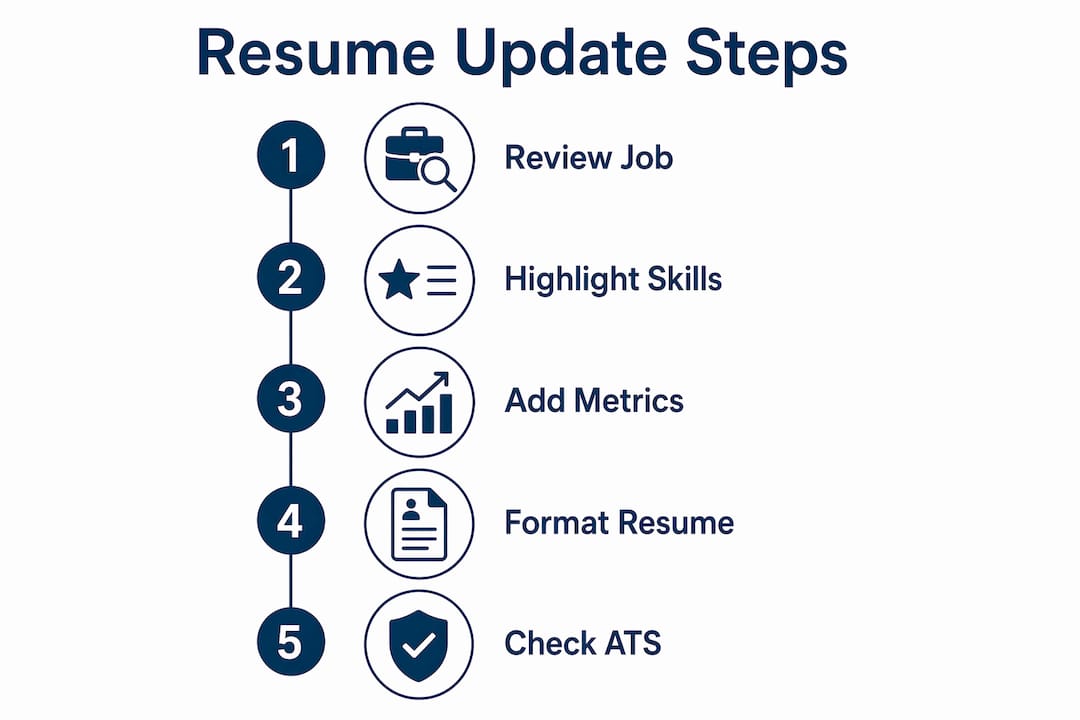
Pro Tip: Review the job posting before submitting. Copy the exact terminology the employer uses for equipment and endorsements, then match that language in your resume. ATS tools score keyword matches, so precision here directly affects your callback rate.
How do you write a strong truck driver resume summary?

A tailored resume summary improves recruiter evaluations in nearly 90% of cases, making it the single highest-return section to update. The summary functions as your application's elevator pitch. Hiring managers spend seconds on an initial scan, so your first three to five sentences must answer their core question: does this driver have the credentials and record we need?
Follow these steps to write a summary that works:
- Lead with your CDL class and top endorsements. Example: "CDL-A driver with Hazmat and Tanker endorsements and 8 years of OTR experience."
- State your safety outcome immediately. Follow the credentials with a concrete record: "Zero preventable accidents over 750,000 miles."
- Name the equipment and lanes you know. Specify the truck models and freight types you have handled most recently.
- Add one compliance or technology credential. Mention your ELD platform and your HOS compliance rate or violation-free period.
- Customize for each posting. Specific trucks, load types, and geographic lanes tailored to each role drive higher callbacks. A summary written for a dedicated grocery account role should not be identical to one written for an OTR flatbed position.
Avoid these common summary mistakes: writing in third person ("John is a dedicated driver"), using filler phrases like "hard worker" or "team player," and listing responsibilities instead of outcomes. Every sentence in your summary should give the recruiter a reason to keep reading.
Pro Tip: Keep your summary to five sentences maximum. Anything longer gets skimmed past. If a sentence does not contain a credential, a metric, or a specific skill, cut it.
How should you structure and format your truck driver resume?
Combination resumes are best for quick recruiter scanning because they place your profile summary and key skills at the top, followed by a detailed work history. This format works for truck drivers because it lets a recruiter confirm your endorsements and safety record in under ten seconds, then dig into your experience if they want more detail.
The table below compares the three main resume formats and their fit for truck driving roles:
| Format | Structure | Best for |
|---|---|---|
| Chronological | Work history first, most recent role at top | Drivers with steady employment history in one role type |
| Functional | Skills and credentials first, minimal work history | Drivers changing specialties or returning after a gap |
| Combination (Hybrid) | Summary and skills first, then full work history | Most truck drivers; recommended for ATS and recruiter scanning |
Place your profile summary, CDL credentials, and key skills in the top third of the first page. This is the section ATS software and recruiters read first. Your detailed work history follows, with each role listing the employer, dates, equipment operated, lanes run, and quantified outcomes.
Resume length should be one page for drivers with under 10 years of experience and two pages for seasoned drivers with extensive, relevant history. Do not pad a one-page resume with old or unrelated jobs. Tighten older roles to two or three bullet points and expand your most recent, most relevant position. If you have held both LTL and dedicated positions, list them in separate entries so recruiters can see the distinction clearly.
How do role-specific metrics improve your resume for dedicated, LTL, and OTR jobs?
Generic OTR resumes do not meet the metric expectations of dedicated or LTL roles. Dedicated and LTL roles have specialized vocabulary and metric expectations that a general driver profile does not address. Updating your resume for a specific role type means adding the exact data points that hiring managers in that segment look for.
Use the reference below to match your metrics to the role:
| Role Type | Key Metrics to Include | Vocabulary to Use |
|---|---|---|
| Dedicated | Trips per week, stops per day, on-time rate, customer name or type | Appointment check-in, dock-door SOP, driver-load vs. driver-unload |
| LTL | Stops per day, OS&D-free record, delivery accuracy rate | Manifest, freight bill, OS&D, dock-to-door |
| OTR | Annual miles, states covered, load types, accident-free miles | Drop-and-hook, live load, pre-trip inspection, logbook compliance |
For dedicated roles specifically, customer workflow details such as appointment check-ins, dock-door SOPs, and home-time patterns demonstrate operational fluency that generic resumes miss entirely. A recruiter hiring for a dedicated grocery account wants to see that you understand appointment windows and customer-specific dock procedures, not just that you drove a truck.
Additional metrics worth adding to any truck driver CV update:
- On-time delivery rate stated as a percentage over a defined period
- Total miles driven per year or per employer
- Number of loads completed per week or month
- Accident-free and violation-free record with specific timeframes
- Fuel efficiency scores if tracked by your fleet's telematics system
What are the most common mistakes drivers make when updating their resumes?
Vague descriptors like "good attitude" or "safe driver" carry zero ATS value. Recruiters need specific credentials and compliance terms, not personality claims. The following mistakes consistently cause truck driver resumes to be filtered out or passed over.
- No specific endorsements listed. Writing "CDL-A" without listing your H, N, or T endorsements means ATS systems searching for those credentials will not match your profile.
- Missing ELD and telematics details. Failing to name the ELD platform you have used is a missed keyword opportunity. Motive, Omnitracs, and Samsara are all searchable terms in logistics ATS systems.
- Listing roles older than 10 years in full detail. Older positions should appear as brief entries. Expanding a role from 2009 at the expense of your 2022 to 2025 experience sends the wrong signal about your current capabilities.
- No customization per job posting. Sending the same resume to a dedicated food-service account and an OTR flatbed carrier is a direct path to rejection. Each posting uses different keywords, and your resume needs to reflect them.
- Under-quantified safety and performance records. Detailed accident-free miles, violation-free years, and on-time delivery rates are key differentiators. Drivers who quantify these outcomes stand out from those who do not.
Pro Tip: Run your updated resume through a free ATS checker before submitting. Tools like Jobscan compare your resume against a specific job posting and show you which keywords are missing. Five minutes of checking can prevent weeks of silence.
Key takeaways
A strong truck driver resume leads with verified credentials, quantified safety records, and role-specific metrics that ATS systems and recruiters can confirm in seconds.
| Point | Details |
|---|---|
| Lead with credentials | Place CDL class, endorsements, and safety metrics in the top third of your resume. |
| Quantify everything | Replace vague claims with numbers: miles driven, accident-free years, on-time delivery rates. |
| Name your ELD platform | List the specific ELD system you have used and your HOS compliance record. |
| Match the role type | Use dedicated, LTL, or OTR-specific vocabulary and metrics for each application. |
| Customize every submission | Tailor your summary and skills section to match the exact language in each job posting. |
What I have learned from watching drivers get passed over
The most consistent pattern I see is drivers underselling verifiable performance because they assume recruiters will ask about it in an interview. That assumption is wrong. By the time a recruiter reaches the interview stage, they have already filtered out every resume that did not answer their questions on paper.
The shift toward ELD and telematics data has changed what "qualified" means in this industry. A driver who lists Motive or Omnitracs by name, states a violation-free HOS record, and ties it to a specific timeframe is signaling operational literacy. A driver who writes "familiar with electronic logs" is not. These are not equivalent, and ATS systems treat them differently.
Resume summaries are the section most drivers write last and least carefully. That is backwards. The summary is the only part of your resume that a recruiter is guaranteed to read. Treat it as a five-sentence argument for why you are the right fit for that specific role, not a general introduction to your career.
Generic resumes are a real liability in a market where targeted job boards and specialized platforms have raised the bar for what a qualified application looks like. Compliance demands are not getting simpler. Drivers who update their resumes to reflect current ELD requirements, endorsement specifics, and role-matched metrics will keep getting callbacks. Drivers who do not will keep wondering why they are not hearing back.
— Aaron
Find FedEx driving opportunities matched to your updated resume
Ucep is a job board and recruiting platform built exclusively for Service Providers contracted with FedEx. Once your resume reflects your CDL credentials, safety record, and technology proficiencies, Ucep connects you with linehaul, CDL-A team, CDL-A solo, and pickup and delivery roles across the country.
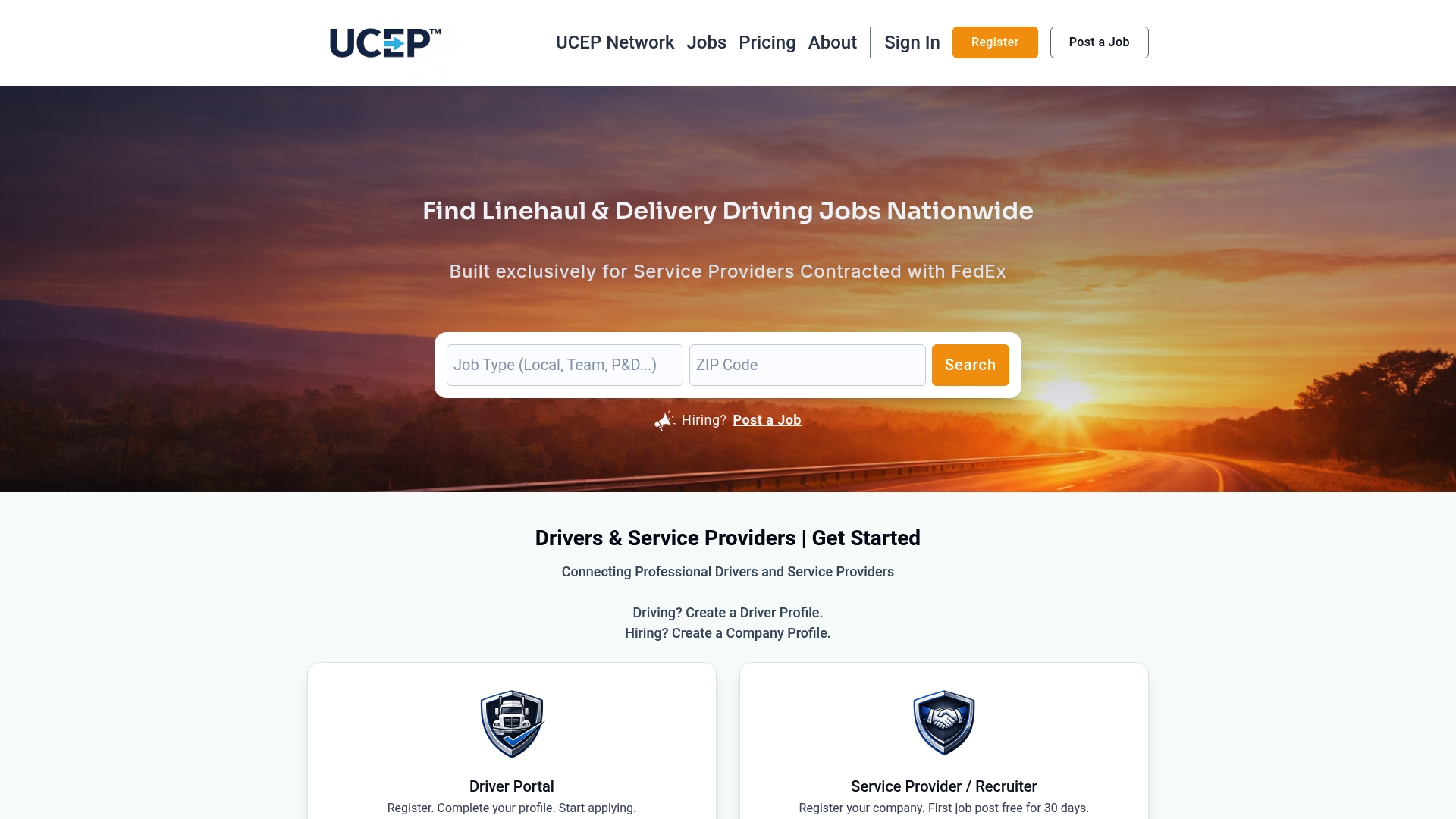
Browse service provider reviews on Ucep to evaluate carriers before you apply, so your updated resume goes to the right opportunity. You can also explore the UCEP Network to see which service providers are actively hiring and what compliance and equipment skills they prioritize. Ucep keeps your job search focused on FedEx-contracted roles so you are not sorting through listings that do not match your CDL-A qualifications.
FAQ
What should go at the top of a truck driver resume?
Your CDL class, endorsements, and a three to five sentence summary highlighting your safety record and key equipment experience belong at the top. ATS systems and recruiters scan this section first, so credentials placed here have the highest visibility.
How long should a truck driver resume be?
One page is standard for drivers with under 10 years of experience. Two pages are acceptable for seasoned drivers with extensive, relevant history across multiple role types or carriers.
How do I make my resume pass ATS screening?
Name your CDL class, every endorsement, the ELD platform you have used, specific equipment models, and quantified safety metrics. ATS filters match keywords from job postings, so using the exact terminology from each posting increases your match score.
What metrics should I include for a dedicated driver role?
List trips per week, stops per day, on-time delivery rate, and any customer-specific workflow details such as appointment check-in procedures or dock-door SOPs. These details signal that you understand the operational demands of single-customer lane work.
Should I use a different resume for each job application?
Yes. Customizing your summary and skills section to match the language in each job posting directly improves your callback rate. A resume written for an OTR flatbed role uses different keywords than one written for a dedicated food-service account.