Nationwide job search trucking is the process of applying for CDL driving positions across the entire United States, targeting roles such as linehaul, OTR, regional, and dedicated freight. The industry term for this practice is nationwide CDL driver recruitment, and understanding how it works gives you a real advantage over drivers who apply randomly. This guide covers every segment you can target, the credentials you need ready before you apply, and the platforms that connect you with verified carriers fastest. Whether you hold a CDL-A and want linehaul work or you are transitioning from regional to OTR, the steps here apply directly to your situation.
What is nationwide job search trucking and which roles does it cover?
Nationwide job search trucking covers four primary driving segments: OTR (over-the-road), regional, local, and linehaul. Each segment differs in pay, home time, and mileage expectations. Knowing the difference before you apply prevents mismatched offers and wasted application time.
The table below compares the four segments side by side so you can identify the right fit before you start applying.
| Segment | Typical pay range | Home time | Weekly mileage |
|---|---|---|---|
| OTR | $60,000–$90,000/year | Every 2–3 weeks | 2,500–3,000 miles |
| Regional | $55,000–$75,000/year | Weekly or bi-weekly | 1,800–2,500 miles |
| Local | $45,000–$65,000/year | Daily | Under 500 miles |
| Linehaul | $60,000–$80,000/year | Varies by terminal schedule | 1,500–2,500 miles |
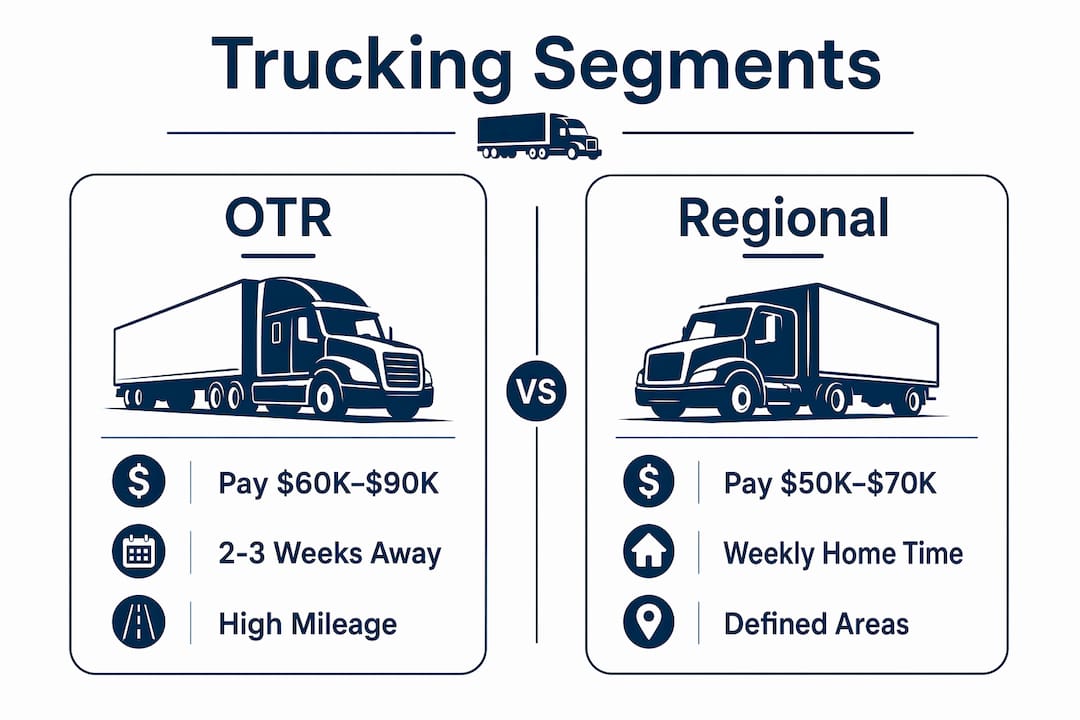
OTR pays $60K–$90K annually but requires 2–3 weeks away from home per trip. That home time gap is the leading cause of driver turnover in OTR positions, which means carriers in this segment actively compete for drivers who can handle the schedule. If you want the highest mileage pay and are comfortable with extended trips, OTR is the right starting point.
Regional drivers operate within defined state areas and typically return home on Fridays through Sundays or take a midweek break. This segment blends road time with consistent home life, making it the most popular choice for experienced drivers with families. Carriers like J.B. Hunt publish category pages that detail exact geographic coverage and schedule expectations, which reduces surprises after you accept an offer.

Linehaul positions focus on moving freight between terminals on fixed routes. The schedule is more predictable than OTR because you run the same corridor repeatedly. This consistency appeals to drivers who want structure without committing to a local route's physical demands of frequent loading and unloading.
Pro Tip: Before applying to any segment, read the carrier's category page carefully. Avoid listings that use vague labels like "OTR" without specifying route geography or home time frequency. Carriers that define routes and home time upfront are the ones worth your application.
How to prepare for a nationwide trucking job search
Preparation determines how fast you move from application to hire. Carriers run compliance checks immediately, so your documents need to be ready before you submit a single application. Disorganized credentials slow the process and can cause carriers to move on to the next applicant.
Follow these steps to get ready:
-
Gather your CDL and endorsements. Confirm your CDL-A is current and check whether the roles you are targeting require Hazmat, Tanker, or other specialized endorsements. Expired or missing endorsements disqualify you before a recruiter reads your application.
-
Obtain your current medical certificate. Your DOT physical must be valid. Carriers verify this during pre-employment screening, and an expired certificate stops the hiring process immediately.
-
Register with the FMCSA Drug and Alcohol Clearinghouse. FMCSA Clearinghouse rules require employers to run a full pre-employment query and at least annual limited queries for every CDL driver. You must provide electronic consent before any carrier can pull your record. Set this up before you apply.
-
Pull your MVR and PSP report. Your Motor Vehicle Record and Pre-Employment Screening Program report show carriers your driving history. Review both for errors before a recruiter sees them. Disputing inaccuracies takes time, so do this early.
-
Organize all documents digitally. Store your CDL, medical certificate, MVR, and endorsement copies in a single folder you can access from your phone. Fast applications require fast document submission, and applying to multiple carriers simultaneously is the recommended approach.
-
Apply to 5–10 carriers at once. Applying to a single carrier and waiting for a response wastes weeks. Submitting to 5–10 companies in parallel gives you competing offers and shortens your time to hire significantly.
Pro Tip: Create a simple spreadsheet tracking each carrier you apply to, the date submitted, the contact name, and the follow-up date. This prevents duplicate applications and keeps your search organized when responses come in at different times.
Where to find nationwide trucking jobs effectively
The platform you use to search directly affects the quality and volume of opportunities you see. General job boards surface trucking listings alongside unrelated roles, which creates noise. Driver-specific platforms filter by CDL class, route type, and home time preference, which saves time and surfaces more relevant results.
Here are the most effective sources for a nationwide CDL job search:
-
Specialized driver recruiting platforms. Tools like Tenstreet allow you to submit your DOT records to multiple fleets through a single application. Carriers using Tenstreet can return hire decisions within 72 hours, which is significantly faster than applying through individual carrier websites.
-
Carrier category pages. Large carriers publish dedicated pages for each driving segment. These pages list route geography, home time frequency, pay structure, and equipment type. Using these pages instead of generic listings gives you accurate information before you apply.
-
Niche job boards for CDL drivers. Platforms built specifically for commercial drivers filter listings by CDL class, endorsement, and route type. This specificity matters when you are targeting linehaul or CDL-A team positions rather than general freight roles.
-
FedEx-focused platforms. If you are targeting FedEx Service Provider routes, Ucep lists verified linehaul, CDL-A solo, CDL-A team, and pickup and delivery positions in one place. You can browse driver opportunities without sorting through unrelated listings.
-
Compliance verification before applying. Before committing to a carrier, check their FMCSA safety score through the FMCSA SAFER system. Carriers with poor compliance records create liability for drivers, and FMCSA rules standardize safety documentation requirements across all carriers nationwide.
Applying through transport-focused job platforms that aggregate listings from multiple carriers also reduces the time you spend searching individual websites. The goal is to maximize the number of qualified applications you submit in the shortest time possible.
Understanding trucking job offers and what employers expect
Reading a job listing accurately prevents you from accepting a role that does not match your lifestyle or income goals. Carriers use specific terms that carry precise meanings in the industry.
Here is what to look for in any nationwide trucking job offer:
-
Pay structure. OTR and linehaul roles typically pay per mile. Regional and dedicated roles sometimes offer hourly pay or a combination of mileage and stop pay. Confirm the base rate, detention pay policy, and fuel surcharge split before accepting.
-
Home time language. Terms like "home weekly" and "home regularly" mean different things at different carriers. Ask for the specific schedule in writing. Dedicated regional drivers typically return home one to two times per week on a fixed schedule, which is more reliable than open-ended home time promises.
-
Contract type. Company driver positions provide a salary or per-mile rate with the carrier covering equipment costs. Lease-to-own and owner-operator arrangements shift equipment and fuel costs to you. Understand the full cost structure before signing any lease agreement.
-
FMCSA pre-employment checks. Every carrier must run a pre-employment Clearinghouse query before your first dispatch. This is non-negotiable under federal law. Carriers that skip this step are out of compliance, which is a red flag.
-
Route type terminology. "Dedicated" means you haul for a single shipper on consistent lanes. "Intermodal" involves rail and truck combinations. "Linehaul" moves freight between terminals on fixed corridors. Each term implies a different daily routine and pay model.
Pro Tip: Ask every recruiter for the average weekly gross pay of drivers currently in the role, not the advertised maximum. The average reflects what you will realistically earn after slow weeks, weather delays, and equipment downtime.
Key takeaways
Nationwide trucking employment requires segment targeting, compliance readiness, and platform selection to produce fast, quality results.
| Point | Details |
|---|---|
| Segment targeting matters | Identify OTR, regional, local, or linehaul before applying to avoid mismatched offers. |
| Compliance readiness speeds hiring | FMCSA Clearinghouse consent and current medical certificates must be ready before your first application. |
| Apply to multiple carriers at once | Submitting to 5–10 carriers simultaneously shortens time to hire and creates competing offers. |
| Use driver-specific platforms | Tenstreet, niche CDL boards, and FedEx-focused platforms like Ucep surface more relevant listings than general job sites. |
| Read offers precisely | Verify home time schedules, pay structure, and contract type in writing before accepting any position. |
What I have learned from watching drivers search nationwide
Most drivers who struggle with a nationwide trucking job search make the same mistake: they apply broadly without targeting a specific segment first. They send applications to OTR carriers, regional carriers, and local carriers simultaneously, then accept the first offer that calls back. That approach leads to a mismatch between the job and the lifestyle they actually want, and they are back searching within six months.
The drivers who move fastest and stay longest in their roles do two things differently. They decide on a segment before they apply, and they have every compliance document ready on day one. Career progression in trucking typically starts with OTR for experience, then moves to regional or local roles for better home time. Knowing where you are in that progression helps you target the right listings instead of applying to everything available.
The other pattern I have seen consistently is that drivers underestimate how much their compliance record affects hiring speed. Carriers run Clearinghouse queries immediately. If your consent is not set up or your record has unresolved violations, the process stops. Getting that sorted before you apply is not optional. It is the single fastest way to shorten your time from application to first dispatch.
— Aaron
Start your search with Ucep
Ucep is a job board and recruiting platform built exclusively for Service Providers contracted with FedEx. If you are looking for linehaul, CDL-A solo, CDL-A team, or pickup and delivery roles, Ucep lists verified openings in one focused place so you are not sorting through unrelated listings.
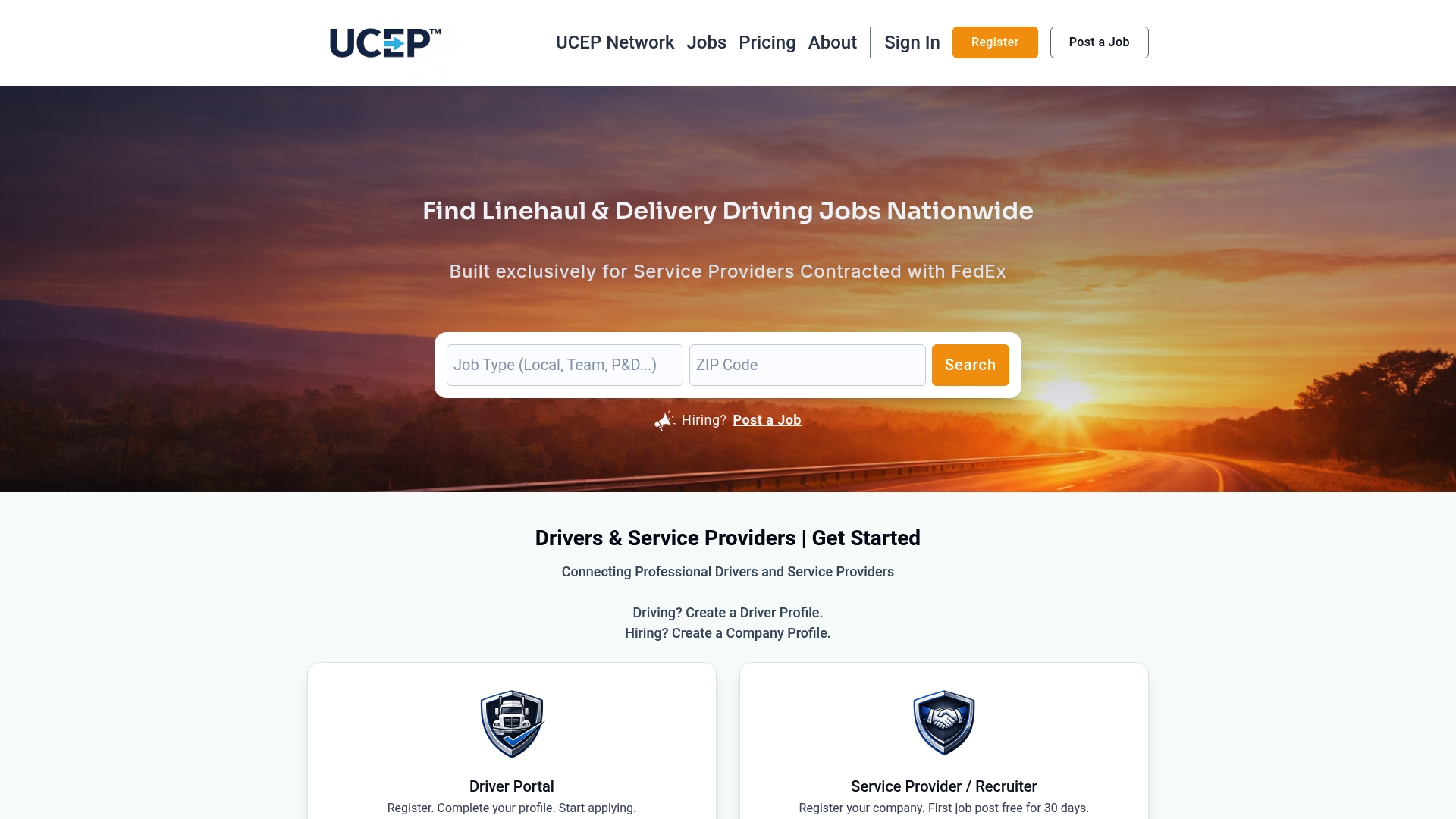
You can read service provider reviews on Ucep before you apply, giving you direct insight into how carriers operate, what home time actually looks like, and what other drivers say about working with specific service providers. You can also browse the full Ucep network to see which companies are actively hiring in your region. Start with the companies hiring now page to find current CDL-A openings across the country.
FAQ
What does nationwide job search trucking mean?
Nationwide job search trucking refers to the process of applying for CDL driving positions across the entire United States, covering segments like OTR, regional, linehaul, and local freight. It involves targeting specific route types, preparing compliance documents, and applying through driver-specific platforms.
What CDL class do I need for most nationwide trucking jobs?
Most OTR, linehaul, and regional positions require a CDL-A license. Local and pickup and delivery roles may accept CDL-B depending on the carrier and equipment type.
How does FMCSA Clearinghouse affect my job application?
Every carrier must run a full pre-employment query through the FMCSA Drug and Alcohol Clearinghouse before your first dispatch. You must register and provide electronic consent before any carrier can access your record.
How many carriers should I apply to at once?
Applying to 5–10 carriers simultaneously is the recommended approach. Submitting to multiple carriers at once shortens your time to hire and gives you competing offers to compare.
What is the difference between dedicated and linehaul trucking?
Dedicated trucking means hauling for a single shipper on consistent, pre-assigned lanes. Linehaul moves freight between terminals on fixed corridors and typically involves less direct shipper interaction and more predictable route schedules.