
The most effective approach for FedEx Service Providers is a three-layer pay package: a verifiable base rate, a guaranteed weekly floor that protects household income, and targeted incentives tied to behaviors drivers can actually control. This structure lets you set competitive driver compensation without chasing national carriers on headline CPM alone. It also aligns pay design with safety evidence, which matters for your FedEx contract performance.
Start here:
- Pull current market rates from BLS/OEWS, the Ucep platform, and posted job listings for your specific route types (linehaul, CDL-A team, P&D).
- Choose the right pay structure for each role (CPM with guarantee for linehaul, hourly for P&D, percentage for dedicated lanes).
- Plan a four-week pilot with a defined driver group before full rollout.
- Consult a professional payroll provider to set up per diem correctly before the first paycheck goes out.
Table of Contents
- What pay models work best for FedEx Service Providers?
- How do you benchmark competitive rates for your driver roles?
- How do you design pay formulas drivers can verify?
- What payroll and compliance steps do you need before launch?
- Which incentives improve retention without creating safety risks?
- How do you roll out the new pay package without losing driver trust?
- Key Takeaways
- Pay design decisions that actually move the needle
- Ucep helps you recruit and benchmark for FedEx driver roles
- Useful sources for further research
What pay models work best for FedEx Service Providers?
Driver pay structures fall into five common categories. Each carries real trade-offs for verification, income predictability, and safety.
| Pay Model | Best Fit | Key Advantage | Main Risk |
|---|---|---|---|
| Hourly / day rate | P&D, local routes | Predictable cost; easy to verify | Less incentive for efficiency |
| Cents-per-mile (CPM) | Linehaul, OTR | Ties pay to output | Deadhead miles reduce effective rate |
| Percentage of load | Dedicated lanes | Scales with revenue | Hard to verify without transparent settlement |
| Guaranteed weekly minimum | All roles | Stabilizes household income | Requires accurate volume forecasting |
| Performance bonuses | Layered on any base | Rewards specific behaviors | Can encourage risky driving if poorly designed |
A systematic review covering 43 studies found that performance-based pay is frequently linked to poorer safety outcomes, while higher pay levels and pay for non-driving tasks tend to improve safety. Fourteen of the twenty studies that examined payment methods directly connected performance-based pay to worse safety results.
Safety signal: Pay tied strictly to productivity, such as CPM without a floor, can push drivers to skip rest or rush deliveries. A guaranteed floor removes that pressure without eliminating the productivity signal entirely.
For FedEx linehaul, CPM with a weekly guarantee is the most common structure. For P&D routes, hourly or day-rate pay is easier to verify and reduces the temptation to rush stops. Dedicated lanes with consistent freight are good candidates for percentage pay, provided you publish clear settlement statements.
How do you benchmark competitive rates for your driver roles?
Reliable benchmarking starts with role definition, not a generic "truck driver" search. A CDL-A team linehaul driver and a P&D driver operate in different labor markets, even within the same terminal.
Benchmarking checklist:
- Define the role precisely: CDL-A solo, CDL-A team, linehaul, or P&D.
- Segment by experience band (0–2 years, 3–5 years, 5+ years).
- Specify home-time expectations and route type in your comparison set.
- Pull data from at least three sources: BLS Occupational Employment and Wage Statistics, posted job listings on the Ucep platform, and published salary guides.
- Use data no older than 12 months; driver pay has shifted enough that older surveys mislead.
- Collect a minimum of 10–15 comparable postings per role before drawing a range.
The National Transportation Institute recommends segmenting drivers by role, experience, and replaceability rather than applying broad increases. That approach delivers more retention per dollar. Regional cost-of-living differences also matter: a CPM rate competitive in the Southeast may fall short in the Pacific Northwest or the Northeast corridor.
Pro Tip: Published CPM figures rarely account for deadhead miles or stop-heavy P&D work. When comparing CPM offers, calculate effective CPM (total weekly pay divided by total miles driven, including empty miles) to get a number drivers can actually compare.
How do you design pay formulas drivers can verify?
Three template structures cover most FedEx Service Provider scenarios. Use these as starting points, then model your actual cost impact in a spreadsheet before committing.
Template A: Mileage-focused with guarantee (linehaul)
- Set a base CPM rate (for example, $0.58 per loaded mile).
- Add a weekly guarantee floor (for example, $1,200 guaranteed regardless of miles dispatched).
- Layer a quarterly safety bonus ($150–$200 per quarter with zero preventable incidents).
- Add correctly structured per diem for nights away from home terminal.
Sample weekly gross: 2,200 miles × $0.58 = $1,276. Floor not triggered. Per diem: 4 nights × $69 (IRS standard) = $276 non-taxable. Total gross package: $1,552.
Template B: Hourly for P&D
- Set an hourly rate (for example, $22–$26/hour depending on market).
- Pay stop pay for each delivery stop above a defined threshold (for example, $1.50 per stop over 80).
- Add an on-time bonus ($50/week for 95%+ on-time delivery rate).
Sample weekly gross: 45 hours × $24 = $1,080 + 20 extra stops × $1.50 = $30 + on-time bonus $50 = $1,160 gross.
Template C: Percentage for dedicated lanes
- Pay a percentage of the linehaul revenue (for example, 28–30%).
- Publish the settlement statement with the load rate visible so drivers can verify the math.
- Set a weekly floor at roughly 80% of average weekly pay to protect against low-volume weeks.
Driver compensation covers far more than mileage pay, including detention, stop pay, layover, and benefits. Publish a one-page pay sheet that lists every component so drivers can check each line on their settlement statement. Transparency here is a direct retention lever.
Size incentive pools so they are self-funding: a fuel-efficiency bonus that pays out $75/week when a driver beats a defined MPG target should be offset by the fuel savings generated. Run the math before you announce the program.
What payroll and compliance steps do you need before launch?
Per diem is the most commonly mishandled element in driver pay packages. Properly structured per diem reduces taxable wages for drivers and lowers employer payroll taxes, but misapplied per diem or incorrect pay-category handling increases audit risk and damages driver trust.
Payroll compliance checklist:
- Confirm driver classification: employee vs. owner-operator. Misclassification triggers IRS and DOL penalties.
- Apply FLSA overtime rules correctly. Most CDL drivers are exempt from FLSA overtime under the Motor Carrier Act exemption, but verify this with your payroll provider for your specific routes and driver classifications.
- Document per diem with a clear accountable plan: overnight travel away from home terminal, IRS-compliant daily rate, and records of travel dates.
- Verify state income tax withholding for drivers who cross state lines regularly.
- Confirm that percentage pay settlements show the gross load revenue so drivers can audit their own checks.
Per diem warning: Paying a flat "per diem" that is not tied to actual overnight travel away from the home terminal, or that inflates the non-taxable portion beyond IRS limits, is a common audit trigger. Work with a payroll provider experienced in trucking before your first paycheck.
Bring in a professional payroll provider before launch, not after the first complaint. Ask them specifically about per diem setup, settlement statement formatting, and how they handle percentage pay calculations. For non-compete and employment agreement considerations that interact with your pay structure, review those alongside your payroll setup.
Pro Tip: Structure settlement statements so every pay component appears as a separate line: base pay, stop pay, per diem, bonuses, and deductions. Drivers who can verify their own check are less likely to call a recruiter at a competing carrier.
Which incentives improve retention without creating safety risks?
The same literature review that flagged performance-based pay risks also identified which pay elements tend to improve outcomes: higher base pay, pay for non-driving tasks (pre-trip inspections, loading assistance, detention time), and predictable income floors.
Design principle: Pay drivers for what you want them to do carefully, not just quickly. A safety bonus for zero preventable incidents rewards the outcome you need. A pure CPM structure with no floor rewards speed, which is the outcome you want to avoid.
Safe incentive examples:
- Quarterly safety bonus tied to zero preventable incidents.
- Fuel-efficiency bonus based on MPG targets the driver can influence.
- Non-driving task pay for pre-trip inspections, detention time, and loading.
- Annual retention increase (for example, $0.02 CPM per year of tenure, up to a defined cap).
- Predictable home-time schedule published in writing at hire.
Retention checklist:
- Guaranteed weekly floor set at roughly 80% of average weekly pay.
- Published one-page pay sheet given to every driver at onboarding.
- Visible bonus math: drivers can calculate their own bonus before the quarter ends.
- Equipment and scheduling commitments documented and honored.
The Four Ps framework (pay, perks, programs, prerequisites) is a useful diagnostic. If your headline pay is competitive but turnover remains high, the problem is often in perks (equipment quality, home time) or programs (onboarding, career path) rather than CPM.
How do you roll out the new pay package without losing driver trust?
Operational rollout checklist:
- Configure payroll system and test one full pay cycle before the live date.
- Print and distribute a one-page pay sheet to every driver before the effective date.
- Train managers on how to explain each pay component and answer verification questions.
- Create a written FAQ covering: how the guarantee works, how bonuses are calculated, and how to raise a pay discrepancy.
- Set a clear enrollment or effective date and communicate it well in advance.
What to say in the first pay walkthrough: "This is your base rate, your guaranteed floor, and how your bonus is calculated. Each number on your settlement statement corresponds to one of these components. If anything looks off, please bring it to me promptly so we can address it."
Pro Tip: Hold the first one-on-one pay walkthrough before the first paycheck under the new structure, not after. Drivers who understand the math before they see the check are far less likely to dispute it or start looking elsewhere.
Payroll setup costs vary by provider but typically include a one-time configuration fee and a per-driver monthly cost. Budget two to four weeks for setup, testing, and manager training before your pilot start date.
Key Takeaways
A three-layer pay package (verifiable base, guaranteed weekly floor, targeted incentives) is the most effective structure for FedEx Service Providers to compete on compensation without unsustainable headline raises.
| Point | Details |
|---|---|
| Benchmark by role, not title | Segment CDL-A team, solo, linehaul, and P&D separately using current market data. |
| Guarantee protects retention | A weekly floor set at roughly 80% of average weekly pay stabilizes household income and reduces turnover. |
| Per diem compliance is non-optional | Misapplied per diem triggers audits; work with a trucking-experienced payroll provider before launch. |
| Safety incentives must be behavior-based | Pay for zero preventable incidents and non-driving tasks, not raw productivity metrics. |
| Ucep platform data supports benchmarking | Ucep's FedEx-focused job listings and driver reviews give Service Providers real market signals for pay and recruiting. |
Pay design decisions that actually move the needle
Most Service Providers focus on CPM when they lose a driver to a competitor. The CPM number is rarely the real reason. Drivers leave because they cannot predict their weekly check, cannot verify their settlement statement, or feel that the bonus math is rigged against them. Those are structural problems, not headline-rate problems.
The evidence from the safety literature reinforces this. Paying more per mile without a floor does not improve retention and can actively worsen safety outcomes. The levers that work are transparency, predictability, and pay for the tasks drivers perform carefully rather than quickly.
Ucep's data on driver experience and FedEx Service Provider retention points to the same conclusion: drivers who can verify their pay and who see a clear path to higher earnings through tenure and safe performance stay longer. That is a design choice, not a budget question.
When applicant volume on a role drops or fill time extends beyond two weeks, that is a pay signal worth acting on. When volume is healthy but offer acceptance drops, the problem is usually in the perks or programs layer, not CPM. Use recruiting data as a real-time benchmark, not just an annual survey.
Ucep helps you recruit and benchmark for FedEx driver roles
FedEx Service Providers who post on Ucep get access to a driver pool that is already filtered for FedEx-related roles, including CDL-A team, CDL-A solo, linehaul, and P&D. That means your job postings reach qualified candidates faster, and the platform's listing data gives you a live read on what competing providers are offering.
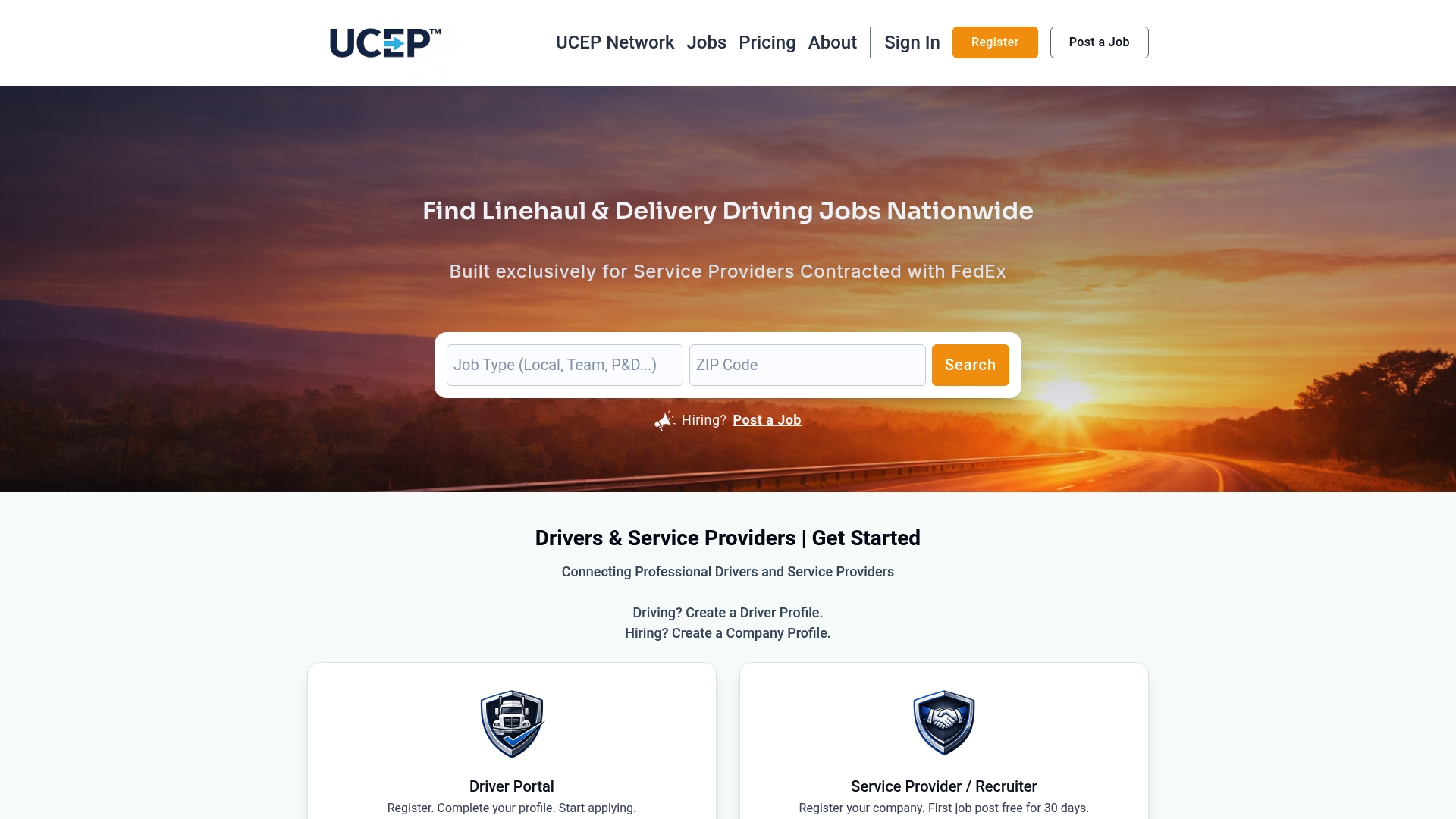
Ucep's employer directory and service provider reviews also give your company a public reputation signal that supports recruiting before a candidate even applies. Drivers research providers before they apply. A strong profile with transparent pay information converts more applicants than a higher CPM with no supporting context.
Post your open roles on Ucep and use the platform's listing data to pressure-test your pay package against what the market is actually offering right now.
Useful sources for further research
- Ways to pay truck drivers
- Systematic review of economic pressure, driver compensation, and safety outcomes
- How to Pay Truck Drivers: The Three-Layer Pay Package Small Fleets Use to Keep Their Best Drivers Without Winning a Bidding War - Innovative Small Carrier Services
- Where to focus your driver pay dollars in 2026 - The National Transportation Institute
- Driver compensation is about far more than mileage pay - The National Transportation Institute
- Truck Driver Salary Guide 2026 — What CDL Drivers Actually Earn - FillTheRig
- The Four Ps of Driver Pay - The National Transportation Institute
- Why Driver Experience Matters for FedEx Service Providers
Confirm publication dates and your state's specific overtime and tax rules before implementing any pay structure. This article provides general information, not legal or tax advice. Consult a qualified payroll professional or employment attorney for guidance specific to your operation.
Recommended
- What It Takes to Succeed as a Team Driver for Service Providers Contracted with FedEx | UCEP Meta description - United Contractor Employment Portal
- Workforce Planning for FedEx Contractors: 2026 Guide
- Why Driver Experience Matters for FedEx Service Providers
- Common FedEx Contractor Staffing Challenges in 2026