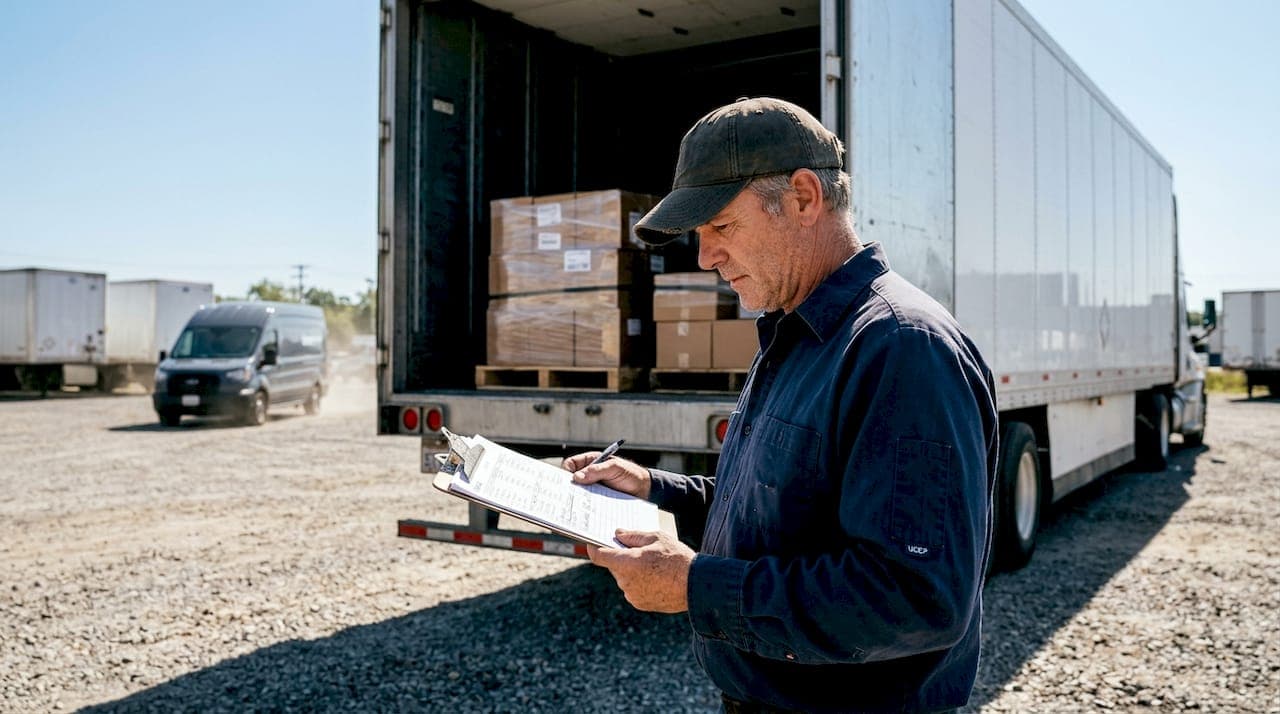
A dedicated route driver is a professional truck driver who hauls freight exclusively for one customer or account, following the same route or set of routes on a consistent schedule. This role differs from over-the-road (OTR) driving, where drivers travel long distances across multiple regions with varied customers and unpredictable schedules. The industry term for this arrangement is "dedicated contract carriage," and it sits at the center of how major shippers keep supply chains reliable. If you are exploring a dedicated route driver job, understanding what separates this role from other trucking positions is the first step toward making the right career choice.
What is a dedicated route driver and what do they do daily?
A dedicated route driver transports goods along a fixed route for a single shipper or customer, typically under a long-term contract between a carrier and that customer. The driver reports to the same locations, interacts with the same dock personnel, and follows the same delivery windows day after day. This predictability is the defining feature of the role.
The daily responsibilities of a dedicated driver cover more ground than simply moving freight from point A to point B. Dedicated truck driver responsibilities include:
- Pre-trip and post-trip inspections to meet Federal Motor Carrier Safety Administration (FMCSA) compliance standards
- Loading and unloading coordination with warehouse and dock staff at assigned facilities
- Maintaining delivery schedules with precise pickup and drop-off times for a single customer account
- Completing electronic logs and Hours of Service (HOS) records accurately
- Communicating with dispatchers and customers about delays, freight conditions, or schedule adjustments
- Building professional relationships with dock workers and receiving staff to keep operations running without friction
Pro Tip: Keep a written log of your regular contacts at each dock. Knowing names and preferred communication styles speeds up every delivery and sets you apart as a professional.
The relationship-building element is not a soft benefit. Repetition builds rapport that directly reduces daily operational stress. When dock staff know you and trust your process, loading times drop and disputes over freight conditions decrease.

What are the benefits of dedicated route driving?
Dedicated route driving offers a specific set of advantages that OTR and spot-market driving cannot match. The core benefit is predictability, and predictability touches every part of a driver's life.
Home time and schedule consistency
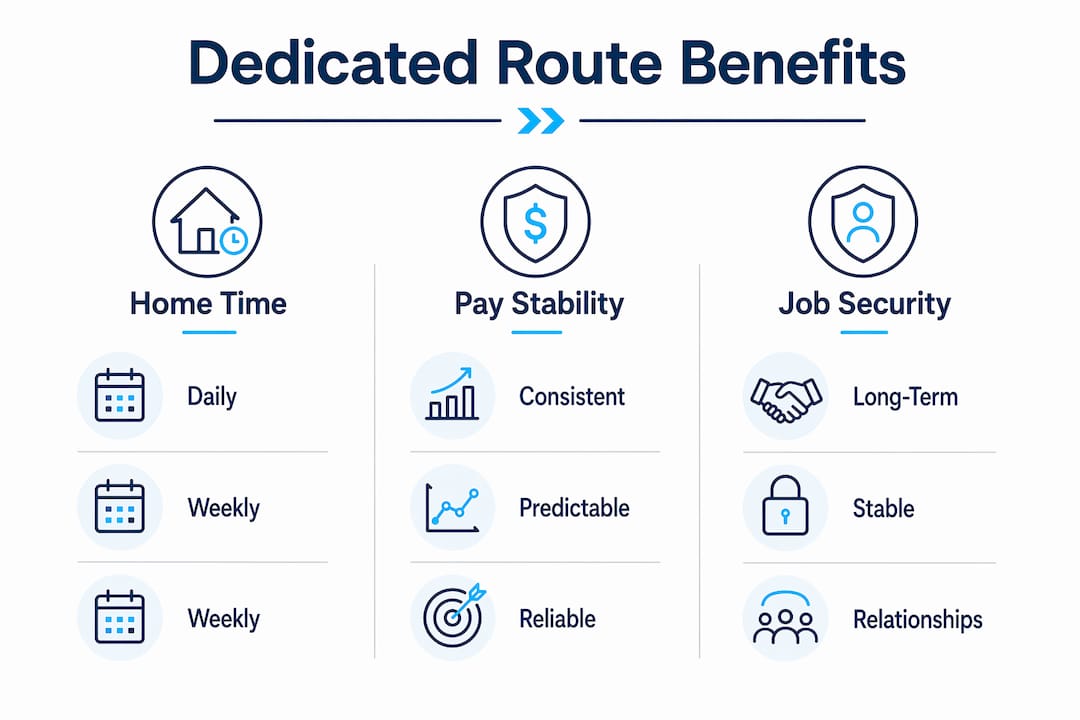
96% of dedicated drivers reach home daily or weekly, compared to OTR drivers who are away for three to four weeks at a time. That difference is significant for anyone with family obligations or health routines that require a stable schedule. Fixed schedules enable effective planning for meals, sleep, and personal time in ways that OTR simply does not allow.
Pay stability and operational efficiency
Dedicated drivers typically earn 5–15% less per mile than spot-market OTR drivers. That sounds like a drawback, but the trade-off is steady weekly pay with far less income variability. A driver on a dedicated account knows what their paycheck looks like before the week starts.
Operational efficiency adds another financial layer. Dedicated routes reduce deadhead miles from 15–25% in OTR down to 5–8%. Deadhead miles are miles driven without a paying load. Cutting them saves fuel, reduces wear on equipment, and keeps a driver's productive hours higher.
"Drivers who value family and steady income typically prefer dedicated routes, while those seeking higher earnings and varied scenery choose OTR roles." Source: Pros and Cons of Being a Dedicated Driver
Job security and long-term relationships
Dedicated drivers serve as the face of their company for a specific customer, which creates a stable work environment and stronger career longevity. Carriers value drivers who maintain those customer relationships because replacing them disrupts the account. That dynamic gives dedicated drivers real leverage when it comes to job security.
| Benefit | Dedicated Route | OTR |
|---|---|---|
| Home time | Daily or weekly | Every 3–4 weeks |
| Pay consistency | Steady weekly pay | Variable, spot-market rates |
| Deadhead miles | 5–8% | 15–25% |
| Customer relationships | Single, long-term account | Multiple, rotating customers |
| Schedule predictability | Fixed routes and windows | Varies by load and region |
What are the main challenges of being a dedicated route driver?
No driving role is without trade-offs, and dedicated contract carriage has clear ones. Understanding them before you commit helps you set realistic expectations.
The most common challenges dedicated drivers report include:
- Route monotony. Driving the same roads to the same locations every week can feel repetitive. Drivers who thrive on variety and new scenery often find dedicated routes limiting after the first few months.
- Lower earning ceiling. Because per-mile rates run 5–15% below spot-market rates, a driver who wants to maximize annual income will find OTR or owner-operator arrangements more lucrative during strong freight markets.
- Customer dependency. Your income and schedule depend on one account staying active. If that customer reduces freight volume or ends the contract, your position changes quickly. This is a real risk that OTR drivers spread across many customers do not face.
- Reduced schedule flexibility. Fixed routes mean fixed commitments. Taking time off or swapping shifts requires coordination with a dispatcher and sometimes the customer directly, which limits spontaneous schedule changes.
- Limited geographic exposure. Drivers who want to see different parts of the country will not get that from a dedicated route. The trade-off for predictability is a narrower operating area.
Less flexibility and variety are the direct costs of higher stability and predictable home time. Knowing which side of that trade-off matters more to you is the clearest way to decide if this role fits.
What qualifications does a dedicated route driver need?
Dedicated route driving has clear entry requirements. Meeting them is straightforward if you plan your steps in order.
- Obtain a Class A CDL. A Commercial Driver's License Class A is the baseline requirement for most dedicated driver jobs. This license covers combination vehicles, which includes tractor-trailers and most freight configurations used in dedicated contract carriage.
- Accumulate minimum driving experience. Most dedicated driver jobs require at least six months to one year of verified CDL driving experience. Some accounts with specialized freight require two or more years.
- Understand FMCSA compliance. Hours of Service rules, electronic logging device (ELD) requirements, and pre-trip inspection standards are non-negotiable. Carriers running dedicated accounts for major shippers hold drivers to strict compliance records.
- Build communication and customer service skills. A dedicated driver represents the carrier directly to the customer. Clear, professional communication with dock staff and dispatchers is part of the job description, not a bonus trait.
- Develop organizational habits. Managing delivery windows, paperwork, and equipment checks on a fixed schedule requires consistent personal organization. Drivers who run tight routines perform better on dedicated accounts.
Pro Tip: Before applying for dedicated positions, pull your Motor Vehicle Record (MVR) and DAC report. Carriers review both, and knowing what they see lets you address any issues before the interview.
Some dedicated accounts also require specific endorsements, such as Hazmat (H) or Tanker (N), depending on the freight type. Check the job posting carefully before applying to confirm which endorsements apply.
How does dedicated route driving affect work-life balance?
Work-life balance is where dedicated driving separates itself most clearly from other trucking roles. The consistent routes and schedules create a "sweet spot" for drivers who need to plan around family commitments, medical appointments, or personal routines.
Predictable home time directly reduces the mental health strain that affects many long-haul drivers. Knowing you will be home by a specific day each week changes how you plan meals, sleep, and time with family. The impact of home time on driver mental health is well-documented in the trucking industry, and dedicated routes address the root cause rather than the symptom.
"The ability to manage work-life balance due to consistent routes and schedules is the defining advantage of dedicated driving for drivers with family priorities." Source: Dedicated Trucking Insights by Melton Truck Lines
Less burnout follows from less uncertainty. OTR drivers face constant variables: new customers, unfamiliar docks, unpredictable weather in unfamiliar regions, and weeks away from home. Dedicated drivers eliminate most of those variables. The result is a lower-stress daily experience that supports longer careers in the industry.
The earnings trade-off is real, but many drivers find that steady income at a slightly lower rate beats the stress of chasing spot-market rates. Personal priorities determine which arrangement wins. Drivers with young children, aging parents, or health conditions that require routine almost always favor the dedicated model.
Key Takeaways
A dedicated route driver is the right career choice for drivers who prioritize schedule stability, consistent home time, and long-term customer relationships over maximum per-mile earnings.
| Point | Details |
|---|---|
| Core definition | A dedicated driver hauls freight for one customer on a fixed route under a long-term contract. |
| Home time advantage | 96% of dedicated drivers reach home daily or weekly, compared to OTR drivers away for weeks. |
| Pay trade-off | Dedicated rates run 5–15% below spot-market but deliver steady, predictable weekly income. |
| Key qualifications | A Class A CDL, minimum experience, FMCSA compliance knowledge, and strong communication skills are required. |
| Best fit | Drivers who value family time, routine, and job security over variety and peak earnings thrive in this role. |
What I have learned about dedicated driving after years in transportation
Drivers often ask me whether dedicated routes are "settling" compared to OTR. My answer is always the same: it depends entirely on what you are optimizing for.
The drivers I have seen burn out fastest are the ones who chased maximum per-mile rates without accounting for what weeks away from home actually cost them. Dedicated driving is not a lesser version of trucking. It is a different product, built for a different set of priorities.
The role suits drivers who are disciplined, relationship-oriented, and comfortable with routine. If you find satisfaction in doing something well repeatedly, rather than doing something new constantly, dedicated routes will reward you. The rapport you build with dock staff and customer contacts becomes a genuine professional asset over time.
One thing I would tell anyone considering this path: vet the account before you accept the position. A dedicated route is only as stable as the customer behind it. Ask how long the carrier has held the contract and whether the account has grown or shrunk in recent years. That one question tells you more about your actual job security than any recruiter pitch.
The trucking industry is shifting toward more dedicated and regional arrangements as shippers prioritize supply chain reliability. That trend works in your favor if you get into dedicated driving now and build a strong track record on a solid account.
— Aaron
Dedicated driver opportunities through Ucep
Ucep is a job board and recruiting platform built exclusively for Service Providers contracted with FedEx. If you are ready to find a dedicated driver role, Ucep connects you directly with Service Providers hiring for pickup and delivery jobs and linehaul positions across the country.
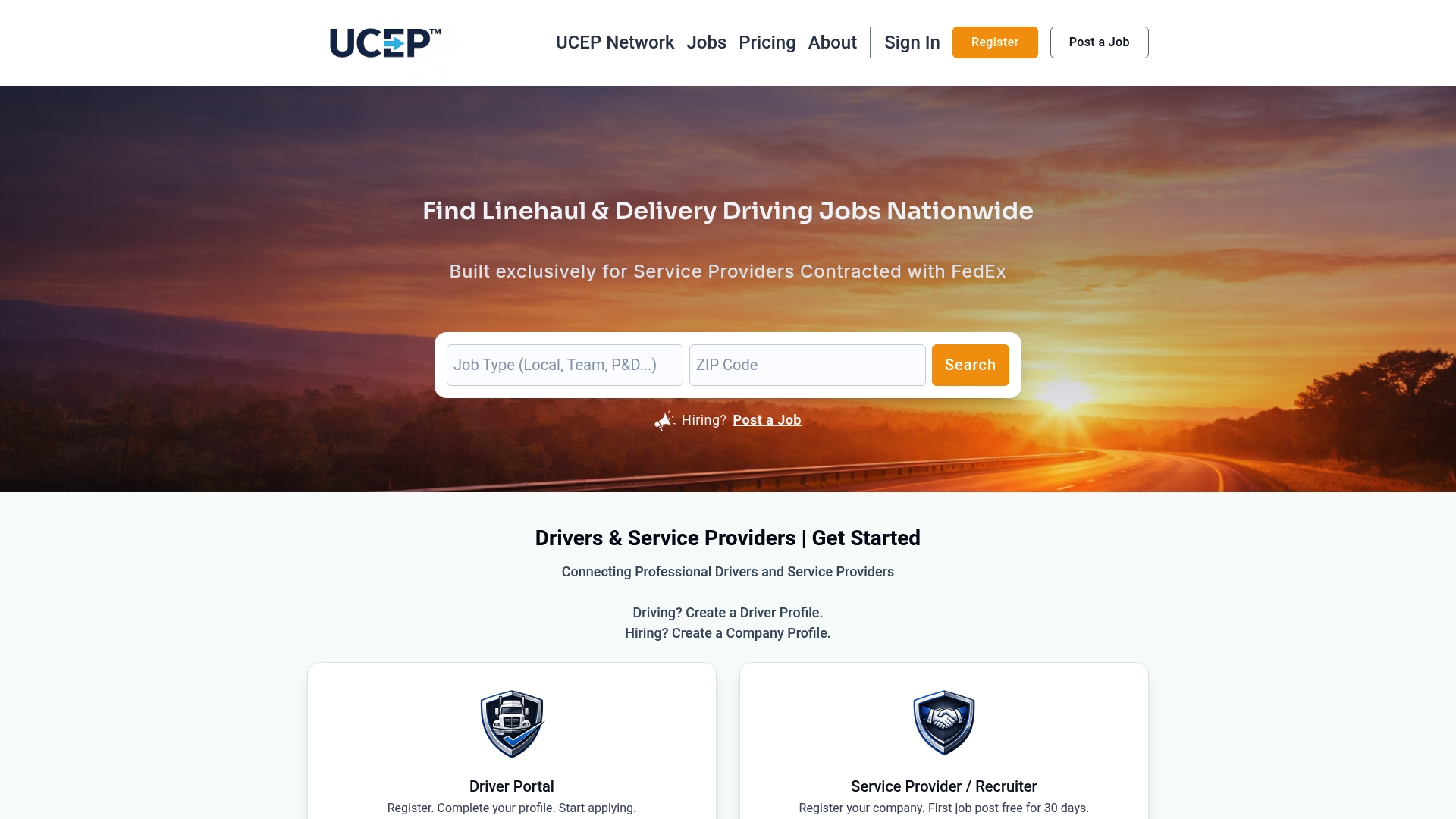
Ucep cuts through the noise of general job boards by focusing entirely on FedEx-related driving opportunities. You will not sort through irrelevant listings or compete with candidates from unrelated industries. Every posting on the platform is relevant to your CDL and your career goals. Browse current openings and apply directly to Service Providers looking for drivers with your qualifications.
FAQ
What is the difference between a dedicated driver and an OTR driver?
A dedicated driver hauls freight for one customer on a fixed route with predictable home time, while an OTR driver travels across multiple regions for various customers and is typically away from home for three to four weeks at a time.
How much does a dedicated route driver earn?
Dedicated drivers earn a steady weekly income, though per-mile rates typically run 5–15% below spot-market OTR rates. The trade-off is consistent pay with far less income variability week to week.
What CDL do you need to become a dedicated route driver?
Most dedicated route driver jobs require a Class A CDL along with a minimum of six months to one year of verified driving experience. Some accounts require additional endorsements depending on the freight type.
Is dedicated driving good for work-life balance?
Dedicated driving is one of the best trucking arrangements for work-life balance. Fixed schedules and consistent home time allow drivers to plan around family, health, and personal routines in ways that OTR driving does not support.
What skills matter most for a dedicated route driver job?
Strong communication, organizational habits, and customer service skills matter as much as driving ability. Dedicated drivers represent their carrier directly to a single customer, so professional conduct and reliability are central to the role.