
Contracted carrier work delivers steadier volumes, more predictable cash flow, and a clearer path to fleet growth than spot-market hauling alone. The core advantages of working with contracted carriers come down to one thing: replacing reactive, load-by-load uncertainty with a structure your operation can actually plan around.
Quick summary of the primary benefits:
- Predictable daily and weekly load volumes
- Justified fleet investment and controlled scaling
- Stronger driver recruiting and retention
- Better equipment-to-freight matching and lower deadhead
- Stable, forecastable revenue with reduced rate volatility
- Lower administrative overhead through dedicated lanes
- Early access to shipper volume forecasts and lane data
- Priority freight access and preferred carrier status
One caveat worth stating upfront: contracts involve trade-offs. You give up some spot-market flexibility, and the terms you sign matter as much as the volumes they promise.
Table of Contents
- 1. Contracted work gives you consistent, predictable loads
- 2. Contracts let you grow your fleet with confidence
- 3. Stable routes help you recruit and keep quality drivers
- 4. Contracts match your freight to your equipment
- 5. Contracted work stabilizes your cash flow
- 6. Dedicated lanes reduce your operational overhead
- 7. Contracted partners share market intelligence you can use
- 8. How to evaluate a contract opportunity
- 9. Downsides of contracted work and how to manage them
- 10. How specialized recruiting platforms help you staff contracted routes
- 11. When contract work makes sense for your carrier business
- Key Takeaways
- What experienced logistics managers actually do with contracts
- Ucep helps carriers staff contracted routes faster
- Further reading and authoritative sources
1. Contracted work gives you consistent, predictable loads
Spot freight is unpredictable by design. Contract work converts that volatility into committed capacity, meaning you know roughly how many loads you're moving each week before the week starts.
Dedicated contract carriage stabilizes rates and guarantees pre-established capacity, protecting both shippers and carriers from spot-market swings. Contract terms commonly run 3–5 years with set pricing, which gives your dispatch team a real planning horizon.
Stat to know: A dedicated fleet raised on-time performance from approximately 95% to over 98% for select high-value retail clients after moving off one-way spot coverage.
Better utilization follows naturally. When you know Tuesday's loads before Monday ends, you can position drivers and equipment without scrambling. Empty miles drop. Route planning tightens. For carriers managing seasonal volume spikes, that predictability is especially valuable.
Pro Tip: In your first 30–90 days on a contract lane, prioritize on-time pickup and delivery above everything else. Brokers and shippers evaluate carriers on on-time performance, communication speed (response within roughly 15 minutes), and document turnaround such as POD and BOL within 24 hours. Hit those benchmarks consistently and you move toward preferred status faster.
2. Contracts let you grow your fleet with confidence
Fleet investment is a capital decision. Banks and lessors want to see revenue certainty before approving equipment financing, and a signed contract is the closest thing to that certainty in trucking.
Contract logistics smooths seasonal volatility and supports carrier investments in equipment and team growth. When you can show a lender a multi-year volume commitment, the financing conversation changes.
Key considerations when using contracts to support fleet growth:
- Size your fleet against the contract's minimum volume guarantee, not its maximum
- Build in a 10–15% buffer for maintenance downtime and driver absences
- Use the contract term length to align equipment lease duration
- Confirm whether the contract allows subcontracting during volume spikes
Dedicated fleet providers can also draw from a broader vetted network to absorb sudden volume spikes without requiring you to own all surge capacity permanently. That flexibility matters when you're scaling.
Pro Tip: Negotiate a short-term expansion clause into any multi-year contract. This lets you add equipment or drivers during a defined ramp period without triggering penalty provisions if volumes don't materialize as projected.

3. Stable routes help you recruit and keep quality drivers
Driver turnover is one of the most expensive problems in trucking. Contracted routes address the root cause: unpredictability. Drivers leave when schedules shift constantly, when home time is unreliable, and when pay varies week to week.

Contract lanes fix all three. Schedules are consistent. Pay is more predictable. Routes are known in advance, which makes recruiting conversations easier and retention rates higher. For dedicated fleet driver roles, this stability is a genuine hiring advantage.
Specific HR benefits of contracted routes:
- Clearer shift schedules that support work-life balance commitments
- Consistent weekly miles, which stabilizes driver earnings
- Branded routes that build driver identity and pride in the account
- Standardized training tied to specific lanes and equipment
Carriers who treat the relationship as a strategic asset get faster approvals, fewer disputes, and more predictable revenue — a compounding advantage over time that extends to driver teams who value working for a stable, organized operation.
Pro Tip: When posting contracted route positions, include the specific lane, home terminal, and weekly mile range in the job listing. Drivers self-select more accurately, which reduces early turnover from mismatched expectations.
4. Contracts match your freight to your equipment
Running the wrong freight in the wrong equipment costs money in accessorials, damage claims, and driver frustration. Contract work lets you align lanes to your actual asset base before the first load moves.
If you run reefer, you negotiate reefer lanes. If your strength is team driving on long-haul corridors, you pursue contracts built around that. Understanding your fleet's specific requirements before entering a contract negotiation is the starting point.
Steps to document equipment fit before signing:
- List your equipment types, weight ratings, and temperature capabilities
- Calculate your average loaded and empty miles per lane
- Identify which freight types produce the fewest accessorial disputes
- Share that profile with the shipper or broker during vetting
Better equipment matching means fewer deadhead miles, lower fuel costs per load, and less wear on assets running freight they weren't designed for. For team driving operations, long-haul contract lanes are often the highest-utilization option available.
5. Contracted work stabilizes your cash flow
Revenue volatility is the primary financial risk for small and mid-size carriers. Spot rates swing with market conditions. Contract rates hold.
Dedicated providers commonly include insurance, maintenance, training, and safety programs as part of all-in pricing, which simplifies forecasting. When your cost structure and revenue are both predictable, margin planning becomes straightforward.
Financial advantages of contracted transportation services:
- Set pricing over the contract term reduces exposure to rate drops
- Predictable invoicing cadence improves accounts receivable planning
- All-in pricing models reduce surprise cost items
- Fuel escalation clauses (when negotiated) protect margins during price spikes
Key figure: Over 70% of U.S. truckload freight moves through brokers; moving to preferred status with a broker can yield a material revenue uplift of 10–20% per mile in some cases, making the relationship worth cultivating deliberately.
For carriers evaluating why FedEx contract routes hold their value, the pricing stability built into those agreements is a primary reason.
6. Dedicated lanes reduce your operational overhead
Every time you take a new spot load, someone on your team is doing administrative work: vetting the broker, confirming insurance, negotiating rate, and processing paperwork. Contract lanes eliminate most of that repetition.
Dedicated providers absorb hidden operating expenses including driver training, safety programs, and maintenance oversight, reducing the capital and administrative burden on carriers across large shipment volumes.
Operational efficiencies you gain from dedicated lanes:
- Consistent terminal relationships reduce check-in and check-out friction
- Integrated ELD and TMS feeds eliminate manual log reconciliation
- Standardized routes reduce driver training time per new hire
- Fewer broker touchpoints per load means less dispatch overhead
Pro Tip: Document your standard operating procedures for each contracted lane within the first 60 days. When you onboard a new driver to that route, the SOP cuts training time and reduces early service failures that can trigger SLA penalties.
7. Contracted partners share market intelligence you can use
Spot carriers react to the market. Contract carriers get ahead of it. When you're embedded with a shipper or 3PL, you receive planning data that independent operators rarely see.
Providers who build integration and trust see preferential access to freight, fewer scope disputes, and faster approvals. That trust also opens the door to forward-looking information.
Types of intelligence contracted partners typically share:
- Seasonal demand forecasts by lane and region
- Volume ramp schedules tied to shipper production calendars
- Lane-level rate trend data that informs your own pricing strategy
- Supply chain engineering inputs that affect routing and equipment needs
For carriers tracking network changes and efficiency shifts, this kind of early visibility is a genuine planning advantage. You can hire ahead of volume, position equipment correctly, and avoid the reactive costs that come with last-minute capacity decisions. Real-time tracking and visibility tools further support this by giving both parties shared operational data throughout the contract term.
8. How to evaluate a contract opportunity
Not every contract is worth taking. The terms determine whether the volume actually benefits your operation or just adds complexity.
Start with these priorities:
- Minimum volume guarantees — confirm the floor, not just the projected average
- Payment terms — net-30 is standard; net-60 or pay-when-paid clauses are red flags
- Detention and TONU language — vague accessorial definitions cost you money
- Termination clauses — know the notice period required on both sides
- Fuel escalation provisions — confirm whether they exist and how they're calculated
- SLA definitions — on-time percentage targets, measurement windows, and penalty thresholds
Questions to ask during vetting:
- What is the guaranteed minimum load count per week?
- How are accessorials defined and invoiced?
- What is the dispute resolution process for short payments?
- Can you audit load data and invoices independently?
Red flags to watch:
- Pay-when-paid clauses with no defined maximum delay
- Payment windows beyond net-45 with no early-pay option
- Vague accessorial language that leaves detention open to interpretation
- No fuel escalation clause in a multi-year agreement
Reaching preferred carrier status typically takes roughly 90 days or 10–30 successful loads with the same partner. Use that benchmark to plan your recruiting and capital commitments during the ramp period. For carriers new to FedEx contractor obligations, reviewing those requirements before signing is a practical first step.
Pro Tip: Score each contract opportunity on a simple 1–5 scale across rate adequacy, payment terms, volume certainty, and SLA risk. Any opportunity scoring below 3 on payment terms or volume certainty deserves a hard look before you commit equipment.
9. Downsides of contracted work and how to manage them
Contracted work is not the right fit for every carrier or every situation. The trade-offs are real.
Common downsides:
- Reduced flexibility to chase higher spot rates during market peaks
- Penalty exposure if you miss SLA targets due to driver shortages or equipment failures
- Long-term rate commitments that may underperform if costs rise faster than escalation clauses allow
- Volume minimums that can strain capacity during slow periods
Mitigation tactics:
- Negotiate escape clauses with defined notice periods (60–90 days is common)
- Include fuel and freight escalation provisions in any agreement longer than 12 months
- Retain a partial spot allocation, typically 15–25% of capacity, to capture market upside
- Cross-train drivers across multiple lanes to reduce SLA risk from absences
- Build a surge-capacity plan using subcontractors or vetted network partners
Dedicated fleets can draw from a broader vetted network to absorb spikes without the carrier owning all that capacity permanently. Structuring your contract to allow subcontracting during peak periods gives you the same flexibility.
Pro Tip: Before signing a multi-year contract, run a 90-day pilot on a single lane. You'll surface SLA risks, equipment fit issues, and administrative friction before they're locked into a long-term commitment.
10. How specialized recruiting platforms help you staff contracted routes
Contracted routes require consistent staffing. A single vacancy on a dedicated lane can trigger SLA penalties and damage the shipper relationship you spent months building.
Specialized job boards accelerate hiring for contracted routes by connecting carriers with drivers who understand the contract environment: consistent schedules, specific equipment, and defined performance expectations. Platforms focused on contracted carrier networks surface candidates who are already familiar with that structure, which shortens onboarding time and reduces early turnover.
Concrete recruiting tools that support contracted operations:
- Targeted driver alerts that push relevant openings to qualified candidates
- Employer profile pages that communicate route details, equipment type, and schedule
- Terminal directories that help candidates evaluate commute and home-time fit
- Built-in applicant tracking that keeps hiring pipelines organized across multiple lanes
Reducing vacancy time on a contracted lane is not just a recruiting metric. It directly protects your on-time performance percentage and your standing with the shipper or 3PL partner.
For carriers managing common staffing challenges on contracted routes, a focused recruiting platform reduces the time between a vacancy and a qualified hire.
Pro Tip: Share your lane details, equipment type, weekly mile range, and home terminal with your recruiting platform when posting. Candidates who apply with that information in hand are better matched and more likely to stay past the 90-day mark.
11. When contract work makes sense for your carrier business
Pursue contracted work when you can meet SLA requirements consistently, want predictable utilization, and are ready to scale with secured demand behind you.
Pursue contracts when:
- Your current driver fill rate is above 85%
- Your equipment utilization is above 70% on spot freight
- You have the financial runway to absorb a 30–60 day ramp period
- You want to justify fleet investment with committed volume
- Driver retention is a priority and you can offer consistent schedules
Prioritize spot when:
- You need maximum lane flexibility week to week
- Your asset base is light and you prefer not to commit capacity
- You're in a high-rate market cycle and spot premiums are significant
A simple readiness check: if your utilization, driver fill rate, and financial runway all support a 90-day ramp, contracted work will likely improve your margins and your operation's stability over time.
Key Takeaways
Contracted carrier work consistently outperforms spot-only models on revenue predictability, driver retention, and operational efficiency when carriers enter agreements with clear terms and realistic volume expectations.
| Point | Details |
|---|---|
| Predictable loads reduce costs | Consistent weekly volumes improve utilization and cut empty miles across your fleet. |
| Preferred status takes roughly 90 days | Plan recruiting and capital decisions around a 10–30 load ramp to reach preferred placement. |
| Contract terms determine actual value | Evaluate minimum guarantees, payment windows, fuel escalation, and SLA definitions before signing. |
| Driver retention improves with stable routes | Consistent schedules and predictable pay reduce turnover on dedicated lanes. |
| Ucep supports contracted route staffing | Ucep's platform connects FedEx-contracted Service Providers with qualified CDL-A and delivery drivers, reducing vacancy time on dedicated lanes. |
What experienced logistics managers actually do with contracts
Most carriers approach a contract as a procurement event. Sign it, move freight, invoice. The managers who get the most out of contracted work treat it differently: as a capacity strategy with its own onboarding process, performance metrics, and review cadence.
The conventional wisdom says contracts are about rate security. That's true, but it's the least interesting benefit. The real advantage is operational clarity. When you know your lanes, your volumes, and your SLA targets, you can build a workforce plan around them. You can hire ahead of ramp, train to specific routes, and measure performance against defined benchmarks instead of chasing whatever the spot market offers that week.
The four metrics worth tracking from day one: utilization rate, on-time delivery percentage, driver vacancy rate, and invoice turn time. If all four are moving in the right direction after 90 days, the contract is working. If one is lagging, you know exactly where to focus.
The most practical thing you can do today: run the contract checklist from Section 8 on the next bid that lands in your inbox. Score it honestly. If it passes, pilot it on one lane before committing your full capacity.
Ucep helps carriers staff contracted routes faster
Filling a contracted lane quickly is not optional. Every day a dedicated route runs short-staffed is a day your on-time percentage drops and your shipper relationship takes a hit.
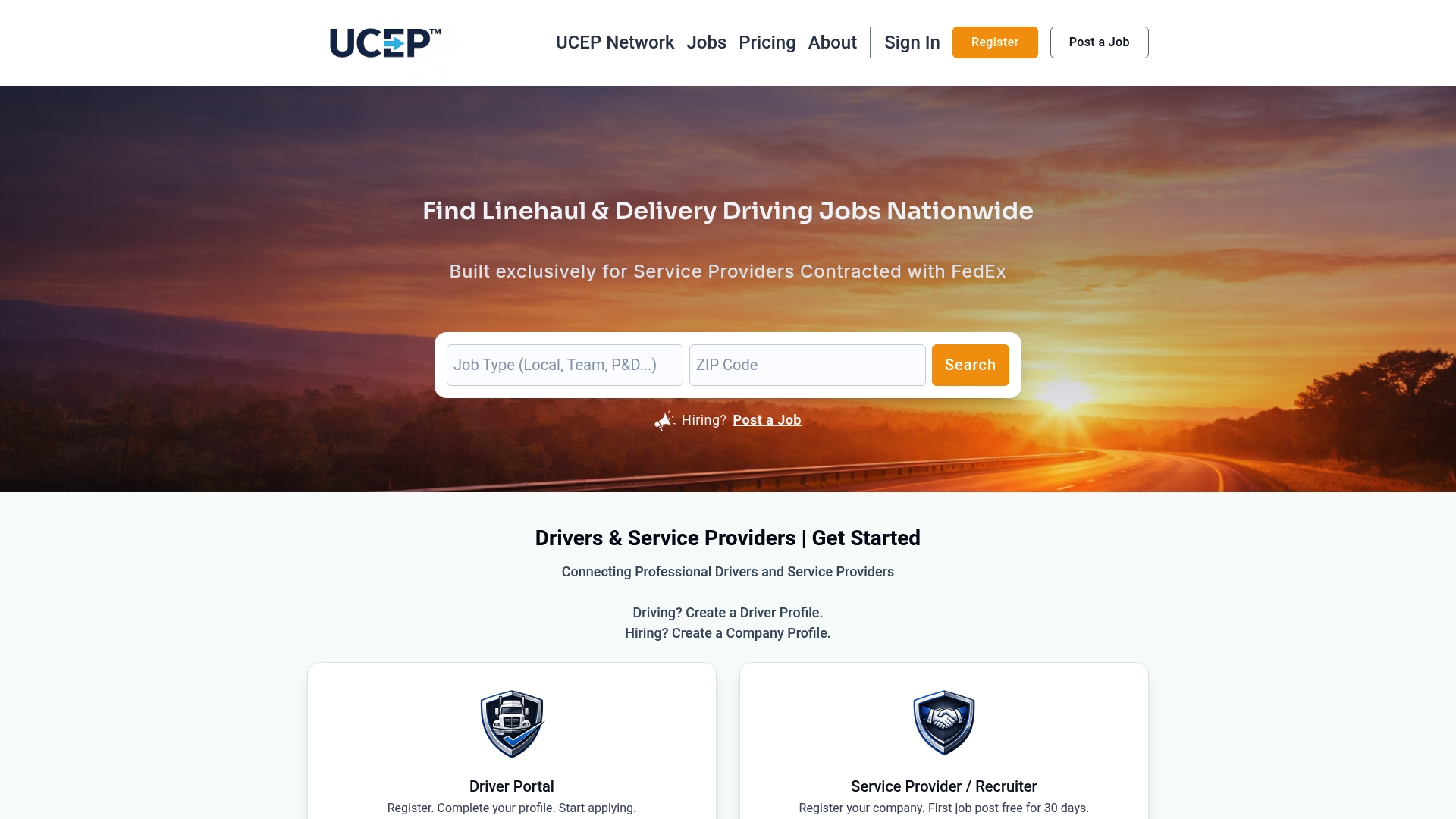
Ucep is a recruiting platform built specifically for Service Providers contracted with FedEx. It connects carriers with drivers who already understand the contract environment: consistent routes, defined schedules, and specific equipment. The platform includes targeted driver alerts, employer profile pages, terminal directories, and a built-in applicant tracking system that keeps your hiring pipeline organized across multiple lanes.
For carriers managing workforce planning across contracted routes, Ucep reduces the time between a vacancy and a qualified hire. Browse service provider profiles and reviews to see how other contractors are using the platform, or post your first role today.
Further reading and authoritative sources
- How dedicated contract carriage helps shippers manage freight risk, cost, and capacity | FleetOwner — Covers rate stabilization, capacity guarantees, and on-time performance data for dedicated fleet models.
- 6 Reasons to Become a Contract Carrier | C.H. Robinson — Practical overview of why carriers benefit from 3PL contract relationships and freight access.
- Ucep Recruiting Platform for FedEx Service Providers — Publisher resource for carriers seeking drivers for contracted CDL-A and delivery routes nationwide.
- Ucep FedEx Contractor Recruiting Strategies — Targeted recruiting tactics for carriers managing contracted FedEx routes.