
FedEx contract routes are stable because three structural features work together: exclusive territorial rights that eliminate intra-contractor competition, weekly settlement payments that create verifiable cash flow, and a contract framework with defined renegotiation cycles that let you plan operations and finances well in advance. A mature vendor ecosystem of route software, fuel cards, and repair networks reinforces that foundation.
Key implications for owners and recruiters:
- Predictable cash flow. Weekly settlement statements include revenue by route, deductions, adjustments, and net deposit, giving you an auditable record every week.
- Saleability. Clean settlement history and a documented driver roster let buyers verify earnings quickly, creating a functioning resale market.
- Delegation-ready operations. Standardized processes and cultural disciplines let you hire a Business Contact and manage multiple stations without being the daily bottleneck.
Table of Contents
- 1. Why FedEx contract routes are stable: the contracting model explained
- 2. Operational levers that keep your route delegation-ready
- 3. Contract economics: margins, renegotiation, and cost pressure
- 4. Why lenders and buyers view FedEx routes as lower-risk assets
- 5. How recruiting and retention preserve route stability
- 6. Risks that can undermine route stability and first actions to take
- 7. Quarterly action checklist for Service Providers and recruiters
- Key Takeaways
- The structural advantage most owners underestimate
- Ucep helps you keep your routes staffed and stable
- Useful sources
1. Why FedEx contract routes are stable: the contracting model explained
Exclusive territorial rights mean no other FedEx contractor can operate inside your assigned pickup and delivery area. That single feature removes the most common revenue threat in logistics: a competitor undercutting you on the same customer base. Under the Independent Service Provider (ISP) model, your territory is yours as long as you meet service and safety requirements.
Settlement cadence reinforces that predictability. FedEx pays contractors weekly, not on 30- or 60-day commercial terms. Each statement breaks down revenue by route, deductions, and net deposit, so you can reconcile cash flow against payroll and operating costs on a rolling seven-day cycle. That cadence also makes route performance quickly auditable for lenders and buyers.
Contracts typically run with renegotiation cycles every 1–2 years. That structure gives you a defined window to plan rate adjustments and cost modeling, though it also means inflationary pressure on fuel and labor can accumulate between renewals. Owners who track those cost lines monthly are better positioned when renegotiation arrives.
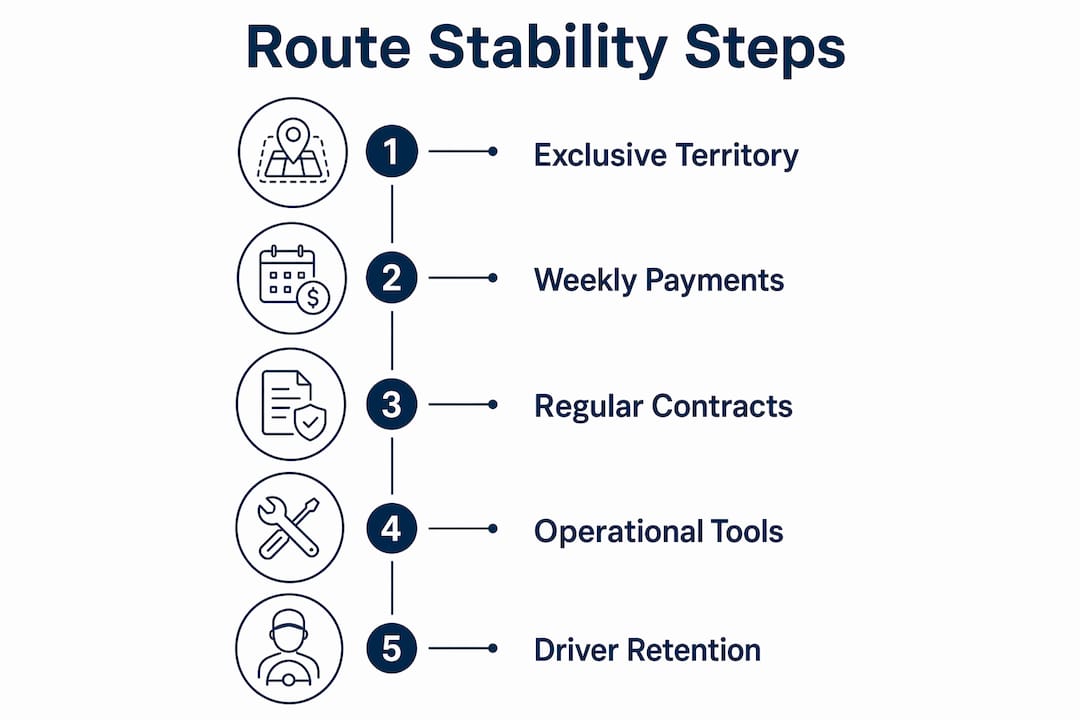
A mature vendor ecosystem supports the whole model. Fuel-card providers, scanner vendors, route optimization software, and repair networks all specialize in FedEx contractor needs, lowering the operational learning curve for new owners and reducing unplanned downtime.
2. Operational levers that keep your route delegation-ready
Stability at the route level is active, not passive. The systems you build determine whether the business runs when you are not in the truck.
Core SOPs every owner should document:
- Driver onboarding checklist (licensing verification, route shadowing, safety orientation)
- Daily dispatch rules and stop sequencing
- Vehicle pre-trip and post-trip inspection logs
- Preventive maintenance schedule by mileage interval
- Incident and claims reporting procedure
KPIs to track weekly:
- On-time delivery rate (SLA compliance)
- Claims rate per 1,000 packages
- Driver no-show rate
- Driver tenure by hire date
Meeting SLAs and maintaining low driver turnover directly affects how buyers and lenders evaluate your route. Contractors with documented performance records are treated as lower-risk, which translates to higher valuations and easier financing.
The "30-minute rule" is a practical delegation discipline: give drivers 30 minutes to resolve a problem before you intervene. Calling drivers mid-route creates dependency and signals to buyers that the business cannot operate without the owner. Pair that with a capable Business Contact (BC) who handles daily dispatch and driver communication, and you can manage multiple stations from a distance.

Pro Tip: When hiring a BC, look for candidates with prior dispatch or logistics coordination experience. A BC who can run daily operations independently is one of the strongest signals of a scalable, stable business.
3. Contract economics: margins, renegotiation, and cost pressure
FedEx contractor revenue is volume- and mileage-based. Your top line grows when package counts rise, which e-commerce trends have supported consistently. The cost side is where margin risk lives.
| P&L Line | What to Watch |
|---|---|
| Driver wages | Largest variable cost; rises with turnover and overtime |
| Fuel | Volatile; erodes margin between renegotiations |
| Vehicle maintenance | Deferred maintenance compounds quickly |
| Insurance | Increases with claims history and fleet age |
| Net operating income | Target 10% EBITDA margin for P&D routes |
P&D routes typically carry moderate EBITDA margins, and linehaul operations can reach higher margins depending on mileage and team structure. Those margins are achievable but not automatic. Fuel and labor are the two lines most likely to compress them between renegotiations.
Financial analysts recommend modeling a renegotiation shock on fuel and labor lines to test margin resiliency across a typical contract cycle. Run that stress test before each renewal window, not after you have already signed.
Pro Tip: Build a simple spreadsheet that applies a 10% increase to your fuel and driver wage lines simultaneously. If net operating income drops below your debt service threshold, you need a cost reduction plan before the next renegotiation, not during it.
4. Why lenders and buyers view FedEx routes as lower-risk assets
Weekly settlement statements create a transparent, verifiable earnings record. A well-prepared buyer can audit a seller's revenue in a short time, which supports a functioning resale market and faster financing approvals. Valuations commonly use EBITDA multiples or percentages of annual revenue, depending on route type and operational history.
What lenders and buyers look for:
- Clean settlement history with no unexplained deductions
- Stable, documented driver roster with tenure records
- Up-to-date vehicle maintenance logs
- Written SOPs covering dispatch, onboarding, and safety
- Current insurance and compliance certificates
Driver turnover is treated as transition risk. Buyers and lenders often require written SOPs and documented rosters to prevent renegotiation at closing. A tenured roster with low turnover materially improves market value and lender confidence.
Documented tenure and SOPs are not just operational best practices. They are the trust signals that close deals faster and at better multiples. Owners who treat their settlement file and driver records as a living due-diligence package are consistently better positioned when they decide to sell or refinance.
5. How recruiting and retention preserve route stability
FedEx Ground experiences roughly 30–40% driver turnover annually, with many new drivers leaving within six months. That rate is the single largest operational threat to route stability. Every departure costs you onboarding time, training resources, and temporary SLA risk.
Hiring checklist for FedEx contractors:
- Write a job description that specifies route type (P&D or linehaul), CDL requirements, and shift schedule.
- Verify CDL-A license, MVR, and background check before offer.
- Complete onboarding paperwork: I-9, W-4, direct deposit, and FedEx-required agreements.
- Schedule a minimum of two route shadow shifts before solo operation.
- Complete safety orientation and document sign-off.
- Set a 30-day and 90-day check-in on the calendar before day one.
Ucep's platform is built specifically for this workflow. Features including targeted driver alerts, employer directories, an applicant tracking system, terminal directories, and internal Service Provider reviews help recruiters source qualified CDL-A and P&D drivers faster and with better fit. Drivers searching for FedEx-specific roles find your listing in a focused environment, not buried in a general job board.
A quick 30–90 day retention play: audit your current pay rates against local market rates, confirm shift start times are consistent week to week, and recognize drivers who complete their first 90 days. Predictable schedules and a simple recognition touchpoint reduce early attrition without significant cost.
6. Risks that can undermine route stability and first actions to take
Common risks and immediate responses:
- High driver turnover. Launch a 30-day retention audit: compare pay rates, check schedule consistency, and survey drivers on their top friction points.
- Missed SLAs. Pull the last four weeks of on-time data by route. Identify the specific stops or time windows causing failures and adjust dispatch sequencing.
- Aging fleet. Review maintenance logs for vehicles over 150,000 miles. Schedule deferred repairs before they become service interruptions.
- Poor recordkeeping. Reconcile your last 90 days of settlement statements against your own revenue records. Flag any unexplained deductions immediately.
- Unexpected contract deductions. Contact your FedEx Ground terminal contact within five business days of any deduction you cannot reconcile.
- No renegotiation plan. Set a calendar reminder 90 days before your contract renewal date to begin your cost modeling and rate review.
Each of these risks has a direct line to revenue, valuation, or continuity. Staffing challenges and fleet gaps are the two most common triggers for SLA failures, which in turn affect contract standing and buyer confidence.
7. Quarterly action checklist for Service Providers and recruiters
- Reconcile the last 13 weeks of settlement statements against your internal revenue records.
- Update your driver roster with current tenure dates, CDL expiration dates, and MVR status.
- Review and update your SOPs for dispatch, onboarding, and vehicle inspection.
- Run a compensation market check against current regional driver pay rates.
- Schedule preventive maintenance for any vehicle approaching its next service interval.
- Conduct a brief driver satisfaction pulse (three to five questions, anonymous).
- Confirm all insurance certificates and compliance documents are current.
- Review your workforce planning for the next 90 days, including any anticipated volume changes.
Pro Tip: Track three numbers weekly: settlement variance from the prior week, driver no-show rate, and on-time delivery percentage. A two-week trend in any of these is an early warning signal worth acting on before it becomes a pattern.
Key Takeaways
FedEx contract routes are structurally stable because exclusive territories, weekly settlements, and a documented operating model create predictable cash flow and a saleable business asset that owners and recruiters can actively protect.
| Point | Details |
|---|---|
| Exclusive territory rights | No intra-contractor competition within your assigned area; this is the primary structural source of revenue predictability. |
| Weekly settlement cadence | Line-item statements every week create verifiable cash flow and simplify due diligence for buyers and lenders. |
| Renegotiation risk is real | Contracts renew every 1–2 years; model a 10% fuel and labor shock before each renewal window. |
| Driver turnover is the top operational threat | Industry turnover runs roughly 30–40% annually; documented tenure and SOPs directly improve route valuation. |
| Ucep for recruiting | Ucep's FedEx-specific job board, applicant tracking, and targeted driver alerts help Service Providers reduce turnover and maintain a stable, documented roster. |
The structural advantage most owners underestimate
The features that make FedEx contract routes stable are not passive. Territorial exclusivity protects your revenue ceiling, but your floor is entirely determined by how well you document, hire, and manage costs between renegotiations.
What owners often miss is that the same features that create stability also create a transferable asset. Weekly settlements are not just cash flow tools. They are the evidence base that supports a 3x–5x EBITDA multiple when you sell. A tenured driver roster is not just an operational convenience. It is the single document buyers scrutinize most carefully at closing.
The practical implication: treat your route like a business you will sell in three years, even if you have no intention of selling. That discipline produces better hiring decisions, tighter cost controls, and cleaner records. Owners who run it that way tend to have more options, whether that means scaling to additional routes, refinancing at better terms, or exiting at a premium.
Ucep helps you keep your routes staffed and stable
Qualified drivers are the variable that most directly determines whether your route stays stable or starts slipping on SLAs. Ucep is a dedicated recruiting platform built exclusively for FedEx-contracted Service Providers. You post CDL-A team, CDL-A solo, linehaul, and pickup and delivery roles to a focused audience of drivers actively looking for FedEx-specific work.
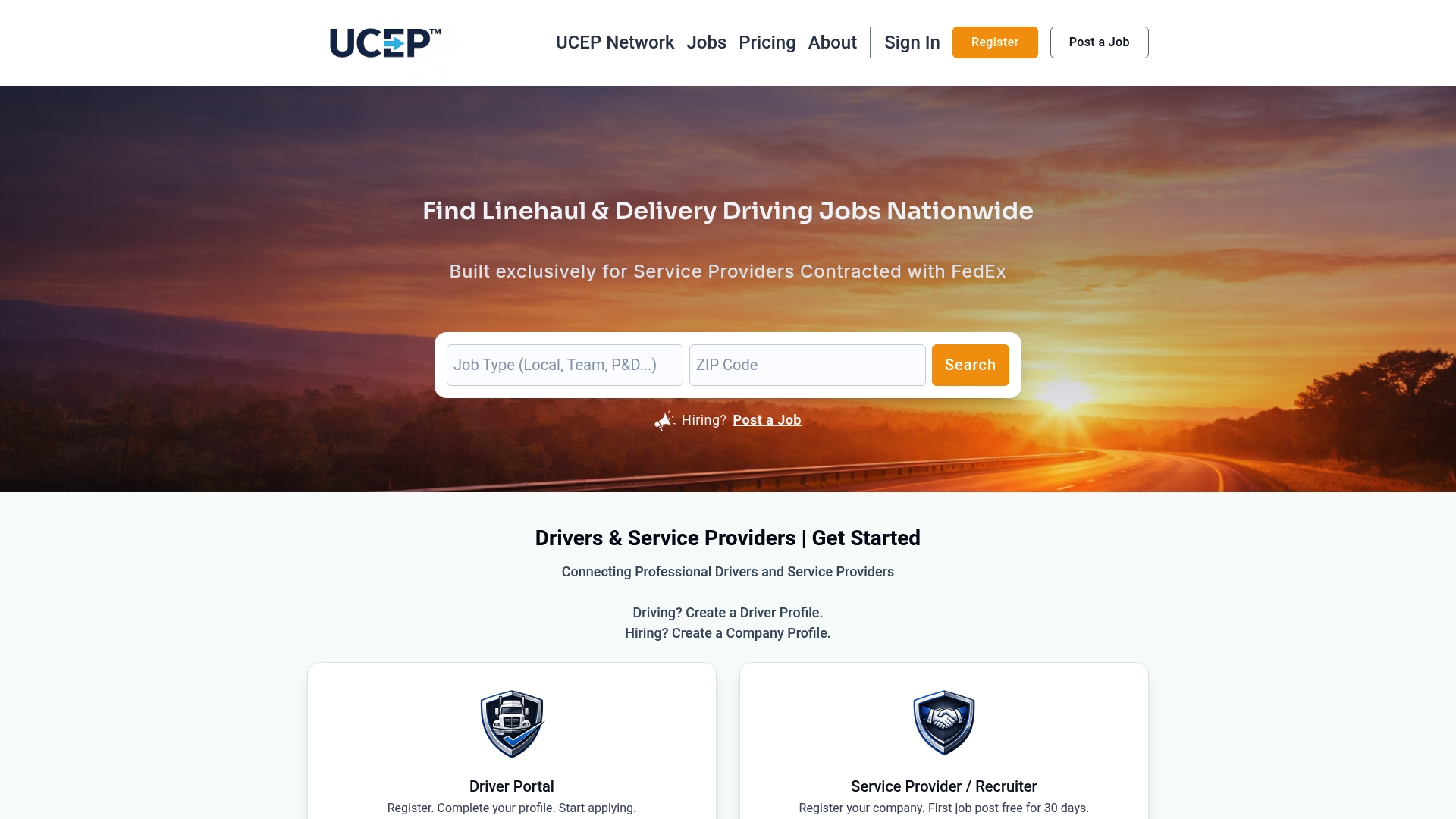
The platform includes an applicant tracking system, targeted driver alerts, employer and terminal directories, and internal Service Provider reviews. Those features let you manage your hiring pipeline and your employer reputation in one place, without paying for a general job board that reaches the wrong candidates. Post your open roles and browse Service Provider reviews to see how other contractors are building their teams. Ready to start hiring? Join the Ucep Network and connect with qualified drivers today.
Useful sources
- What I Love About FedEx Ground Contracting — RouteContractor.AI: Covers settlement cadence, vendor ecosystem, and delegation disciplines for FedEx contractors.
- The Most Predictable Part of FedEx Contracting: Explains how exclusive territorial rights reduce competitive risk and support revenue predictability.
- Unpacking an Industry: FedEx Routes — Withum: Financial analysis of renegotiation cycles, margin structure, and inflation risk for FedEx contractors.
- What Determines List Price for FedEx Ground Routes? — Route Consultant: Covers how SLA performance and driver turnover affect route valuation and buyer perception.
- Driver Stability Sells — RouteAdvisors: Details how documented rosters and low turnover improve market value and lender confidence.
- FedEx Ground Routes Are More Valuable Than Ever — RouteAdvisors: Covers EBITDA margins, valuation multiples, and the role of e-commerce growth in route demand.
- Pros and Cons of Buying a FedEx Route — ComCap Financial: Explains how weekly FedEx payments improve contractor cash flow versus standard commercial payment terms.
- What Is a FedEx Ground Contractor? — LegalClarity: Overview of the ISP model, contract structure, territorial exclusivity, and peak-season Schedule K agreements.
Recommended
- FedEx Ground Contractor Obligations: 2026 Guide
- FedEx Contractor Fleet Requirements Explained for Owners
- Common FedEx Contractor Staffing Challenges in 2026
- What It Takes to Succeed as a Team Driver for Service Providers Contracted with FedEx | UCEP Meta description - United Contractor Employment Portal