
A FedEx contractor recruiting strategy is a defined system for sourcing, screening, and onboarding qualified drivers across linehaul, CDL-A team, CDL-A solo, and pickup and delivery roles. Generic job board postings no longer fill seats reliably. The most effective FedEx contractor hiring strategies in 2026 combine targeted sourcing channels with disciplined internal processes and operational readiness. This fedex contractor recruiting strategies list covers every method worth your time, from CDL school outreach to referral programs to the real limits of outsourcing.
1. What are the best sourcing channels for FedEx contractors in 2026?
FedEx contractors in 2026 prefer targeted recruiting channels over broad job boards to find quality drivers cost-effectively. That preference reflects a real shift in where qualified CDL holders actually pay attention. Six channels consistently outperform the rest.
- CDL schools and local driving programs. Visit programs directly, build relationships with instructors, and attend graduation events. New CDL holders are actively looking for their first stable position. You get candidates before they sign elsewhere.
- Structured employee referral programs. Referral programs are among the most effective and cost-efficient recruiting channels for FedEx contractors. A driver who refers a colleague already knows your operation and vouches for the candidate. Pay the bonus in two installments: half at hire, half at 90 days.
- Niche Facebook groups and online communities. Groups dedicated to FedEx drivers, CDL-A job seekers, and regional trucking communities contain active candidates who are not browsing Indeed. Post consistently with clear pay and route details.
- Direct outreach at truck stops and driver gatherings. Face-to-face contact at fuel stops, driver lounges, and local trucking meetups reaches experienced drivers who are open to a move but not actively applying online.
- Niche job boards built for transportation. Platforms focused exclusively on FedEx-related roles attract candidates who already understand the network. Specialized boards reduce noise and improve candidate fit compared to general listings.
- Broad job boards like Indeed and ZipRecruiter. These platforms are increasingly ineffective for FedEx contractors as of 2026. Volume is high, but candidate quality and fit drop significantly. Use them as a last resort, not a primary channel.
Pro Tip: Run at least three channels simultaneously. CDL school outreach fills your pipeline with new drivers. Referrals bring experienced, pre-vetted candidates. Niche boards catch active job seekers. No single channel covers all three.
2. Why a formal recruiting process matters more than sourcing

A formal recruiting process is the difference between filling a seat and keeping it filled. High-performing fleets own their onboarding experience and treat recruiting as an integrated process involving sales, psychology, and compliance. That means you cannot hand the whole process to a third party and expect retention to follow.
The core elements of a disciplined contractor recruitment process include:
- Structured screening. Ask consistent questions about driving history, attitude toward dispatch communication, and experience with time-sensitive routes. Screen for fit, not just credentials.
- Clear pay explanation. Walk every candidate through exactly how pay is calculated, including bonuses, deductions, and route expectations. Confusion about pay is one of the top reasons drivers leave within 90 days.
- Controlled final interview. You or your operations manager must conduct the final interview. This is where you set expectations, assess attitude, and confirm the candidate understands the role.
- Contractor-owned onboarding. Do not outsource the first week. Introduce the driver to your dispatcher, show them the equipment, and walk through your safety and communication standards in person.
Pro Tip: Track 30-day and 90-day turnover separately. If drivers leave before 30 days, the problem is in your onboarding or pay communication. If they leave between 30 and 90 days, look at dispatch relationships and equipment reliability.
3. What are the pros and cons of outsourcing FedEx contractor recruiting?
Outsourcing recruiting only succeeds when your operation is already stable. Unstable pay structures, dispatch issues, or poor communication cause recruiting firms to fail regardless of their candidate volume. A third-party recruiter can deliver qualified applicants. They cannot fix the reasons drivers leave after two weeks.
Third-party recruiting services cannot fix root causes like poor management or unreliable equipment. They only mask symptoms. That distinction matters before you write the check.
| Point | In-house recruiting | Outsourced recruiting |
|---|---|---|
| Cost | Lower per-hire cost over time | Higher upfront fees per placement |
| Control | Full control over screening and onboarding | Limited control; depends on firm's process |
| Speed | Slower to build pipeline initially | Faster candidate flow when operation is stable |
| Quality fit | Higher fit when process is disciplined | Variable; depends on how well you brief the firm |
| Risk | Requires internal time and systems | Masks operational problems; turnover stays high |
When outsourcing makes sense: your pay structure is documented and clear, your equipment is reliable, your dispatch communication is consistent, and you have defined the role precisely for the recruiting firm.
When outsourcing is a mistake: you are experiencing high turnover for reasons you have not diagnosed, your pay is inconsistent or unclear, or you expect the recruiter to solve a culture or management problem.
Maintaining authority over the final driver interview and onboarding process significantly improves hiring outcomes. Even when you use a recruiting firm, keep the final interview and day-one onboarding in your hands.
4. How to build a referral program that actually produces candidates
A referral program works when the incentive is real and the process is simple. Drivers will not refer friends if the bonus is too small, paid too late, or buried in paperwork. Set a clear dollar amount, explain it during onboarding, and pay it on a visible schedule.
The structure that works best for FedEx service providers:
- Set a referral bonus between $300 and $600 per successful hire. The exact amount depends on your market and role type.
- Pay half at the referred driver's start date and half at 90 days of employment.
- Announce new referral hires publicly within your team. Recognition reinforces the behavior.
- Make the referral submission process one step: a text, a form, or a direct conversation with your dispatcher.
Referral candidates arrive with context. They already know what the job involves because their contact told them. That pre-screening reduces early turnover and shortens your onboarding time. Structured referral programs move the needle with incentives and trusted candidate pipelines.
5. What operational factors directly affect your recruiting results?
Recruiting does not happen in isolation. FedEx contractors face wage pressure and must link recruiting strategy to bonus structures and company culture for retention success. A driver who hears great things during the interview but encounters broken equipment on day three will not stay. Your operation is your recruiting pitch.
The operational factors that most directly affect your ability to attract and keep drivers:
- Equipment reliability. Drivers talk. A fleet with consistent maintenance and clean vehicles attracts better candidates through word of mouth.
- Dispatch communication. Unclear or disrespectful dispatch interactions are a top driver complaint. Train your dispatchers the same way you train your drivers.
- Pay accuracy and timing. Pay every driver correctly and on time, every week. One short paycheck damages trust that takes months to rebuild.
- Route predictability. Drivers value knowing what to expect. Consistent routes reduce stress and improve retention.
- Safety culture. Drivers who feel safe and respected stay longer and refer more candidates. Post your safety record. Talk about it during interviews.
Recruiting for FedEx contractors demands deeper integration across pay structure transparency, compliance, and culture to overcome challenges under FedEx 2.0. That integration is not optional. It is the foundation every effective contractor recruitment process is built on.
6. Quick-win tactics to keep your pipeline active between hiring cycles
A recruiting pipeline should never go cold. Consistent low-effort activity between active hiring periods keeps candidates warm and reduces the time to fill when you need a driver quickly.
- Post one piece of content per week on your company's Facebook page or LinkedIn profile. Show your equipment, your team, or a driver milestone.
- Attend one local CDL school event per quarter. Even when you are not hiring, your name stays visible.
- Keep a short list of silver-medal candidates from past hiring rounds. Contact them first when a new opening appears.
- Ask every departing driver for an exit conversation. The feedback is free and often identifies a fixable problem.
- Review your job postings every 60 days. Update pay ranges, route descriptions, and any changed requirements.
Pro Tip: Create a simple one-page driver overview document that explains your pay structure, route types, and equipment. Share it at CDL schools, truck stops, and in online groups. Candidates who read it before applying arrive better prepared and ask better questions.
Key takeaways
Effective FedEx contractor recruiting requires targeted sourcing channels, a contractor-owned onboarding process, and operational stability working together before any recruiting method will produce lasting results.
| Point | Details |
|---|---|
| Targeted channels outperform broad boards | CDL schools, referral programs, and niche boards deliver better candidate fit than Indeed or ZipRecruiter. |
| Own your onboarding | Contractors who control the final interview and first week retain drivers longer than those who outsource it. |
| Outsourcing has preconditions | Third-party recruiting only works when pay, equipment, and dispatch communication are already stable. |
| Referral programs need structure | Pay bonuses in two installments and make the submission process one step to maximize participation. |
| Operations drive retention | Equipment reliability, pay accuracy, and dispatch quality directly affect whether recruited drivers stay. |
What I have learned about recruiting as an operational discipline
Most contractors treat recruiting as a task they do when a seat is empty. That framing is the root cause of most hiring problems I have seen. Many contractors mistakenly view recruiting as transactional. Top fleets apply sales and psychology principles and own onboarding to reduce turnover. That gap is wider than most people realize.
The contractors who fill seats fastest are not the ones spending the most on job boards. They are the ones who have a referral program running at all times, a relationship with at least one CDL school, and a dispatcher who treats drivers with respect. Those three things cost almost nothing compared to a recruiting firm retainer.
The hardest lesson is that outsourcing recruiting feels like a solution when you are overwhelmed. But if drivers are leaving because of equipment problems or pay confusion, a recruiter just delivers more people into the same broken system. Fix the operation first. Then bring in outside help if you still need volume.
I have also seen contractors underestimate the value of the final interview. That conversation is where you set the tone for the entire employment relationship. Letting a third party own it is giving away the most important moment in your hiring process. Keep it. Prepare for it. Use it.
— Aaron
How Ucep helps FedEx service providers find qualified drivers
Ucep is built exclusively for service providers contracted with FedEx. It connects contractors with qualified candidates for linehaul, CDL-A team, CDL-A solo, and pickup and delivery roles in one focused place.
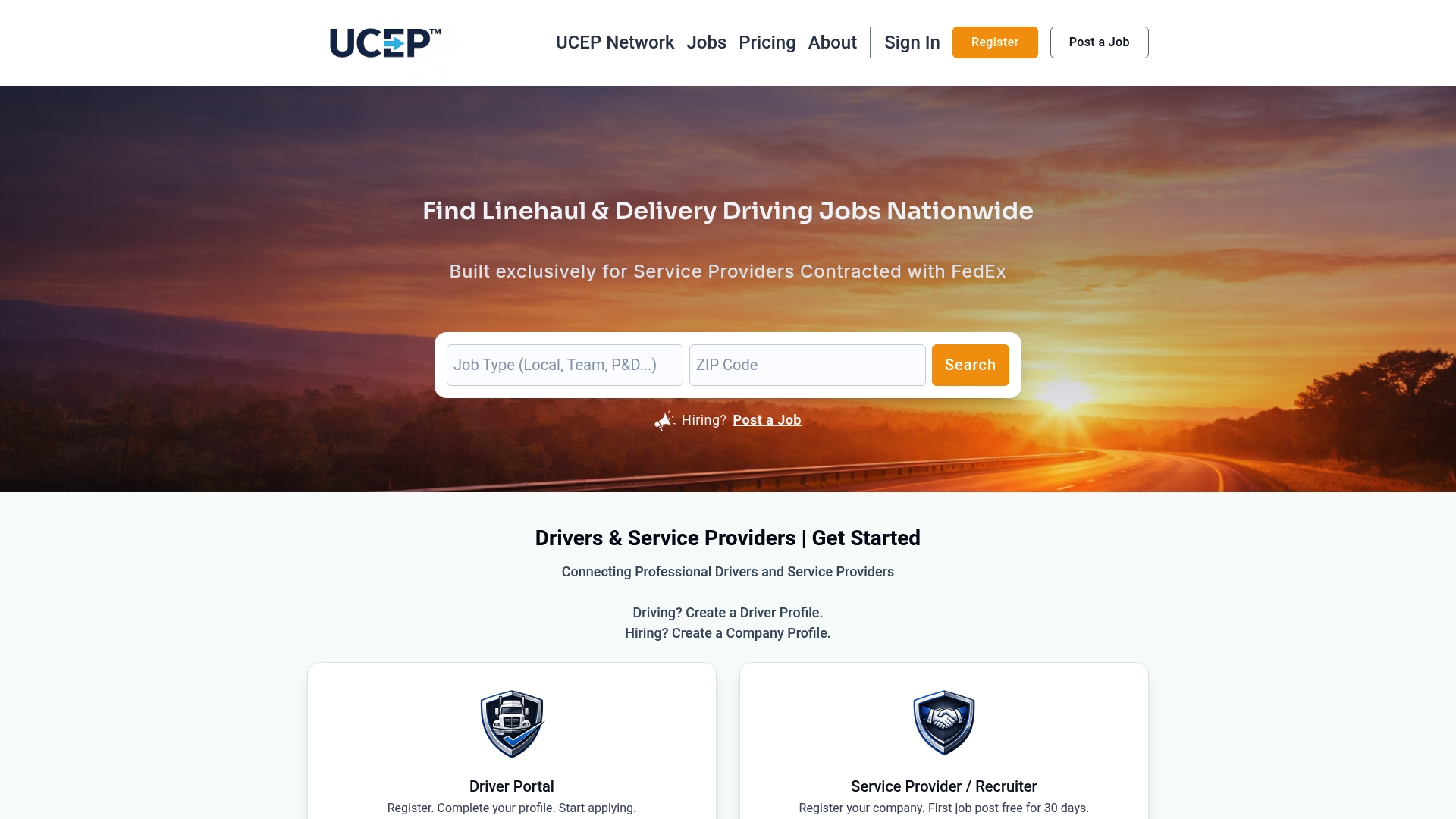
You can browse driver candidates by role type and location, post open positions directly to an audience that already understands the FedEx network, and read service provider reviews from other contractors to benchmark your own recruiting and retention practices. Ucep removes the noise that makes general job boards ineffective and puts your openings in front of drivers who are specifically looking for FedEx-related work. Visit ucep.co to post your first role or explore the candidate pool.
FAQ
What sourcing channels work best for FedEx contractor hiring?
CDL schools, structured employee referral programs, and niche job boards built for FedEx-related roles consistently outperform broad platforms like Indeed. Running at least three channels simultaneously produces the most reliable candidate flow.
When should a FedEx contractor outsource recruiting?
Outsourcing works when your pay structure is clear, your equipment is reliable, and your dispatch communication is consistent. Using a recruiting firm before those conditions are met typically results in high early turnover without addressing the root cause.
How does onboarding affect driver retention for FedEx contractors?
Contractors who own the final interview and the first week of onboarding retain drivers at higher rates than those who delegate both to a third party. Clear pay explanation and direct dispatcher introductions during onboarding reduce 30-day turnover significantly.
What is the most cost-efficient recruiting method for FedEx service providers?
Structured employee referral programs deliver the lowest cost per hire and the highest candidate fit. Paying bonuses in two installments tied to 30-day and 90-day milestones keeps the program financially sustainable and rewards retention.
How does FedEx 2.0 affect contractor recruiting strategy?
FedEx 2.0 increases pressure on contractors to align bonus structures and company culture with network operating expectations. Contractors who integrate pay transparency and culture-building into their recruiting pitch attract drivers who are prepared for those standards.