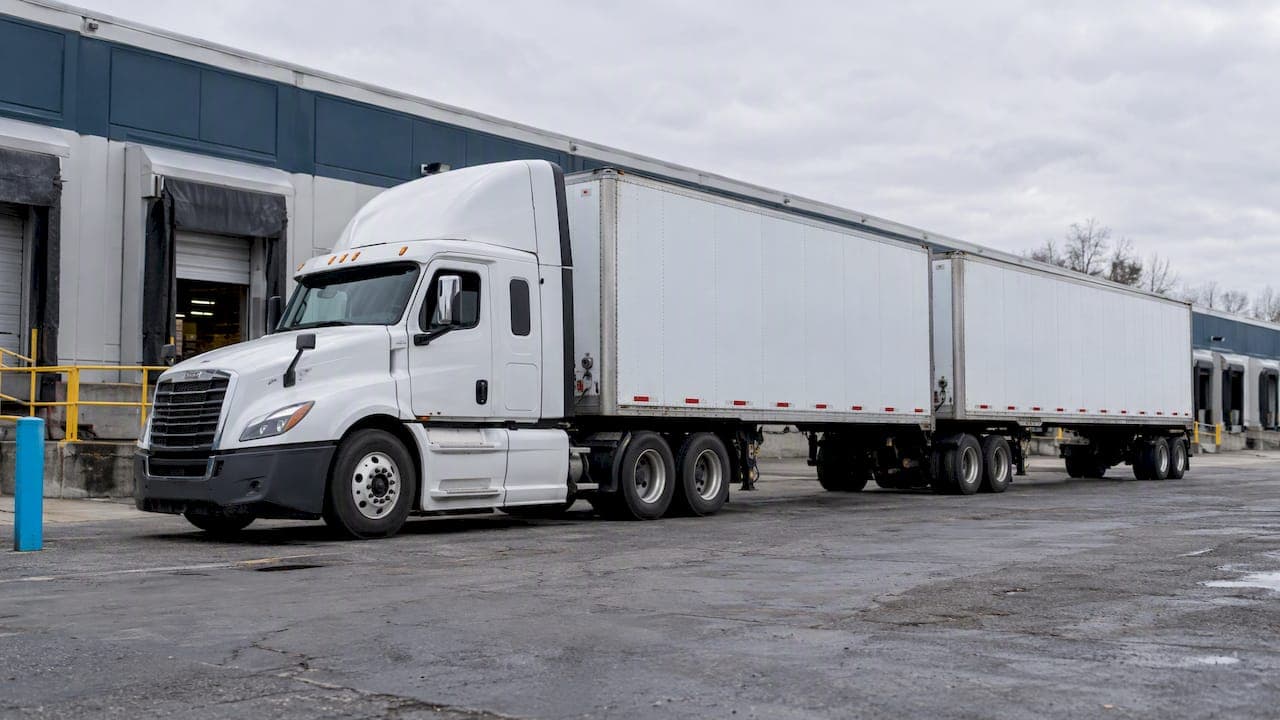
Hiring for a doubles and triples endorsement means one thing at the legal level: the driver must hold a CDL with the T endorsement, which requires a state knowledge test. In practice you also have to confirm the license class, the training history and real experience pulling twin trailers. This guide covers both sides: Service Providers contracted with FedEx who are recruiting, and drivers who want to qualify for these roles.
TL;DR
- The T endorsement covers both double and triple trailers. Federal rules require a state knowledge test only, with no separate federal skills test.
- The endorsement is a legal minimum. It does not prove a driver can handle a set of twins on a wet ramp at 3 a.m.
- Verify the Class A CDL, the endorsement on the license, and ELDT history for anyone who got a Class A recently.
- Post the endorsement requirement in the job title and the first lines of the listing, along with pay model, schedule and run type.
- Drivers: list the endorsement in your profile, then filter by linehaul and CDL-A solo or team roles.
Table of Contents
- What the T endorsement covers
- What to verify before you hire
- Writing a listing that attracts qualified drivers
- Why endorsement-holders are in demand
- For drivers: how to qualify
- Our perspective
- Post your driver roles on UCEP
- Quick checklist for Service Providers
- FAQ
- Sources
What the T endorsement covers
The T endorsement is the CDL code for double and triple trailer combinations. One code covers both configurations. To get it, a driver passes a knowledge test administered by the state. Unlike the passenger or school bus endorsements, it has no additional skills test under federal regulation.
That is why many drivers add it in a single DMV visit after holding a Class A. It is also why you should not treat it as proof of experience. A driver can hold the endorsement and never have coupled a set of pups.
When the endorsement is required
Drivers often get this wrong, and so do job posts. FMCSA guidance says the endorsement is not required for a straight truck towing a single trailer, even with a pintle hook. It does apply to double or triple saddle-mount combinations when the combination weight rating is 26,001 pounds or more and the towed units exceed 10,000 pounds GVWR, as FMCSA explains in its saddle-mount Q&A.

For a Service Provider, the practical point is simple. Check the actual equipment and weights on the route before you write "T endorsement required" in a listing. If your operation does not run twin trailers, the requirement filters out good candidates for no reason.
What to verify before you hire
The endorsement is one line on a license. A complete screen has more steps. Use this order.
- License class. Confirm a valid Class A CDL. Linehaul work with twins is a Class A job.
- Endorsement. Confirm the T appears on the license itself, not just on a driver's statement that he or she "passed the test."
- Other endorsements. Drivers hauling hazardous materials who also run doubles or triples need both the H and T endorsements, and must pass both knowledge tests. Most FedEx linehaul roles do not need the H, so list it only if your freight requires it.
- Training history. Entry-level driver training is mandatory for anyone getting a Class A for the first time or upgrading from Class B. The T endorsement itself does not add ELDT hours, but a newly licensed driver should have the Class A training on record.
- Experience with the actual setup. Ask what combination the driver has pulled, for how long, and on what kind of run: drop-and-hook, live load, hub to hub.
- Road test. Federal rules do not require an employer road test specifically because a driver holds a doubles/triples endorsement. You can still set stricter internal standards. Many Service Providers use a short road test with a set of twins for this reason.
For background on how the license classes and endorsements fit together, see our guide to types of CDL driver certifications. If you screen newer candidates, the article on what a trucking skills assessment covers can help you structure yours.
Endorsement versus operational skill
FMCSA guidance on specialized driving stresses that these configurations have a high center of gravity and different stability behavior than a single trailer. The endorsement tells you the driver passed a written test on that material. It does not tell you how the driver handles backing, coupling, swaying in wind or tight yards.
Two practical checks cover most of the gap:
- Ask the driver to walk through a full coupling and pre-trip on a set of twins.
- Ask about the worst weather or road condition the driver has run twins in, and what changed in the driving.
Writing a listing that attracts qualified drivers
Search results for this keyword are dominated by aggregator pages with thousands of listings. A driver scrolling through them sees the same generic title repeated. A clear, specific post stands out.
Put the requirement where drivers look
Use a title such as "CDL-A Solo Linehaul Driver, Doubles/Triples Endorsement Required." Many drivers filter by endorsement. Others skip long posts, so the first three lines should state:
- Role type: linehaul solo, linehaul team, or pickup and delivery
- Required license: Class A CDL with T endorsement
- Pay model and a clear figure or range
- Schedule: start time, days, home time
- Equipment: drop-and-hook or live load, and the trailer setup
Our driver job description template gives a full structure you can adapt.
Be specific about pay
Trucking pay is hard to compare. The Bureau of Labor Statistics reports that the median annual wage for heavy and tractor-trailer truck drivers was $58,640 in May 2025, with the top 10% earning more than $79,380. Pay varies by employer, mileage, cargo and experience.
That range is why vague pay language costs you applicants. State whether the job pays by the mile, by the hour or per route, and give the number. If drivers are 1099 contractors rather than W-2 employees, say so. Our piece on 1099 versus W-2 drivers explains the pay, tax and legal differences you need to explain clearly.
Post when drivers are looking
Timing affects response. We have published a short guide on the best time to post trucking jobs, and another on seasonal hiring spikes that matter for peak-season linehaul staffing.
Why endorsement-holders are in demand
Demand for qualified drivers is steady. BLS projects about 214,500 openings a year for heavy and tractor-trailer drivers from 2025 to 2035, mostly to replace workers who leave the occupation, with 4% employment growth over the decade. For a Service Provider, that means a steady need to refill seats, not a one-time hire.
Drivers with a Class A and a T endorsement meet the baseline for twin-trailer linehaul work, so the pool is narrower than for general CDL-A roles. See why CDL-A drivers earn more than other truckers and the wider driver shortage picture for context.
For drivers: how to qualify
If you are a driver reading this, the path is short.
- Hold a valid Class A CDL. If you are getting it for the first time, expect to complete ELDT first. Read our CDL-A requirements for beginners.
- Study the doubles and triples section of your state CDL manual. Your state sets the exact testing process.
- Pass the knowledge test. No federal skills test is required for this endorsement.
- Confirm the T appears on your updated license.
- Build experience. Many Service Providers hire drivers who have pulled twins before. Ask about training on the first runs if you have not.
Fees, test format and scheduling vary by state, so check with your state driver licensing agency before you go.
Is it hard?
The test is a written exam and is generally a short add-on compared with the Class A itself. The harder part is the on-road learning: coupling, backing and handling a longer, less forgiving combination. Ask a prospective employer how new twin drivers are trained.
Our perspective
We built UCEP for one hiring pool: drivers working with FedEx Service Providers. The T endorsement shows up in our listings constantly, especially on linehaul solo and team roles. What we see is a mismatch between how Service Providers write the requirement and how drivers search for it.

Providers often write "doubles/triples required" with nothing else. Drivers then have to guess the schedule, run type and pay before deciding to apply. The posts that read best put the endorsement next to the run type and the pay model, because those are the three details a driver uses to decide.
We also recommend treating the endorsement as a filter, not a verdict. Check it, then verify experience and run a short road test if your policy allows. A clear process protects your safety record and gives drivers a fair chance to show what they have done.
— Aaron
Post your driver roles on UCEP
UCEP is a job board built exclusively for FedEx-contracted Service Providers, with categories for CDL-A solo linehaul, CDL-A team linehaul, and pickup and delivery roles. Our positioning is simple: we reach drivers with FedEx experience, which we put at 140,000+, and every listing is in a FedEx-focused context.
The platform includes a built-in applicant tracking system, targeted driver alerts and company profile management. On our pricing page you can start with the Complimentary Trial Listing, or choose the Standard Monthly Plan at $99 per month. Drivers can browse jobs for free.
Quick checklist for Service Providers
| Step | What to confirm |
|---|---|
| Equipment | Whether your runs actually need the T endorsement |
| License | Valid Class A CDL with T shown on the card |
| Training | ELDT record for new Class A holders |
| Experience | Twins pulled, run type, years |
| Road test | Internal standard, if you set one |
| Listing | Role, endorsement, pay model, schedule in the first lines |
FAQ
How can I get my doubles and triples endorsement?
Hold a valid CDL, study the doubles and triples section of your state manual and pass the state knowledge test. Federal rules do not require a separate skills test for this endorsement. Check your state licensing agency for fees and scheduling.
Is it hard to get a doubles and triples endorsement?
The written test is usually considered one of the more manageable endorsements because it is knowledge-only. The harder part is learning to handle the combination on the road. Ask an employer about training before your first run.
Does a straight truck with a pintle hook trailer need the T endorsement?
No. FMCSA guidance says a straight truck towing a single full trailer with a pintle hook does not need the doubles/triples endorsement. It applies to double or triple combinations that meet the federal weight thresholds.
Do employers have to give a road test to drivers with a T endorsement?
Federal rules do not require one on the basis of the endorsement alone. Employers can set stricter internal standards, and many Service Providers do so for twin-trailer roles.
Sources
- Heavy and Tractor-Trailer Truck Drivers, Occupational Outlook Handbook, BLS
- Drivers, FMCSA
- Entry-Level Driver Training (ELDT), FMCSA
- Saddle mount combinations and the doubles/triples endorsement, FMCSA
- Straight truck with pintle hook and full trailer, FMCSA
- Employer road test guidance, FMCSA
- Transporting Hazardous Materials by Highway, New Carrier Information Guide, FMCSA