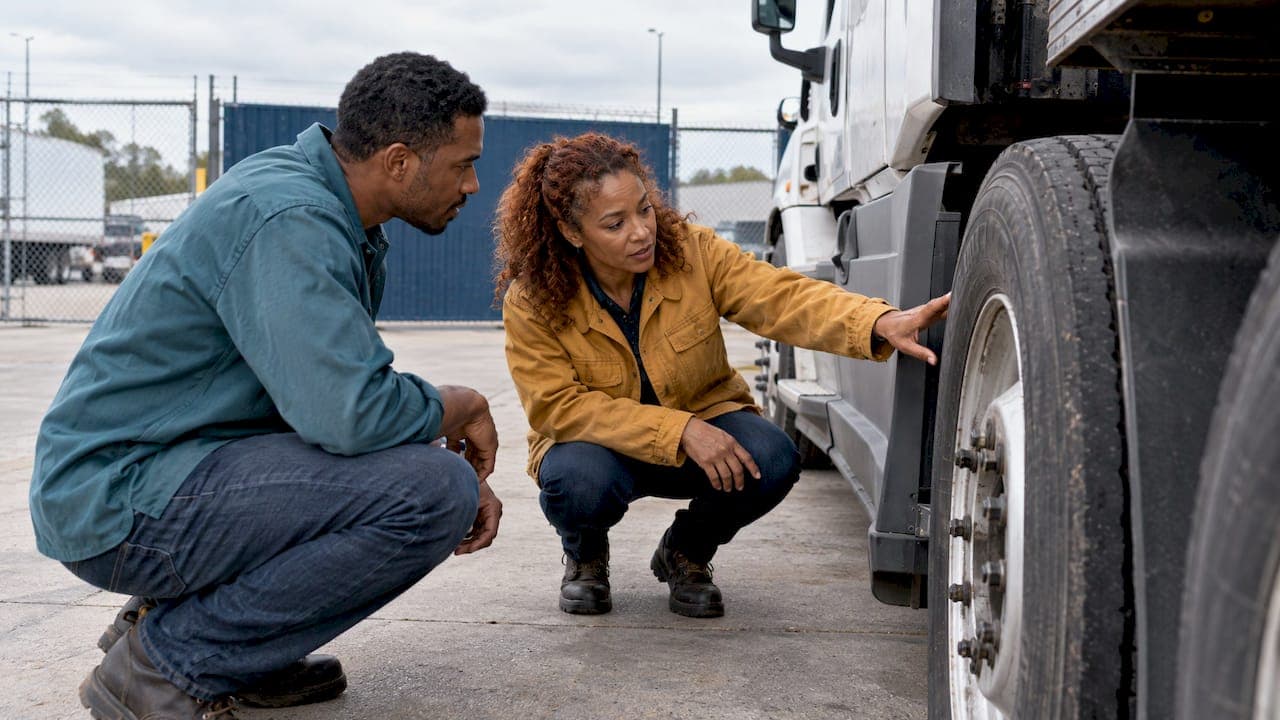
A CDL apprenticeship program pairs paid on-the-job driving with structured instruction so a new driver can earn a Class A license and start working. A Registered Apprenticeship is overseen by the U.S. Department of Labor, and the American Trucking Associations describes these programs as combining paid on-the-job training with instruction. Many carrier-run "paid CDL training" programs are not registered apprenticeships, so the terms of each one matter. This guide covers the differences, eligibility, pay, costs, contracts and the checks to run before you sign. It also covers how FedEx Service Providers can build a program for linehaul, team, solo, and pickup and delivery roles.
TL;DR
- A registered apprenticeship combines paid work and instruction under U.S. Department of Labor oversight. Paid CDL training and pre-apprenticeship are related but different.
- Programs vary widely in length, weekly pay and what you owe if you leave early. Read the contract before you accept.
- Entry-level driver training (ELDT) is a federal requirement for first-time Class A applicants, so confirm the provider is listed on the FMCSA Training Provider Registry.
- Service Providers can structure training by role: pickup and delivery first, then solo, then team linehaul, with a mentor at each step.
- Drivers can browse FedEx-related roles on UCEP's job board. Service Providers can post openings on our pricing page.
Table of Contents
- What a CDL apprenticeship is, and what it is not
- Who qualifies
- What the training includes
- Length, pay and cost
- Contracts, repayment and staying commitments
- How to evaluate a program
- For FedEx Service Providers: structuring an apprenticeship by role
- Our perspective
- Find FedEx-related driving roles or post your own
- FAQ
- Sources
What a CDL apprenticeship is, and what it is not
Three different things get called "CDL apprenticeship" in search results. Knowing which one you are looking at changes what you can expect.
| Type | What it is | Typical features |
|---|---|---|
| Registered apprenticeship | A formal program with a sponsor, paid work and related instruction, overseen by the U.S. Department of Labor | Structured training plan, mentoring, defined path to Class A |
| Paid CDL training | A carrier trains you in-house and pays a weekly amount or stipend | Often has an employment commitment and a repayment term |
| Pre-apprenticeship | Training at no or low cost that prepares you to enter a trade or a full program | Short, skills-focused, may not include a CDL |
The federal ELDT rule applies to all of them if you are a first-time Class A applicant. We cover that below.
The practical difference is accountability. A registered program follows a documented structure. A paid training program follows the employer's own policy. Both can lead to a good first job, but you should read the written terms in either case.
Who qualifies
Requirements differ by sponsor and state. As one example, the New Mexico Department of Workforce Solutions lists the following for its CDL Driver Apprenticeship:
- Age 18, or 21 if the applicant is from another state
- A high-school equivalency
- Physical ability to do the work
- A DOT physical and drug screen on acceptance
- A full motor vehicle record (MVR)
- U.S. citizenship or permanent residency
- A valid driver's license
Other programs add their own filters. One veterans program that appeared in search results asks for military service, a valid Class A CDL and a limit on recent moving violations. Check the specific sponsor's page.
Two requirements trip up many applicants:
- The medical exam. You need a DOT medical card to drive commercially. Our DOT medical exam checklist lists what examiners look at, so you can prepare before you apply.
- Your driving record. Programs pull your MVR. If you have violations, ask the sponsor what their cutoff is before you spend time on the application.
For a broader view of license classes and endorsements, see our guide to CDL-A driver requirements for beginners.
What the training includes
A typical program has two parts: instruction to get the license, then supervised work that builds experience.
One paid CDL program describes classroom, guided-range and road instruction. It is followed by one-on-one practical training and mentoring during the apprentice's first year of solo driving. The goal is a Class A driver.
The federal baseline sits underneath this. Under ELDT, first-time Class A applicants must complete both theory and behind-the-wheel training, but FMCSA sets no minimum behind-the-wheel hours. The rule, established in 2022, relies on the provider's assessment of whether the student is competent, according to a 2026 ELDT summary. Two programs with the same title can therefore differ in hours and in how much road time you get.
After the license, the best programs keep going. Mentorship in the first months matters because that is when new drivers learn load securement habits, trip planning, hours-of-service discipline and customer handling. Our guide to first-year CDL driver challenges covers what to expect.

Length, pay and cost
Programs are short compared with most apprenticeships in other trades. Examples from carriers' own pages:
- One carrier's in-house CDL training runs 19 consecutive days, followed by four weeks of over-the-road training. Trainees receive $500 per week during both, according to its paid CDL training page.
- Job listings that came up for this keyword show advertised pay ranges of roughly $900 to $1,500 a week. Those numbers describe listings for the driving role, and training-period pay can be lower, as the example above shows.
When you compare, put the numbers side by side:
- Weekly pay during classroom training
- Weekly pay during over-the-road training with a trainer
- Pay once you drive solo
- Who pays for transportation, lodging and meals
- Total weeks from start to solo driving
A program with lower training pay but better mentoring and a shorter path to solo can beat a program with higher advertised pay that stretches the training period.
Contracts, repayment and staying commitments
This is the part of the paperwork that matters most. Many programs cover tuition and travel in exchange for a work commitment.
The same carrier mentioned above charges no upfront cost and pays transportation to and from its training center, along with accommodations. It also requires one year of work after you get your CDL, and a driver who leaves early repays a prorated part of the training cost.
That structure is common, and it can be a fair trade. Before you sign, get clear answers to these:
- How long is the commitment, counted from the CDL date or the hire date?
- Is repayment prorated, flat, or tied to a note?
- What counts as leaving: quitting, termination, or both?
- What happens if the company changes your lane, home time or pay?
- Does the agreement say who pays if you fail the skills test?
Save a copy of everything you sign. If a term is unclear, ask for it in writing before the start date.
How to evaluate a program
Use this checklist for any program, registered or not.
- Registry listing. Employers must make sure that any in-house CDL program meant to qualify for ELDT is listed on the FMCSA Training Provider Registry. The registry itself is public. FMCSA says it exists so entry-level drivers complete required training before testing. Look up the provider before you enroll.
- Registered apprenticeship status. If the program says it is a Registered Apprenticeship, ask which agency registered it. State-registered programs may give carriers additional benefits, including tax credits in many states and potential training subsidies, which can affect how much a sponsor can invest in apprentices.
- Mentor ratio and trainer quality. Ask how many apprentices each mentor handles and how mentors are selected.
- Equipment and freight. Find out what you will drive and haul. Training on a late-model tractor with an automatic transmission is different from a manual.
- Home time. Over-the-road programs have long stretches away. Our guide to over-the-road driving explains typical schedules.
- Path after training. One sponsor's program lists paths such as OTR company driver, lease operator, and driver trainer or fleet mentor. A clear path signals that the sponsor has thought about retention. Our article on CDL career growth examples shows how drivers move up.
If you are not ready for a CDL program yet, driving jobs with no experience are a lower-commitment way in. To see which license and endorsements fit your target roles, read about the types of CDL certifications.
For FedEx Service Providers: structuring an apprenticeship by role
FedEx-contracted Service Providers hire for several different jobs, and each needs a different ramp. A single program template rarely fits all of them. Here is one way to structure it. Treat it as a planning framework, not a regulation.
Pickup and delivery
Pickup and delivery drivers work local routes with frequent stops. Early training should focus on route familiarity, scanning and handheld procedures, package handling, safe backing and customer interaction. Pair each new driver with an experienced driver on the same route for the first weeks, then reduce ride-along time as the driver shows consistency.
CDL-A solo linehaul
Solo linehaul drivers run scheduled terminal-to-terminal lanes. Training should cover pre-trip inspections, trip planning, hours-of-service compliance, fuel and fatigue management, and terminal procedures. A good path is a few supervised runs on a fixed lane before solo release. Our guide to CDL-A solo driving opportunities describes the role from the driver's side.
CDL-A team linehaul
Team drivers share a truck and split driving time. Beyond the solo skills, training should address sleeper-berth rest, handoffs, communication with a co-driver and shared responsibility for the equipment. Matching apprentices with a compatible experienced partner is often the deciding factor in whether a team lasts.
A simple progression
| Stage | Focus | Mentor involvement |
|---|---|---|
| 1. License | Theory, range and road training from a provider listed on the registry | Instructor-led |
| 2. Supervised work | Real routes or lanes with a trainer | Daily |
| 3. Release | Solo or team assignment with check-ins | Weekly |
| 4. Review | Safety record, performance and role fit | Scheduled reviews |
Before you design it, confirm with your own counsel and the relevant state agency whether you want formal registration. The potential tax credits and subsidies mentioned above vary by state. You can also look at WOTC for trucking for a hiring incentive that may apply to some new hires.
Finally, assess candidates before you commit training hours. A trucking skills assessment shows what candidates should expect, and it helps you set a baseline.
Our perspective
Apprenticeships work best when both sides know exactly what the arrangement is. Drivers want a clear path, fair pay and no surprises in the contract. Service Providers want drivers who stay and who are ready for the lane they are hired into.
We built UCEP for FedEx Service Providers because the roles are specific: linehaul, CDL-A team, CDL-A solo, and pickup and delivery. A general job board mixes those roles with everything else in trucking. A focused board puts openings in front of drivers who are looking for FedEx-related work. Our own claim is that this focus gives Service Providers targeted reach to 140,000+ FedEx-experienced drivers.
For a Service Provider running a training program, that reach helps in two ways. You can recruit experienced drivers for roles that need them, and you can find candidates who are willing to grow into a role you train for. Our applicant tracking system, employer and terminal directories and driver alerts are designed to keep that process in one place.
For drivers, we recommend using the employer directories and reviews to research a company before you apply. Look at the role, the terminal and what other drivers say, then compare that to the terms in your offer.
Aaron
Find FedEx-related driving roles or post your own
If you are a driver, UCEP lists pickup and delivery, CDL-A solo linehaul and CDL-A team linehaul roles in one place. You can filter listings, research employers and manage your applications. Browse driver jobs →
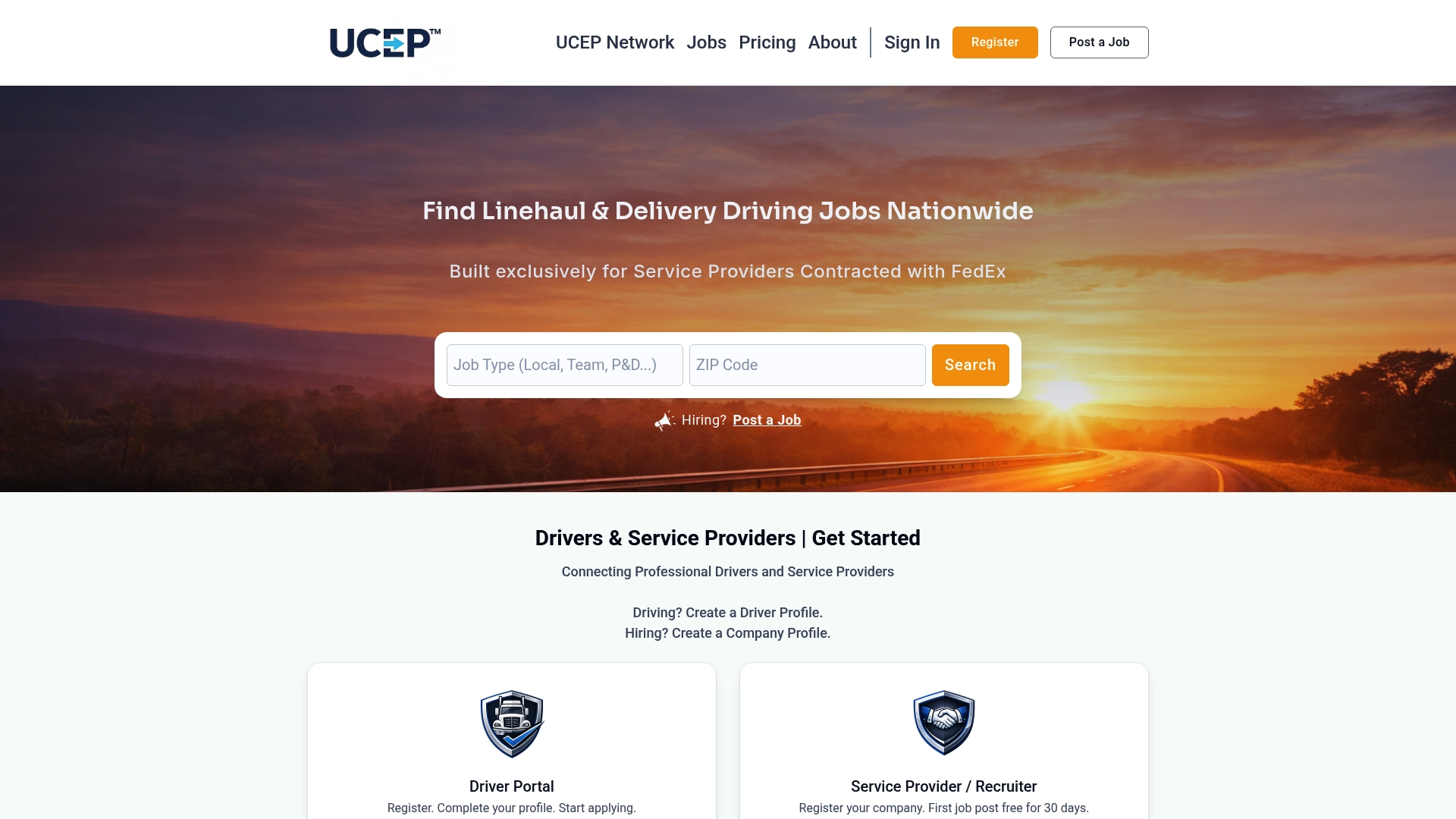
If you are a Service Provider, you can start with a complimentary trial listing. The Standard Monthly Plan is $99 per month. Both include access to the recruiting tools described on our pricing page.
FAQ
Is a CDL apprenticeship the same as paid CDL training?
Not always. A Registered Apprenticeship follows a documented structure and is overseen by the U.S. Department of Labor. Paid CDL training is usually an employer's own program, with its own terms for pay and commitment. Read the written terms of either one before you accept.
Do I owe money if I leave a program early?
It depends on the sponsor. One carrier requires a year of work after you get your CDL and prorates the training cost if you leave sooner. Ask for the repayment terms in writing, including what counts as leaving and how the amount is calculated.
What do I need to start?
Requirements vary. One state program asks for a minimum age, a high-school equivalency, a DOT physical and drug screen, a motor vehicle record and a valid driver's license. Confirm the exact list with the sponsor, and see our CDL-A requirements guide.
How do I check that a training provider is legitimate?
Look the provider up on the FMCSA Training Provider Registry. First-time Class A applicants must complete ELDT theory and behind-the-wheel training before taking the test. Then ask how many hours of range and road time you will get, since the federal rule does not set a minimum.
Can FedEx Service Providers run their own apprenticeship?
Yes, many carriers run in-house training. If the program is meant to qualify for ELDT, it must be listed on the FMCSA registry. Check with your state about formal registration and any tax credits or subsidies that may apply.
Sources
- Trucking Apprenticeship Opportunities, American Trucking Associations
- CDL Driver Apprenticeship, New Mexico Department of Workforce Solutions
- Paid CDL Program and Training Center
- Paid CDL Training, new to trucking
- ELDT Requirements 2026: Hours, Training Provider Registry
- FMCSA Entry-Level Driver Training (ELDT) 49 CFR 380
- FMCSA Training Provider Registry