
Entry-level driving jobs are defined as positions that hire candidates without prior driving history and provide structured training to qualify them for the role. You can find driving jobs no experience required by targeting employers like UPS, First Student, and Averitt, all of which offer paid training, license acquisition support, and clear progression paths. The key is knowing which roles to target, what qualifications you actually need, and how to navigate the hiring process from day one.
What entry-level driving jobs with no experience look like
Entry-level driving roles focus on trainability and basic qualifications rather than logged miles or prior routes. Employers evaluate candidates on physical fitness, background screening results, and willingness to complete training. This means your lack of a driving record is not the barrier you might assume it is.
The most common no-experience driving positions include:
- Non-CDL delivery driver: Operates vans or small trucks on local routes. No commercial license required at hire.
- Logistics driver trainee: Hired without a license and trained on vehicle operation, safety checks, and route management.
- Dock-to-driver trainee: Starts in warehouse or dock operations, then transitions to a driving role after completing an on-site training program.
- School bus driver trainee: Companies like First Student hire candidates without a CDL and provide paid CDL training with a starting rate of $20.50 per hour after completion.
Most listings share a consistent set of baseline requirements. You must typically be at least 21 years old due to insurance regulations, pass a background check and drug screening, and meet physical demands that include lifting packages up to 70 pounds. Vehicle inspections are also part of the daily routine, so comfort with basic mechanical checks is expected from day one.
Employers use a staged hiring approach, moving candidates from non-driving or trainee roles into licensed driving positions. This structure protects both the employer and the candidate, allowing you to prove reliability before taking the wheel independently.
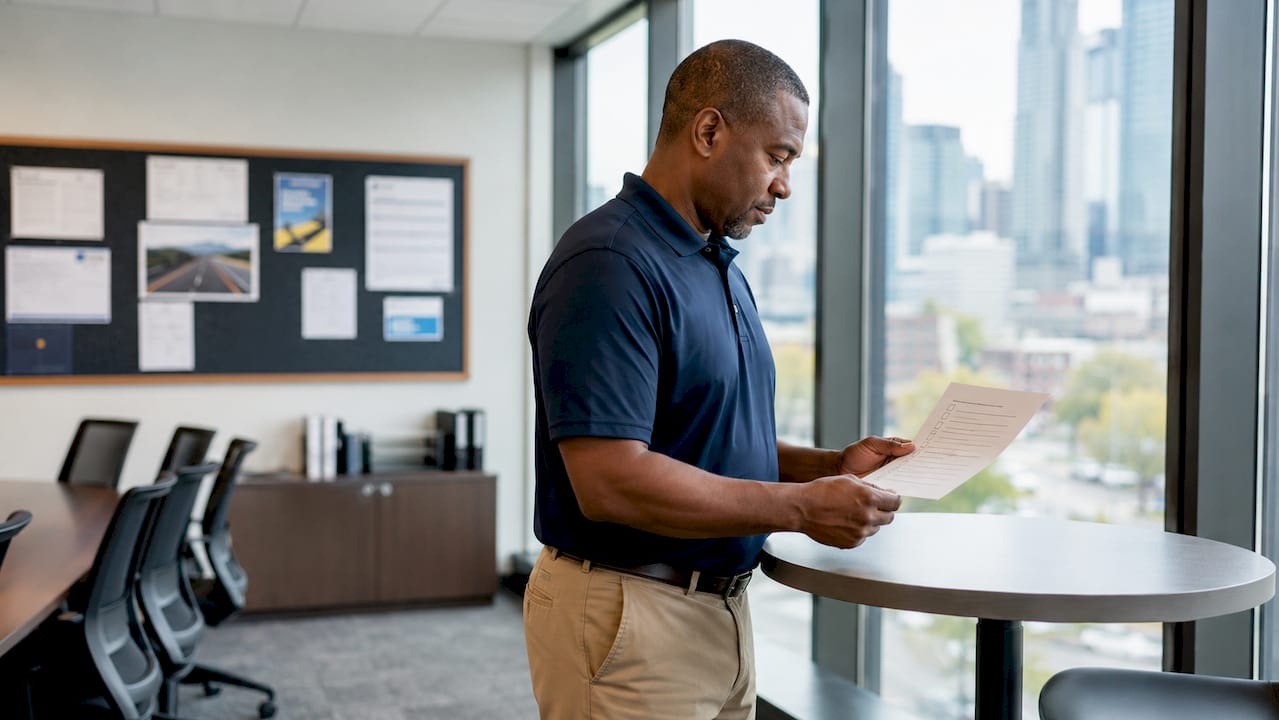
Pro Tip: When reviewing job listings, look for phrases like "no license required" or "training provided" in the job description. These signal that the employer has a structured onboarding program rather than expecting you to arrive qualified.
How do you get a CDL with no driving experience?
The CDL licensing process follows a fixed federal sequence that every candidate must complete, regardless of experience level. Understanding this sequence prevents the most common mistake: assuming you can speed up the timeline.
Here are the steps to obtain a CDL-A from scratch:
- Pass the general knowledge test at your state's DMV to receive a Commercial Learner's Permit (CLP).
- Hold your CLP for a minimum of 14 days. Federal regulation 49 CFR 383.25 mandates this waiting period. You cannot skip or shorten it.
- Complete Entry-Level Driver Training (ELDT) through a federally registered training provider. This covers theory and behind-the-wheel instruction.
- Pass the CDL skills test, which includes a pre-trip inspection, basic vehicle control, and an on-road driving evaluation.
The distinction between CDL and non-CDL roles matters when you are planning your entry point. Non-CDL delivery positions require only a standard driver's license and are the fastest way to start earning while you build experience. CDL-A roles, which cover linehaul, freight, and team driving, require the full licensing sequence above but come with significantly higher earning potential.
| Role Type | License Required | Training Provided | Typical Timeline to Start |
|---|---|---|---|
| Non-CDL delivery driver | Standard driver's license | Often yes | 1 to 2 weeks |
| CDL-A trainee (employer-sponsored) | CLP at hire, CDL-A after training | Yes, paid | 4 to 8 weeks |
| Dock-to-driver program | Permit required before driving | Yes, on-site | 4 to 6 weeks |
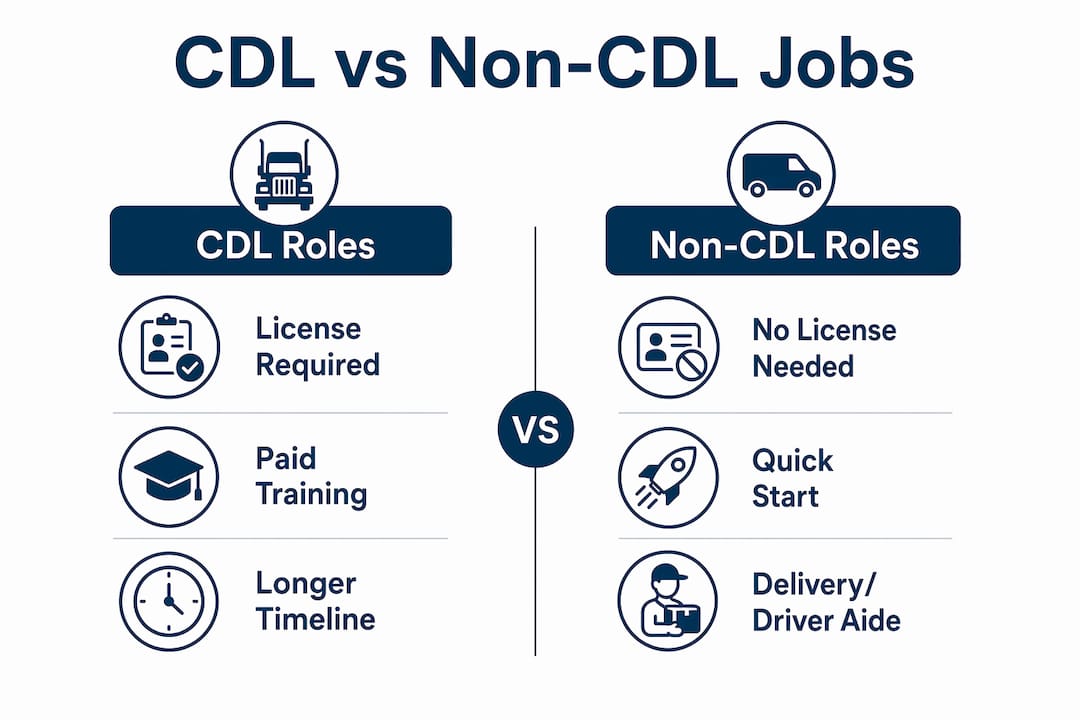
Averitt and First Student both offer employer-sponsored CDL training, meaning you do not pay out of pocket for the licensing process. Paid training programs at companies like UPS and Averitt also include medical benefits, paid time off, and defined career advancement paths. This makes employer-sponsored routes more practical than attending a private CDL school at your own expense.
What is a dock-to-driver program and how does it work?
A dock-to-driver program is a structured employer training pathway that hires candidates into warehouse or dock roles first, then transitions them into CDL-qualified driving positions after a set training period. Averitt's program is one of the most cited examples in the freight industry.
Averitt's dock-to-driver program runs for four weeks, or 20 paid training days, with a local driver trainer. Candidates must hold a Commercial Learner's Permit before the driving portion begins. After completing the program, participants qualify as CDL-A dock associates and are eligible for driving assignments.
The benefits of this model are practical:
- You earn a paycheck from day one, even before you are licensed to drive.
- You learn the freight operation from the ground up, which makes you a more capable driver.
- You demonstrate work ethic and reliability to the employer before taking on a driving role.
- Physical work experience in dock or warehouse environments is treated as a predictor of driving readiness by freight employers.
"Dock-to-driver programs remove the experience barrier entirely. You are not expected to arrive with a CDL. You are expected to arrive ready to work and learn."
The timeline from application to qualified driver in a dock-to-driver program typically runs four to six weeks, depending on when you schedule your CLP test and how quickly ELDT slots are available. Early scheduling of your CLP and ELDT is the single most effective way to reduce your total wait time. Candidates who delay the permit application by even one week push their entire qualification date back by the same amount.
Pro Tip: Apply for your Commercial Learner's Permit before you accept a dock-to-driver offer. Having your CLP in hand when you start means you can begin the driving portion of training on schedule rather than waiting.
How to search and apply for no experience driving jobs
Searching for jobs for new drivers requires more specific keywords than "entry-level driver." Generic search terms return a mix of results that often require prior experience or a current CDL. More targeted terms produce listings built specifically for candidates without a background in driving.
Use these keywords when searching on platforms like Indeed or ZipRecruiter:
- "Trainee driver"
- "Dock-to-driver"
- "Paid CDL training"
- "Apprentice driver"
- "No license required driver"
- "Driver training program"
Specific search terms like "dock-to-driver" consistently outperform generic phrases when filtering for no-experience freight driving positions. This is because employers who run structured training programs use those program names in their job titles.
| Search Term | Best For | Where to Use |
|---|---|---|
| "Paid CDL training" | CDL-A trainee roles | Indeed, ZipRecruiter, employer sites |
| "Dock-to-driver" | Freight and linehaul programs | Averitt careers, freight carrier sites |
| "No license required driver" | Non-CDL local delivery | Indeed, Google Jobs |
| "Driver trainee" | Broad entry-level search | All major job boards |
Beyond general job boards, specialized platforms produce better results for freight and delivery roles. Ucep is a job board and recruiting platform built specifically for Service Providers contracted with FedEx, covering linehaul, CDL-A team, CDL-A solo, and pickup and delivery positions. Searching through a focused driver job board removes the noise of unrelated listings and connects you directly with employers who are actively hiring.
When preparing your application, your resume does not need driving experience to be competitive. Highlight physical fitness, reliability, any schedule-driven work history, and your willingness to complete training. Employers running trainee programs are selecting for attitude and work ethic, not prior mileage.
Key takeaways
Entry-level driving jobs with no experience are accessible through employer-sponsored training programs, and the fastest path to qualification is starting the CDL licensing process before your first day of work.
| Point | Details |
|---|---|
| Employer-sponsored training is standard | Companies like UPS, First Student, and Averitt hire without a license and cover CDL training costs. |
| The 14-day CLP hold is non-negotiable | Federal law requires a minimum 14-day wait between CLP issuance and the CDL skills test. |
| Dock-to-driver programs pay from day one | Averitt's 4-week program lets you earn while you train before transitioning to a driving role. |
| Keyword targeting improves job search results | Terms like "dock-to-driver" and "paid CDL training" return better listings than "entry-level driver." |
| Physical readiness matters to freight employers | Prior experience in physically demanding roles signals reliability and is valued in freight hiring. |
What I have learned about starting a driving career from scratch
I have reviewed hundreds of job listings and hiring programs for new drivers, and the pattern is consistent: the candidates who move fastest are the ones who treat licensing as a task to complete before they need it, not after they are hired.
The most common mistake I see is waiting until an employer offers a training slot before scheduling the CLP test. The 14-day federal hold on the CLP is fixed. You cannot bypass the mandatory waiting periods for permits and ELDT, and most candidates do not realize this until they are already in the hiring process. That delay costs real weeks.
My honest recommendation: get your CLP scheduled the same week you start applying. It costs you nothing to hold a permit, and it makes you a stronger candidate. Employers running dock-to-driver or trainee programs prefer applicants who already have their permit in hand because it shortens the time to a productive driver on the road.
Physical readiness is also underrated. Freight roles involve daily package handling, vehicle inspections, and long hours on your feet. Candidates who come from warehouse, construction, or any physically demanding background have a genuine advantage, not because of the work itself, but because it signals the discipline and consistency that freight employers are actually hiring for.
Finally, do not overlook the value of a focused job search. Applying through a platform built for transportation roles, rather than a general job board, puts your application in front of employers who are specifically looking for new drivers to train. That specificity matters more than most candidates realize.
— Aaron
Start your search with the right tools
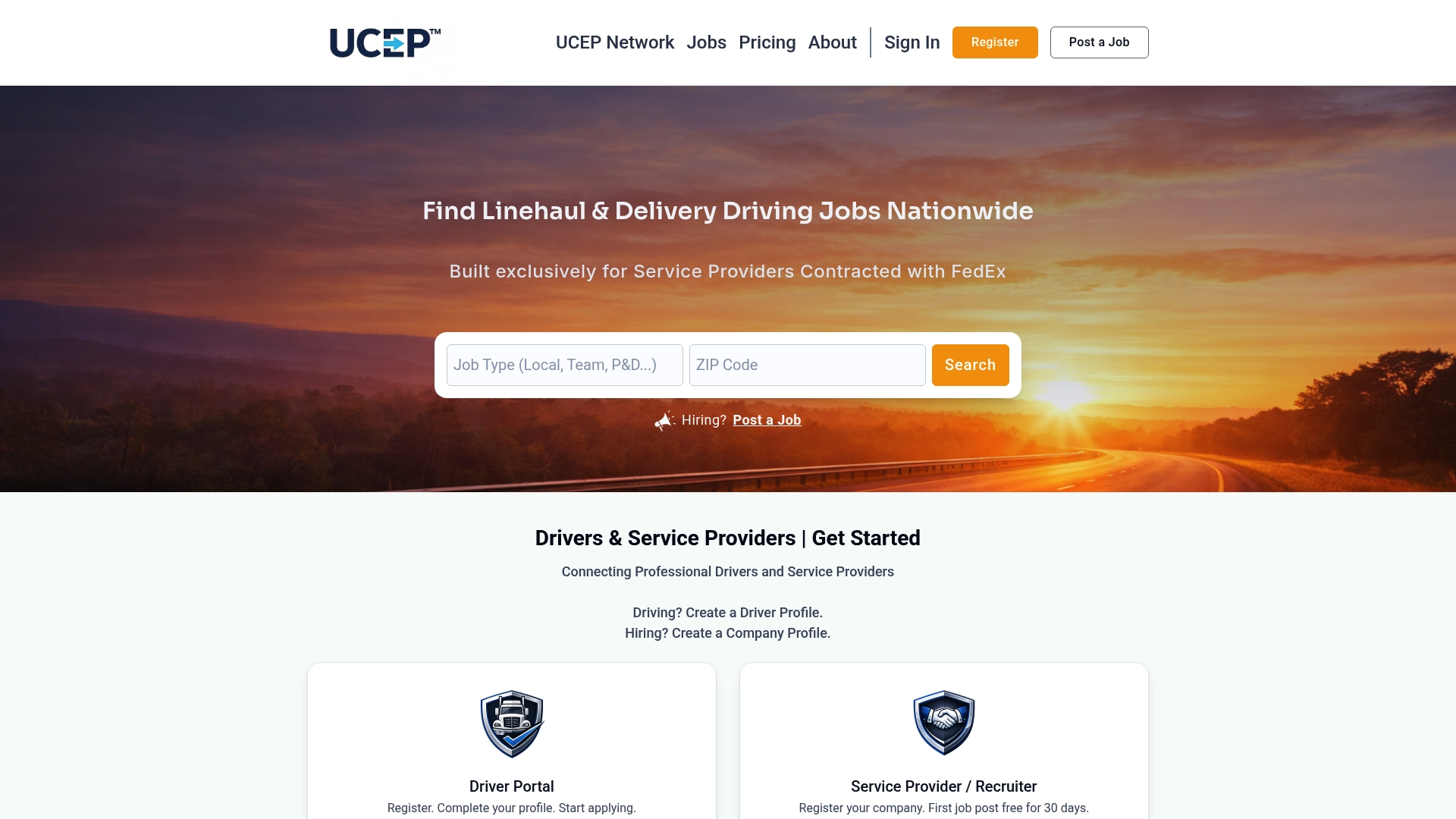
Finding the right employer is as important as meeting the qualifications. Ucep is a dedicated job board and recruiting platform built exclusively for Service Providers contracted with FedEx, covering linehaul, CDL-A team, CDL-A solo, and pickup and delivery roles nationwide. If you are looking to apply for driving jobs online with no prior experience, Ucep connects you directly with employers who offer structured training programs and clear entry-level pathways. You can browse verified service provider reviews to evaluate employers before you apply, and access the full Ucep company directory to find companies currently hiring new drivers in your area.
FAQ
Can you get a driving job with no experience?
Yes. Employers like UPS, First Student, and Averitt hire candidates without prior driving experience and provide paid training to acquire the necessary license. Entry-level roles focus on trainability and basic qualifications rather than prior mileage.
What is the minimum age for entry-level driving jobs?
Most entry-level driving positions require candidates to be at least 21 years old. This is driven by insurance regulations that apply to commercial vehicle operators across most freight and delivery roles.
How long does it take to get a CDL with no experience?
The minimum timeline is approximately four to six weeks, accounting for the mandatory 14-day CLP hold, ELDT completion, and the CDL skills test. Employer-sponsored programs like Averitt's dock-to-driver training run on a similar schedule.
What keywords should I use to find no experience driving jobs?
Search for terms like "paid CDL training," "driver trainee," "dock-to-driver," and "no license required driver" on platforms like Indeed or ZipRecruiter. Targeted keywords consistently return better results than generic phrases like "entry-level driver."
Do I need to pay for CDL training myself?
Not if you apply through an employer-sponsored program. Companies like First Student and Averitt cover CDL training costs as part of their hiring process, and many also include benefits packages and career advancement opportunities once you qualify.