
Over the road driving is defined as long-haul trucking that crosses state lines, with drivers spending 2–3 weeks away from home per trip. The industry term is OTR trucking, and it forms the backbone of freight movement across the United States. OTR drivers average 2,500–3,000 miles per week and earn between $60,000 and $90,000 annually as company drivers. That mileage and pay scale separates OTR from every other trucking category. The Federal Motor Carrier Safety Administration (FMCSA) regulates every aspect of the profession, from how long you can drive to how you must rest.
What is over the road driving, and how does it work?
Over the road trucking means hauling freight across multiple states on routes that can stretch from coast to coast. A single trip can take 6–7 days for a solo driver. You live out of your truck's sleeper cab for weeks at a time, stopping at truck stops for fuel, rest, and meals. This is not a job you commute to. It is a job you live inside.
The FMCSA sets the legal framework for every OTR driver through its hours-of-service (HOS) rules. These rules cap daily driving time and require mandatory rest breaks. FMCSA hours-of-service rules directly shape your trip schedule, your delivery windows, and how you plan parking stops. Ignoring them is not an option. Violations carry fines and can end your career.
OTR trucking is also the entry point most experienced drivers recommend for building a career. The mileage you accumulate in OTR creates a foundation that opens doors to regional and local positions later. You learn to manage dispatch pressure, navigate unfamiliar routes, and handle mechanical issues far from home.
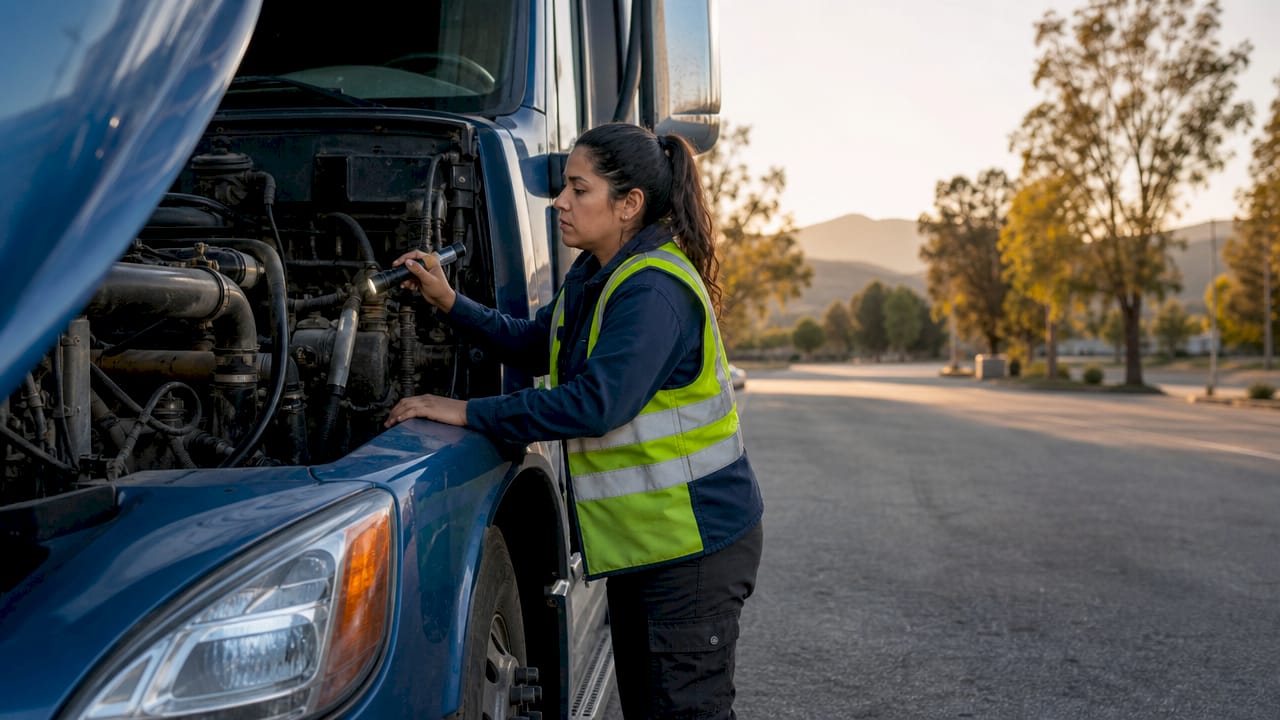
What are the types of over the road driving jobs?
OTR driving jobs fall into four main categories. Each one carries different expectations for pay, home time, and daily workload.
- Solo company driver: You drive alone under a carrier's authority. The carrier owns the truck and handles insurance, fuel cards, and dispatch. Pay is typically per mile. You get assigned loads and follow a set schedule.
- Solo owner-operator: You own or lease your truck and operate under your own or a carrier's authority. You take on more financial risk but keep a larger share of revenue per load.
- Team driver: Two drivers share one truck, alternating shifts so the vehicle runs nearly 24 hours a day. Team driving cuts cross-country delivery time from 6–7 days down to 3–4 days. That speed makes team loads attractive to shippers with tight deadlines.
- Specialized freight driver: You haul specific cargo types such as hazardous materials, oversized loads, or refrigerated goods. These roles require additional endorsements but pay more per mile.
Solo vs. team driving: which fits you?
Solo driving gives you full control of your schedule within dispatch constraints. You set your own pace, choose your rest stops, and manage your cab space alone. The tradeoff is slower delivery times and lower per-trip earnings on time-sensitive loads.
Team driving doubles the truck's productivity. Team driving requires close partner compatibility because you share a small cab, sleep while your partner drives, and coordinate every stop. If the partnership works, the earnings are strong. If it does not, the friction compounds quickly over thousands of miles.
Pro Tip: If you are new to OTR, start as a solo company driver. You build mileage, learn dispatch dynamics, and avoid the interpersonal complexity of team driving until you know the road well.
What are the requirements to become an OTR driver?
A Class A Commercial Driver's License (CDL) is the non-negotiable starting point for any OTR career. A Class A CDL and DOT physical are mandatory before you can legally operate a commercial vehicle in interstate commerce. The licensing process includes a written knowledge test, a pre-trip inspection test, and a road skills test.
The DOT physical examination covers several health categories:
- Vision: You must have at least 20/40 acuity in each eye, with or without correction.
- Hearing: You must perceive a forced whispered voice in the better ear at no less than 5 feet.
- Blood pressure: Readings must fall within acceptable ranges. Uncontrolled hypertension disqualifies you.
- General health: Conditions like epilepsy, insulin-dependent diabetes, and certain heart conditions require waivers or disqualify applicants outright.
Beyond the base CDL, endorsements expand your options and your earning potential. A hazmat endorsement requires a TSA background check and a written test. A tanker endorsement opens liquid freight loads. A doubles/triples endorsement lets you pull multiple trailers. Each endorsement adds a layer of qualification that carriers value when assigning higher-paying loads.
The FMCSA also requires a clean Motor Vehicle Record (MVR) and a drug and alcohol clearinghouse check before any carrier can hire you. These checks are not a formality. Carriers run them every time you apply.
What is the lifestyle of an OTR driver like?
Life as an OTR driver follows a rhythm that most people outside the industry do not fully anticipate. You spend 2–3 weeks on the road, then return home for 2–4 days before the next dispatch. That ratio defines your personal life, your relationships, and your physical health.
Here is what a typical week on the road looks like:
- Dispatch and pre-trip inspection: Your day starts with a load assignment and a thorough walk-around of your truck. You check tires, lights, brakes, and fluid levels before every departure.
- Driving and HOS management: You track your hours carefully using an Electronic Logging Device (ELD). Most solo drivers run 10–11 hours of driving per day within the 14-hour on-duty window.
- Parking and rest: Finding a legal parking spot at a truck stop before your HOS clock runs out is a daily challenge. Parking scarcity is a major stressor for OTR drivers, often exceeding the difficulty of the drive itself.
- Meals and personal care: Truck stops provide showers, laundry, and food options. Drivers who plan meals and maintain exercise habits report better energy and fewer health problems over long hauls.
- Communication and downtime: Staying connected with family during rest periods is a deliberate practice, not a passive one. Maintaining family communication while away is one of the most cited factors in long-term driver retention.
Pro Tip: Build a consistent sleep schedule tied to your HOS clock, not the time zone you are in. Irregular sleep is the fastest path to fatigue-related errors.
The psychological side of OTR life is real and often underestimated. New drivers frequently struggle with isolation and the disorientation of returning home for only a few days before leaving again. Drivers who build routines, stay physically active, and maintain regular contact with people they care about last longer in the profession. You can read more about managing this at Ucep's mental health resource for drivers.
How does OTR compare to regional and local trucking?
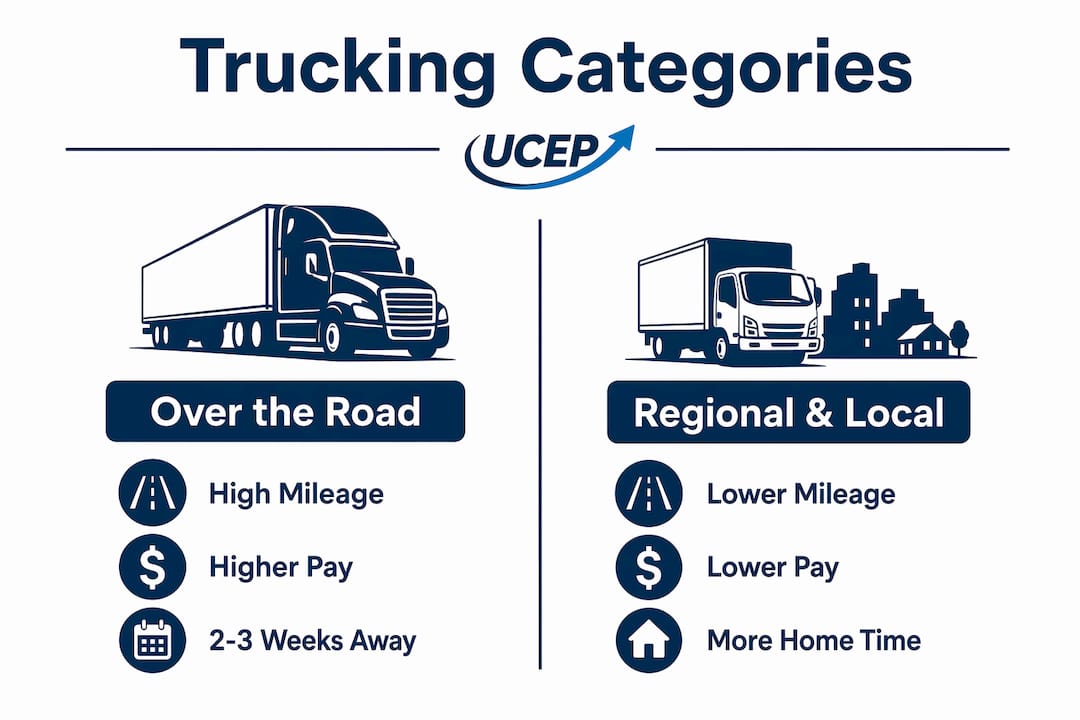
The three main trucking categories differ most on home time, mileage, and pay. Understanding these differences helps you choose the right starting point for your career.
| Category | Weekly mileage | Annual pay range | Home time |
|---|---|---|---|
| OTR | 2,500–3,000 miles | $60,000–$90,000 | Every 2–3 weeks |
| Regional | 1,500–2,200 miles | $55,000–$75,000 | Weekly |
| Local | Under 500 miles | $45,000–$65,000 | Daily |
OTR pay exceeds regional and local driving because of greater mileage and per diem tax advantages on meals and incidentals while away from home. That pay premium comes at the cost of home time. Regional drivers return home weekly and cover shorter routes, making that category attractive to drivers with young families or strong community ties.
Local driving offers daily home time but the lowest mileage-based earnings. It suits drivers who prioritize stability and predictability over income maximization.
Many drivers begin in OTR to accumulate mileage and experience, then transition to regional or local roles once they have the record to negotiate better terms. OTR is not always a permanent career stage. For many, it is a deliberate investment in their driving record.
Key Takeaways
OTR trucking is the highest-mileage, highest-paying category of commercial driving, and it requires a Class A CDL, a DOT physical, and the mental discipline to manage weeks away from home.
| Point | Details |
|---|---|
| OTR defined | Long-haul trucking crossing state lines, averaging 2,500–3,000 miles per week with 2–3 weeks away. |
| Licensing requirement | A Class A CDL and a DOT physical are mandatory before operating in interstate commerce. |
| Job types vary | Solo, team, company driver, and owner-operator roles each carry different pay, home time, and workload. |
| Lifestyle demands | Parking scarcity, isolation, and irregular schedules are the most common challenges for new OTR drivers. |
| Career path value | OTR builds the mileage record that qualifies drivers for regional and local positions with better home time. |
What I have learned about succeeding in OTR driving
The biggest misconception new drivers carry into OTR is that the job offers freedom. It does not, at least not in the way most people imagine. OTR drivers retain less autonomy than expected because dispatch schedules, loading appointments, and FMCSA mandates dictate nearly every hour of the day. The freedom is geographic, not temporal. You see the country. You do not control your calendar.
What actually predicts success in OTR is patience and routine. Drivers who build consistent habits around sleep, meals, and exercise outlast those who treat the road as a series of improvised decisions. The ones who burn out fastest are usually the ones who never establish a rhythm.
The career path argument for OTR is also more compelling than most people realize. Starting in OTR and accumulating mileage quickly puts you in a position to negotiate regional or local roles with carriers who value a clean, high-mileage record. You are not stuck in OTR forever. You are building the credential that makes every other driving job easier to get.
If you are seriously considering this career, read about team driving with FedEx service providers before you decide on solo versus team. The differences in daily life are significant, and knowing them early saves you from a poor first placement.
— Aaron
OTR driving opportunities through Ucep
Ucep is a job board and recruiting platform built exclusively for Service Providers contracted with FedEx. If you are ready to find OTR, linehaul, or CDL-A team positions, Ucep connects you directly with vetted companies that are actively hiring.
You can browse companies hiring drivers right now, or read service provider reviews from drivers who have worked with these carriers. Both resources are free and built specifically for drivers entering or advancing in the FedEx contractor network. Ucep removes the guesswork from finding a reputable first placement.
FAQ
What is OTR trucking in simple terms?
OTR trucking is long-haul freight transportation across state lines, with drivers spending 2–3 weeks on the road and covering 2,500–3,000 miles per week.
How much do OTR drivers earn per year?
Company OTR drivers earn between $60,000 and $90,000 annually, depending on mileage, experience, and endorsements held.
What license do you need for over the road driving?
A Class A CDL is required for OTR driving, along with a passing DOT physical examination covering vision, hearing, and blood pressure.
How does team OTR driving work?
Two drivers share one truck and alternate shifts, keeping the vehicle running nearly around the clock and cutting cross-country delivery time from 6–7 days to 3–4 days.
Is OTR driving a good career starting point?
OTR is widely considered the best entry point in trucking because it builds mileage and experience quickly, which qualifies drivers for higher-paying regional and local roles later.
Recommended
- Healthy Eating on the Road: A Trucker’s Guide - United Contractor Employment Portal
- Life in the Miles: Truck Driver Mental Health, Home Time, and Burnout - United Contractor Employment Portal
- Trucking and Severe Summer Weather | Safety Tips for Drivers - United Contractor Employment Portal
- Safe Delivery Driving Summer 2026 | Reduce Delivery Risk - United Contractor Employment Portal