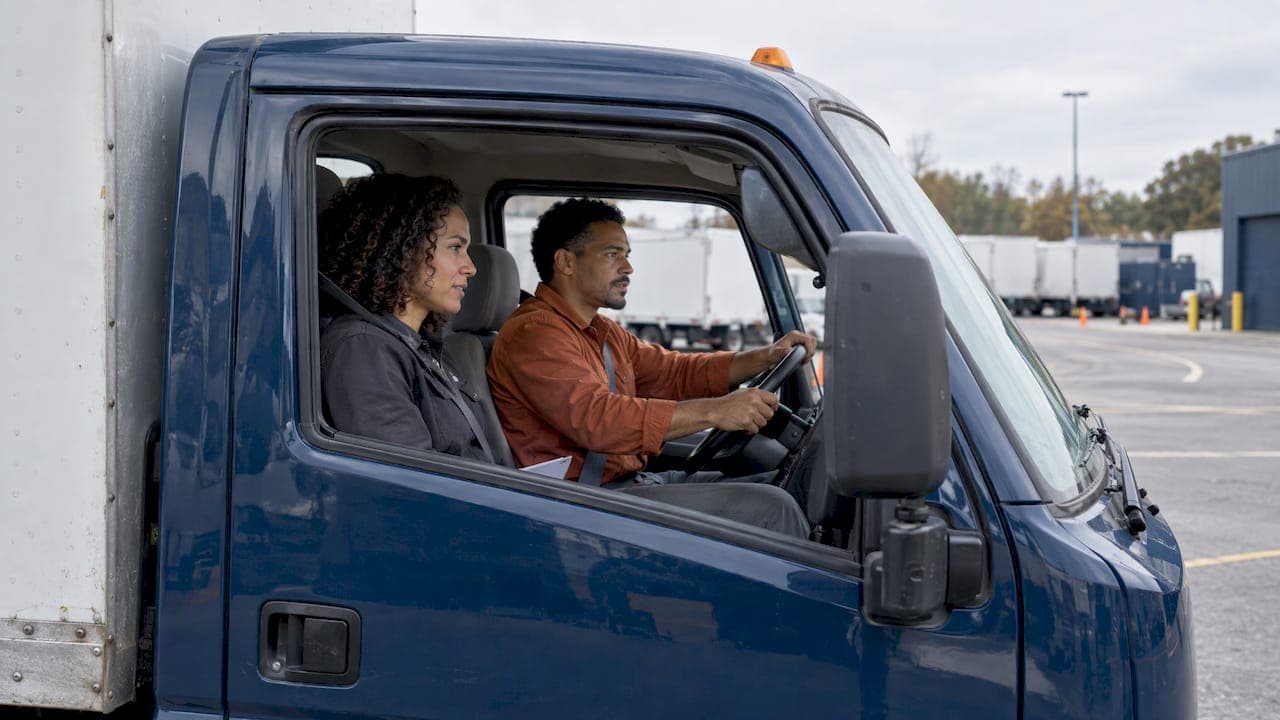
A seasonal driver hiring plan answers five questions before peak arrives: how many drivers you need, for which roles, when to recruit, what each hire must pass, and how you keep them through the last delivery day. This guide walks through each step for Service Providers contracted with FedEx, covering linehaul, CDL-A team, CDL-A solo, and pickup and delivery roles.
Peak is already under way as you read this. If you have not started, the plan below still works as a shortened version: fill the highest-risk routes first, then build the rest of the roster in waves.
TL;DR
- Work backward from your peak start date. Recruiting, screening, and training take weeks, so each stage needs its own deadline.
- Size headcount by route type, not by a single total. Dense residential routes suit temporary drivers. Complex routes and linehaul runs go to experienced drivers.
- Seasonal hiring does not waive federal driver qualification rules. Write the license class and endorsements into the posting and screen every candidate.
- State pay, hours, and the end date in the posting. Clear terms reduce no-shows and early quits.
- Plan the end of the season at the start: which seasonal drivers you would rehire, and who covers absences in between.
Table of Contents
- Build the timeline backward from peak
- Estimate headcount by route type
- Match drivers to roles
- Screening and qualification: seasonal does not mean relaxed
- Where to recruit and what the posting should say
- Set pay and terms clearly
- Reduce turnover and plan the season's end
- Our perspective
- Post your seasonal roles on UCEP
- FAQ
- Sources
Build the timeline backward from peak
Start with the date your volume rises, then subtract each stage. Our planning assumption is that a new driver needs roughly three to four weeks from first contact to a confident solo route, counting offer, background checks, training, and ride-alongs. Your own number may be shorter or longer. Measure it from your last hiring wave and use that.
A working schedule looks like this:
| Stage | What happens | Plan for |
|---|---|---|
| Forecast | Estimate peak volume and routes by type | 10 to 12 weeks before peak |
| Posting | Publish role-specific listings and open referral channels | 8 to 10 weeks before peak |
| Screening | Applications, motor vehicle record checks, interviews | 6 to 8 weeks before peak |
| Offers and onboarding | Paperwork, orientation, training, ride-alongs | 3 to 4 weeks before peak |
| Buffer | Replace no-shows and early quits | Through peak |
If you are reading this late, compress the stages but keep the order. Drivers with prior FedEx experience usually need less training, so hire them first when time is short. Drivers new to the network need background checks and full training, so they are the group that needs the earliest start.
The pattern behind the timing is worth understanding. Our guide on why seasonal hiring spikes in trucking explains how demand cycles compete for the same driver pool. Qualified candidates get taken early, which is why a late start costs you choice.
Estimate headcount by route type
A single "we need 12 seasonal drivers" number hides the decisions that matter. Break it down in four steps.
- List every route you run at peak. Include pickup and delivery routes, linehaul lanes, and any team runs.
- Mark which routes are covered by your permanent drivers. Everything left over is a seasonal gap.
- Add coverage for absences. Peak is when permanent drivers also get sick, take time off, or leave. Add a cushion on top of the route gap.
- Add a no-show allowance. Not every accepted offer becomes a driver on day one. Base the allowance on your own past hiring waves.
The cushion and no-show figures should come from your records, not from a rule of thumb. If you do not have records, start conservatively and track the numbers this season so next year's plan has data.
For a deeper method, see our workforce planning guide for FedEx contractors.
The labor market behind your numbers
Demand for delivery drivers is expected to keep growing as e-commerce expands and customers expect faster delivery, according to the Bureau of Labor Statistics. The supply side is tighter than the demand side suggests. U.S. truck transportation employment stood at 1,513,300 in December 2025, its lowest level since July 2021. Fewer available drivers means seasonal candidates have options, and your posting competes with others.
Fleet owners also compete for drivers who are already working. A truck that sits out of service for a cracked windshield is a seat you cannot fill, so plan equipment readiness alongside headcount. This box truck windshield replacement guide for fleet managers covers the repair side of keeping a fleet on the road.

Match drivers to roles
Seasonal drivers are not interchangeable. Assign them where their experience fits the risk.
Pickup and delivery
Temporary drivers do best on simple, dense residential routes with predictable stops. Give your most experienced permanent drivers the complex routes: rural spreads, business parks with tight docks, and routes with heavy or bulky freight. If you need a model for what a standard day looks like, our pickup and delivery daily routine examples give candidates a realistic picture.

CDL-A solo linehaul
Solo linehaul roles carry more responsibility per driver: longer distances, tractor-trailer handling, and hours-of-service limits. Prioritize candidates with verifiable CDL-A driving history. A new seasonal hire is a poor fit here unless your safety record and training capacity support it.
CDL-A team linehaul
Team roles depend on two people working well together. If you hire seasonal team drivers, interview them as a pair or place them with an established partner. A weak pairing can take two trucks off schedule.
A quick assignment guide
| Role | Best seasonal candidate | Main risk |
|---|---|---|
| Pickup and delivery, dense residential | New-to-FedEx drivers with a clean record | Slow stops, missed delivery windows |
| Pickup and delivery, complex routes | Experienced FedEx drivers only | Service failures and damage |
| CDL-A solo linehaul | Drivers with verified CDL-A experience | Safety and hours-of-service compliance |
| CDL-A team linehaul | Established pairs or proven solo drivers | Partner conflict, schedule gaps |
Screening and qualification: seasonal does not mean relaxed
Federal driver qualification rules apply to seasonal drivers the same way they apply to permanent ones, wherever the vehicle falls under those rules. Under 49 CFR 391.11, a commercial motor vehicle driver must be at least 21, able to read and speak English sufficiently, capable of operating the vehicle safely through experience or training, physically qualified, licensed in one state, not disqualified, and road-tested or hold an accepted equivalent.
The application itself is regulated. 49 CFR 391.21 requires a formal employment application, including residence and employment history. Build your application form from the regulation text rather than from a generic template.
A practical screening checklist:
- Completed driver application that meets 391.21
- Motor vehicle record review
- Verification of CDL class and endorsements for linehaul roles
- Medical examiner's certificate where required
- Road test or accepted equivalent
- Prior employer safety history inquiries
- Drug and alcohol program steps and Clearinghouse queries for CDL roles
Your obligations as a contractor go beyond this list. Our FedEx Ground contractor obligations guide covers them, and the driving opportunity requirements list shows what candidates expect to be asked. If a rule is unclear for your vehicle type, confirm it with your compliance contact or your FedEx business representative before you hire.
Speed up onboarding without skipping steps
The stages that can be shortened are paperwork and scheduling, not checks. Send forms electronically, book orientation slots in advance, and have trainers assigned before offers go out. Our guide to onboarding new CDL drivers quickly lays out the sequence.
Where to recruit and what the posting should say
Use several channels at once, because no single one fills a seasonal roster:
- Job boards focused on FedEx driving work. Candidates already know the network and understand the role.
- Local driving schools. Recent graduates need experience and often want a start date.
- Referrals from your current drivers. Ask early, and consider a referral bonus paid after a set number of days worked.
- Social media and local community groups. Useful for pickup and delivery roles.
- Past seasonal drivers. Contact last year's good performers before you post anything.
For a fuller channel breakdown, read how to get qualified FedEx drivers in two weeks.
What a seasonal posting must include
A good posting removes questions before the candidate asks them:
- The role: pickup and delivery, CDL-A solo, or CDL-A team linehaul
- License class, endorsements, and minimum age
- Vehicle type and whether a trailer is involved
- Daily route expectations and typical start time
- Physical requirements, such as lifting limits
- Pay structure and how often drivers are paid
- The expected start date and end date of the seasonal period
- Any bonus tied to attendance or finishing the season
Postings that list vehicle class and endorsements save you from screening candidates who cannot take the job. If your hire could become permanent, say so. Many strong seasonal drivers want that option.
Set pay and terms clearly
Decide pay before you post, not during interviews. Check your local market, because wages differ widely by region. As a national reference point, the Bureau of Labor Statistics reports that the median annual wage for light truck drivers was $44,860 in May 2025. Use that only as a baseline and compare it with the listings in your own area.
Consider these levers:
- Weekly pay. Seasonal workers often want quick, predictable income.
- Peak bonus. Pay it at the end of the season or at milestones to encourage drivers to stay.
- Attendance and safety bonuses. Reward what you need most during peak.
- Overtime terms. Explain how overtime works before the first shift.
- Route consistency. A driver who knows the route performs better and wants to stay.
Put all of this in writing in the offer. Vague terms are a common reason new drivers walk away in the first two weeks.
Reduce turnover and plan the season's end
The first weeks decide whether a seasonal driver stays. Write down what each of the first four weeks looks like: who the driver rides with, what route they run, who answers their questions, and when you will check in. A driver who knows what to expect is less likely to quit.
Practical steps:
- Assign every new driver one named contact.
- Check in at the end of the first week, then every week after.
- Keep vehicles in good condition. Breakdowns and poor equipment push people out. Regular maintenance, such as the preventive work described in this guide to dependable vehicle service, helps keep drivers on routes and out of the shop.
- Give permanent drivers rest. Schedule time off for your full-time team before the heaviest weeks, while seasonal drivers are gaining experience, so your core drivers do not burn out.
Our common FedEx contractor staffing challenges article covers more of the retention picture.
Plan the end of the season
Decide in advance:
- Which seasonal drivers you would rehire or convert to permanent
- When you will tell drivers their last day, and how
- Who collects equipment, badges, and scanners
- How you will keep a list of good seasonal drivers for next year
A clean exit makes next year's recruiting easier. Keep a simple record of attendance, safety, and service quality for each seasonal driver.
Our perspective
We see the same pattern in seasonal hiring every year. Service Providers wait until volume rises, then discover that the drivers they want are already placed. The fix is rarely a higher wage. It is an earlier start, a clearer posting, and a defined first month.
We built UCEP for one audience: FedEx-contracted Service Providers and the drivers who work with them. That focus matters in seasonal hiring because candidates searching a FedEx-specific board already understand the roles. They know what pickup and delivery, CDL-A solo, and CDL-A team linehaul mean. You spend less time explaining and more time evaluating.
Our advice is to treat seasonal hiring as a repeating process, not a yearly emergency. Keep your postings, your screening checklist, and your list of past drivers current all year. Then each peak starts from a prepared position.
— Aaron
Post your seasonal roles on UCEP
UCEP is a job board and recruiting platform for FedEx-contracted Service Providers. You can list pickup and delivery, CDL-A solo linehaul, and CDL-A team linehaul roles, and use the built-in applicant tracking system to manage candidates in one place. New recruiters can start with a complimentary trial listing. The Standard Monthly Plan is $99 per month. See both on the UCEP pricing page.
Drivers looking for seasonal or permanent FedEx work can browse current listings on the UCEP jobs page.
FAQ
When should I start recruiting seasonal drivers?
Start as early as you can, ideally two to three months before peak. Your timeline depends on how long screening and training take in your operation. If you are already in peak, prioritize experienced FedEx drivers, who need less training.
Do seasonal drivers need the same qualifications as permanent drivers?
Yes, where federal driver qualification rules apply to the vehicle. The requirements in 49 CFR 391.11 cover age, licensing, physical qualification, and road testing, and the application must meet 391.21. Confirm anything unclear with your compliance contact.
Which routes suit seasonal drivers best?
Simple, dense residential pickup and delivery routes are the best fit. Keep complex routes and CDL-A linehaul runs for experienced drivers, unless a seasonal candidate has verified CDL-A experience.
How do I keep seasonal drivers from quitting early?
Give them a written plan for their first four weeks, a named contact, weekly check-ins, reliable equipment, and clear pay terms. Pay alone rarely fixes early turnover.
Sources
- Delivery Truck Drivers and Driver/Sales Workers, Bureau of Labor Statistics
- Truck transportation jobs flat in December, lowest since 2021, FreightWaves
- 49 CFR Part 391 Subpart B, Qualification and Disqualification of Drivers, eCFR
- 49 CFR 391.21, Application for employment, eCFR