
Onboarding new CDL drivers quickly means compressing the time from job offer to road-ready status from weeks down to days by running compliance steps in parallel with digital tools. The industry term for this approach is structured driver onboarding, and it covers everything from document collection and drug testing to safety orientation and file management. Digital workflows reduce onboarding time from 14–28 days down to 3–5 business days. That compression directly reduces turnover, lowers compliance risk, and gets revenue-generating drivers behind the wheel faster. Fleet managers and recruiters who adopt this model gain a measurable edge in a tight driver market.
What compliance requirements must you handle before onboarding begins?
Compliance is not a final step. It is the foundation every other onboarding task is built on, and missing a single document can stop a driver from dispatching or trigger a costly DOT audit.
Every new CDL driver file must contain the following before the driver turns a wheel:
- A valid Commercial Driver's License (CDL) with the correct endorsements for the assigned route
- A current medical examiner's certificate issued under FMCSA standards
- A completed pre-employment background check
- A Federal Motor Carrier Safety Administration (FMCSA) Drug and Alcohol Clearinghouse query
- A Motor Vehicle Record (MVR) pull from the driver's state of license
- A signed employment application with a 10-year work history
- Completed road test documentation or a certificate of road test from a prior employer
Pre-employment drug testing is the rate-limiting step in this entire process. Drug test turnaround times range from 24–72 hours, and missing documentation can result in fines up to $16,000 per violation. That fine exposure makes skipping or delaying any compliance step a serious financial risk, not just a procedural one.
Safety orientation documentation carries equal weight. Failure to document safety orientation is the most common costly audit failure, and penalties can reach $16,000 per occurrence. Use signed, standardized orientation forms for every driver, every time.
Pro Tip: Order your Clearinghouse query and MVR pull the same day you extend a job offer. Both can return results before the drug test clears, so you lose no time waiting.
How do digital tools help you accelerate CDL driver onboarding?
The fastest fleets do not process onboarding steps one at a time. They run multiple verification tracks simultaneously using digital platforms built for commercial driver compliance.
Here is a step-by-step approach to compressing your onboarding timeline:
-
Deploy a mobile-first intake portal. Send drivers a secure link to upload their CDL, medical card, and employment history from their phone. Mobile-first digital intake with OCR automates data capture and flags errors instantly, eliminating days of administrative back-and-forth.
-
Trigger all background checks simultaneously. The moment a driver submits their intake form, launch the MVR pull, Clearinghouse query, and background check at the same time. Do not wait for one result before starting the next.
-
Schedule the drug test on day one. Send the driver to a collection site the same day you receive their application. The 24–72 hour window runs while your other checks are processing in parallel.
-
Use a real-time compliance dashboard. Track every open item, expiration date, and pending result in one place. Automated alerts flag missing documents before they become audit failures.
-
Complete safety orientation digitally. Deliver orientation materials through your portal, collect digital signatures, and store completed forms automatically in the driver's file.
Running verification steps in parallel rather than sequentially is the single biggest factor that speeds up onboarding without reducing compliance. Fleets that still process steps one at a time are adding unnecessary days to every hire.
| Workflow Type | Typical Timeline | Compliance Risk |
|---|---|---|
| Sequential (paper-based) | 14–28 days | High: incomplete files during audit window |
| Parallel (digital tools) | 3–5 days | Low: all checks run and documented simultaneously |

Pro Tip: Choose a platform that integrates directly with FMCSA Clearinghouse and state MVR databases. Manual queries add 1–2 days per hire and introduce data entry errors.
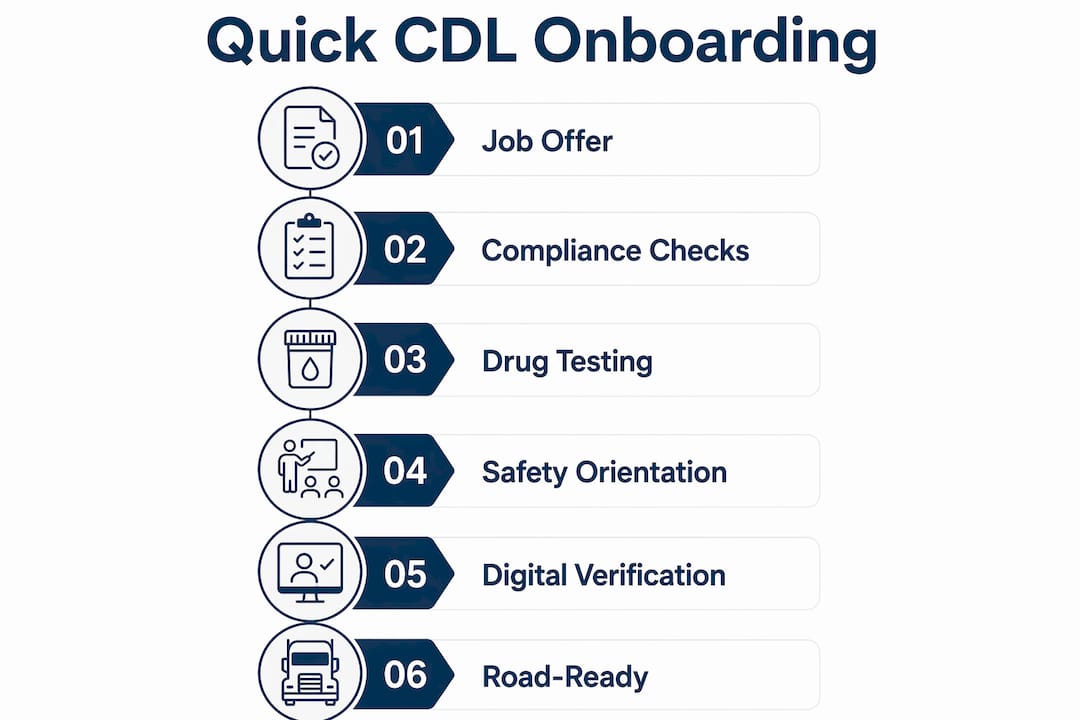
Digital onboarding portals also improve candidate retention during the hiring process. Drivers who receive a professional, mobile-friendly intake experience are less likely to accept a competing offer while your paperwork is still in progress.
What are the most common bottlenecks in CDL driver onboarding?
Most slow onboarding processes share the same root cause: linear sequencing. Fleets wait for one step to finish before starting the next, and each wait compounds into days of lost time.
The most frequent bottlenecks include:
- Waiting on drug test results before starting other checks. This single habit adds 24–72 hours of dead time to every hire. Start all other verification steps the moment the driver submits their application.
- Incomplete or unsigned safety orientation documents. Skipping Clearinghouse queries or safety orientation documentation causes frequent costly violations, particularly for small fleets without dedicated HR staff.
- Paper-based intake forms. Physical paperwork requires manual re-entry, creates transcription errors, and slows document routing. Every paper form is a delay waiting to happen.
- Vendor and lab turnaround variability. Drug testing labs and background check vendors have different processing speeds. Build a preferred vendor list based on consistent turnaround times, not just cost.
- No centralized tracking. When compliance steps are tracked in spreadsheets or email threads, items fall through the cracks. A missing document discovered during a DOT audit costs far more than the software to prevent it.
"Speed and compliance are not trade-offs. Rapid digital onboarding increases compliance safety by reducing incomplete file exposure during audits." — FleetRabbit, 2026
Small fleets face the highest risk here. Without a dedicated HR department, compliance gaps accumulate quickly. Adopting digital checklists and automating pre-employment steps closes those gaps even when you are managing hiring with a small team. Platforms built for commercial driver compliance handle the tracking automatically, so nothing depends on someone remembering to follow up.
What post-onboarding steps reduce turnover and maintain compliance?
Getting a driver road-ready in 3–5 days is only the first part of effective driver onboarding. What happens in the first 90 days determines whether that driver stays or leaves.
Use a structured check-in schedule after the driver's first dispatch:
-
30-day check-in. Review the driver's initial performance data, address any questions about routes or procedures, and confirm all compliance documents are current. This conversation signals that the company pays attention and cares about the driver's experience.
-
60-day check-in. Assess safety performance metrics, review any incidents or near-misses, and confirm that medical certificates and endorsements are still valid. Use this meeting to identify any training gaps before they become habits.
-
90-day check-in. Conduct a formal performance review. Confirm the driver's file is audit-ready, update any expiring documents, and discuss long-term scheduling preferences. Drivers who reach 90 days with positive feedback are significantly more likely to stay through the first year.
Structured onboarding reduces first-year driver turnover by 30% and preventable crashes within 90 days by 25%. Those numbers reflect the direct value of treating onboarding as a 90-day process, not a 5-day checklist. Retention and safety improve together when you stay engaged after the first dispatch.
Continuous compliance monitoring is equally critical after onboarding. Medical certificates expire annually. CDL endorsements require renewal. Drug and alcohol program participation must be documented throughout employment. A digital compliance system that sends automated expiration alerts keeps every driver file audit-ready without manual calendar management.
For fleet managers working with FedEx service provider networks, maintaining audit-ready files is especially important given the compliance standards required across contracted routes.
Key Takeaways
Structured, digital, parallel onboarding is the fastest and most compliant way to get new CDL drivers road-ready, and the 30-60-90 day follow-up process is what keeps them.
| Point | Details |
|---|---|
| Start compliance steps in parallel | Launch MVR, Clearinghouse, and background checks simultaneously on day one. |
| Drug test drives the timeline | Schedule collection immediately; the 24–72 hour window runs while other checks process. |
| Digital intake cuts weeks to days | Mobile portals with OCR reduce onboarding from 14–28 days to 3–5 business days. |
| Safety orientation must be documented | Unsigned or missing orientation logs can trigger fines up to $16,000 per violation. |
| Post-hire check-ins reduce turnover | Structured 30-60-90 day reviews cut first-year turnover by 30% and crashes by 25%. |
Why speed and compliance belong in the same conversation
Most fleet managers I talk to treat speed and compliance as competing priorities. They assume moving faster means cutting corners. That assumption is wrong, and it costs fleets real money.
The fleets that onboard drivers fastest are also the most compliant. They use digital systems that document every step automatically, so their files are more complete than fleets still relying on paper. A paper-based fleet that takes three weeks to onboard a driver is not being more careful. It is just being slower, and its files are often less organized when an auditor shows up.
The insight that changed how I think about this: small fleets have the most to gain from digital onboarding tools. A large carrier has a full HR department managing compliance. A small fleet with two or three recruiters is managing the same regulatory requirements with a fraction of the staff. Automated checklists and parallel workflows do not just save time for small operators. They make compliance achievable without adding headcount.
One thing I would caution against: treating the 3–5 day onboarding target as a reason to rush safety orientation. That is the one step where speed creates real risk. Every other step in the process can be parallelized and automated. Safety orientation requires a driver's full attention and a signed, completed record. Do not let the efficiency mindset bleed into that conversation.
The fleets winning on driver recruitment right now are the ones that post on niche job boards and then back that up with a fast, professional onboarding experience. Drivers talk to each other. A smooth hire process becomes a recruiting advantage on its own.
— Aaron
Ucep helps you hire and onboard CDL drivers faster
Ucep is a job board and recruiting platform built exclusively for FedEx Service Providers. It connects you directly with qualified CDL-A drivers for linehaul, team, solo, and pickup and delivery roles, so you spend less time sorting through unqualified applicants and more time moving drivers through your onboarding process.
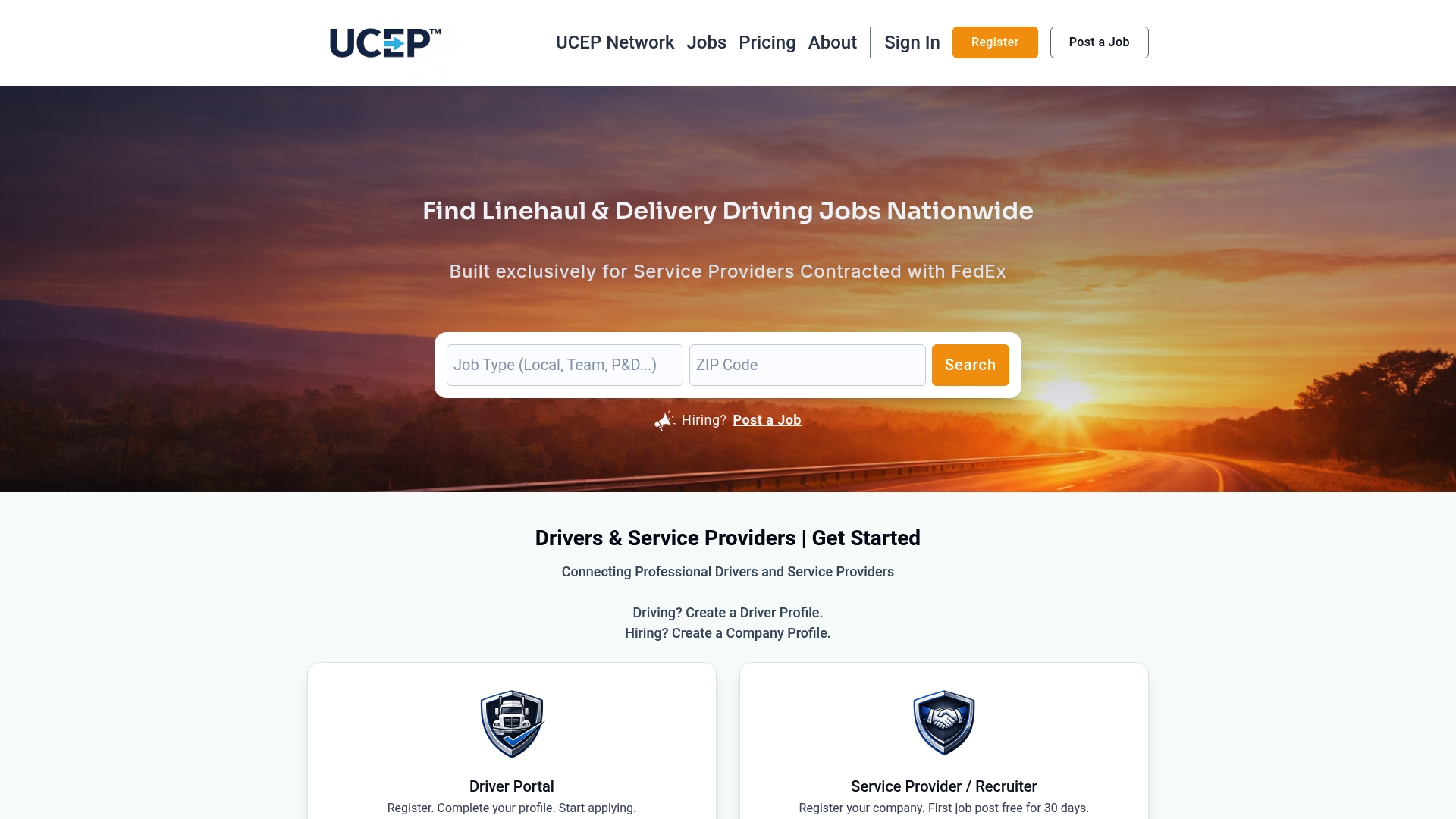
When you post on Ucep, you reach drivers who are already looking for FedEx-contracted opportunities. That focus reduces recruiting noise and shortens the time between posting and first interview. Browse companies hiring CDL drivers through the Ucep network, or check service provider reviews to see how other operators are building their driver rosters efficiently. The faster you find the right candidate, the sooner your compliant onboarding process can do its job.
FAQ
How long does CDL driver onboarding take with digital tools?
Digital onboarding reduces the process to 3–5 business days. Manual, paper-based methods typically take 14–28 days.
What documents are required to onboard a CDL driver?
Required documents include a valid CDL, current medical certificate, completed background check, FMCSA Clearinghouse query, MVR pull, signed employment application, and road test documentation.
What is the biggest bottleneck in CDL driver onboarding?
Pre-employment drug testing is the primary bottleneck, with results taking 24–72 hours. Running all other compliance checks in parallel during that window eliminates most of the delay.
Can small fleets onboard CDL drivers quickly without an HR department?
Yes. Digital checklists and automated compliance platforms handle tracking and alerts without dedicated HR staff, making fast and compliant onboarding achievable for small operators.
How does structured onboarding affect driver retention?
Structured onboarding with 30-60-90 day check-ins reduces first-year driver turnover by 30% and cuts preventable crashes within the first 90 days by 25%.