
A pickup and delivery driver's daily routine is a structured sequence of pre-shift preparation, parcel loading, route execution, scheduled breaks, and return logistics. In the industry, this role is formally called a pickup and delivery (P&D) driver, and the daily schedule typically runs 8–10 hours. Pickup delivery driver daily routine examples show that shifts start between 6:00 am and 9:00 am, with drivers handling 150–300 packages per day while complying with Federal Motor Carrier Safety Administration (FMCSA) hours-of-service rules. Every stage of the day connects directly to safety, on-time performance, and driver well-being.
1. What are the essential pre-shift activities for pickup delivery drivers?
Pre-shift preparation sets the tone for the entire day. Drivers who invest time before the first stop consistently finish faster and with fewer errors than those who rush through loading.
The first task is the pre-trip vehicle inspection. Pre-trip inspections catch mechanical problems before they become accidents on the road. You check tires, brakes, lights, mirrors, and fluid levels. You also confirm the cargo area is clean and secure before loading begins.

Parcel sorting comes next, and it is the single biggest time investment that pays off all day. Sorting parcels by delivery sequence means you never dig through the van at a stop. Place heavier items on the floor near the door and lighter parcels on top. Group stops by zone so the first delivery is closest to the door and the last is deepest in the load.
Technology plays a direct role here. Many drivers use routing apps to visualize the day's stops before loading, which lets them arrange packages in reverse delivery order. This approach cuts per-stop time significantly across a full multi-drop shift.
Key pre-shift tasks include:
- Complete the FMCSA-compliant vehicle inspection checklist
- Scan and verify every parcel against the manifest
- Sort packages in reverse delivery sequence
- Load heavy items low and near the rear door
- Confirm your routing app is updated with the day's stops
- Check weather and traffic for known delays
Pro Tip: Spend an extra 15–20 minutes on load organization at the depot. That investment saves you 30 or more minutes of searching and repositioning throughout the day.
2. How do pickup delivery drivers manage their route efficiently?
Route execution is where preparation meets reality. A well-loaded van and a clear route plan let you move through stops with minimal friction.
Experienced drivers rely on routing algorithms and mobile apps to sequence stops by distance and traffic patterns. These tools recalculate in real time when accidents or road closures appear. You should still know your territory well enough to override the app when local knowledge gives you a faster path.
Each stop follows a consistent process. Pull up, scan the package before leaving the vehicle, carry it to the door, confirm delivery, and return. Consistency at each stop prevents missed scans and customer complaints. Drivers who skip scanning steps create problems that take far longer to resolve than the seconds saved.
Handling 150–300 packages per shift demands physical stamina. Carrying items up to 50 pounds repeatedly across a full shift adds up fast. Proper lifting technique, using your legs and keeping loads close to your body, reduces injury risk over a long career.
Access challenges are a normal part of the delivery driver schedule. Gated communities, apartment intercoms, business receiving docks, and dogs at front doors all require problem-solving. You can find guidance on handling difficult access situations in resources like construction zone safety tips, which cover maintaining professionalism under pressure.
Key route management practices include:
- Follow the app's sequence but apply local knowledge when needed
- Scan every package before leaving the vehicle
- Use proper lifting form on every stop, not just when you feel tired
- Note access codes and gate information for repeat stops
- Communicate delays to dispatch as soon as you identify them, not after they compound
Proactive communication with dispatch about delays is a hallmark of experienced drivers. Telling dispatch about a 20-minute traffic backup at 10:00 am gives the team time to adjust customer expectations. Waiting until 3:00 pm creates a crisis.
Drivers who become valued customer contacts during their routes build trust with regular stops. Knowing a business's receiving hours or a customer's preferred drop location turns a routine delivery into a reliable service relationship.
3. Why are scheduled breaks critical during a delivery shift?
Breaks are not optional downtime. They are a functional part of the delivery driver schedule that directly affects afternoon performance and safety.
A 30-minute break during the shift improves afternoon efficiency and reduces both cognitive and physical fatigue. Drivers who skip breaks report that the final two hours of the shift feel nearly twice as difficult. That difficulty shows up in slower stop times, missed scans, and a higher risk of vehicle incidents.
The physical demands of the role make rest non-negotiable. Frequent exits from the vehicle, carrying packages up to 50 pounds, and walking varied terrain add up to a physically intense workday. Hydration and nutrition matter just as much as rest. Drivers who maintain energy through proper food choices perform more consistently in the afternoon hours. Ucep's guide on eating well on the road covers practical nutrition strategies for drivers managing long shifts.
Risks of skipping breaks include:
- Cognitive slowdown that makes route decisions slower and less accurate
- Increased likelihood of lifting injuries due to muscle fatigue
- Higher risk of vehicle incidents in the final hours of the shift
- Reduced customer interaction quality at late-day stops
Pro Tip: Schedule your break during a natural gap in the route, such as between two zones or after completing a dense cluster of stops. This keeps your momentum intact and avoids breaking mid-zone.
4. What post-shift routines keep drivers compliant and ready for tomorrow?
The end of the shift is as structured as the beginning. Drivers who treat the return to depot as a checklist task finish faster and start the next day with less friction.
The first priority is returning failed deliveries and any equipment to the correct depot location. Organized return of failed deliveries and completed paperwork prevents delays that can add an hour or more to end-of-shift time. Failed deliveries need redelivery notes, updated tracking status, and physical return to the designated area.
Post-shift steps to complete before leaving the depot:
- Return all undelivered packages to the correct staging area with updated status
- Complete and submit your delivery logs and any customer signature records
- Verify your hours-of-service log against the FMCSA 11-hour driving limit within the 14-hour window
- Conduct a post-trip vehicle inspection and report any damage or mechanical issues
- Restock supplies such as delivery bags, tape, and door hangers for the next shift
- Review the next day's manifest if available and flag any known access challenges
The last mile of the shift is when fatigue-related incidents most often occur. Organizing return paperwork and materials throughout the day, rather than saving it all for the end, reduces this risk. Drivers who log completed stops in real time arrive at the depot with most of the administrative work already done.
Planning for the next day's route before leaving the depot is a habit that separates efficient drivers from reactive ones. A quick review of tomorrow's stop count, any known access issues, and weather forecasts takes five minutes and saves far more time the next morning.
Key Takeaways
A structured daily routine is the most reliable way for pickup and delivery drivers to maintain efficiency, safety, and compliance across an 8–10 hour shift.
| Point | Details |
|---|---|
| Pre-shift preparation matters most | Sorting parcels by delivery sequence before leaving the depot saves significant time at every stop. |
| Route execution requires consistency | Scanning every package before leaving the vehicle prevents missed deliveries and customer complaints. |
| Breaks protect afternoon performance | A full 30-minute break reduces fatigue and keeps stop times consistent through the end of the shift. |
| Post-shift compliance is non-negotiable | Verifying hours-of-service logs against FMCSA limits and returning failed deliveries on time prevents end-of-shift delays. |
| Proactive communication reduces problems | Telling dispatch about delays early gives the team time to adjust before issues compound. |
What I've learned about building a driver routine that actually holds up
The drivers who last in this profession are not the fastest. They are the most consistent. I've seen drivers burn through their first year by chasing stop counts and skipping breaks, only to struggle with injuries or burnout before the second year begins.
The routines that hold up are built around two things: load organization and honest communication. If your van is loaded correctly and dispatch knows what's happening on your route in real time, almost every other problem becomes manageable. Traffic, weather, a locked gate at stop 47. None of those derail a driver who prepared well and communicates early.
Physical self-care is the part most new drivers underestimate. Lifting technique, hydration, and a real break in the middle of the day are not soft suggestions. They are the difference between a sustainable career and a short one. Treat the skills required for this role with the same seriousness you give to your driving record.
Route driving is a skilled profession. The drivers who recognize that build routines that support their performance, protect their health, and make them the kind of professional that service providers actively want to retain.
— Aaron
Ucep connects drivers with the right opportunities
Knowing your daily routine is one part of building a strong delivery career. Finding the right service provider to work with is the other.
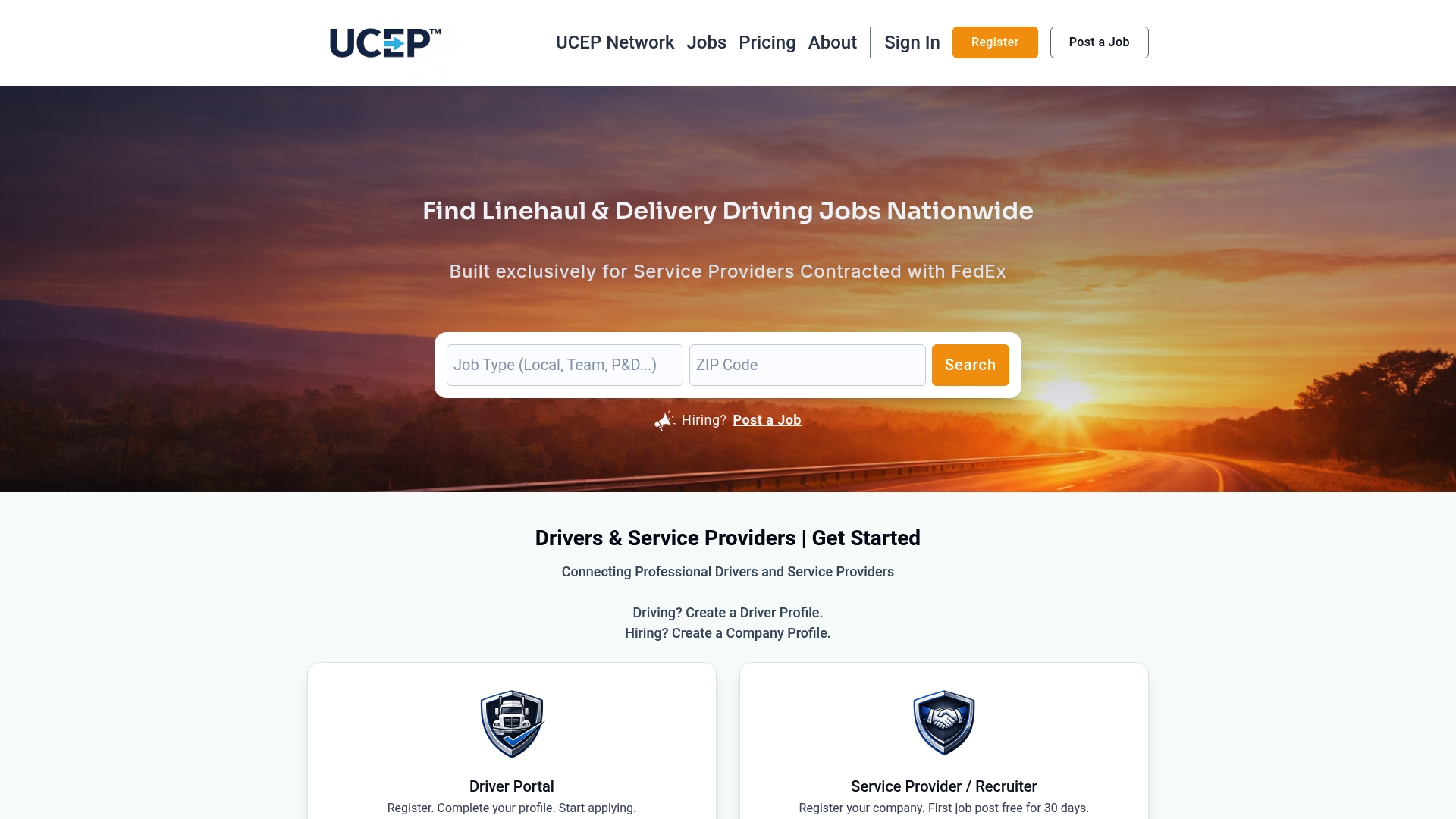
Ucep is a dedicated job board and recruiting platform built exclusively for Service Providers contracted with FedEx. You can browse companies currently hiring drivers for pickup and delivery roles nationwide, all in one focused place. Before you apply, read through service provider reviews from drivers who have worked with those companies directly. Real feedback from working drivers helps you identify employers who support safe schedules, fair workloads, and professional development. Ucep also provides driver resources to support your performance and safety on the job.
FAQ
How long is a typical pickup and delivery driver shift?
A standard P&D shift runs 8–10 hours, with depot arrival and loading typically between 6:00 am and 9:00 am depending on the service provider.
How many packages does a delivery driver handle per shift?
Most P&D drivers deliver between 150 and 300 packages per shift, with individual items weighing up to 50 pounds.
What FMCSA rules apply to pickup and delivery drivers?
The FMCSA limits commercial drivers to an 11-hour driving maximum within a 14-hour on-duty window, which applies to most P&D drivers operating commercial vehicles.
Why is parcel sorting so important before the route starts?
Pre-trip parcel sorting by delivery sequence eliminates repeated searching in the van at each stop, saving time and reducing physical strain across the full shift.
What should drivers do with failed deliveries at the end of the shift?
Failed deliveries must be returned to the designated depot staging area with updated tracking status and redelivery notes completed before the driver logs off for the day.