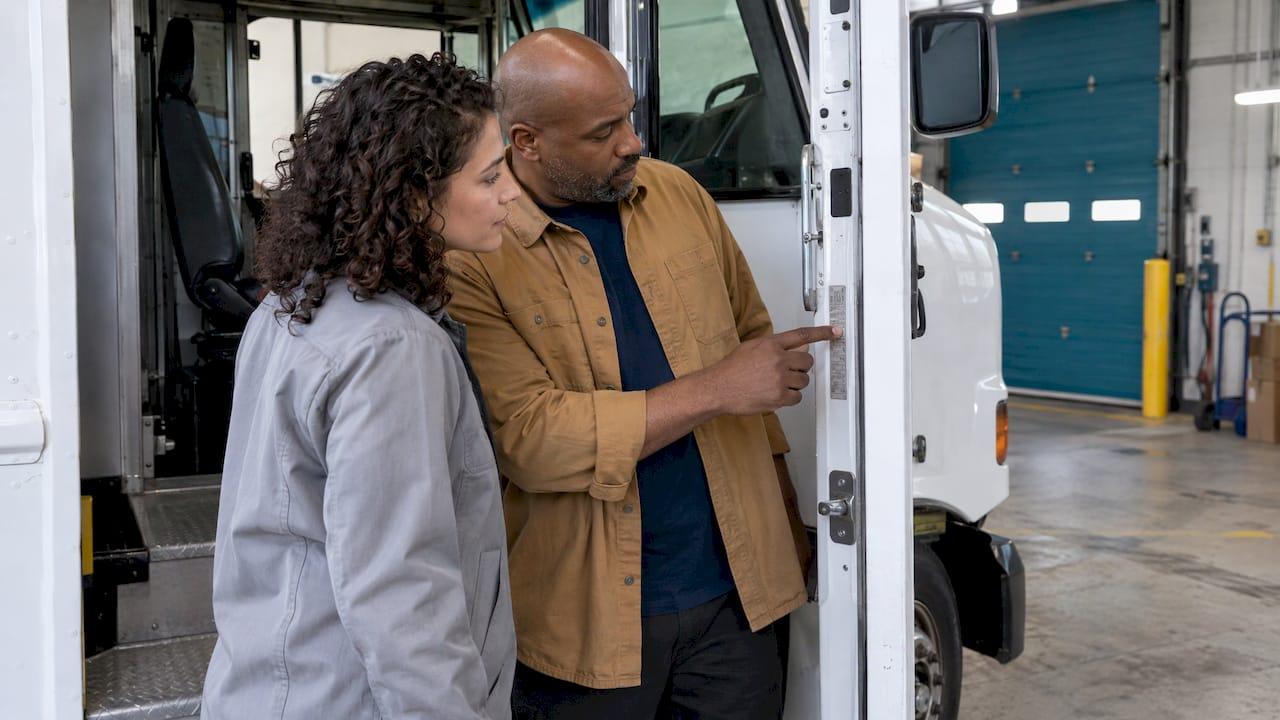
A pickup and delivery (P&D) driver needs a license that matches the vehicle's weight rating, a current DOT medical certificate, a clean driving record and a passed pre-employment drug test. The exact license class depends on the truck, and the employer sets the rest. Box trucks and step vans fall under the same weight rules, so the vehicle's rating, not its shape, decides what you need. On UCEP, FedEx-contracted Service Providers post P&D roles and drivers can filter them in one place, so the requirements below are the ones you will see in those listings.
TL;DR
- Vehicles rated 26,001 pounds or more need a Class B CDL (commercial driver's license) or higher. Lighter box trucks and step vans may not need a CDL.
- First-time CDL applicants must finish Entry-Level Driver Training (ELDT) with a registered provider.
- Employers commonly require a clean motor vehicle record, a DOT medical certificate and a negative drug test before you drive.
- Service Providers should state the vehicle rating, license class, age and screening steps in every listing.
Table of Contents
- What a P&D driver does
- License requirements by vehicle
- Entry-level driver training
- Age, medical card and endorsements
- What employers add: record, background and drug testing
- Steps for drivers
- Steps for Service Providers
- Where UCEP fits
- Our perspective
- FAQ
- Sources
What a P&D driver does
The Bureau of Labor Statistics describes P&D drivers as the most common delivery drivers. They drive small trucks or vans from distribution centers to delivery locations and load and unload cargo. Delivery trucks in that category are under 26,001 pounds.
A step van is a box-shaped vehicle with a walk-in work area and direct access to the cargo. A box truck has an enclosed cargo body behind the cab with rear access, sometimes with a ramp or lift. Job title, appearance and legal classification are not interchangeable, so confirm the exact vehicle rating and license requirement in the listing. For a fuller role description, see our guide to the P&D driver role.

License requirements by vehicle
The license follows the gross vehicle weight rating (GVWR), the maximum loaded weight the manufacturer sets for the vehicle.
| Vehicle | Typical rating | License |
|---|---|---|
| Cargo van, smaller box truck or step van | Under 26,001 lb | Regular license, often called non-CDL (Class C in some postings) |
| Straight truck, larger box truck or step van | 26,001 lb or more | Class B CDL |
| Tractor-trailer | Combination vehicle | Class A CDL |
FMCSA defines Class B as a single vehicle with a GVWR of 26,001 pounds or more, or one towing a vehicle rated at 10,000 pounds or less. A Class B covers straight trucks such as box trucks and many local delivery jobs, while a Class A also lets you operate most Class B vehicles. That makes P&D work a common first step toward CDL-A roles. Our CDL-A requirements guide and overview of CDL types cover the next step.
A CDL is not required below 26,000 pounds when the vehicle carries fewer than 16 passengers, so many cargo vans and smaller box trucks are non-CDL jobs. Check the rating on the door-jamb label or ask the Service Provider.
Entry-level driver training
First-time Class A or Class B applicants, Class B holders upgrading to Class A, and first-time applicants for the school bus, passenger or hazardous materials endorsements must complete Entry-Level Driver Training. States issue the CDL after you pass their knowledge and skills tests for the vehicle type.
The ELDT rule took effect on February 7, 2022. According to one ELDT explainer, there is no federal minimum number of hours, and training counts only if the provider is on the FMCSA Training Provider Registry. Verify the provider is listed before you pay.
Age, medical card and endorsements
- Age: a state-by-state guide reports a minimum age of 18 for intrastate and 21 for interstate CDL driving. Some employers set 21 for every driver. Confirm with your state licensing agency.
- Medical certificate: under 49 CFR 391.41, drivers subject to the rule must be certified as physically qualified. Standards include 20/40 distant visual acuity in each eye and a 70-degree horizontal field of vision in each eye. Since June 23, 2025, CDL and CLP holders with a current certificate do not need to carry it.
- Endorsements: most P&D work needs none. A hazmat endorsement is sometimes listed as recommended.
- Recent rules: FMCSA publishes updates such as the non-domiciled CDL final rule on its regulatory guidance page. Check it for the current text.
What employers add: record, background and drug testing
Employer standards vary, but a pattern is visible. According to one screening provider, most delivery companies want no more than 2 to 3 moving violations in 3 years and no DUI or DWI within 5 to 10 years. Criminal checks usually focus on felonies in the last 7 years.
A published non-CDL box truck posting from DSV shows how specific a listing can be:
- a valid Class C license and a clean two-year driving record
- a medical certificate valid for at least a year
- no positive drug or alcohol test in 5 years
- no bodily-injury accident in 3 years
- no DUI, DWI, reckless driving or speeding 12+ mph over the limit in 5 years
- skills in backing a box truck, load securement, GPS routing, inspections and proof-of-delivery paperwork, plus lifting up to 50 pounds
For CDL drivers, federal rules add more. Under 49 CFR 382.301, the employer must receive a verified negative controlled-substances result before you perform safety-sensitive work. The driver file requires three years of employment history, a motor vehicle record from each state where you held a license, and a Clearinghouse query.
Steps for drivers
- Check the vehicle rating in the listing and match it to your license.
- If you need a CDL, complete ELDT with a registered provider and pass your state tests.
- Get a DOT medical exam and keep your certificate current.
- Request your motor vehicle record and fix errors before applying.
- Browse P&D openings on UCEP's job board, where listings come from FedEx Service Providers, and use the employer directory and reviews to research the company.
- Expect a drug test and background check before your first route.
Steps for Service Providers
Write requirements as a list: vehicle type and rating, license class, minimum age, record limits, medical certificate, drug testing and physical demands such as lifting. Clear criteria reduce unqualified applications. Our job description template, local hiring guide and pipeline stages article show how to turn them into a hiring process. For pay benchmarks to include, see FedEx P&D pay.
Where UCEP fits

UCEP is a job board built only for FedEx Service Providers, with listings for pickup and delivery, CDL-A solo and CDL-A team linehaul roles. It offers a built-in applicant tracking system, targeted driver alerts and company profile management, and reaches 140,000+ FedEx-experienced drivers.
New recruiters can start with a Complimentary Trial Listing. The Standard Monthly Plan is $99 per month. See UCEP pricing.
Our perspective
Most application problems we see described in P&D hiring come from mismatched expectations: a driver reads "box truck" and assumes no CDL, or a listing leaves out the vehicle rating. We built UCEP around FedEx Service Providers so listings can name the role, vehicle and requirements in one place.
Drivers get filtered search, employer research and application management. Service Providers get a focused audience and an applicant tracking system. State the requirements plainly and the right drivers apply.
Aaron
FAQ
Do I need a CDL to drive a box truck or step van?
Only if the vehicle's GVWR is 26,001 pounds or more. Lighter box trucks and step vans can be driven without a CDL. Confirm the rating with the employer.
What age do I need to be?
A CDL generally requires 18 for intrastate and 21 for interstate driving, and many employers set 21 for all drivers. Check your state and the listing.
Is a clean driving record required?
Employers commonly set limits on moving violations, DUI history and accidents. Limits vary by employer, so read the listing and review your motor vehicle record first.
Will I be drug tested?
CDL drivers must have a verified negative pre-employment test before safety-sensitive work. Drug screening is also a standard part of delivery-service hiring for non-CDL roles.
Sources
- BLS: Delivery Truck Drivers and Driver/Sales Workers
- EPIQ Logistics: Delivery Driver Vehicle Types
- FMCSA: CDL Drivers
- Truckers News: How to Get Your First Truck Driving Job
- Bobtail: How to Get Your CDL
- Compliant Drivers: ELDT Requirements
- MileMarker: CDL Requirements by State
- Cornell LII: 49 CFR 391.41
- FMCSA: Regulatory Guidance
- GCheck: Delivery Driver Background Check
- DSV: Non-CDL Local Box Truck Driver
- eCFR: 49 CFR Part 382
- Driver Personnel Files: 49 CFR 391.51