
Hiring local pickup delivery drivers is the single most direct way to protect your business's fulfillment reliability. In the last-mile delivery sector, the term "pickup and delivery driver" covers a broad range of roles, from independent owner-operators running cargo routes to W-2 employees handling scheduled local stops. To hire pickup delivery drivers locally with confidence, you need clear qualification standards, a defined screening process, and a hiring model that fits your operational volume. This guide covers both gig-based and traditional employment paths so you can build a driver roster that holds up under real demand.
What qualifications should you require when hiring local pickup delivery drivers?
Setting clear prerequisites before you post a job saves time and reduces bad hires. The standard qualification bar for local delivery driver services includes licensing, experience, age, and physical capability.
Licensing and experience requirements:
- A valid commercial driver's license (CDL) or DZ license for roles involving larger vehicles or heavier loads
- At least 2 years of verifiable driving experience for owner-operator and full-time positions. That threshold exists because experienced drivers handle route pressure, tight schedules, and vehicle issues without supervision.
- A minimum age of 21 years or older for most commercial delivery roles. This aligns with federal DOT regulations for interstate commerce and is standard practice for local routes as well.
- A clean driving record with no major violations in the past 3–5 years
- Proof of vehicle ownership and current commercial auto insurance for owner-operator candidates
Physical and compliance requirements:
- Ability to lift, carry, and maneuver packages within the weight limits defined by your operation
- Willingness to complete a physical capability test before the first shift
- Agreement to drug screening and background check as part of the hiring process
Pro Tip: Verify insurance documents directly with the issuing carrier, not just from a copy the driver provides. Expired or fraudulent certificates are one of the most common compliance gaps in owner-operator hiring.
The vehicle ownership and insurance check is a critical filter. Skipping it exposes your business to liability if a driver causes an accident while uninsured.

How do gig-based platforms change the hiring timeline?
Gig platforms have fundamentally changed the speed at which you can find local drivers. Gig-based drivers typically complete onboarding and start accepting jobs within 24–48 hours. That speed matters when you have a sudden volume spike or a full-time driver calls out sick.
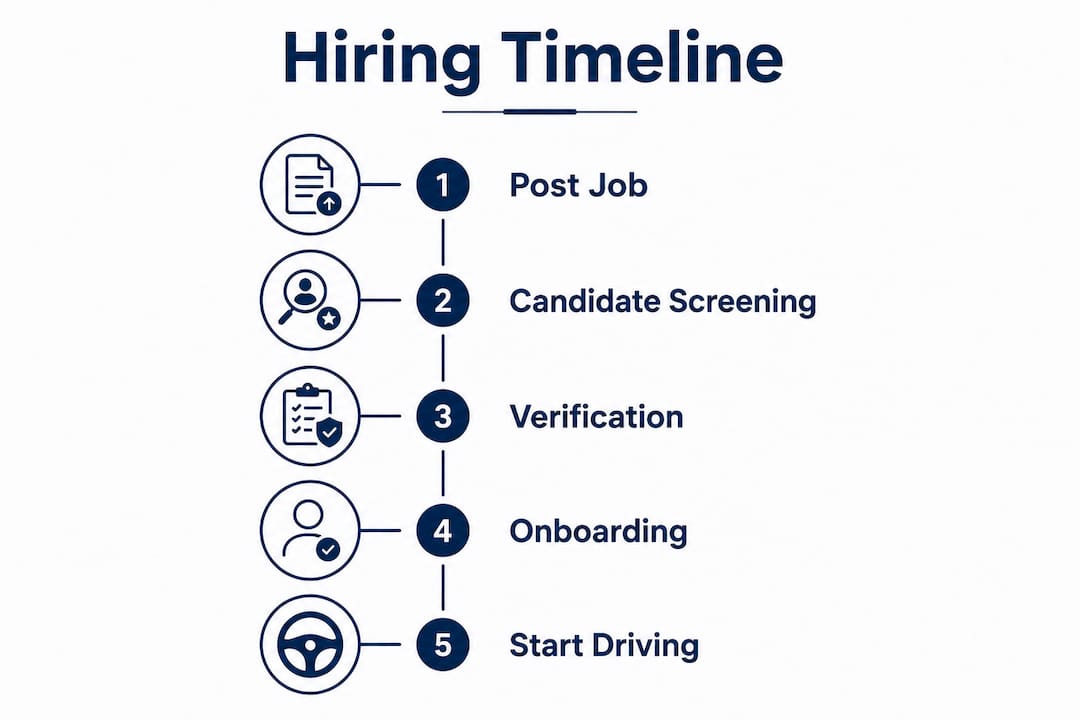
Traditional W-2 hiring moves on a different timeline. Full-time employee onboarding typically takes several weeks when you factor in background checks, drug screenings, physical tests, and paperwork processing. That gap is significant for operations that need coverage now.
| Hiring Model | Typical Onboarding Time | Screening Rigor | Scheduling Control |
|---|---|---|---|
| Gig platform driver | 24–48 hours | Platform-managed | Flexible, driver-led |
| W-2 full-time employee | Several weeks | Employer-managed | Fixed, employer-led |
| Owner-operator contractor | 1–2 weeks | Employer-verified | Negotiated per contract |
Gig platforms also handle payment processing, job matching, and basic identity verification. That reduces your administrative load for short-term or overflow needs. The trade-off is consistency. A gig driver may accept your job today and decline tomorrow. You have less control over punctuality, appearance, and customer interaction quality.
Pro Tip: Use gig drivers to cover peak periods and unexpected gaps, but build your core roster with W-2 employees or contracted owner-operators. That combination gives you both flexibility and reliability.
Combining gig drivers with traditional employees improves coverage during peak demand and reduces downtime. Businesses that treat gig hiring as a supplement rather than a replacement get the best of both models.
Many drivers actively seek non-passenger cargo delivery gigs because the work is more consistent and predictable than rideshare. That preference works in your favor when recruiting for dedicated pickup and delivery jobs.
What are the best practices for screening and selecting local drivers?
A structured screening process separates reliable candidates from those who look good on paper. Follow these steps in order to build a dependable local driver pool.
-
Run a background check and pull the driving record. Request a Motor Vehicle Report (MVR) from the state DMV for every candidate. Look for patterns, not just single incidents. Two speeding violations in 12 months signal a habit, not bad luck.
-
Verify all documentation directly. Confirm CDL or DZ license validity through the issuing state's database. Check insurance certificates with the carrier. Ask for proof of vehicle registration if the driver uses their own vehicle.
-
Evaluate the customer service mindset. Customer service skills are critical for delivery drivers because they represent the final touchpoint with your customer. Ask scenario questions: "A customer says their package is damaged. What do you do?" The answer tells you more than a resume ever will.
-
Check references from prior delivery employers. Ask specifically about punctuality, communication, and how the driver handled difficult deliveries. Generic character references from friends or family do not count.
-
Assess physical capability. Have candidates demonstrate their ability to handle the specific load types your operation requires. A driver who cannot safely manage a 70-pound appliance box is not a fit for furniture or equipment delivery routes.
-
Conduct a structured interview with scenario questions. Ask about route planning, how they handle GPS failures, and what they do when a delivery address is wrong. Practical questions reveal operational judgment that standard interview questions miss.
Logistics managers view driver customer service skills as equally important as driving capability. Build that standard into every interview, not just the job description.
How can businesses onboard and manage local drivers effectively?
Onboarding sets the tone for the entire working relationship. A disorganized first week leads to confusion, errors, and early turnover.
Core onboarding steps for full-time and contractor hires:
- Complete all compliance paperwork before the driver's first shift, including I-9 verification, tax forms, and any state-required employment documents
- Conduct a formal orientation covering delivery procedures, communication protocols, and customer service expectations
- Assign a dispatcher or team lead as the driver's primary contact for the first 30 days
- Provide written route guidelines and escalation procedures for delivery exceptions
Documentation and tracking requirements:
- Require drivers to maintain accurate logs of inspections, deliveries, and invoicing. Failure to maintain documentation causes compliance issues and operational delays. Owner-operators face legal consequences when logs are incomplete or falsified.
- Use a digital tracking tool to monitor delivery completion rates, on-time performance, and customer feedback scores
| Onboarding Element | Purpose | Timeline |
|---|---|---|
| Compliance paperwork | Legal employment authorization | Before first shift |
| Orientation session | Policy and procedure alignment | Day 1 |
| Dispatcher assignment | Communication and support | First 30 days |
| Performance review | Early issue identification | Day 30 and Day 90 |
Efficient local driver onboarding balances thorough compliance checks with speed. Digital document submission and remote verification reduce delays without cutting corners on legal requirements.
What common challenges arise when hiring local delivery drivers?
Hiring local courier services staff comes with predictable pitfalls. Knowing them in advance lets you build safeguards into your process.
The most frequent hiring challenges include:
- Unverified vehicle documentation. Drivers who cannot produce current insurance or registration should not be placed on active routes. Proper vehicle type and proof of insurance are major screening filters that many businesses skip under time pressure.
- Extended background check delays. Some third-party screening vendors take 5–10 business days. Build that window into your hiring timeline so you are not pressured to skip steps.
- High early turnover. Drivers who feel unsupported in the first two weeks leave quickly. Assign a clear point of contact and check in during the first week.
- Gig driver availability gaps. Gig platforms do not guarantee driver availability. During peak seasons, platform supply tightens. Maintain a bench of pre-vetted drivers you can activate on short notice.
- Regulatory compliance gaps. Drivers who are unfamiliar with safe delivery driving standards create liability. Provide written safety guidelines and require acknowledgment before the first shift.
Businesses that skip structured screening to fill roles quickly almost always pay more in turnover, liability claims, and customer complaints than the time they saved. A two-week hiring process done correctly costs less than a two-month cycle of replacing bad hires.
The fix for most of these challenges is process, not speed. A clear checklist applied consistently produces better hires than an ad hoc approach applied quickly.
Key Takeaways
The most reliable way to hire local pickup and delivery drivers is to combine structured screening with a dual hiring model that uses both gig-based and W-2 drivers to match your operational needs.
| Point | Details |
|---|---|
| Set clear prerequisites | Require CDL or DZ licensing, 2 years of experience, and verified insurance before screening begins. |
| Use a dual hiring model | Combine gig drivers for flexibility with W-2 employees for consistency and operational control. |
| Prioritize customer service | Evaluate communication skills and customer mindset alongside driving capability in every interview. |
| Document everything | Require accurate delivery logs and compliance paperwork to avoid legal and operational delays. |
| Build a pre-vetted bench | Maintain a list of approved drivers ready to activate during peak demand or unexpected gaps. |
What I have learned about hiring local drivers the hard way
The biggest mistake I see business owners make is treating driver hiring as a volume problem. They post a job, get applications, and fill the seat as fast as possible. Then they wonder why turnover is high and customer complaints keep coming in.
The real problem is almost always the screening step. Businesses skip reference checks because they feel awkward. They accept photocopied insurance certificates without verifying them. They skip the scenario interview because the candidate "seems like a good fit." Every one of those shortcuts shows up later as a problem you have to manage in the field.
The second thing I have seen consistently is that the niche job boards outperform general platforms for delivery driver hiring. When you post on a board built for drivers, you attract candidates who are already oriented toward the work. The screening conversations are shorter because the baseline fit is higher.
The combination that works is simple: use gig drivers to handle overflow and test new candidates in real conditions, then convert the best performers to W-2 or contractor status. That approach gives you a live audition before you commit, and it gives the driver a chance to prove reliability before asking for a guaranteed schedule. It is not a perfect system, but it is far more reliable than hiring from a resume alone.
— Aaron
Ucep connects you with qualified local drivers
Finding reliable local pickup and delivery drivers takes more than a job posting. Ucep is a dedicated recruiting platform built for FedEx Service Providers, connecting you with drivers who already understand cargo delivery standards and route expectations.
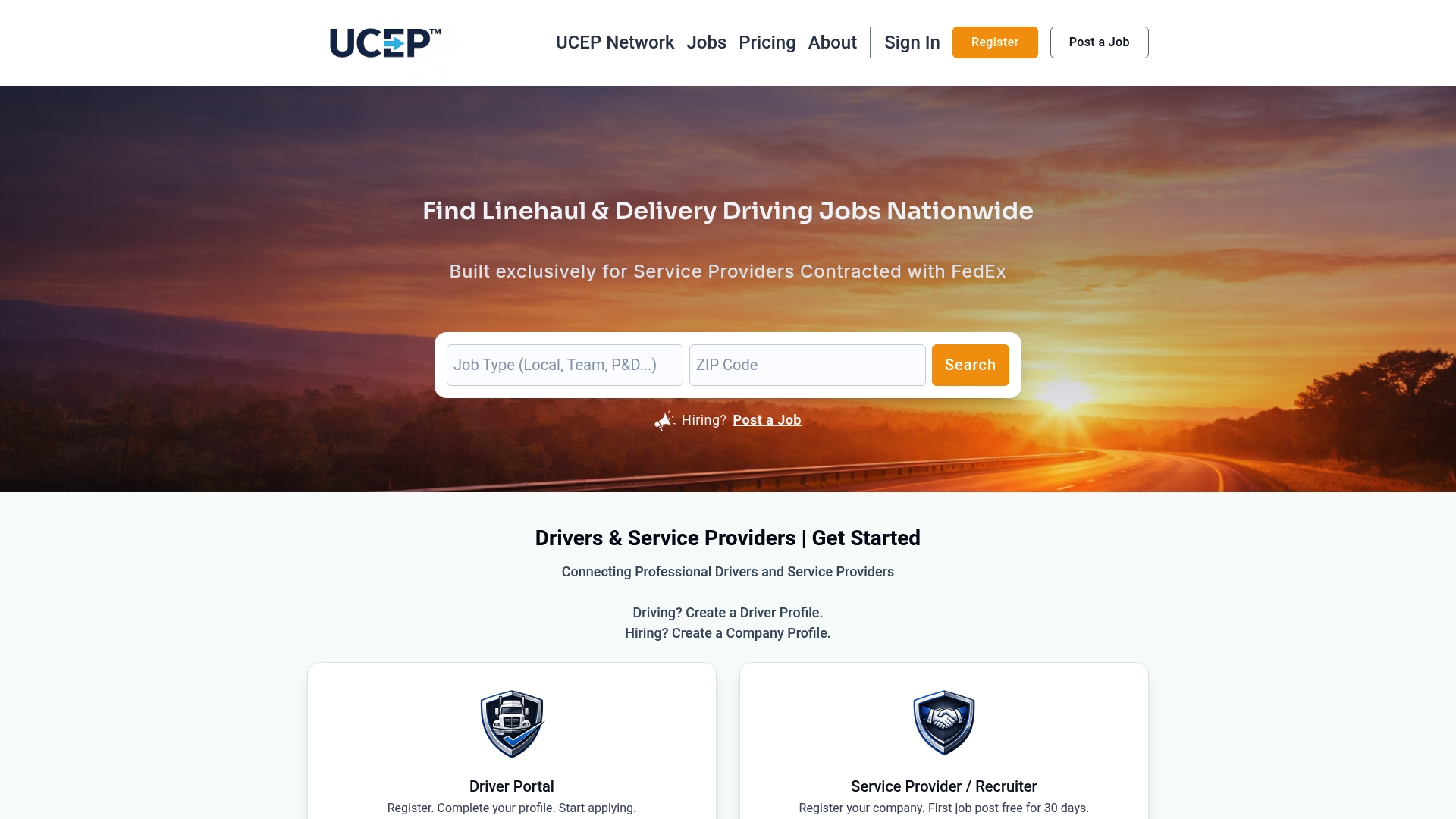
Through Ucep, you can access vetted service provider reviews to evaluate driver track records before making a hiring decision. The platform also lists companies actively hiring drivers so you can benchmark your offer against current market standards. Whether you need pickup and delivery drivers for local routes or CDL-A candidates for longer hauls, Ucep gives you a focused pool of qualified candidates without sorting through unrelated applicants.
FAQ
What qualifications do local pickup delivery drivers need?
Local delivery drivers typically need a valid driver's license or CDL, at least 2 years of verifiable driving experience, and proof of vehicle insurance. Most roles also require a minimum age of 21 and a clean driving record.
How long does it take to hire a local delivery driver?
Gig-based drivers can be onboarded and working within 24–48 hours. Full-time W-2 hires typically take several weeks due to background checks, drug screening, and compliance paperwork.
How much do local pickup and delivery drivers earn?
Local delivery drivers typically earn between $25 to $50+ per hour depending on job complexity, vehicle type, and market conditions.
What is the biggest hiring mistake for local delivery roles?
Skipping vehicle insurance verification is the most common and costly error. Placing an uninsured driver on active routes exposes your business to direct liability in the event of an accident.
How can I reduce driver turnover after hiring?
Assign a dedicated dispatcher contact for the first 30 days, conduct a formal orientation, and check in during the first week. Drivers who feel supported in the early weeks stay significantly longer than those left to figure things out on their own.