
Do three things now: trim your DOT application to the mandatory 49 CFR 391.21 fields, run a pre-employment full query through the FMCSA Clearinghouse before any conditional offer, and build pre-populated, mobile-first forms so drivers finish applying in minutes, not sessions. These three moves cover compliance and conversion at the same time, which is exactly what a FedEx-contracted Service Provider recruiting team needs from a driver application process.
TL;DR:
- Applications need identity, CDL details, three years of address, job, accident, and violation histories, plus signed certification; defer deeper checks until after a conditional offer.
- Since January 6, 2023, employers need a full Clearinghouse query with electronic consent; a limited query does not meet the requirement before employment.
- Request prior employers’ drug, alcohol, and driving records when you make a conditional offer, and document contact attempts if an employer does not respond.
- Bulk Clearinghouse queries run in nightly batches, so teams hiring multiple drivers can use a query plan and submit files early to avoid weekend delays.
- A medical review officer must verify a driver’s negative drug test before the driver starts duties covered by FMCSA drug testing rules.
Table of Contents
- A 7-step hiring checklist for driver applications
- Design a compliant, short DOT application per 49 CFR 391.21
- Run fast, compliant pre-employment screening
- Speed up completion with pre-population and mobile-first design
- Verify prior-employer records, MVRs, and DQ files efficiently
- Metrics and quick experiments that improve your hiring funnel
- Why compliance and low-friction UX belong in the same process
- How UCEP helps you put these tactics into practice
- FAQ
- Sources
A 7-step hiring checklist for driver applications
A clear sequence keeps your team compliant and your candidates engaged. Follow these steps in order for every driver hire:
- Post the role with a short, mobile-friendly application link and a 2-hour reply SLA.
- Collect only the immediate essentials: identity, license, and contact details.
- Send consent requests for the Clearinghouse query the same day the candidate applies.
- Run a full Clearinghouse query before extending a conditional offer.
- Request prior-employer drug, alcohol, and driving records once a conditional offer is made.
- Schedule the DOT physical and collect the medical certificate alongside final paperwork.
- Confirm pre-employment drug test results and complete the driver qualification file before start date.
Mail-based consent requests can stall a hire for weeks, so push candidates toward electronic consent wherever the Clearinghouse allows it.
Design a compliant, short DOT application per 49 CFR 391.21
49 CFR 391.21 sets the mandatory fields for every driver application, and sticking to that list keeps your form short without cutting corners. The regulation requires applicant identity, a multi-year address history, employment history, and record of accidents and violations, CDL information, and a signed certification from the applicant.
Group your fields by urgency instead of asking for everything up front:
- Identity, contact information, and CDL number for the initial application.
- Address and employment history for the second step, right after submission.
- Accident and violation history, plus signature and certification, before you move the candidate to screening.
- Deeper verification fields, like references and prior safety performance, after a conditional offer.
Retain every signed application and supporting document in the driver qualification file, since 391.21 ties the signature directly to the applicant's certification of accuracy. For field-by-field guidance on grouping, see 8 FMCSA-compliant driver application form field groups.
Pro Tip: Ask for the signature and certification on the same screen as the accident history so the form reads as one continuous commitment, not two separate asks.

Run fast, compliant pre-employment screening
As of January 6, 2023, every prospective employer must run a pre-employment full query of the FMCSA Clearinghouse before putting a driver behind the wheel, and that query requires the driver's electronic consent. Build the consent request into your application flow so it goes out the moment a candidate applies, not after your team gets around to it.
The Clearinghouse processes bulk queries in nightly batches and charges a per-query fee, so recruiters hiring in volume can buy a query plan and upload a tab-delimited or Excel file instead of running queries one at a time. That batching means a query submitted in the afternoon typically clears overnight, which you can plan around when setting candidate expectations.
- Buy a Clearinghouse query plan if you hire more than a handful of drivers a month.
- Use the bulk upload option to query multiple candidates in one batch.
- Schedule queries early in the day so overnight processing doesn't add a weekend delay.
- Require a negative, MRO-verified pre-employment drug test before any driver starts safety-sensitive work, per FMCSA guidance.
For the full testing timeline, including return-to-duty documentation when a prior violation exists, see CDL drug testing requirements for hiring: 2026 guide.
Speed up completion with pre-population and mobile-first design
Auto-population pulls known data from a driver's prior application history, and that single change can cut completion time from over 20 minutes to under 4. Fewer fields to retype means fewer candidates who quit halfway through.
- Pre-fill name, license number, and address history when a returning candidate starts a new application.
- Build the form mobile-first, since most drivers apply from a phone between loads.
- Use progressive disclosure: show only the current step's fields, not the entire 391.21 form at once.
- Accept document photos (license, medical card) instead of requiring scans or uploads from a desktop.
Messaging matters as much as the form itself. A short text or email within minutes of application, not hours, keeps candidates from applying elsewhere. For message templates, see 5 Minute Driver Messaging and post openings Tuesday through Thursday between 8 and 11 AM, when driver response rates run highest.
Pro Tip: Reply to every application within two hours. A fast first response often matters more to a driver than the job details themselves.
Verify prior-employer records, MVRs, and DQ files efficiently
Request prior-employer controlled-substance and alcohol program records as soon as you extend a conditional offer, since FMCSA guidance expects these checks completed early in the hiring window, not after the driver starts.
- Send the request in writing the same day you make the conditional offer.
- Document every attempt to reach a nonresponsive prior employer, including dates and method.
- Treat a documented good-faith effort as sufficient when a prior employer never responds.
- Store the motor vehicle record and all driver qualification file items together, retained per FMCSA recordkeeping rules.
- Flag any gap in the 3-year history immediately rather than waiting for a final review.
Partner platforms built around identity-driven onboarding, like the approach described in carrier onboarding automation for logistics managers, show how pairing identity verification with document requests can shave days off this step for high-volume fleets.
Metrics and quick experiments that improve your hiring funnel
Track a short list of numbers instead of a long one. Application completion rate, time-to-complete, Clearinghouse full-query completion rate, time-to-offer, and 90-day qualified-hire retention cover the full funnel from post to retained driver.
- Run an A/B test on form length: full 391.21 form versus a staged version with deeper fields after the conditional offer.
- Test message subject lines for your first-response email or text.
- Compare posting cadence against the Tuesday through Thursday, 8 to 11 AM window.
- Measure pre-populated forms against manual entry for completion time and drop-off.
Assign one owner to review these metrics weekly and keep the dashboard to a single page. For deeper metric definitions and retention benchmarks, see 5 trucking recruiting metrics for 90-day retention.
Why compliance and low-friction UX belong in the same process

Recruiting for FedEx-contracted Service Providers means living inside FMCSA rules every day, and the mistake we see most often is treating compliance and conversion as separate problems. They are not. A short, well-grouped application that satisfies 391.21 and a Clearinghouse query that runs the moment consent clears will always convert better than a long form padded with fields you don't need yet.
Our view, built from working with driver job boards and recruiter workflows across FedEx-related roles, is that the recruiters who win on both retention and speed are the ones who sequence the ask instead of front-loading it.
— Aaron
How UCEP helps you put these tactics into practice
We built UCEP as a job board dedicated entirely to Service Providers contracted with FedEx, which means your listing reaches drivers already looking for linehaul, CDL-A team, CDL-A solo, and pickup and delivery roles in your category, not a general trucking audience. That focus is the practical payoff: less time filtering unqualified applicants, more time running the screening steps above.
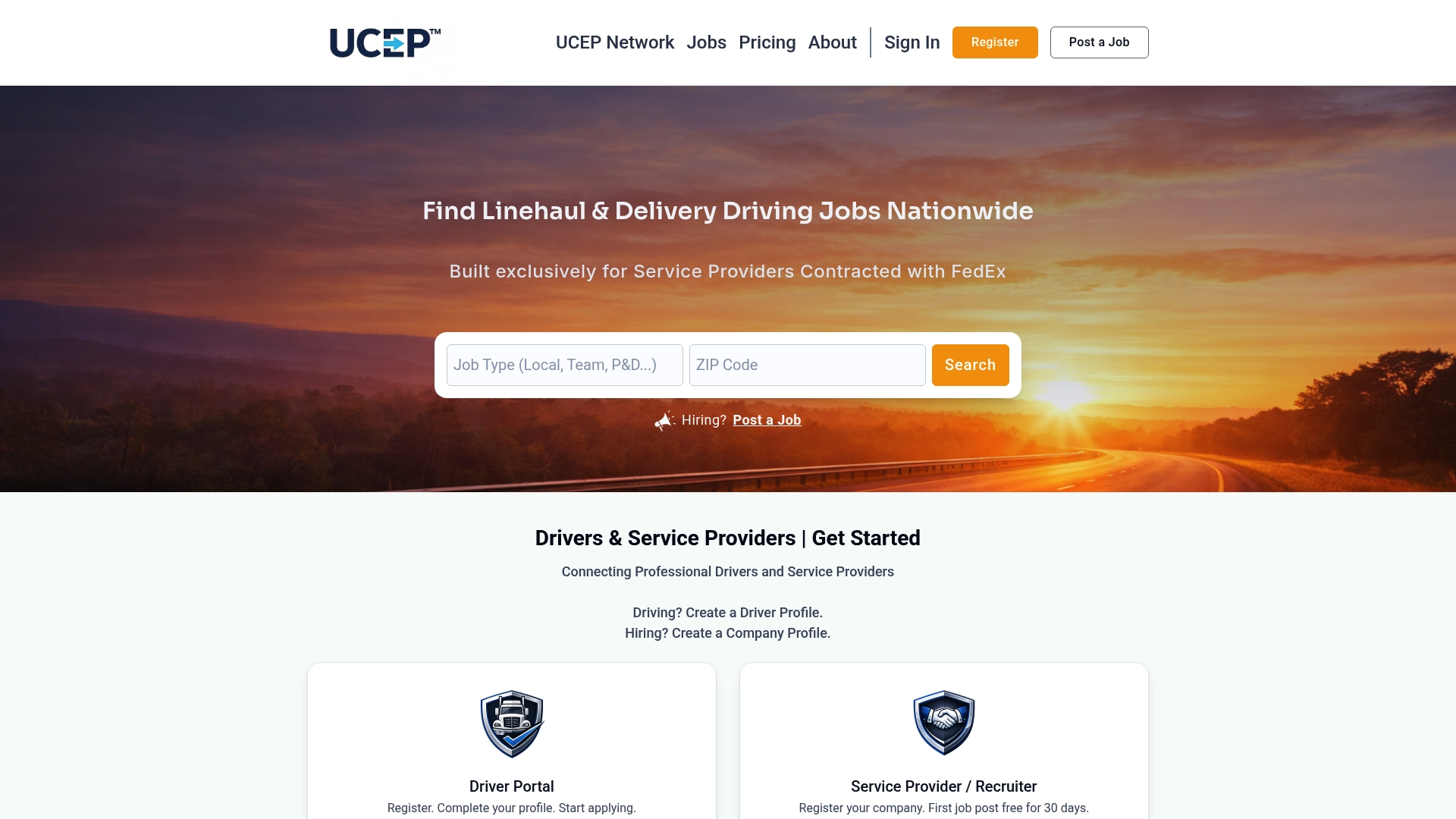
- Browse live roles across Pickup & Delivery, CDL-A Solo, and CDL-A Team Linehaul categories to see how other Service Providers structure their postings.
Start your trial listing today and apply the checklist above to the next driver who applies.
FAQ
What is the FMCSA Clearinghouse full query requirement?
Since January 6, 2023, employers must run a pre-employment full query of the FMCSA Drug & Alcohol Clearinghouse before using a driver, and that query requires the driver's electronic consent. A limited query alone no longer satisfies the pre-employment requirement.
Which fields does a driver application need under 49 CFR 391.21?
A compliant application collects applicant identity, a 3-year address history, a 3-year employment history, a 3-year accident and violation record, CDL information, and a signed certification, as set out in 49 CFR 391.21. Grouping these fields by urgency, with deeper verification fields after a conditional offer, keeps the form short without skipping any requirement.
When should we request prior-employer drug and alcohol records?
Send the request as soon as you extend a conditional offer, since FMCSA guidance expects this check completed early in the hiring process. Document every attempt if a prior employer doesn't respond, since a documented good-faith effort satisfies the requirement.
How much does a Clearinghouse query cost for a bulk hire?
The Clearinghouse charges a per-query fee and processes bulk uploads in nightly batches, so employers hiring multiple drivers can buy a query plan and submit a tab-delimited or Excel file instead of running queries individually. Submitting queries earlier in the day avoids an added overnight delay before results clear.
What does UCEP cost for Service Providers who want to post driver jobs?
UCEP offers a Complimentary Trial Listing with no published price for new recruiters, and a Standard Monthly Plan at $99 per month for ongoing postings. Both plans give access to job categories for pickup and delivery, CDL-A solo, and CDL-A team linehaul roles.
Sources
- FMCSA Clearinghouse — pre-employment investigations after Jan 6, 2023
- 49 CFR 391.21 — Application for employment (Cornell LII)
- FMCSA implementation guidelines — alcohol and drug regulations, chapter 5