
A high-converting trucking careers page leads with pay, splits drivers from non-drivers within seconds, and shows a four-step application path before asking anyone to click "Apply." The best trucking careers page examples put a real number in the hero, not "competitive pay," and pair it with a low-friction CTA. Above the fold, you need a pay or guarantee line, a driver/non-driver chooser, a primary CTA, and one or two benefit callouts. UCEP's own company listings, plus carriers like Old Dominion, model this pattern well.
TL;DR:
- Highlighting a specific pay rate or guarantee line upfront significantly increases application click-through rates, especially when paired with a low-friction call-to-action.
- Including a visual four-step application process near the CTA reduces applicant drop-off by clarifying the next steps and easing entry anxiety.
- Separating driver and non-driver roles into distinct sections or tabs improves user experience by targeting each audience's specific interests and avoiding confusion.
- Using concrete, specific figures in headlines, pay lines, and sign-on bonuses outperforms vague language like "competitive pay," leading to higher applicant engagement.
- Implementing tested layout patterns that address common friction points can help recruiters quickly generate qualified driver applications without fully redesigning the careers page.
Table of Contents
- Six Trucking Careers Page Examples Worth Copying
- The Anatomy of a High-Converting Trucking Careers Page
- Ready-to-Use Copy for Headlines, Pay Lines, and CTAs
- How UCEP Listings Put These Patterns Into Practice
- A 30-Day Checklist and Three A/B Tests to Run
- When to Prioritize Pay Clarity Over Culture Messaging
- Publish Your Careers Page Faster With UCEP
- Sources
- FAQ
Six Trucking Careers Page Examples Worth Copying
Recruiters don't need to reinvent page design. They need to know which layout patterns actually move applicants through the funnel. Here are six recurring patterns from real trucking job postings and career hubs, and what each one does well.
- Driver-first hub: Hero pay line, immediate CTA, and a route or home-time summary right under the fold. This works because experienced drivers scan for numbers first and bounce off pages that only promise "great pay."
- Training-program funnel: A low-barrier CTA for new grads, sometimes paired with lease-to-own messaging. It lowers the entry cost of applying for someone who isn't sure they qualify yet.
- Non-driver careers hub: A separate block or tab for shop techs, dispatchers, and admin staff, kept distinct from driver listings so neither audience has to dig.
- Benefits-first layout: Sign-on bonuses, weekly guarantees, and paid orientation featured near the top, often before the job description itself.
- Application-steps page: A four-step visual (apply, screen, orientation, start) placed near the CTA. Career hubs that spell out the application process reduce applicant uncertainty and cut drop-off.
- Hybrid carrier listings on UCEP: Company pages like Stat Trucking's driver jobs listing and JAR Trucking's driver jobs listing combine segmented roles, pay context, and a named recruiter contact in one compact page.
Each pattern solves a different friction point. Pick the ones that match your hiring bottleneck rather than copying all six at once.
The Anatomy of a High-Converting Trucking Careers Page
Order matters more than most recruiters assume. A driver who has to scroll past a mission statement before seeing pay is a driver who leaves. Structure the page so the most decision-relevant information appears first, then layer in trust signals as they scroll.
- Above the fold: Hero headline, pay or guarantee line, primary CTA button, and a quick segment chooser (drivers vs. non-drivers).
- Middle section: Pay details with earning examples, benefits and incentives, and equipment or home-time specs.
- Lower section: Career-path stories, promote-from-within proof points, and links to non-driver careers.
- Footer: Recruiter contact information, an FAQ block, and the expected application timeline.
Microcopy carries more weight than most job pages give it. Instead of "Competitive pay," try "Earn $0.62 to $0.68 per mile, plus a $2,000 weekly guarantee." Instead of "Sign-on bonus available," specify "$5,000 sign-on bonus, paid in three installments." Vague language forces experienced drivers to guess, and guessing drivers usually click away.
Pro Tip: Put your recruiter's name and direct phone number in the footer, not just a generic "Contact Us" form. Drivers trust a person more than a form.
Ready-to-Use Copy for Headlines, Pay Lines, and CTAs
You don't need a copywriter to fix a weak careers page. You need templates that swap in your actual numbers. Here's a starting set, organized by the block they belong in.
Headline templates:
- "Drivers Start at $[X]/Mile. Non-CDL Roles Also Open."
- "[X] Weekly Guarantee for CDL-A Team Drivers."
- "Home Every [X] Days. Apply in Under 5 Minutes."
Pay-line templates: Pair any per-mile figure with a real-world illustration, since job postings that publish concrete pay numbers alongside sign-on bonuses and holiday incentives consistently outperform vague "competitive pay" language. Use "Earn up to 4 cents more per mile after 90 days" rather than "pay increases available."
CTA variants: Experienced drivers respond to "Apply Now, Start This Week." New drivers and trainees respond better to lower-commitment phrasing like "Request a Recruiter Call" or "Apply to Our Training Program."
A short application-visual block, placed right above the CTA, reduces applicant anxiety by making the next steps concrete instead of a mystery form:
How UCEP Listings Put These Patterns Into Practice
UCEP was built around the exact patterns above, because UCEP's platform exists specifically to help FedEx Service Providers reach experienced drivers without competing against generic job boards.
- Stat Trucking's listing segments roles clearly and puts pay context near the top instead of burying it under a company history paragraph.
- JAR Trucking's listing keeps the CTA visible and names a recruiter contact directly, cutting the "who do I actually talk to" friction that kills applications.
- Employer directories and targeted driver alerts let Service Providers reach FedEx-experienced drivers who already know the terminology and equipment, shortening the screening conversation.
- Listing templates on UCEP mirror the pay-line and segmentation structure covered above, so a recruiter isn't designing from a blank page.
For deeper examples of how to frame long-term career messaging, UCEP's blog post on career growth examples that actually work breaks down promote-from-within language drivers actually respond to.
A 30-Day Checklist and Three A/B Tests to Run
Redesigning an entire careers page is a big lift. Testing three specific changes is not. Start with the checklist below, then run the tests in parallel if your traffic supports it.
- Add a hero pay line with a real number, not a placeholder phrase.
- Add a driver/non-driver segment chooser above the fold.
- Add a four-step application visual near the primary CTA.
- Test a short application form against your current full-length form.
| Test | What you're comparing | Metric to watch |
|---|---|---|
| Pay-line specificity | Specific per-mile or weekly number vs. "competitive pay" | Click-to-apply rate |
| Application-step visual | Four-step visual present vs. absent | Apply-complete rate |
| CTA placement | Hero CTA vs. mid-page CTA | Recruiter response time to first contact |
Give each test at least two full weeks before calling a winner. Trucking hiring cycles run slower than retail or hospitality, so a three-day sample size will mislead you.
When to Prioritize Pay Clarity Over Culture Messaging
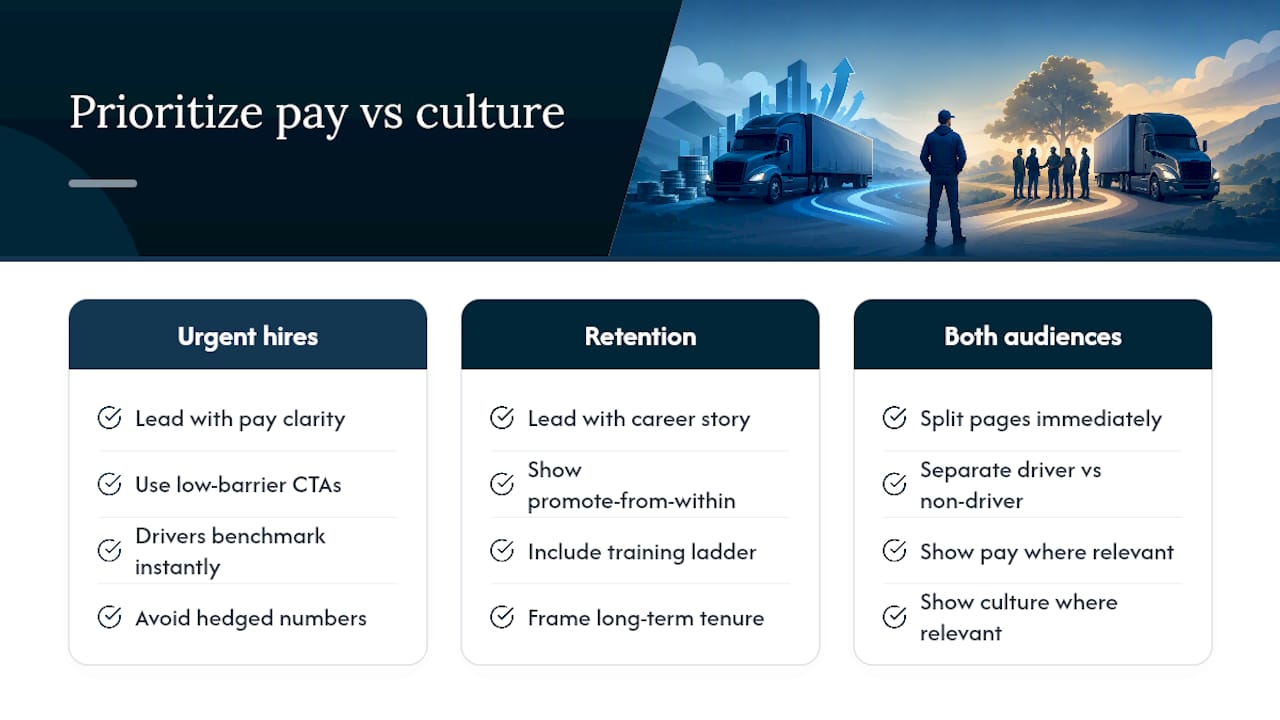
Recruiters ask me constantly which matters more: the pay line or the career story. The honest answer depends on your hiring goal, not on some universal best practice.
If you need trucks moving next week, lead with pay clarity and low-barrier CTAs. Experienced drivers benchmark instantly and leave pages that hedge on numbers. If you're building a retention pipeline, invest in promote-from-within stories and training-ladder proof, the same way Old Dominion frames long-term tenure on its listings. If both driver and non-driver audiences are large enough to matter, split them immediately. Don't make a dispatcher wade through CDL pay tables to find their job category.
— Aaron
Publish Your Careers Page Faster With UCEP
UCEP gives FedEx-contracted Service Providers a direct, focused route to drivers who already understand the linehaul, CDL-A, and pickup-and-delivery roles you're hiring for, without competing against every warehouse and delivery gig on a general job board.
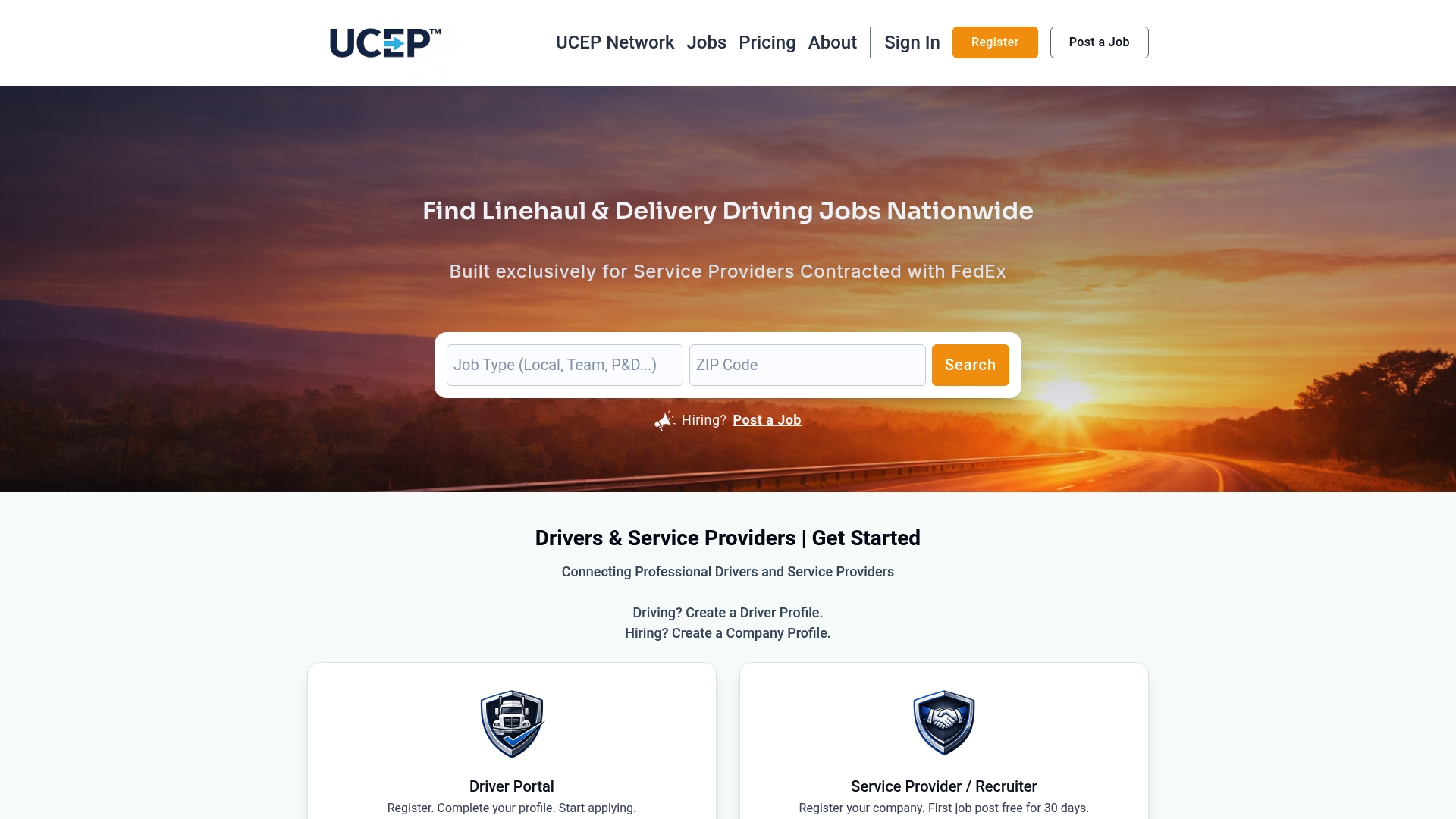
The Complimentary Trial Listing lets you publish a job post using the pay-line and segmentation patterns covered above at no cost, so you can test the templates before committing to anything. The Standard Monthly Plan, priced at $99 per month, adds ongoing visibility for Service Providers who need a steady stream of qualified applicants rather than a one-time post. Because UCEP focuses specifically on FedEx-experienced drivers, your listing reaches candidates who already know the equipment and the terminology, which typically shortens the screening conversation. Browse how current listings are structured on the jobs page, then publish your own post using the trial listing to see how quickly applications start coming in.
Sources
For deeper study, review Old Dominion's careers listing for pay-transparency and tenure messaging, and Stoller Trucking's careers hub for application-step visualization. On UCEP, review the Stat Trucking listing, the JAR Trucking listing, and the blog post on pickup and delivery driver hiring tips for operational context.
- Class A CDL Line-Haul / Mileage Driver | Old Dominion Freight Line — ODFL Careers
- CDL-A - Team Van Truckload truck driver - Holiday incentives — JobTarget (Schneider listing)
- Careers at Stoller Trucking
FAQ
Can you provide examples of good trucking career pages?
Old Dominion's careers listing, Stoller Trucking's careers hub, and UCEP company pages like the Stat Trucking and JAR Trucking listings each show a different strong pattern, from pay transparency to a clear application-steps visual. Each leads with concrete information rather than a vague mission statement.
What CDL job can pay around $3,000 a week?
Weekly pay near that range typically comes from CDL-A team linehaul roles or specialized freight, where per-mile rates, weekly guarantees, and sign-on incentives stack together, as seen in listings that publish concrete pay numbers alongside holiday incentives. Actual pay depends heavily on route type, experience, and home-time schedule, so treat any single figure as an example, not a guarantee.
Can you provide examples of career profiles for drivers?
A strong driver career profile usually pairs a route type (linehaul, regional, local) with a pay range, home-time expectation, and equipment details. UCEP's career growth examples show how carriers frame promotion paths from solo driving into training or dispatch roles.
What makes a good trucking careers page?
A good careers page shows pay numbers early, segments drivers from non-drivers immediately, and explains the application process in clear steps so applicants know what happens after they click submit. Pages that skip these basics see higher drop-off, since unclear next steps after applying is one of the biggest UX failures recruiters report on trucking careers pages.
How much does it cost to post a trucking job on UCEP?
UCEP offers a Complimentary Trial Listing with no published price for Service Providers who want to test the platform first. The Standard Monthly Plan is $99 per month for ongoing job posting and applicant tracking access.