
The fastest way to find a reliable co-driver is to post a focused listing on a dedicated driver job or matching platform and run a short, documented trial before committing long term. Carrier matching programs, driver forums, and social groups all work too, but a specialized platform gives you better filters and verified contacts. For FedEx-related team roles, UCEP lists CDL-A team openings alongside the tools to screen candidates quickly.
TL;DR:
- Before agreeing, verify the CDL, medical certificate, endorsements, and reference; obtain consent for a limited FMCSA Clearinghouse query, since a record triggers a full query.
- Set a 2 to 4 week trial with written pay splits, shared costs, driving and rest rotations, and clear terms for ending the arrangement early.
- Confirm that your insurer covers the second driver during a trial, and put cargo liability, shared costs, and early termination terms in writing before departure.
- State route type, rotation days, pay, sleeper setup, required endorsements, schedule preferences, and start date so candidates can assess compatibility before contacting you.
- Choose carrier matching programs for verified employment and steady payroll; forums respond quickly, but they leave credential checks entirely to you.
Table of Contents
- Where to look: marketplaces, carrier programs, forums, and social groups
- How to vet a candidate co-driver before you agree to team
- How to create an effective profile or listing that attracts compatible co-drivers
- Setting up a trial, first meetings, and ongoing partnership rules
- Insurance and liability considerations when hiring a co-driver
- Legal agreements and partnership contracts for co-drivers
- Key qualities and soft skills to assess in a co-driver
- Best practices for onboarding and training a new co-driver
- Recruiter/driver perspective on what makes team driving work
- How to use UCEP to find co-driver or team-driving opportunities
- FAQ
- Sources
- Official resources for vetting and regulatory checks
Where to look: marketplaces, carrier programs, forums, and social groups
Each channel serves a different need, and knowing which one fits your situation saves weeks of searching.
Dedicated marketplaces and niche job boards attract drivers who are actively looking for team arrangements, not just browsing. These platforms usually offer searchable filters for route type, equipment, and pay structure, which narrows your options fast. Some charge for listings, but the tradeoff is a higher concentration of serious candidates.
Carrier or company matching programs connect you with drivers already vetted by payroll and compliance departments. This route tends to be more reliable for drivers who want steady paychecks and verified job assignments, since the carrier has already confirmed employment status and insurance coverage.
Forums and social groups, including trucking community forums and Facebook or Telegram groups, move quickly. You can post a request and get responses within hours. The tradeoff is informal vetting: nobody is checking credentials for you, so the responsibility falls entirely on you.
Rally and motorsport co-driver searches work differently. Pairing for competitive events typically happens through local motor clubs and rally-specific channels, and participants should confirm license and eligibility requirements with their national motorsport federation before committing to a team.
When choosing a channel, consider:
- Dedicated platforms: higher intent, better filters, sometimes paid.
- Carrier programs: verified jobs, steady payroll, limited to specific companies.
- Forums and groups: fast but informal, vetting is on you.
- Rally channels: niche, eligibility rules vary by federation.
How to vet a candidate co-driver before you agree to team
Vetting isn't optional, even when a candidate seems like a perfect fit on paper. A few checks upfront prevent costly surprises on the road.
- Request document images before meeting in person: a valid CDL, current medical certificate, and any relevant endorsements.
- Run a Clearinghouse query. The FMCSA Clearinghouse allows a limited query to check for drug and alcohol program violations, but you need driver consent first, and a full query is required if a record turns up.
- Verify recent employment. Ask for at least one employer reference and confirm the candidate's current job status matches what they told you.
- Set a trial period of 2 to 4 weeks. Use this window to confirm compatibility on the road, not just on paper.
- Document the outcome. Put trial terms, pay splits, and expectations in writing before day one.
The FMCSA Clearinghouse limited query process requires employer registration and driver consent, with a full query triggered if a violation record appears. Check the Clearinghouse guidance before you finalize any team arrangement. Our CDL drug testing requirements guide walks through the consent and query steps in more detail.
How to create an effective profile or listing that attracts compatible co-drivers
A listing that gets strong responses answers the questions a serious candidate will ask before they even reach out.
Include these fields:
- Route type and typical days out per rotation.
- Pay split or expected pay range.
- Equipment details, including sleeper berth configuration and endorsements required.
- Lifestyle flags: day or night preference, smoking or pet policy, noise tolerance, required break schedule.
- Available start date and whether you're open to a trial period.
- What you plan to verify, such as CDL status and Clearinghouse consent.
Keep the listing to one tight paragraph plus a short bullet list. Vague listings ("looking for a team driver, good pay") get ignored. Specific listings get applications from people who already know they fit.
Pro Tip: List your non-negotiables first, pay split, schedule, and equipment, so candidates self-select before you spend time screening.
Our team driver recruiting strategies guide covers additional screening language that works well for CDL-A postings.
Setting up a trial, first meetings, and ongoing partnership rules
A trial period only works if both sides agree on the rules before the first mile.
- Structure a 2 to 4 week trial with clear pay handling, shared cost splits (fuel, tolls, meals), and a rotation schedule for driving and rest.
- Before meeting, verify IDs, exchange emergency contacts, and review the planned route together so nothing is a surprise on day one.
- Put basics in writing before you start: pay terms, coverage responsibilities, and how either side can end the trial early if things aren't working.
- If the trial doesn't work out, close it professionally: settle final pay, offer honest feedback, and provide a reference if warranted.
Review our guide to hiring linehaul drivers for a sample trial timeline that fits most team setups. A fleet-safety resource on preventing equipment incidents offers useful habits worth adapting to a first-shift safety checklist, even outside its original context.
Insurance and liability considerations when hiring a co-driver
Before a new co-driver sits in your cab, confirm how your insurance policy treats a second driver. Many owner-operator policies list a single named driver, and adding a co-driver without notifying your insurer can leave both of you exposed if an incident happens during the trial period.
Ask your insurance provider directly whether your policy covers a co-driver during a trial, or whether you need a short-term rider. Some carriers require the co-driver to be added formally before they can legally operate the vehicle, even for a few weeks.
Liability also extends beyond the vehicle itself. If you're splitting pay or sharing a load, clarify in writing who is responsible if cargo is damaged or delayed during the trial. A one-page agreement that states each driver's responsibilities protects both of you if a dispute comes up later.
If your co-driver is finding work through a carrier matching program, confirm the carrier's own liability coverage applies to the specific role you're filling. Coverage terms can vary between team driving, linehaul, and pickup and delivery assignments, so don't assume one policy covers every scenario.
Legal agreements and partnership contracts for co-drivers
A written agreement protects both drivers when expectations are clear from the start. At minimum, a co-driver agreement should cover pay structure, how shared costs like fuel and tolls get split, who covers maintenance costs if equipment is jointly used, and what happens if either party wants to end the arrangement early.
Spell out the trial period terms directly in the agreement: start date, end date, and what "successful completion" looks like. Vague language here causes most of the disputes that end team partnerships badly.
If you're operating as independent contractors rather than employees of the same carrier, clarify tax and liability responsibilities separately. Two independent contractors sharing a truck is a different legal relationship than two employees assigned by the same company, and the agreement should reflect which situation applies.
Keep a signed copy of the agreement accessible to both drivers, along with any Clearinghouse consent forms and reference checks completed during vetting. If a dispute arises later, having these documents on hand simplifies resolution considerably.
Key qualities and soft skills to assess in a co-driver
Credentials tell you whether someone can legally drive. They don't tell you whether you can share a cab with them for weeks at a time.
Communication style matters more than most drivers expect going in. A co-driver who stays quiet about problems until they boil over creates more friction than one who raises small issues early. Ask candidates directly how they handle disagreements about route choices or rest stops.
Reliability under fatigue is another marker worth probing. Ask how a candidate has handled schedule changes or unexpected delays in past roles, since those answers reveal how they respond under pressure better than a resume does.
Compatibility on lifestyle basics, sleep schedule, noise tolerance, cleanliness, food preferences, often determines whether a partnership lasts past the first month. These details feel minor until you're sharing a sleeper berth with someone for ten hours a night.
Flexibility around schedule changes and willingness to communicate proactively tend to predict long-term fit better than driving experience alone.

Best practices for onboarding and training a new co-driver
A short, structured onboarding period sets the tone for the entire partnership. Start with a walkthrough of the truck itself: sleeper berth setup, ELD login, and any shared equipment both drivers will use daily.
Review how your ELD system handles multiple drivers before the first shift. Platforms like Geotab Drive support adding multiple drivers to a single vehicle account, and understanding that workflow ahead of time avoids logging errors during the trial.
Walk through your planned route together before departure, including fuel stops, rest breaks, and any delivery windows that require precise timing. This reduces miscommunication once you're on the road.
Agree on a daily check-in routine, even something as simple as a five-minute conversation at shift change, to flag concerns before they become bigger problems. Document early observations from both sides during the trial period so you have a record to reference if the partnership moves toward a permanent arrangement.

Recruiter/driver perspective on what makes team driving work
Most failed team-driving pairs skip the trial or rush the listing. A realistic 2 to 4 week trial with clear pay terms upfront cuts turnover more than any interview question ever will. Specialized platforms built around specific carrier networks, FedEx-focused roles especially, cut search time because the candidates already match your requirements. One underrated red flag: a candidate who avoids specifics about pay expectations usually avoids specifics about everything else too.
— Aaron
How to use UCEP to find co-driver or team-driving opportunities
We built UCEP as a dedicated job board exclusively for Service Providers contracted with FedEx, which means every listing you post or browse is already relevant to drivers looking for FedEx-related work. We list CDL-A team, CDL-A solo linehaul, and pickup and delivery openings in one place, so you're not sorting through unrelated postings.
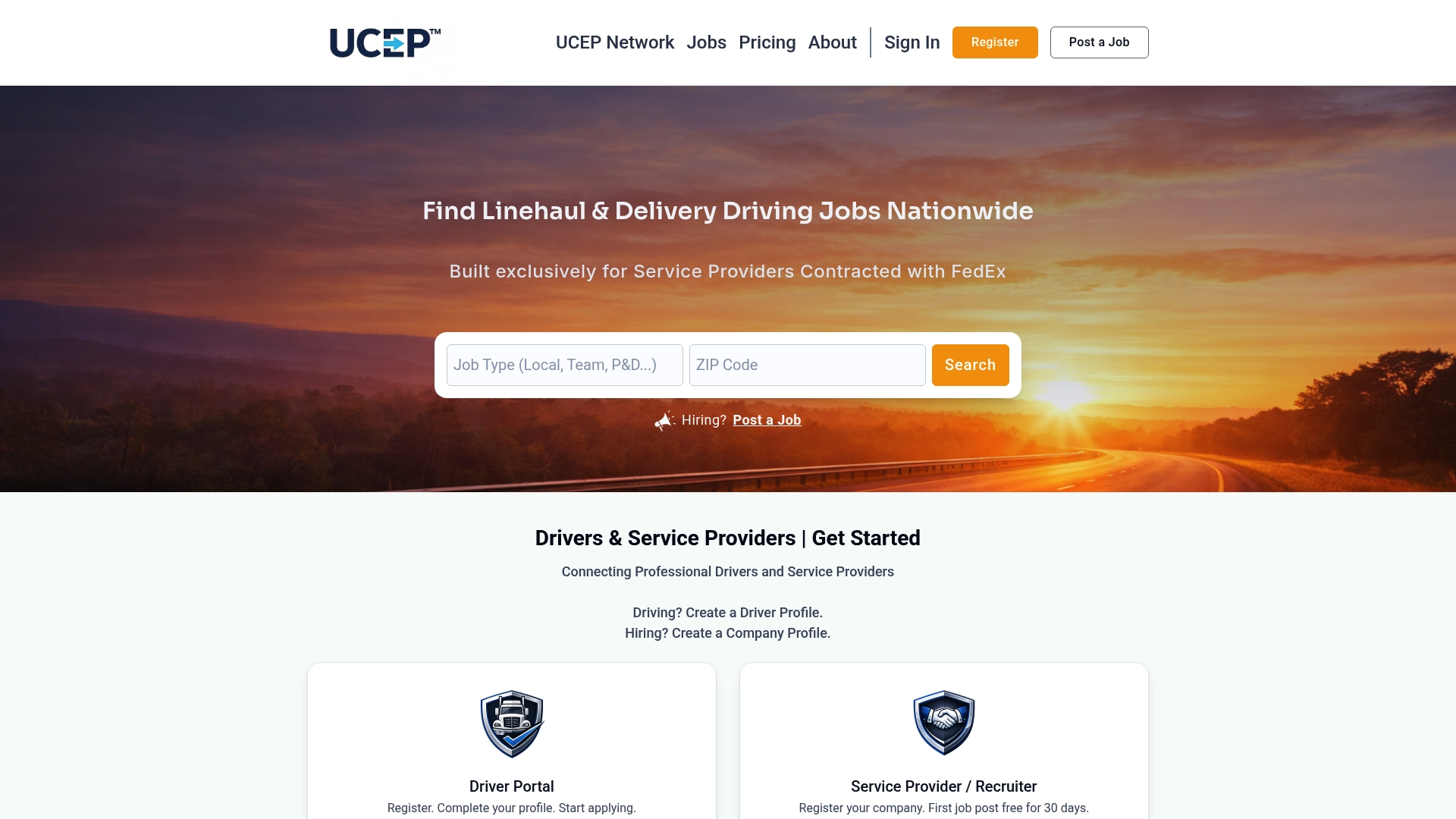
Getting started takes three steps:
- Create a company profile and post a job, starting with our Complimentary Trial Listing.
- Browse or post openings across our job categories, including CDL-A team and linehaul roles.
- Screen applicants using the vetting steps above, then arrange a trial period before finalizing the partnership.
When you're ready for ongoing hiring, our Standard Monthly Plan runs $99 per month and keeps your listings active across our driver network.
FAQ
What does 42 mean in CB talk?
In CB radio slang, certain numeric codes like "10-4" are used to acknowledge messages, allowing truckers to confirm receipt efficiently without tying up airtime.
What CDL job can I make $3000 a week?
Weekly pay varies widely by route type, experience, and carrier, and no single CDL job guarantees a specific weekly figure. Team driving, linehaul, and specialized freight roles tend to offer higher weekly potential than solo local routes, but actual pay depends on miles, load type, and the hiring carrier's rate structure.
Can you hire someone to drive you around for a day?
Hiring a personal driver for a day is a different service than finding a co-driver for commercial trucking, and it typically involves rideshare or chauffeur services rather than CDL-focused platforms. For commercial team driving or freight-related roles, a dedicated driver job board is the better starting point.
Is there any app to find drivers?
Yes, several platforms focus specifically on connecting drivers with carriers or team-driving opportunities, including dedicated job boards built around specific networks. UCEP focuses specifically on FedEx-related driving roles, including CDL-A team and pickup and delivery positions.
Sources
- Federal Register, Volume 90 Issue 178 (Wednesday, September 17, 2025)
- Federal Register: Hours of Service of Drivers: Pilot Program (2026)
- FMCSA Clearinghouse: Conduct a limited query (Employer guidance)
- Co-drivers | Geotab Support Center
Official resources for vetting and regulatory checks
Before finalizing any co-driver arrangement, confirm current rules directly from official sources. FMCSA's 2025 Federal Register notice outlines eligibility criteria for the flexible sleeper berth pilot program, including Clearinghouse exclusions. A related 2026 Federal Register notice explains how enforcement personnel verify pilot program waiver letters during inspections. For ELD-specific questions about managing co-driver logs, Geotab's support documentation covers the add-driver workflow used across many fleets.