
Prefer a carrier mix: use national routes for standardized, coast-to-coast capacity, and use regional lanes to protect margin, reduce deadhead, and retain drivers. For most FedEx-contracted Service Providers, that means prioritizing regional where dense lanes exist and reserving national capacity for peak overflow and non-covered zones.
When to favor national routes:
- Peak season, holiday volume, or multi-state distribution requiring uniform service-level agreements (SLAs)
- Coast-to-coast coverage where regional density does not support direct service
- Administrative simplicity: one contract, one billing integration, centralized reporting
When to favor regional routes:
- Dense urban or residential lanes where shorter hauls reduce fuel, maintenance, and deadhead costs
- Driver retention is a priority and home time matters to your workforce
- Surcharge exposure on residential lanes needs to be controlled
When to run a mix:
- Your lane map includes both dense local zones and thin long-haul corridors
- You want negotiating leverage and protection against single-provider rate increases
Recommended baseline: For most Service Providers with dense residential lanes, a starting point of roughly 70% regional and 30% national gives you cost efficiency where volume supports it, and reach where it does not. Treat this as a starting framework, not a fixed rule.
Table of Contents
- How do regional and national routes compare side by side?
- What do national routes offer FedEx-contracted operators?
- Why regional routes often produce stronger net margins
- What are the real operational cost differences between route types?
- How do you decide which route type fits your operation?
- How do you build a practical carrier mix for FedEx operations?
- How does route type affect driver recruiting and retention?
- Key Takeaways
- A practical perspective on route strategy
- Find the right drivers for your route mix with Ucep
- Useful sources
How do regional and national routes compare side by side?
The benefits of regional vs national routes become clearest when you look at the same dimensions across both options.
| Dimension | Regional Routes | National Routes |
|---|---|---|
| Typical pay / rate structure | Higher rate per mile on short loads; lower gross ceiling | Lower rate per mile; higher gross potential on long hauls |
| Predictability / schedule consistency | High; consistent lanes and familiar dispatch | Moderate; more variables across regions |
| Home time & shift length | Weekly or more frequent; shorter shifts | Irregular; multi-day or week-long runs common |
| Route distance / miles per shift | 500 miles typical | 500+ miles; often cross-country |
| Deadhead % | 5–10% typically | 15–25% typically |
| Seasonality / peak capacity | Limited surge capacity; may need national overflow | Manages capacity across multiple regions during high-volume periods |
| Driver qualifications | CDL-A; lane familiarity valued | CDL-A; OTR experience preferred |
| Cost to operate | Lower fuel, maintenance, lodging | Higher fuel, tires, and lodging costs |
For Service Providers: Regional lanes offer stronger margin control on dense routes; national lanes simplify multi-state contract management. For CDL drivers: Regional means more home time and predictable schedules; national means higher gross pay potential with more time away.

What do national routes offer FedEx-contracted operators?
National routes deliver standardized service levels across all 50 states, which matters when your FedEx contract requires uniform SLA performance regardless of geography.
Key operational advantages include:
- Redundant routing: National networks can reroute shipments through alternate hubs during weather events or facility outages, protecting contract compliance.
- Single-contract simplicity: One contract, unified billing, and a single EDI integration reduce administrative overhead as you scale.
- Centralized tracking and reporting: Easier performance monitoring across lanes without managing multiple carrier relationships.
- Multi-state distribution: When customers require consistent delivery windows across regions, national capacity removes the coordination burden.
Peak season is where national networks earn their place. During high-volume periods like the holidays, national carriers manage capacity across multiple regions, reducing the risk of service disruption that can affect geographically limited providers. For Service Providers with FedEx contracts that carry SLA penalties, that reliability is worth the higher per-mile cost. Understanding how peak demand affects your hiring needs is also worth reviewing in Ucep's guide on seasonal hiring spikes.
Why regional routes often produce stronger net margins
Regional routes typically lower operating cost per mile and increase net profit per mile because of reduced fuel, maintenance, and lodging. Drivers on regional lanes spend significantly less on fuel and save a notable amount on living expenses by returning home more often.
That math changes the gross-vs-net comparison significantly. A regional lane may show a lower gross rate than a national haul, yet produce a stronger net margin after you subtract fuel, tires, and overnight costs.
Driver-facing benefits reinforce the financial case. Regional drivers return home weekly and report less stress from lane familiarity and predictable schedules. In a tight driver market, that predictability is a retention tool you do not have to pay extra for.
Operationally, regional lanes mean fewer hub handoffs, lower exposure to extended-area surcharges, and stronger local market knowledge. Dense routing reduces accessorial and extended-area surcharges on residential-heavy lanes, which is a direct margin improvement for Service Providers running FedEx pickup and delivery routes.
What are the real operational cost differences between route types?
Cost differences between regional and national operations are concrete and measurable across several line items.
| Cost Factor | Regional | National (OTR) |
|---|---|---|
| Deadhead % | 5–10% | 15–25% |
| Fuel spend | 40–60% lower (shorter hauls) | Higher (extended mileage) |
| Maintenance / tire wear | Lower | Higher |
| Driver lodging / food | $750–$1,000 monthly savings | Full expense exposure |
| Surcharge exposure | Lower on dense residential lanes | Higher; extended-area fees common |
Deadhead is the most controllable cost lever. At 15–25% deadhead on long-haul versus 5–10% on regional lanes, the difference in paid-mile efficiency compounds quickly across a fleet. Every empty mile is a direct margin loss.
Operational consequences to plan for:
- Dispatch complexity: National operations require more terminal coordination, appointment scheduling, and handoff management.
- Lumper and accessorial exposure: More terminal touches mean more billing variables.
- Billing and invoicing: Multiple regional carriers add administrative load unless you standardize invoice formats early.
Pro Tip: Map your top 10 lanes by freight density before assigning route type. Lanes with consistent daily volume and short distances are strong candidates for regional sourcing; thin or irregular lanes are better covered by national capacity.
How do you decide which route type fits your operation?
Score each item 1 (low priority or low exposure) to 5 (high priority or high exposure):
- Coverage area required: Do your contracts require service across multiple states or regions?
- SLA risk tolerance: How severe are the penalties for missed delivery windows?
- Peak-season exposure: How much does your volume spike during holidays or high-demand periods?
- Driver home-time priorities: How important is weekly home time to your current or target drivers?
- Equipment and maintenance budget: Can your fleet absorb higher wear from long-haul mileage?
- Deadhead tolerance: What deadhead percentage can your margins support?
- Hiring and retention capacity: How difficult is it for you to recruit and keep qualified CDL drivers?
Scoring guide: A score of 28–35 points toward a national-heavy or mixed approach with strong national backup. A score of 15–22 points toward a regional-primary strategy. Scores in the 22–28 range typically suit a balanced carrier mix.
Red flags that should push you away from regional-only:
- Inconsistent freight density across your lanes
- Seasonal volume spikes you cannot absorb locally
- Limited access to regional terminals in your service area
Red flags that should push you away from national-only:
- High residential surcharge exposure eating into margins
- Driver turnover driven by home-time complaints
- Dense local lanes where regional rates would be more competitive
Watch for driver recruiting red flags that often signal a route-type mismatch before it becomes a retention problem.
How do you build a practical carrier mix for FedEx operations?
Logistics analysts describe regional carriers as a "secret weapon" for lowering costs in dense lanes while national carriers provide predictable nationwide reach. The practical goal is to use both deliberately.
Step-by-step approach:
- Map your top lanes by freight density and average haul distance.
- Assign regional capacity to lanes with consistent daily volume and distances under 500 miles.
- Keep national carrier relationships active for lanes outside your regional footprint and for peak-period overflow.
- Build in negotiating leverage by maintaining multiple carrier relationships so you can shift volume when rates or performance shift.
Operational controls that keep a mixed network manageable: standardize your invoice formats across carriers, use uniform EDI or label practices, layer SLAs by lane type, and schedule quarterly performance reviews for each carrier relationship. A diversified carrier mix also reduces risk during rate increases or capacity constraints.
How does route type affect driver recruiting and retention?
Driver priorities are consistent: home time, schedule predictability, pay after expenses, and clear lane assignments. Route type directly affects all four.
Retention levers by route type:
- Regional operations: Advertise weekly home time, lane familiarity, and lower out-of-pocket expenses. Offer lane training and per-diem policies that reflect actual regional cost savings.
- National operations: Lead with higher gross pay and short-term performance bonuses. Be transparent about time-away expectations during recruiting.
- Both: Predictable schedules reduce cognitive load and are a major retention factor in a tight driver market.
For regional-heavy operations, hiring pickup and delivery drivers locally shortens time-to-fill and produces candidates already familiar with the service area. For national lanes, team driver strategies can improve utilization and reduce per-driver deadhead. Ucep's guide on CDL-A team driver recruiting covers those tactics in detail.
Ucep's platform matches CDL drivers to FedEx-specific route types, so Service Providers can filter applicants by the lane type they are actually hiring for, reducing mismatches and cutting time-to-hire.
Key Takeaways
A carrier mix outperforms a single-route strategy for most FedEx-contracted Service Providers: regional lanes protect margin and retain drivers, while national lanes provide the reach and redundancy that SLA compliance requires.
| Point | Details |
|---|---|
| Regional lowers operating cost | Drivers spend significantly less on fuel and save considerable amounts on lodging compared to national routes. |
| Deadhead drives margin loss | Regional deadhead rates are substantially lower than those of national routes, directly improving paid-mile efficiency. |
| National protects peak-season SLAs | National networks manage capacity across regions during high-volume periods, reducing disruption risk. |
| Carrier mix beats single-type reliance | A diversified mix creates negotiating leverage and protects against rate increases or capacity gaps. |
| Ucep matches drivers to route type | Ucep's FedEx-specific job board helps Service Providers find CDL drivers matched to regional or national lanes. |
A practical perspective on route strategy
The binary framing of "regional vs. national" misses the real decision. Most Service Providers do not get to choose one cleanly. Your lane map chooses for you. What you actually control is how deliberately you assign capacity to each lane type and whether your driver recruiting reflects those assignments.
The operators who struggle are usually the ones who default to national for everything because it feels simpler, then absorb the surcharge exposure and driver turnover costs without connecting them to the route decision. Regional lanes require more upfront lane analysis, but the margin and retention payoff is consistent for dense residential operations.
The carrier-mix approach is not a compromise. It is the more precise strategy.
Find the right drivers for your route mix with Ucep
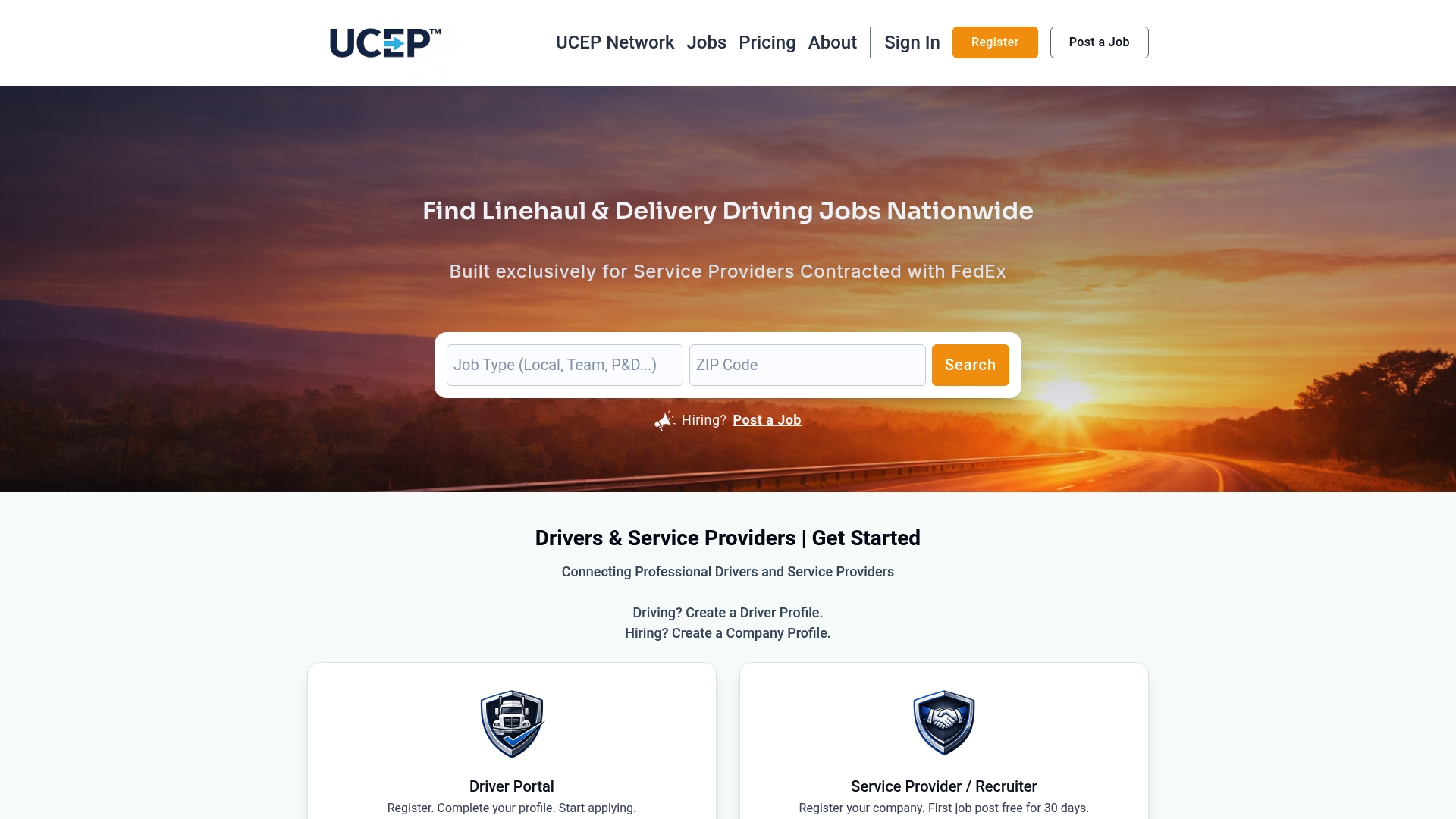
Ucep is the only job board built exclusively for FedEx-contracted Service Providers. Whether you are filling regional pickup and delivery lanes or recruiting CDL-A drivers for national linehaul, Ucep connects you to qualified candidates who already understand the FedEx operating environment.
- Targeted listings: Post regional or national lane openings to a driver audience actively searching for FedEx-specific roles.
- Terminal and employer directories: Research Service Providers and terminals in your network before you hire or expand lanes.
- Applicant tracking: Manage recurring lane hires without rebuilding your pipeline from scratch each time.
Browse the Ucep Network to see how Service Providers are using the platform, or check service provider reviews to research operators in your area. Post your first listing and start matching drivers to the route type that fits your operation.
Useful sources
- OSM Worldwide: National vs. Regional Shipping Networks — Operational comparison of national and regional carrier networks; best for capacity and seasonality data.
- Launch Fulfillment: Regional vs. National Carriers — Analyst perspective on carrier-mix strategy; best for the "secret weapon" framing and cost-in-dense-lanes argument.
- Truck Dispatch Experts: Regional vs. Long Haul Trucking — Driver-facing data on home time, fuel savings, and retention; best for the $750–$1,000/month lodging savings figure.
- FF Dispatch: Regional vs. OTR Trucking — Deadhead percentage data and per-mile rate comparisons; best for the 5–10% vs. 15–25% deadhead figures.
- Varsity Logistics: Building a Carrier Mix — Operational controls for mixed networks; best for surcharge exposure, invoicing standardization, and negotiating leverage.
- AtoB: Regional vs. OTR — Fleet management perspective on hybrid route strategies and driver satisfaction factors.
- Freight-Specialist: Regional vs. National Freight Carriers — FTL-focused breakdown of transit times, damage rates, and rural coverage differences.
Recommended
- Dedicated Trucking Job Board Benefits for FedEx Drivers
- FedEx Driving Opportunity Requirements List for 2026
- What It Takes to Succeed as a Team Driver for Service Providers Contracted with FedEx | UCEP Meta description - United Contractor Employment Portal
- FedEx Pickup Delivery Model Explained for Logistics Planners