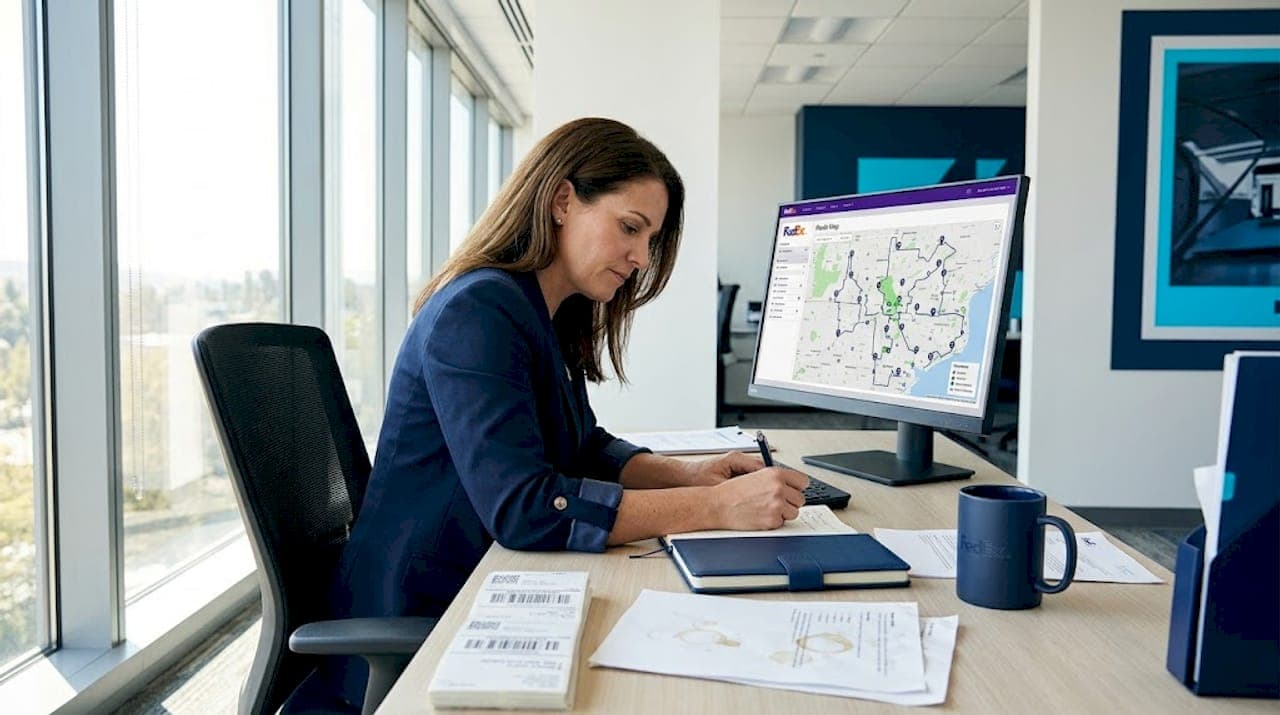
If you've ever scheduled a FedEx pickup and wondered why the process felt different from last time, you're not alone. The FedEx pickup delivery model explained properly reveals a system with distinct networks, service types, and operational rules that many businesses and individuals misread. Getting this wrong costs real money. Missed cutoffs, wrong service selections, and misunderstood pickup requirements all add up. This guide breaks down exactly how FedEx pickup and delivery works across Ground, Express, and SameDay so you can plan with confidence.
Table of Contents
- Key takeaways
- How the FedEx pickup and delivery model works
- Scheduling pickups: your options and how they work
- FedEx SameDay: a different model entirely
- Route operations, efficiency, and what the numbers tell you
- Applying this knowledge to your logistics planning
- My take on FedEx pickup and delivery complexity
- How Ucep helps you staff FedEx pickup and delivery operations
- FAQ
Key takeaways
| Point | Details |
|---|---|
| Two separate FedEx networks | FedEx Ground and FedEx Express operate independently with different speeds, schedules, and pickup processes. |
| SameDay requires a scheduled pickup | You cannot drop off SameDay shipments at standard locations; pickups must be arranged in advance. |
| ISPs run P&D routes | Independent Service Providers manage FedEx Ground pickup and delivery, which creates daily route variability. |
| Pickup fees vary by method | Ad-hoc pickups cost more; account holders with volume commitments may qualify for reduced or waived fees. |
| Dimension-based planning is reshaping logistics | FedEx now uses cube-based planning technology that improves route efficiency and changes how shippers should think about packaging. |
How the FedEx pickup and delivery model works
Understanding FedEx delivery starts with knowing that FedEx does not operate as a single unified network. Two distinct domestic networks handle pickup and delivery in fundamentally different ways: FedEx Ground (including Home Delivery) and FedEx Express.
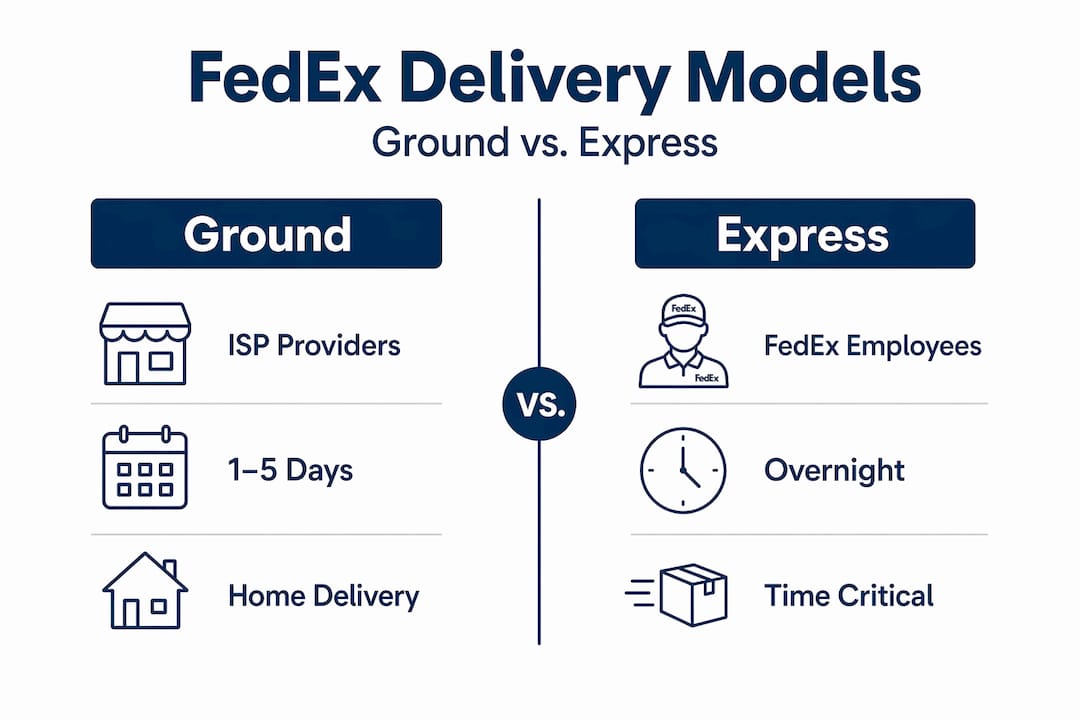
FedEx Ground focuses on cost-effective, non-urgent shipping. Transit times run 1 to 5 business days depending on distance. FedEx Home Delivery, a subset of Ground, serves residential addresses 7 days a week. FedEx Express, by contrast, delivers on time-definite schedules. Think overnight, 2Day, and 3Day options. Express serves both residential and commercial addresses but operates on tighter cutoffs and higher price points.
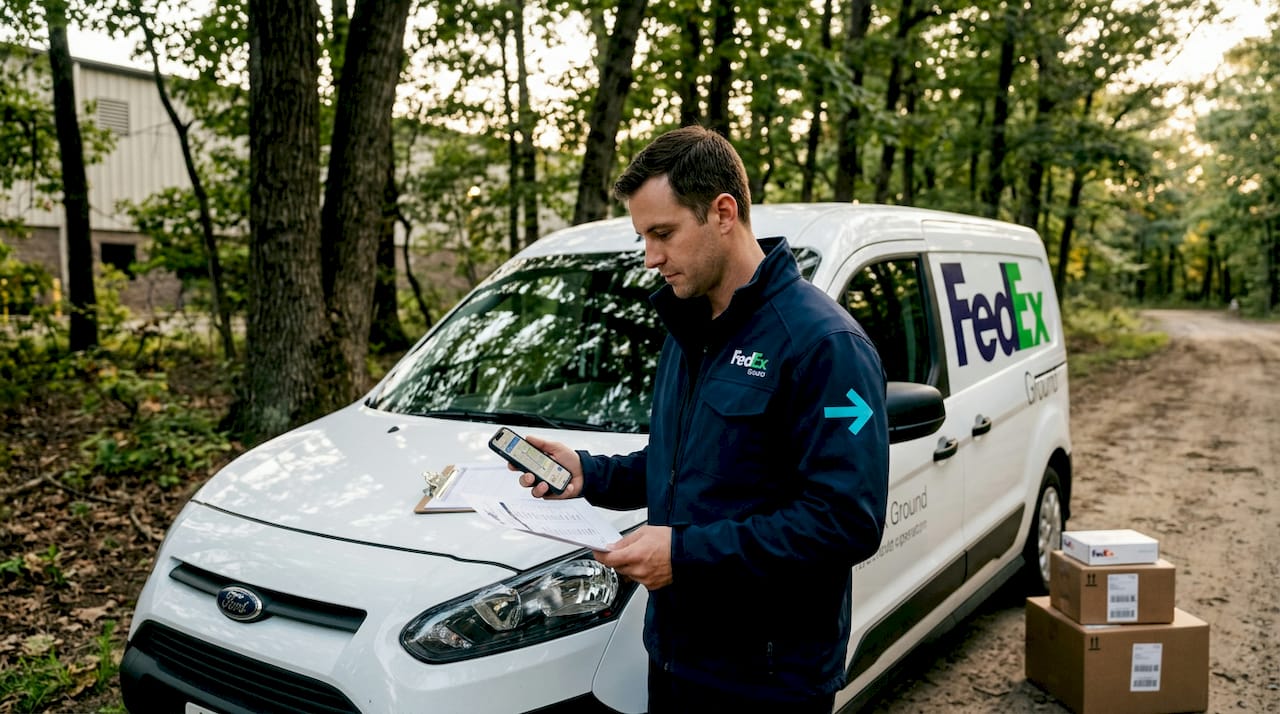
The structural difference most people miss is who actually handles the pickup and delivery work. FedEx Ground P&D routes are operated by Independent Service Providers, not FedEx employees. These ISPs contract with FedEx and manage their own drivers, vehicles, and daily operations. FedEx Express drivers, however, are direct FedEx employees. This distinction affects everything from service consistency to how route issues get resolved.
Here is a quick overview of what each network covers:
- FedEx Ground: 1 to 5 business day delivery, ISP-operated, mostly commercial with Home Delivery for residential
- FedEx Home Delivery: Residential delivery 7 days a week, part of the Ground network
- FedEx Express: Time-definite overnight to 3-day delivery, FedEx employee-operated, available for business and residential
Pro Tip: If your shipment is going to a residential address and timing is flexible, use Home Delivery instead of Ground to get 7-day delivery coverage without paying Express rates.
Scheduling pickups: your options and how they work
The FedEx pickup process varies depending on whether you need a one-time pickup or a recurring arrangement. Scheduling online involves selecting your service type, entering shipment details, setting a ready time and a close time for your location, and optionally requesting special equipment like a liftgate. You receive a confirmation with a reference number once the request is submitted.
Here are the main pickup types you will encounter:
- On-call (one-time) pickup: Scheduled for a specific date through FedEx.com, the mobile app, or by phone. Best for occasional shippers.
- Scheduled recurring pickup: A standing daily or weekly pickup arrangement tied to your FedEx account. Ideal for businesses with consistent outbound volume.
- Drop-off at FedEx location: No pickup fee, but you take the shipment to a FedEx facility, authorized retailer, or drop box.
- Freight pickup (LTL or Express Freight): Requires a separate freight pickup request and may involve special documentation and equipment arrangements.
Pickup lead times and fees depend on how and when you schedule. Same-day pickups are possible if you request before the regional cutoff. Ad-hoc pickups outside your service area or normal route may carry additional fees. Account holders with volume commitments can often reduce or eliminate pickup fees entirely.
Common pitfalls that delay pickups:
- Packages not ready at the specified ready time
- Missing or incorrect shipping labels
- No one available to hand over the shipment at the close time
- Requesting equipment (like a liftgate) without noting it in the pickup request
Pro Tip: Always set your close time at least 30 minutes after your actual closing time. Drivers run routes in sequence and do not always arrive at the estimated window.
FedEx SameDay: a different model entirely
FedEx SameDay operates outside the standard Ground or Express model. It is designed for urgent shipments that cannot wait for next-day processing. Packages up to 150 lbs qualify for FedEx SameDay, while heavier freight falls under SameDay Freight.
The most critical thing to understand: SameDay shipments must be scheduled for pickup. You cannot walk into a FedEx Office location or drop a SameDay package in a drop box. The service uses dedicated transport modes and a centralized national network that operates separately from standard Ground or Express facilities.
Key facts about FedEx SameDay:
- Requires a scheduled pickup arranged directly through FedEx
- Cannot be combined with standard on-call or recurring Ground pickups
- Priced significantly higher than Ground or Express due to the priority handling and dedicated transport
- In March 2026, FedEx launched FedEx SameDay Local in partnership with OneRail, offering two-hour and end-of-day delivery options aimed specifically at retailers
The retail-facing SameDay Local service is not available for individual shipments through FedEx.com. It runs through business accounts and retail partnerships only. If you are a small business expecting to use SameDay Local, verify eligibility through a FedEx account representative before building it into your logistics plan.
Pro Tip: For urgent shipments that fall under SameDay pricing thresholds, compare FedEx SameDay rates with regional courier options. SameDay is fast, but the cost differential can be significant for non-critical items that could use overnight Express instead.
Route operations, efficiency, and what the numbers tell you
For businesses operating as FedEx Ground Service Providers or considering that route, the operational picture matters as much as the service details. Understanding FedEx delivery from an operator perspective means knowing how volume, technology, and route structure affect daily outcomes.
Here is a direct comparison of the main FedEx service models from an operational standpoint:
| Feature | FedEx Ground P&D | FedEx Express | FedEx SameDay |
|---|---|---|---|
| Operated by | Independent Service Providers (ISPs) | FedEx employees | FedEx / dedicated partners |
| Delivery speed | 1 to 5 business days | Overnight to 3 days | Same day |
| Residential coverage | 7 days (Home Delivery) | Monday to Saturday | As scheduled |
| Profit margin (ISP) | 10 to 20% | N/A (employee model) | N/A |
| Route variability | High (daily volume shifts) | Moderate | Low (dedicated runs) |
| Pickup flexibility | Recurring or on-call | Recurring or on-call | Scheduled only |
FedEx Ground P&D routes generate approximately $100,000 to $130,000 in annual revenue per route, with profit margins between 10 and 20%. Linehaul routes outperform on margin, ranging from 15 to 35%, but P&D remains more accessible for new operators. Daily volume on P&D routes shifts based on destination codes and package flow, which means static planning does not work. Operators need contingency drivers and flexible scheduling to stay efficient.
On the technology side, FedEx Freight has shifted from weight-based to dimension-based planning. Dimension-in-motion technology now captures over 90% of shipment dimensions in real time, improving cube utilization by 12% across FedEx Freight networks. For shippers, this means how you package matters more than it used to. Oversized or irregularly shaped packages affect your rate and how your freight fits into the network.
Pro Tip: If you run P&D routes as an ISP, build a backup driver list before peak season, not during it. Volume can spike 30 to 50% in Q4, and last-minute staffing is the single biggest operational risk for small ISP operations. Ucep's driver job board connects ISPs with qualified P&D candidates year-round.
Applying this knowledge to your logistics planning
Knowing how FedEx pickup and delivery works only helps if you translate it into decisions. Here is how to apply what you have learned:
- Match service to urgency. Use Ground or Home Delivery for non-urgent shipments. Use Express for time-sensitive packages. Reserve SameDay for genuine emergencies where the cost is justified.
- Use FedEx online tools. The FedEx Ship Manager portal and mobile app let you schedule pickups, manage recurring arrangements, and track shipments from one dashboard. Account users can also set default packaging and billing preferences to reduce manual entry.
- Label accurately. Wrong or missing labels are the top cause of pickup failures and delivery delays. Print labels fresh for each shipment and confirm the service type matches what you scheduled.
- Communicate special instructions. If your location requires a liftgate, dock appointment, or after-hours access, include those details at the time of scheduling. Drivers operate on tight routes and cannot accommodate unannounced requirements.
- Plan for seasonal volume. If you ship consistently through Q4 or other peak periods, switch to a scheduled recurring pickup. Ad-hoc pickups during peak season face longer lead times and reduced availability.
For businesses managing FedEx Ground routes as ISPs, route optimization and driver retention directly affect your margins. The distinction between FedEx Ground and Express networks matters here because each requires different staffing approaches and route management strategies.
Pro Tip: Small businesses shipping fewer than 10 packages a week should consider opening a FedEx account even if they primarily drop off packages. Account holders get access to rate discounts, consolidated invoicing, and pickup scheduling features that are not available to one-off shippers.
My take on FedEx pickup and delivery complexity
I have seen businesses make expensive decisions based on assumptions about how FedEx works rather than how it actually operates. The most common mistake is treating FedEx as a single carrier with a single process. It is not. Ground and Express move through different networks, use different labor models, and have different operational constraints.
What I have found particularly telling is how many ISPs underestimate the daily variability on P&D routes. Unlike linehaul, where you know your origin, destination, and mileage before the shift starts, P&D drivers deal with shifting package counts, address exceptions, and customer availability issues every single day. That variability is manageable with the right systems and contingency staffing, but it catches operators off guard when they have planned for a static workload.
The shift to dimension-based planning is one change I think deserves more attention from shippers. Most businesses still think in terms of weight when they price and plan shipments. Cube is where the real leverage is now, both in terms of cost and how your freight integrates into the FedEx network.
My contrarian advice: do not default to FedEx for every shipment just because you have an account. There are situations, particularly for SameDay or regional deliveries, where regional carriers or same-day courier networks offer better pricing or faster actual transit. Building FedEx into a mixed carrier strategy instead of a single-carrier dependency gives you more flexibility and negotiating leverage.
Transparency with your customers about delivery timing also matters more than most operators acknowledge. Realistic delivery windows, communicated upfront, reduce service calls and disputes. That is a simple operational win that costs nothing to implement.
— Aaron
How Ucep helps you staff FedEx pickup and delivery operations
If you are a FedEx Service Provider managing Ground pickup and delivery routes, staffing is one of your highest-impact operational variables. Finding qualified P&D and linehaul drivers through general job boards wastes time and produces weak results.
Ucep is a job board and recruiting platform built exclusively for Service Providers contracted with FedEx. You can post open roles for P&D drivers, CDL-A solo, CDL-A team, and linehaul positions, and reach candidates who already understand the FedEx operating model. Browse service provider reviews to evaluate potential contracting partners, or explore the UCEP Network to connect with companies operating FedEx routes in your region. When you are ready to hire, view companies hiring drivers to see active opportunities across the country.
FAQ
What is the FedEx pickup and delivery model?
The FedEx pickup and delivery model refers to how FedEx collects packages from shippers and delivers them to recipients through its Ground and Express networks. Ground routes are operated by Independent Service Providers, while Express routes use FedEx employees.
Can I drop off a FedEx SameDay shipment at a regular location?
No. FedEx SameDay shipments must be scheduled for pickup and cannot be dropped off at standard FedEx facilities or drop boxes. This is a common source of service failures for customers who assume SameDay works like a standard Express shipment.
How do I schedule a FedEx pickup online?
Log into your FedEx account, select the pickup option, choose your service type, enter shipment and location details, set a ready time and close time, and optionally request equipment like a liftgate. You will receive a confirmation reference number.
What is the profit margin for FedEx Ground P&D routes?
FedEx Ground P&D routes typically generate between 10 and 20% profit margins, with annual revenue per route ranging from $100,000 to $130,000. Linehaul routes generally produce higher margins of 15 to 35%.
How does dimension-based planning affect FedEx shipping costs?
FedEx now uses real-time dimension capture technology to price and plan freight based on cube rather than weight alone. This means oversized or irregularly packaged shipments may cost more, and shippers benefit from tighter, more efficient packaging.