
A terminal hiring radius is the maximum distance or drive time a motor carrier allows between a driver's home and the terminal for a role to count as local or home-daily. If you are a driver, confirm the radius in writing before you apply. If you are a recruiter, state the radius and how you measure it in the job post. The FMCSA sets the compliance floor; platforms like UCEP help both sides find matches inside that radius.
TL;DR:
- A typical home-daily radius ranges from 0 to 50 miles or 0 to 30 minutes drive time, with exact measurements often specified in writing during hiring.
- Radius thresholds vary: short distances usually indicate true local roles, whereas longer distances suggest regional or sleeper routes, affecting pay and schedule predictability.
- Employers can legally set geographic hiring limits as long as they apply the same criteria to all applicants and document the policy formally for scaling.
- Drivers should verify the exact radius, measurement method, and pay details, including overtime and sleeper night compensation, before accepting a role.
- Using niche platforms like UCEP helps match drivers with terminal-based jobs within approved radius, reducing application mismatches and ensuring clearer job expectations.
Table of Contents
- What terminal hiring radius means and why employers set it
- Common radius thresholds and the realistic expectations they create
- Legal and compliance signals that interact with a hiring radius
- How recruiters set and measure an effective terminal hiring radius
- How job seekers verify and respond to a terminal hiring radius
- Candidate and recruiter checklist: what to confirm before you apply or post
- Why niche job boards reduce geographic mismatch
- How UCEP helps you post or search terminal jobs
- Sources
- FAQ
What terminal hiring radius means and why employers set it
A terminal hiring radius separates three kinds of work. Home-daily roles put you back at your own bed every night, usually within a tight distance of the terminal. Regional roles stretch that distance out and may require a night or two away. Over-the-road (OTR) roles drop the radius concept almost entirely, since the job is built around multi-day routes rather than a fixed commute.
Employers set a radius for practical reasons, not arbitrary ones.
- Scheduling depends on drivers reaching the terminal reliably at shift start, so a tight radius protects on-time departures.
- Payroll, workers' compensation, and insurance costs are easier to manage when drivers live inside a predictable zone.
- Retention tends to improve when the commute matches what was promised, since long or unpredictable commutes drive early quits.
The word "local" in a job ad is often vague. Before you read too much into it, ask for the written radius and the average tour length, since two postings using the same word can mean very different shifts.
Common radius thresholds and the realistic expectations they create
Radius thresholds vary by carrier and terminal, but a few bands show up repeatedly across the industry.
- A relatively short distance usually marks a true metro, home-daily role where you clock out and go home the same night, most days.
- A moderate distance typically signals short regional work with occasional late clock-outs and the rare overnight away from home.
- A longer distance generally points to regional or multi-day routes, where sleeper nights become routine rather than exceptional.
Some employers measure the radius by drive time instead of distance, often using a threshold like a 30-minute commute. Drive time tends to fit metro hiring better, since it accounts for traffic and road type rather than a straight line on a map. A practical industry guide on local trucking notes that job ads often blur these categories, which is why asking for the exact operating radius and the expected end-of-shift location matters more than trusting the headline.
These thresholds map directly to pay and lifestyle expectations. A tighter radius usually means more predictable hours but a smaller pool of qualified applicants, while a wider radius opens the pool but raises the odds of sleeper nights and schedule variability.
Legal and compliance signals that interact with a hiring radius
A hiring radius does not exist in isolation. It sits next to a set of federal and payroll rules that shape how fast a carrier can bring a driver on and what documentation has to be ready first.
- FMCSA driver qualification file rules require motor carriers to collect an employment application and run motor vehicle record checks before a driver starts, with specific timelines attached.
- Pre-employment drug and alcohol testing guidance requires written notice of testing requirements and sets timelines employers must follow around consent and results.
- Payroll, workers' compensation, and state tax exposure all shift depending on where a driver lives, which gives carriers a direct financial reason to keep hiring inside a defined zone.
Employers are generally within their rights to set geographic hiring radii in at-will settings when the rule is applied consistently, according to legal analysis of geographic hiring practices. Geography functions as a legitimate operational filter, not a protected classification, as long as it is applied the same way to every applicant.
Institutional employers formalize this further. A university hiring policy example defines a primary work radius in writing and requires approval for any hire outside it, which shows how radius rules move from informal practice to documented policy once an organization scales.

How recruiters set and measure an effective terminal hiring radius
A radius that is too tight starves the applicant pool. One that is too wide invites turnover. The fix is measurement, not guesswork.
- Track acceptance rate by mile band (0 to 25, 26 to 50, 51 to 75, 76 to 100, and 100-plus) over several months to see exactly where acceptance drops off.
- Choose your measurement method by context: GIS-based straight-line miles work for rural terminals, while door-to-door drive time through a routing tool fits metro areas better, since traffic and road layout matter more than raw distance there.
- Put the radius in writing in every job ad, along with any exception process for a driver just outside the line.
- Review the radius on a set cadence rather than leaving it unchanged for years, since local housing costs and traffic patterns shift the applicant pool over time.
Pro Tip: Pair your radius with a relocation incentive for strong candidates just outside the line instead of rejecting them outright.
How job seekers verify and respond to a terminal hiring radius
Before you accept a role, a few questions save you from a bad surprise three weeks in.
- Ask for the written radius in miles or minutes, not a verbal estimate.
- Confirm the average clock-out time and how overtime or detention pay is calculated.
- Request the pay plan in writing, including how sleeper nights or layovers are compensated if the role occasionally exceeds the stated radius.
- If the radius is close but not quite feasible, ask directly about relocation assistance before walking away from the opportunity.
Walking in often beats applying online for terminal roles. Bring a current motor vehicle record, your medical card, and a one-page work history with no unexplained gaps, since a clean application speeds up the qualification file review required under federal driver qualification rules. Time your visit around typical hiring windows, usually early in the week, when terminal staff have more time to review a walk-in packet.
Pro Tip: Call ahead to confirm who handles walk-in applications, since showing up during a shift change often means waiting for someone who isn't there.
Candidate and recruiter checklist: what to confirm before you apply or post
A short checklist prevents most radius misunderstandings before they cost either side time.
- Exact radius, stated in miles or minutes, and whether it is measured by straight-line distance or drive time.
- Written pay plan, including overtime, detention, and any sleeper night compensation.
- Timing for motor vehicle record review and drug test consent, matched to federal requirements.
- Who provides each item and when, so nothing surfaces for the first time at orientation.
| Item to confirm | Who provides it | When |
|---|---|---|
| Exact radius and measurement method | Recruiter | In the job posting |
| Written pay plan | Recruiter | Before interview |
| MVR review timing | Carrier compliance | Before start date |
| Drug test consent and timing | Carrier compliance | Before start date |
A simple template helps on both sides. Candidates can ask, "Can you confirm the radius in miles and how you measure it?" Recruiters can state, "This role requires a home address within 50 miles of the terminal, measured by drive time."
Why niche job boards reduce geographic mismatch

Generic job boards rarely let a driver filter by terminal, which means plenty of applications land on roles well outside a workable radius. UCEP focuses specifically on terminal and FedEx Service Provider listings, letting recruiters filter by terminal location and letting drivers search roles that already match where they live.
The most common mistake on both sides is treating "local" as a fixed industry term instead of asking for the specific radius and shift pattern in writing. That single question, asked early, prevents most of the mismatches that waste a recruiter's time and a driver's week.
— Aaron
How UCEP helps you post or search terminal jobs
UCEP is built exclusively for Service Providers contracted with FedEx, which means every listing on the platform already sits inside a terminal-relevant context rather than a generic job feed.
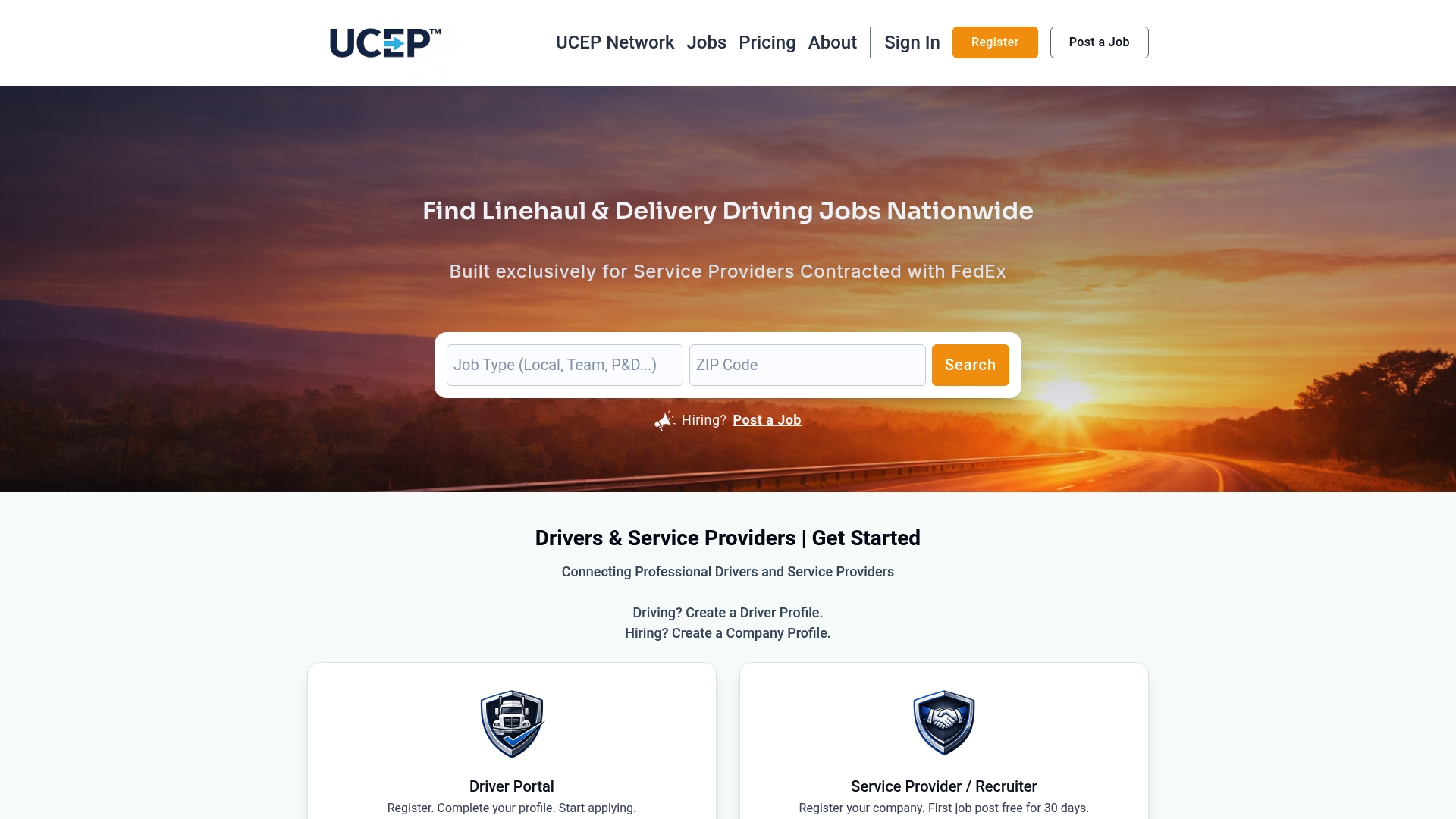
Recruiters can start with a Complimentary Trial Listing or move to the Standard Monthly Plan at $99 per month, both of which include terminal directories and a built-in applicant tracking system for managing candidates by radius.
- Recruiters get terminal directories, applicant tracking, and listings that state the radius upfront.
- Drivers get filtered search across pickup and delivery, CDL-A solo linehaul, and CDL-A team linehaul roles, organized by terminal rather than buried in generic postings.
- Either side can start today: post a trial listing or search terminal-filtered jobs directly on UCEP.
Sources
For primary detail beyond this guide, consult FMCSA driver qualification rules, FMCSA drug and alcohol testing guidance, and BLS wage and employment data for truck drivers. Industry guidance on local versus regional trucking roles adds practical context on radius terminology, and carrier operations content from Haullytics explains cost drivers behind geographic hiring limits.
- Is geographical discrimination legal? — HRMorning
- Local Trucking Jobs 2026: Pay, Home Time & How to Find Them — OTrucking
- eCFR §391.51: General requirements for driver qualification files
- Implementation guidelines for alcohol and drug regulations — FMCSA
FAQ
What jobs pay well without requiring a four-year degree?
Driving roles, including CDL-A positions, are among the jobs that can pay well without a four-year degree, with pay varying by route type, radius, and experience. The Bureau of Labor Statistics tracks wage data for truck drivers specifically, which is a useful benchmark when comparing local and regional offers.
What is the highest paying transportation job?
Pay varies widely by role, route type, experience, and whether the position is local, regional, or long-haul. The Bureau of Labor Statistics publishes wage data across transportation occupations that drivers can use to compare options realistically.
Is it hard to qualify for a CDL driving job?
Qualifying requires meeting federal driver qualification standards, including a clean application history and a motor vehicle record check, plus passing required drug and alcohol testing. Most qualified drivers with a clean record and the right endorsements clear these steps without major delay, though timelines depend on the carrier's process.
How do I find terminal-based driving jobs near me without a degree?
Search a platform that organizes listings by terminal and role type, such as UCEP's job search, rather than a generic job board that does not filter by location. Confirm the written hiring radius for any listing before applying, since that determines whether the role is truly home-daily or requires occasional overnight stays.