
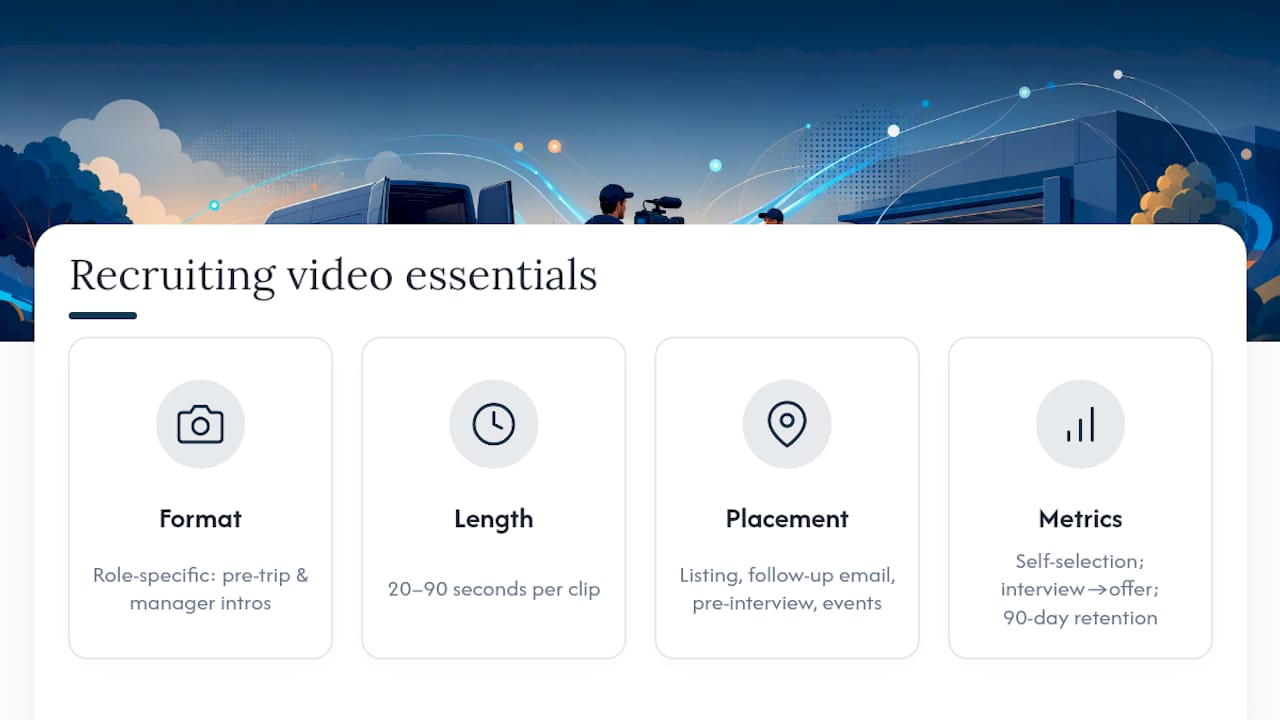
The most effective creative option for hiring FedEx-contracted drivers is a short, role-specific video (20 to 90 seconds) placed at the exact moment a candidate hesitates. LACED Agency reported an increase in qualified applications for a regional carrier that swapped glossy brand films for this format, and NorthRiver Logistics saw fewer unqualified applications after doing the same. Three elements make it work:
- Authenticity — real drivers and managers, not actors or scripts.
- Specificity — one clip answers one question (schedule, equipment, pay structure).
- Distribution — placed where hesitation happens, not buried in a generic gallery.
Key Takeaways
Video-first, role-specific creative placed at candidate decision points reduces unqualified applications and improves early retention more reliably than volume-focused job ads.
| Point | Details |
|---|---|
| Lead with role-reality video | Film pre-trip, a typical stop, and end-of-shift home time in one 20 to 90 second clip. |
| Launch three assets first | Manager intro, myth-buster, and mobile short-form ad give the best effort-to-impact ratio. |
| Match assets to funnel stage | Send the manager clip before interviews and the training walkthrough during onboarding. |
| Measure fit, not just volume | Track self-selection rate, interview-to-offer rate, and 90-day retention over raw applicant counts. |
| Host and target through UCEP | UCEP embeds role videos on job pages and sends targeted alerts to matching driver candidates. |
Table of Contents
- Copy-Ready Creative Options You Can Run This Month
- NorthRiver Logistics: What They Filmed and What Changed
- Where to Place Assets in the Candidate Funnel
- Channels and Activations That Reach FedEx Driver Candidates
- Production and Messaging Rules That Keep Assets Credible
- KPIs and Experiments to Test What's Actually Working
- A Recruiter's Take on What Actually Moves the Needle
- How UCEP Speeds Up Running These Creative Options
- Frequently Asked Questions
- Sources
Copy-Ready Creative Options You Can Run This Month
You don't need a production budget to start. You need a prioritized list and the discipline to launch three things well instead of ten things poorly.
- Role-reality video — a driver narrates a normal shift, pre-trip to final stop. Works because it kills vague expectations before they turn into early quits. Effort: medium.
- Manager intro clip — the person who'll actually supervise them says who they're looking for. Builds trust before the interview. Effort: low.
- Myth-busting clip — addresses one common misconception (unpaid layover, forced dispatch, home time). Effort: low.
- Mobile short-form ad — 15 second vertical cut for Instagram Reels or TikTok, pointing to the full job listing. Effort: low.
- Targeted gamer placement — an in-game ad inside a trucking or driving simulation title, similar to Schneider National's approach to reaching younger prospects. Effort: high.
- Referral QR card — current drivers hand these to prospects at truck stops or terminals; scanning it opens the role video and a one-click apply page. Effort: low.
- On-route signage — a QR code on the truck itself, turning every mile driven into a passive recruiting ad. Effort: low.
- Driving-school partnerships — a short co-branded clip explaining the path from CDL training to a P&D or linehaul seat. Effort: medium.
- Local hiring-event loop — the role-reality video plays on a loop at job fairs while recruiters talk to candidates in person. Effort: low.
- Mobile-friendly one-click application — not a creative asset by itself, but the landing point every other asset needs to work. Effort: medium.
Pro Tip: If your budget only covers three, run the manager intro, the myth-buster, and the mobile short-form ad first. All three are low-effort, and together they remove the two biggest objections candidates have before they ever open a full application. Place these on your job page, in your first follow-up email, and in your paid social creative, in that order.
NorthRiver Logistics: What They Filmed and What Changed
NorthRiver didn't rebuild its recruiting from scratch. It replaced vague job ads with a small library of modular clips, each answering one candidate question: what a pre-trip inspection looks like, what a typical stop sequence involves, what end-of-shift actually means for take-home time. A manager introduction clip ran alongside a myth-busting video addressing dispatch and home-time concerns.
The assets sat in four places: the job page itself, a follow-up email sent within 24 hours of application, a short pre-interview message, and a looping screen at in-person hiring events. That placement mattered as much as the footage. A candidate who watches the manager clip before an interview shows up already knowing what to expect.
NorthRiver's results were measurable: fewer unqualified applications reaching the interview stage, candidates arriving more prepared for interviews, and better early retention among new hires. Setting accurate expectations upfront cuts the early-regret quits that cost far more than a video shoot ever will.
Pro Tip: Before you publish any video, run the script past ops and HR. A driver describing "flexible home time" when the actual policy is fixed-route scheduling creates the exact mismatch you're trying to eliminate. Review assets quarterly, since routes, pay structures, and equipment change faster than most job pages get updated.
Where to Place Assets in the Candidate Funnel
Each stage of the hiring funnel calls for a different asset, and sending the wrong one at the wrong time wastes the effort you put into filming it.
- Awareness — short-form ads and social content introduce the role broadly (paid social, community posts).
- Consideration — the full role-reality video and an FAQ section live on the job page itself.
- Application — a short form paired with an "apply in 3 minutes" call to action, no lengthy prerequisites upfront.
- Decision — a manager intro clip sent before the interview, reducing no-shows and setting tone.
- Onboarding — a training walkthrough video, so day one holds no surprises.
To make this work operationally:
- Embed the role-reality video directly on the job listing, not linked off-page.
- Trigger the manager clip automatically through your applicant tracking system once an interview is scheduled.
- Use a QR code linking to the same video on printed signage and referral cards.
- Keep every CTA specific: "Apply in 3 minutes," "Schedule a call," or "Scan for a day in the life," rather than a generic "Learn more."
Channels and Activations That Reach FedEx Driver Candidates
Where you post matters as much as what you film. Route Consultant recommends combining job boards with driving schools, referral networks, and local community groups rather than relying on one channel alone.
- Focused job boards — listings built specifically for FedEx-contracted roles reach candidates already looking for this exact opportunity, typically at a lower cost per qualified applicant than broad general boards.
- Facebook groups and local community pages — low-cost, high-trust placement for referral posts and role videos.
- Instagram Reels and TikTok — short-form cuts of your role-reality video, aimed at younger CDL holders and career-changers.
- In-game ads — nontraditional but worth testing if you're trying to build a longer-term pipeline of younger talent, not fill this week's seat.
- Driving-school partnerships — co-branded content placed where candidates are actively earning their CDL.
- Local hiring events — video loops plus in-person conversation close gaps a listing alone can't.
Pro Tip: Layer your ad targeting by geography, route lane, and experience level rather than broad demographics. A candidate near your actual terminal with relevant CDL time converts far better than a wide, unfiltered audience.
Production and Messaging Rules That Keep Assets Credible
Drivers evaluate employers the way consumers evaluate brands, checking for authenticity before they trust a claim. That means production quality matters less than accuracy.
- One question per clip. Don't try to cover pay, schedule, and equipment in a single video.
- Film real drivers and real managers, not stand-ins reading a script.
- Capture pre-trip inspection, a typical stop, and end-of-shift home time. These three moments answer most candidate objections.
- Keep clips between 20 and 90 seconds, edited vertical for mobile viewing.
- Caption every asset. Many candidates watch with sound off, especially on job sites and social feeds.
- Add a short text summary beneath any job-page video so candidates can scan without watching.
- Every eligibility claim (CDL class, experience minimum, home-time policy) needs sign-off from ops or HR before it goes live.
Pro Tip: A phone camera, a $30 lavalier mic, and natural daylight outperform a scripted studio shoot for this purpose. Minimal scripting keeps the driver's answers sounding like a real person, not a brand voiceover.
KPIs and Experiments to Test What's Actually Working
Volume of applications is the wrong headline metric. Fit is what pays off.
| Point | Details |
|---|---|
| Self-selection rate | Track qualified applications as a share of total applications, not raw volume. |
| Interview-to-offer rate | A rising rate after adding video usually signals better-prepared candidates. |
| First-90-day retention | The clearest signal that expectations set pre-hire matched the actual job. |
| Cost-per-qualified-hire | Compare this against recruiter time saved, not just ad spend. |
Run small experiments before scaling anything:
- A/B test the role-reality video against a static job post on the same listing.
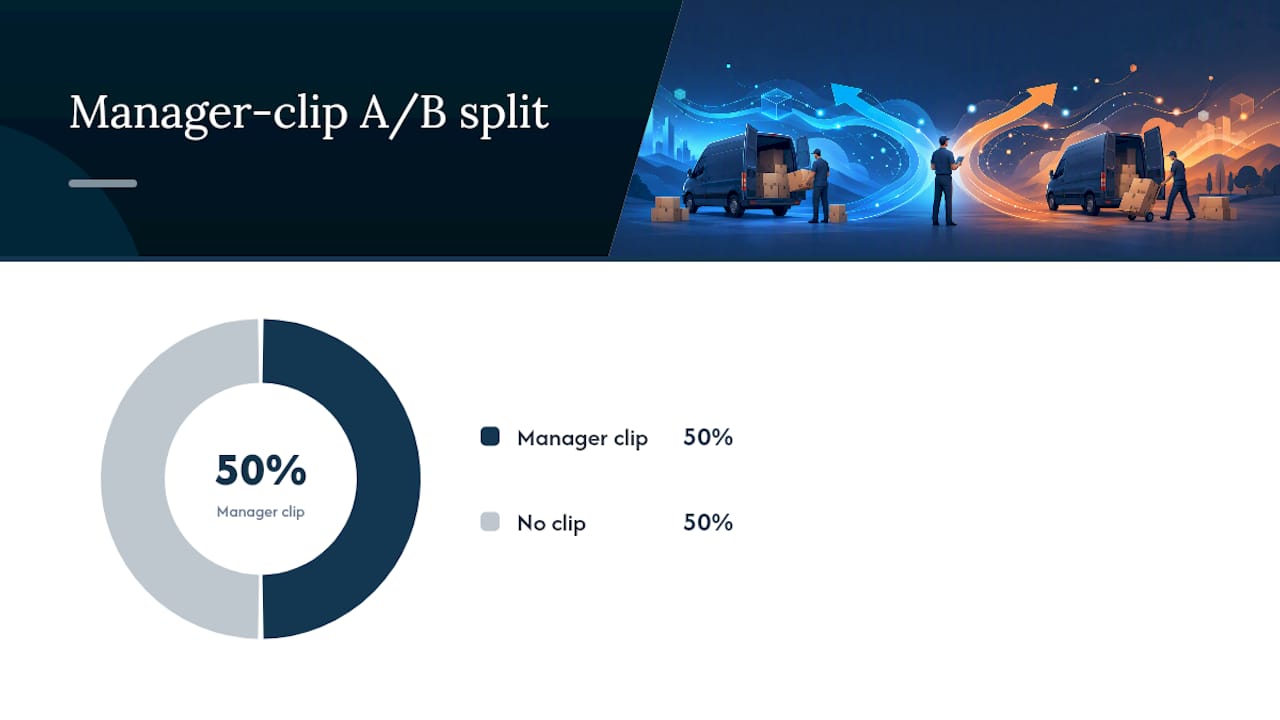
- Send the manager clip to half of scheduled interviews and compare no-show rates.
- Test "Apply in 3 minutes" against "Schedule a call" as your primary CTA.
Pro Tip: Validate any change on a rolling cohort of 10 to 30 applicants before rolling it out fleet-wide. It's a fast, low-risk way to catch a bad script or a confusing CTA before it costs you a week of applications.
A Recruiter's Take on What Actually Moves the Needle
Most execution failures aren't creative failures, they're placement failures: a great video sitting unlinked on a job page nobody scrolls past. Prioritize the manager clip and the myth-buster before anything flashier. Verify every claim with operations first, then pilot with one role, two assets, and two channels before expanding further.
How UCEP Speeds Up Running These Creative Options
Filming the video is half the work. Getting it in front of the right driver, at the right moment, is the other half, and that's where a general job board falls short for FedEx-contracted roles specifically. UCEP is built around this exact gap: it hosts your listings, embeds your role videos directly on the job page, and sends targeted alerts to drivers who match your route type and experience level.
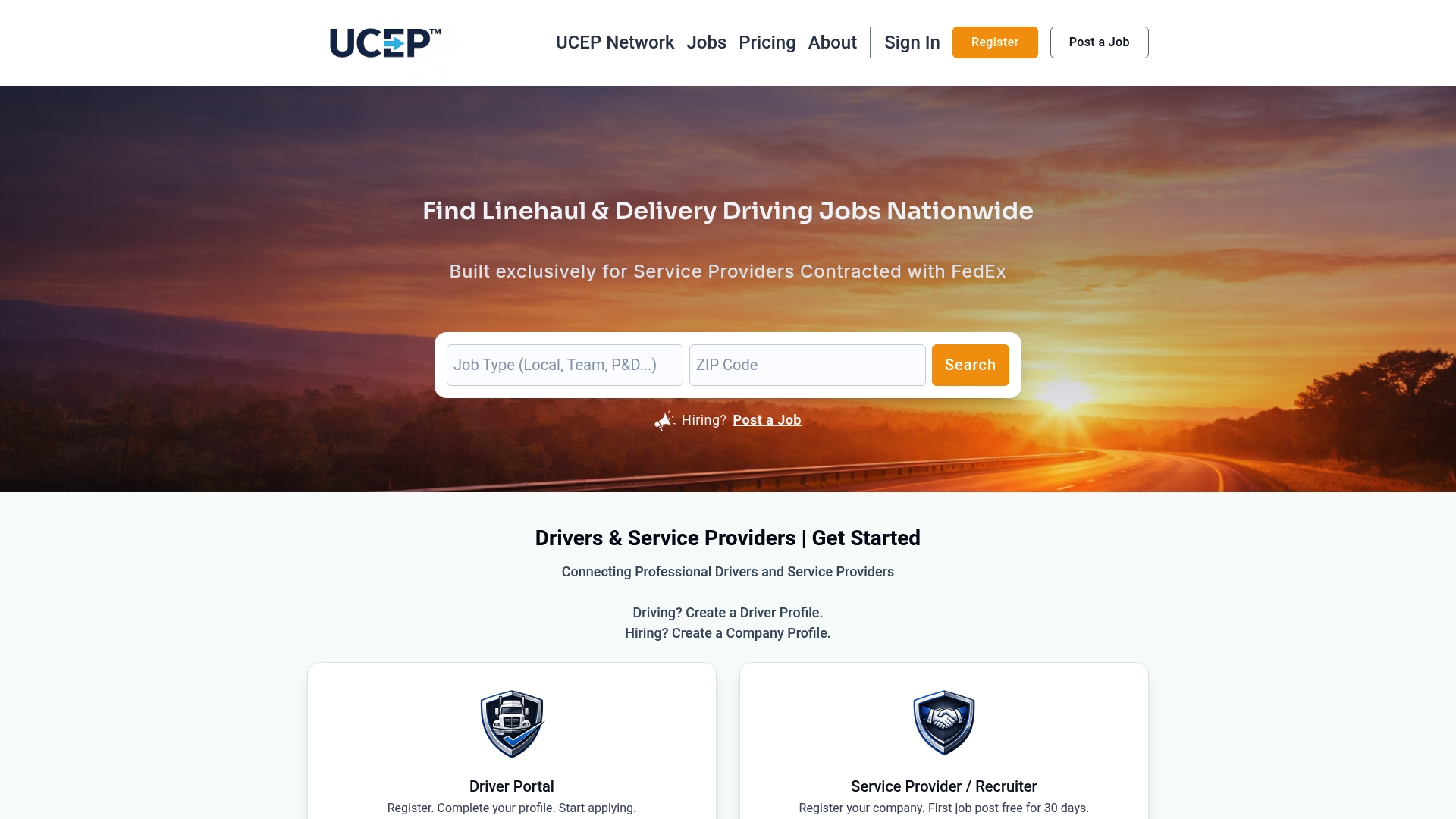
That means the manager clip, the myth-buster, and the role-reality video all live in one place your candidates already trust, backed by a company profile that shows real driver and service provider reviews. Bulk posting and applicant tracking integration mean you're not manually copying links across five different platforms every time you update an asset. If you're ready to put a video-first campaign in front of qualified drivers instead of a general audience, start a company profile on UCEP and connect your first job listing to a role video this week.
Frequently Asked Questions
What are the best creative options for hiring FedEx-contracted drivers? Short, role-specific videos (20 to 90 seconds) covering pre-trip routines, manager introductions, and common myths outperform static job ads and generic brand films for this audience.
How long should recruiting videos be for driver hiring? Between 20 and 90 seconds per clip. Longer videos lose viewers before they reach the answer, and one question per clip keeps each asset focused.
Where should role videos be placed in the hiring process? On the job listing itself, in the first follow-up email, in a pre-interview message, and looping at in-person hiring events, so candidates encounter the same information at every decision point.
How do I know if creative hiring options are working? Watch self-selection rate, interview-to-offer conversion, and 90-day retention. A rise in qualified applications relative to total volume signals the creative is filtering correctly, not just attracting clicks.
Is filming recruiting videos expensive? Not necessarily. A phone camera, a basic lavalier mic, and natural light produce credible results, and unscripted driver interviews often perform better than polished, scripted content.
Sources
- Creative That Converts: What Today’s Drivers Actually Respond To - LACED Agency
- Logistics Hiring with Video Recruitment | Boost Trust & Retention
- Hiring Strategies for Finding and Keeping FedEx Drivers — Route Consultant
Recommended
- FedEx Contractor Recruiting Strategies List for 2026
- Workforce Planning for FedEx Contractors: 2026 Guide
- What It Takes to Succeed as a Team Driver for Service Providers Contracted with FedEx | UCEP Meta description - United Contractor Employment Portal
- Common FedEx Contractor Staffing Challenges in 2026