
Most experienced-driver referral bonuses fall between $1,500 and $5,000, with team referrals often paying more than solo hires. Payment usually arrives in stages tied to milestones like the first load or 21, 30, or 90 days on the job. The single most important step you can take right now: make sure the driver you refer lists your name or driver ID on their application before orientation, and keep a screenshot as proof.
TL;DR:
- Some carriers pay team referral bonuses that exceed solo bonuses, with amounts up to $5,000 paid in installments over 30 to 90 days.
- Payment often depends on the referred driver completing specific milestones, such as delivering the first load or reaching 30, 60, or 90 days of employment.
- A referral only pays out if the applicant lists the referrer's name or driver ID on their application before orientation, with a screenshot as proof being a key safeguard.
- Eligibility rules exclude recent hires or drivers with insufficient CDL experience, and the referred driver generally must remain employed at payout time.
- Tracking referrals, confirming application details, and avoiding third-party staffing organizations can maximize chances of receiving bonuses without disputes.
Table of Contents
- How Do Driver Referral Program Payouts Compare Across Carriers?
- How Do Driver Referral Programs Work?
- Checklist: What to Do Before You Refer Someone
- How UCEP Helps Drivers and Service Providers Verify Referral Terms
- Tactics to Maximize Referral Earnings and Avoid Voided Bonuses
- Legal and Compliance Considerations in Driver Referral Programs
- Impact of Referral Programs on Driver Retention and Performance
- How Do Referral Programs Compare Across Trucking Companies?
- Why Referral Programs Matter for Drivers and Carriers
- Find Referral-Ready Drivers and Verify Program Terms on UCEP
- Sources
- FAQ
How Do Driver Referral Program Payouts Compare Across Carriers?
Bonus structures vary more than most drivers expect. Some carriers front-load a lump sum after the first delivered load. Others stretch payments across 60 or 90 days, betting that a staggered schedule keeps both the referrer and the new hire engaged longer.
| Carrier | Experienced solo bonus | Team bonus | Payout timing | Submission method |
|---|---|---|---|---|
| U.S. Xpress | $1,500 per experienced solo driver | $3,000 per experienced team | After first load delivered | Referrer listed on application |
| J.B. Hunt | Referral amount varies by role and experience | Referral amount varies by role and experience | Payment after 21 days employed/contracted | Documented referral prior to hire |
| PGT Trucking | $5,000 total paid in installments | Not separately listed | Installments scheduled after first load, tied to payroll dates | Application referral field |
| CRST | Staged payments starting at $500 with milestone payments | Not separately listed | Payments at 30, 60, and 90 days | Referral submission at hire |
| Schneider | Not publicly listed | Not publicly listed | Not publicly listed | Contact recruiter |
| PAM Transport | Not publicly listed | Not publicly listed | Not publicly listed | Contact recruiter |
Carriers that publish exact figures, like U.S. Xpress and PGT, give you the clearest picture of what to expect. PGT's $5,000 structure represents one of the larger total payouts in the industry, but it arrives in installments rather than a single check. J.B. Hunt and CRST favor a milestone approach that rewards patience over speed. If you want cash fast, look for a first-load trigger. If you want the biggest total number, staged programs with multiple milestone payments tend to add up to more, even if they take three months to fully pay out.
How Do Driver Referral Programs Work?
A referral program only pays out when specific conditions line up correctly. Miss one, and you can lose a bonus you've technically earned.
Eligibility rules to check first:
- You typically need to be an active, currently employed driver to qualify as a referrer.
- Many programs require the referred driver to meet a minimum CDL-A experience threshold, sometimes excluding recent graduates with under three to twelve months on the road, depending on the carrier.
- Rehire windows matter: a driver who left the company recently may be excluded from referral eligibility for a set period.
- Certain entry-level or training positions may be carved out of the bonus structure entirely.
Payment triggers and timing patterns:
- First-load delivery is the most common trigger, used by U.S. Xpress and PGT Trucking.
- Milestone-based schedules (21, 30, 60, or 90 days) are common among carriers like J.B. Hunt and CRST, sometimes splitting payment across multiple checks.
- Both the referrer and the referred driver often need to remain actively employed on the payout date, not just at the time of hire.
Documentation rules that trip people up:
- The referred applicant must list your name or driver ID in the correct field, usually before orientation begins.
- Some programs won't accept referrals submitted after the applicant has already started the hiring process.
- Fine print often excludes stacking referral bonuses with other promotions, and disputes typically route through a recruiter or HR contact rather than automatically resolving.
Checklist: What to Do Before You Refer Someone
Getting the bonus is less about persuasion and more about process. Follow these steps in order:
- Confirm eligibility first. Check the driver's experience level and intended role against the carrier's published requirements before you spend time recruiting them.
- Get your name on the application. Have the referred driver enter your full name and driver ID in the referral field before they submit, and before orientation starts.
- Capture proof immediately. Take a screenshot of the submitted application showing your name in the referrer field, and note the recruiter's name and the date.
- Log it in a simple tracker. A basic spreadsheet with the applicant's name, application date, and recruiter contact prevents lost referrals when you're juggling more than one.
- Follow up at each milestone. Check in around the first load or the 30/60/90-day mark, and escalate to the recruiter directly if a payout doesn't appear on schedule.
Pro Tip: Screenshot the confirmation page the moment the application is submitted. Referral disputes almost always come down to proving the referrer field was filled out correctly, and a dated screenshot settles the argument fast.
How UCEP Helps Drivers and Service Providers Verify Referral Terms
UCEP is built specifically for Service Providers contracted with FedEx and the drivers who work with them, not for the trucking industry at large. That focus matters when you're trying to verify referral program details or find candidates worth referring.
Here's how the platform's features apply directly to referral research:
- Employer profiles let you review a Service Provider's posted terms, pay structure, and openings before you refer anyone.
- Terminal directories help you match a referred driver to a specific location and route type, which matters when programs restrict bonuses by terminal.
- Driver reviews give you a second opinion on whether a company's referral promises match reality.
- Built-in applicant tracking helps Service Providers document who referred whom, reducing the disputes that come from missing paperwork.
For Service Providers hiring through team driver recruiting strategies, a niche platform narrows the search to candidates who actually fit FedEx-contracted roles.
Tactics to Maximize Referral Earnings and Avoid Voided Bonuses
A few habits separate drivers who collect every bonus they're owed from those who lose credit over avoidable mistakes.
- Target team pairings first. Team bonuses frequently exceed solo bonus amounts, so referring a pair of drivers who already work together can multiply your payout per hire.
- Source candidates where drivers already gather. Trucking forums, CDL training programs, and industry job boards tend to produce more qualified leads than cold outreach.
- Never let a referral route through a third-party staffing agency. Doing so commonly voids referral credit entirely, even if you made the original introduction.
- Track every referral in one place. A spreadsheet with application date, recruiter name, and milestone dates keeps multiple referrals from falling through the cracks. Reviewing recruiting metrics can also help you spot which sourcing channels actually convert.
Legal and Compliance Considerations in Driver Referral Programs
Referral bonuses are a form of employee compensation, and that status carries real implications. Bonuses paid to W-2 employees are generally treated as taxable income and typically show up on a driver's paycheck with standard withholding applied, rather than arriving as a separate, tax-free gift.
Carriers also build anti-fraud language into their referral terms for good reason. Programs commonly prohibit self-referrals, prevent a driver from referring an immediate family member already employed at the company, and reserve the right to deny a bonus if the referral relationship can't be verified. If you're unsure whether a referral qualifies, ask the recruiter directly rather than assuming.
Equal employment considerations apply too. A referral program can't be used, intentionally or not, as a workaround for discriminatory hiring practices. Reputable carriers apply the same background check, drug testing, and CDL verification standards to referred candidates as they do to any other applicant. A referral gets someone's application noticed faster. It doesn't exempt them from standard hiring screens.
Contract drivers working under a Service Provider arrangement face a slightly different picture than direct W-2 employees. Independent contractor referral arrangements can carry different tax treatment, and the terms should be spelled out clearly in the Service Provider's own referral policy rather than assumed to mirror a traditional employer's program. When in doubt, read the written terms before you refer anyone, not after.

Impact of Referral Programs on Driver Retention and Performance
Referred drivers tend to stick around longer than drivers hired through cold applications or job boards alone, largely because someone who already works at the company has effectively pre-vetted them for fit. That pre-vetting cuts both ways: a driver's willingness to put their name on a referral means they're less likely to refer someone who will wash out in the first 90 days, since a quick exit reflects on the referrer too.
Carriers lean on this dynamic deliberately. Staged payout schedules, like the 30/60/90-day structures used by CRST, aren't just a way to spread out cost. They're designed to keep the new hire engaged through the riskiest early window of employment, when most driver turnover happens. A driver who knows their referrer has a financial stake in their success also tends to get more informal mentorship during onboarding, which shows up in fewer early-tenure safety incidents and smoother route assignments.
Performance benefits show up too, though less dramatically than retention gains. A referred driver arrives with a rough idea of company culture, equipment standards, and route expectations, which shortens the ramp-up period compared to a stranger walking in cold. None of this makes referral programs a guaranteed fix for turnover. But the incentive structure aligns interests in a way that generic recruiting ads simply can't replicate.
How Do Referral Programs Compare Across Trucking Companies?
Not every carrier treats referrals the same way, and the differences say something about each company's hiring priorities. Carriers offering the largest total bonuses, like PGT's $5,000 structure, tend to be competing hardest for experienced CDL-A talent in a tight labor market. Spreading that bonus across installments protects the carrier from paying out to someone who quits in week two, while still making the total number attractive enough to motivate active recruiting from current drivers.
Carriers with milestone-based timing, like J.B. Hunt's 21-day trigger, are optimizing for a faster signal that the hire is sticking. That shorter window suits carriers with high-volume freight networks where onboarding speed matters more than a multi-month proof period.
Outside trucking, referral mechanics look structurally similar but move faster. Rideshare platforms like Lyft pay bonuses within one to two pay cycles and require the referral code entered at initial application, a much shorter validation window than trucking's multi-week milestones. The core lesson carries across industries: the company decides what behavior it wants to reward, and the payout schedule is built to reinforce exactly that.

Why Referral Programs Matter for Drivers and Carriers
Carriers pay referral bonuses because they're a cheaper, faster path to a qualified hire than most recruiting channels. A current driver vouching for a candidate carries more built-in trust than a job ad ever will, and that trust translates into fewer bad hires down the line.
The trend worth watching is the shift toward larger team bonuses and staged payouts. Carriers are betting on retention, not just placement, which means your referral strategy should shift too. Referring a proven team pairing, and staying engaged through the full payout window rather than walking away after submission, is where the real money sits.
— Aaron
Find Referral-Ready Drivers and Verify Program Terms on UCEP
Some specialized platforms offer access to details that generic job boards skip. For those trying to fill CDL-A team, solo, linehaul, or pickup and delivery roles, or drivers trying to figure out which employer's referral terms actually match what they advertise, searching scattered company pages can waste time.
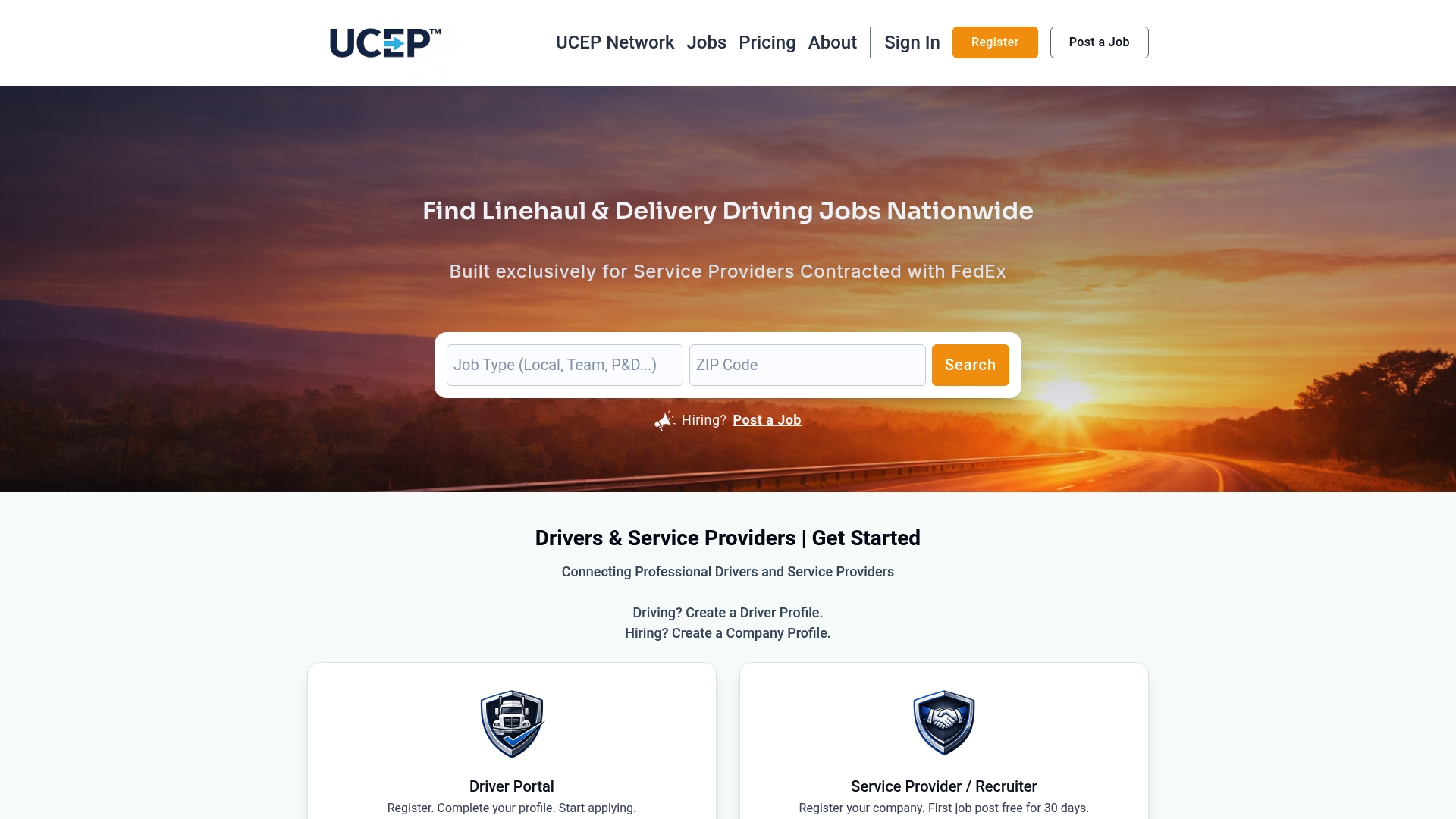
Certain platforms centralize employer profiles, terminal directories, and driver reviews specific to niche markets, allowing users to check a Service Provider's reputation and openings in one place instead of piecing it together from forums and word of mouth. Some providers use built-in applicant tracking systems that document referrals, which can help reduce disputes that void otherwise valid bonuses. Research backs this up: targeted job boards tend to shorten time-to-first-load compared to broad-audience recruiting sites, which matters directly if your bonus is tied to that first-load milestone.
Browse open driver jobs and employer profiles on UCEP and start narrowing down which referral-ready opportunities actually fit your network.
Sources
- Driver Referral - U.S. Xpress Inc.
- Truck Driver Referral Bonus Program | Drive J.B. Hunt
- Driver Referral Bonus - PGT Trucking
- Driver referral bonuses - Lyft Help
FAQ
Is there a $500 Uber referral code available?
Referral bonus amounts vary by region and platform, and rideshare programs like Lyft's require entering a code at the time of the initial application rather than after the fact. Check the specific platform's current program page for the exact amount active in your area.
Which app gives $100 per referral?
Referral payout amounts change frequently and vary by market, so there's no single fixed figure across all rideshare or delivery apps. Confirm the current bonus directly on the platform's official referral or help page before referring anyone.
What CDL job can I make $3,000 a week?
High-mileage team driving roles, specialized freight (like tanker or oversized loads), and owner-operator positions tend to offer the highest weekly earning potential in trucking, though actual pay depends on experience, route, and carrier. This figure reflects strong-performing roles rather than typical entry-level pay.
Does Walmart offer a $110,000 salary to new drivers?
Some large retail and logistics carriers advertise total compensation packages in that range for experienced Class A drivers, but figures like this typically reflect top earners with seniority, not guaranteed starting pay for new hires. Always verify current compensation details directly with the employer's recruiting page.
How do I make sure my referral bonus doesn't get denied?
Confirm the referred driver lists your name or driver ID in the correct application field before orientation begins, and keep a dated screenshot as proof. Checking employer profiles and driver reviews on a platform like UCEP before referring can also help you verify a company's actual payout track record.