
Most FedEx linehaul drivers earn between about $135 and $220 per day, or roughly from the mid-thirty thousands to the mid-fifty thousands a year, depending on route density, state, and which contractor runs the settlement. Pay varies this much because linehaul drivers work for independent Service Providers (ISPs) under contract with FedEx, not FedEx corporate itself, and each ISP builds its own pay model from weekly settlement revenue. The sections below show you how to convert any posted rate into an hourly number and what to ask before you sign.
TL;DR:
- Pay varies widely based on route length, work hours, and whether contractors pay per mile, daily rate, or hourly, affecting real hourly earnings.
- Most drivers earn between $35,000 and $57,200 annually, but actual pay depends heavily on route density, state laws, and contractor business health.
- Confirm whether minimum miles are guaranteed weekly or monthly, and ask for written policies on pay, benefits, and fuel overages before accepting an offer.
- A driver’s effective hourly rate can drop significantly if routes take longer than expected, so ask about average run times during negotiations.
- Review all deductions, benefits, and pay structures carefully, and verify contractor pay claims with real settlement reports to avoid surprises.
Table of Contents
- Typical FedEx Linehaul Pay Ranges by Day, Hour, and Year
- How FedEx Linehaul Pay Is Structured
- Who Actually Pays You: Contractor Settlements vs. FedEx Corporate
- Why Linehaul Pay Differs So Much by State
- Converting Posted Pay Into a Real Hourly Rate
- Benefits, Deductions, and What Your Real Take-Home Looks Like
- Checklist Before You Accept a Linehaul Offer
- Evaluating and Negotiating a FedEx Linehaul Offer
- What Surprises Most Drivers About Linehaul Pay
- Find Verified FedEx Linehaul Jobs on Ucep
- Sources
Typical FedEx Linehaul Pay Ranges by Day, Hour, and Year
Daily flat rates for linehaul work typically run $135 to $220 per day, with the spread driven mostly by route length and how many hours the run actually takes. A 10-hour run at $180 a day works out to $18 an hour before deductions. A 6-hour run at the same $180 rate pays closer to $30 an hour. That gap is the single biggest source of confusion for drivers comparing job postings.
Annual pay tends to cluster into three bands:
- Entry-level or shorter routes: roughly $35,000 to $42,000 a year
- Median linehaul pay: roughly $42,000 to $50,000 a year
- Top-earner routes (longer hauls, team splits, or dense freight lanes): $50,000 to $57,200 or higher
The federal government classifies most linehaul work under heavy and tractor-trailer truck driver codes in the Occupational Employment and Wage Statistics program, which tracks broader trucking pay rather than FedEx-specific contractor rates. That distinction matters: BLS numbers give you a general trucking benchmark, but your actual paycheck depends entirely on the ISP you work for and the settlement math behind your route. User-submitted pay reports on sites like Glassdoor for the FedEx Linehaul Driver role tend to echo this same wide range, which tells you the variation is real and not a fluke of one bad data source.
How FedEx Linehaul Pay Is Structured
Contractors build linehaul pay around a handful of models, and knowing which one you're being offered changes how you should read the number on the job post.
- Per-mile pay. Solo drivers and team drivers get separate per-mile rates, with team rates often set lower per person since the miles get split between two drivers covering more ground per day.
- Flat daily rate. A fixed dollar amount per run regardless of exact hours, common on set relay routes.
- Hourly pay. Less common in linehaul but used by some ISPs, especially for shorter regional runs.
- Guaranteed minimum miles. Many contracts guarantee a floor, commonly 1,800 miles for solo drivers and 4,000 for team drivers per week, so pay doesn't collapse during a slow freight week.
Team splits typically divide per-mile revenue evenly, then each driver pays their own tax and deduction share separately as employees of the ISP. You can see the actual math behind a team driver pay split worked out in detail if a team offer is on the table.
Pro Tip: Ask specifically whether the guaranteed minimum applies per week or per pay period. A monthly guarantee can hide a genuinely bad week that a weekly guarantee would catch.
Who Actually Pays You: Contractor Settlements vs. FedEx Corporate
FedEx doesn't cut your paycheck. FedEx pays a weekly settlement to the ISP that holds your linehaul contract, and that ISP covers fuel, insurance, equipment, and driver payroll out of that settlement before keeping any profit. Drivers are almost always W-2 employees of the ISP, not FedEx, which is why two drivers running similar routes for different contractors can see noticeably different pay and benefits.
Industry guidance puts payroll allocation at roughly 38% to 52% of a contractor's annual revenue. That range explains a lot:
- A tightly run ISP with efficient routes can push more of that revenue toward driver wages.
- A struggling contractor with high turnover or old equipment often has less room to pay competitively.
- Your offer reflects that specific contractor's business health more than any FedEx-wide pay scale.
Many ISPs now run payroll through platforms like FleetWage that pull settlement data directly and calculate per-stop tiers, deductions, and bonuses automatically, which cuts down on manual payroll errors.
Why Linehaul Pay Differs So Much by State
State pay gaps in linehaul work come down to three forces: state minimum wage floors, regional cost of living, and how competitive the local contractor market is for drivers.
- Higher-paying regions tend to include the Northeast corridor, California, and parts of the Pacific Northwest, often landing above $190 a day for comparable routes.
- Lower-paying regions cluster in parts of the South and rural Midwest, sometimes closer to $135 to $160 a day for similar mileage.
- Wage law differences matter too. States with stronger overtime and contractor classification protections tend to see tighter, more consistent pay floors.
State variation in median annual pay often has more to do with local labor law and cost of living than with any FedEx corporate policy. Before comparing two offers in different states, check your state's overtime rules and independent contractor classification standards, since those set the floor an ISP has to pay regardless of route.
Converting Posted Pay Into a Real Hourly Rate
A daily or per-mile number on a job post only means something once you convert it. Three quick examples show how.
- Flat daily rate: $180/day at 9 hours = $20/hour. Same $180 at 12 hours = $15/hour. Always ask the average run time, not the best-case scenario.
- Per-mile solo vs. team: A solo route paying $0.62/mile at 500 miles nets $310 for the day. A team route at $0.42/mile per driver covering 900 miles nets $378 per driver, split from a longer combined run.
- Per-stop with tiers: Some relay-style runs pay a base per-stop rate plus a bonus tier after a stop threshold. A route hitting 40 stops at $4.25 base plus a $2 bonus per stop over 35 adds $10 to that day's total.
Benefits, Deductions, and What Your Real Take-Home Looks Like
Gross pay is only half the picture. Contractor-provided benefits vary widely, so ask what's actually included before comparing two offers side by side.
- Health insurance availability and contractor cost share
- Retirement plan options, if any
- Fuel and vehicle maintenance deduction policy, since some ISPs pass through overage costs
- 6th-day and holiday pay treatment, often used as a peak-season incentive rather than a year-round rate
Pro Tip: Ask for a written breakdown of deductions before your first run, not after your first paycheck. A sample settlement report tells you more than any verbal promise.
Checklist Before You Accept a Linehaul Offer
- What's the guaranteed minimum, and is it weekly or monthly?
- How is overtime calculated, especially on per-stop or flat-rate routes?
- What's the payroll schedule, and is it consistent week to week?
- Who covers fuel overages, and is there a written policy?
- What benefits are included, and starting when?
- Who pays for training, and is it deducted from early paychecks?
Red flags include vague settlement explanations, pay rules that shift after you're hired, or any contractor unwilling to show you a sample settlement report from an existing driver.
Evaluating and Negotiating a FedEx Linehaul Offer
Once you've converted the posted rate into an hourly number, negotiate specifics rather than a general "more pay" request.
- Ask directly for a guaranteed minimum mileage floor in writing, not verbally promised.
- Request a 6th-day premium rate before peak season starts, not after you've already worked one.
- Get the fuel deduction policy in writing so a slow month doesn't come as a surprise.
- Confirm whether training is paid and at what rate.
If you're weighing multiple offers, FedEx driving opportunity requirements are worth confirming first, since eligibility gaps can eliminate an otherwise strong offer. Ucep lists verified openings from contracted Service Providers, including current listings from Four Leaf Recruiting, so you can compare real postings side by side instead of relying on secondhand pay rumors.
What Surprises Most Drivers About Linehaul Pay
The biggest surprise isn't the pay rate itself. It's how much effective hourly pay swings based on route hours nobody mentioned during the interview. A driver who assumes a flat $190 rate is "$190" often discovers it's closer to $15 an hour once a longer-than-expected run gets factored in. Ask about average run time and benefit gaps before you ask about the headline number.
— Aaron
Find Verified FedEx Linehaul Jobs on Ucep
Comparing pay rates only gets you so far if you can't tell which contractors are actually offering what they claim. This job board is focused on FedEx-contracted Service Providers, with listings tied to ISPs hiring for linehaul, CDL-A, or pickup and delivery roles.
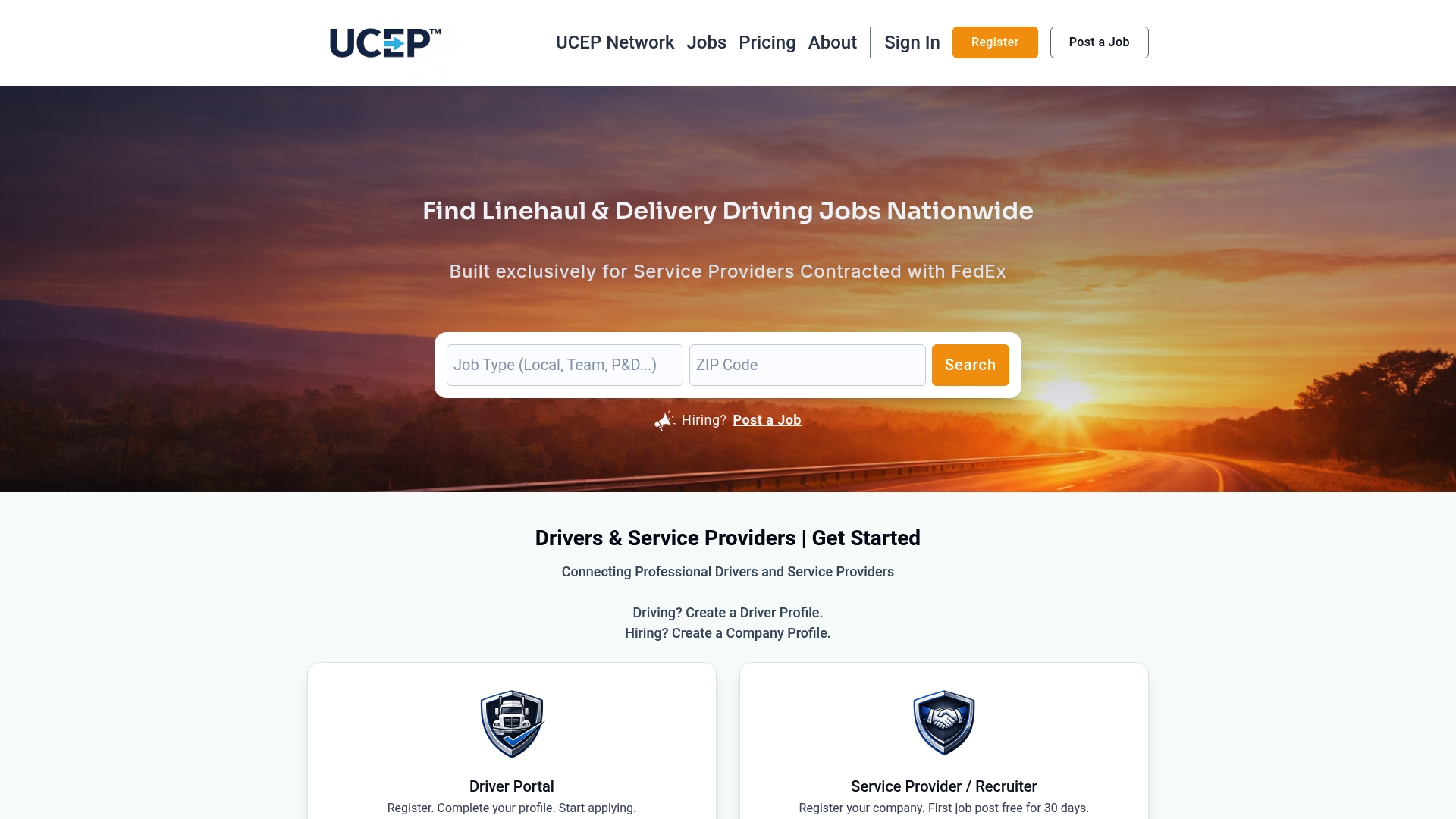
The site offers filtered job search by role and location, employer directories for researching contractors, and driver-submitted reviews highlighting pay and benefits experiences. Browse open linehaul roles like the current Revolution Recruiting LLC listings, or check the Q&A page if you want specific answers about a contractor's pay policy before you apply.