
Contractor driver pools are defined as groups of independent or contract drivers that fleet operators engage on a flexible basis to meet shifting freight demand. Understanding why contractor driver pools matter is the first step toward building a logistics operation that can absorb volume spikes, cover unexpected absences, and control labor costs without sacrificing service quality. For FedEx service providers managing linehaul, CDL-A, and pickup and delivery routes, these pools are not a backup plan. They are a core capacity tool.
Why contractor driver pools matter for operational resilience
Freight demand does not move in a straight line. Volumes spike around peak shipping seasons, drop during slow periods, and shift without warning when weather or equipment failures disrupt planned routes. A contractor driver pool gives you a ready group of qualified drivers to call on without the fixed cost of keeping those drivers on payroll year-round.

The most effective fleets use a tiered capacity approach where internal drivers handle baseline volume and contractor pools absorb overflow. Meeting 80–85% of peak demand through internal planning and contractor pools reduces the need for emergency contingency options. That matters because contingency pools carry the highest cost in any capacity plan and signal structural problems when used frequently.
Here is what a well-managed contractor driver pool solves in practice:
- Delivery delays. You fill open routes the same day instead of scrambling for days.
- Seasonal volume spikes. You scale up in october and november without hiring permanent staff you will not need in january.
- Driver absences. You cover call-outs without pulling other drivers into double shifts.
- Route expansion. You test new service areas without committing to full-time headcount.
- Customer experience. Consistent on-time delivery protects your service provider contract and your reputation.
Pro Tip: Plan your contractor pool size around your top 15% volume weeks, not your average week. Pools sized for average demand fail exactly when you need them most.
Fleets that build internal driver pipelines report lower recruiting and onboarding costs alongside better operational resilience. The logic is straightforward: a driver who already knows your routes, your equipment, and your standards costs far less to activate than a stranger hired through a last-minute posting.
What are the financial impacts of contractor driver pools?
The cost comparison between 1099 contractor drivers and W-2 employee drivers is more complex than it looks on a payroll report. Contractor pools appear cheaper on the surface. The reality includes hidden costs that erode that advantage if you are not managing them carefully.
| Financial factor | 1099 contractor pool | W-2 employee driver |
|---|---|---|
| Base labor cost | Lower per mile or per day | Higher fixed salary or hourly rate |
| Benefits cost | None paid by fleet | $15,000–$25,000 annually per driver |
| Misclassification risk | High if not managed | None |
| Turnover cost | Variable, often high | Lower with good retention |
| Workers' comp liability | Shared or transferred | Employer bears full cost |
| Scheduling flexibility | High | Lower |
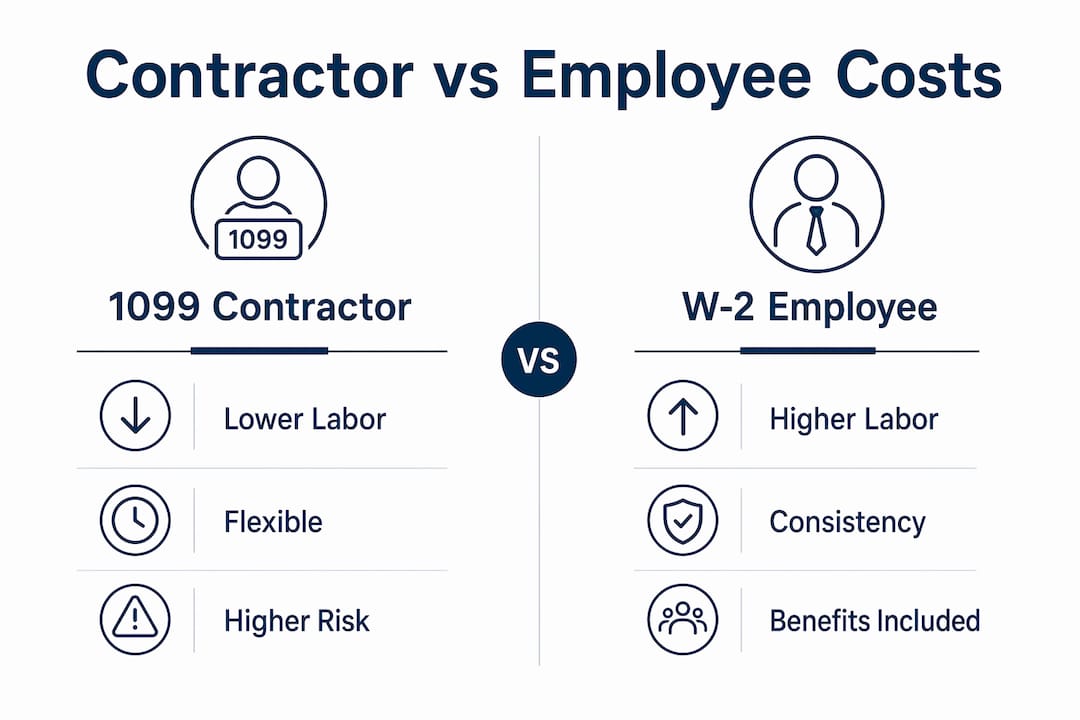
Benefits for company drivers add $15,000–$25,000 annually but reduce turnover and improve service consistency. That means the W-2 model costs more upfront and pays back through stability. The 1099 model costs less upfront and carries legal and quality risks that can cost far more if mismanaged.
The smartest financial structure in 2026 is a hybrid model. You maintain a core group of W-2 drivers for your baseline routes and use a contractor pool for overflow. This approach combines cost-efficient flexibility with operational stability, and 2026 fleet trends confirm that operators using this model improve both retention and freight fulfillment rates.
Pro Tip: Build a total labor cost model before deciding your W-2 to contractor ratio. Include recruiting, onboarding, benefits, turnover, and misclassification insurance. The number that looks cheaper on day one rarely looks the same at year end.
How do legal and compliance risks affect contractor driver pools?
Misclassification is the single largest legal risk in contractor driver pool management. If a state or federal agency determines your 1099 contractors are actually employees, you face back taxes, penalties, workers' compensation claims, and personal injury liability. States like Massachusetts apply the ABC test, which sets a high bar for classifying a worker as an independent contractor.
Misclassification liability can trigger audits, insurance premium spikes, and civil claims. The risk is not theoretical. Regulatory scrutiny of driver classification has increased in 2026 across multiple states, and FedEx service providers operating under contracted agreements face additional layers of compliance review.
Key compliance practices that reduce your exposure include:
- Document the working relationship. Written contracts, independent contractor agreements, and route assignment records all support your classification defense.
- Avoid behavioral control. If you dictate hours, require specific equipment, or mandate uniforms, regulators may view the relationship as employment.
- Use leasing partners as employers of record. Professional leasing partners transfer liability for payroll taxes and workers' compensation while strengthening your audit defense.
- Audit regularly. Compliance is not a one-time setup. Review contractor agreements and working practices at least twice per year.
- Stay current on state law. Classification rules vary by state and change frequently. What is compliant in Texas may not be compliant in California.
Labor classification rules emphasize the actual working relationship over the title on a contract. The label "independent contractor" does not protect you if the day-to-day reality looks like employment.
Best practices for integrating contractor driver pools effectively
Building a contractor pool that actually performs requires more than posting a job and collecting applications. Drivers choose which fleets to work with based on pay reliability, freight consistency, and how they are treated. You compete for contractor loyalty the same way you compete for customer loyalty.
-
Recruit through niche channels. General job boards attract high volume and low fit. Niche job boards built for specific driver types deliver candidates who already understand the role and the network. For FedEx service providers, this means targeting platforms where CDL-A and delivery drivers actively search for FedEx-related work.
-
Set clear expectations upfront. Drivers who know exactly what routes, pay rates, and settlement timing to expect are more likely to stay available. Ambiguity drives contractors to fleets that communicate clearly.
-
Pay on time, every time. Transparent settlement timing is one of the top factors contractors use to evaluate fleet partners. Late or inconsistent pay is the fastest way to lose a contractor to a competitor.
-
Maintain consistent freight access. Contractors who sit idle lose income. If your pool drivers cannot count on regular route availability, they will prioritize other clients. Build your pool around drivers you can actually keep active.
-
Support driver performance. Provide access to maintenance resources, route information, and operational support. Fleets that treat contractors as partners rather than vendors gain a recruiting advantage in tight labor markets.
Pro Tip: Treat your top contractor drivers the way you treat your best W-2 employees. Recognize reliability, communicate proactively, and give them first access to preferred routes. Loyalty in a contractor pool is earned, not assumed.
Continuous evaluation of driver performance and ongoing compliance audits keep your pool operating at a high standard. A pool that is not actively managed degrades over time as your best drivers migrate to better-managed fleets.
Key Takeaways
Contractor driver pools are the most practical tool fleet managers have for balancing cost, flexibility, and service reliability without overcommitting to fixed labor.
| Point | Details |
|---|---|
| Pools solve capacity gaps | Contractor pools fill volume spikes and absences without adding permanent payroll. |
| Hybrid models outperform | Combining W-2 core drivers with 1099 contractors improves both cost control and retention. |
| Misclassification is a real risk | Document working relationships and audit contractor agreements at least twice per year. |
| Loyalty must be earned | Transparent pay, consistent freight, and operational support keep top contractors available. |
| Niche recruiting pays off | Targeted job boards deliver better-fit candidates than general platforms for specialized driver roles. |
The real cost of treating contractors as disposable
I have watched service providers build contractor pools the wrong way more times than I can count. They post a generic listing, onboard whoever applies, and then wonder why their pool evaporates the moment volume picks up and every other fleet in the region is calling the same drivers.
The fundamental mistake is treating contractors as a cost line rather than a capacity asset. Drivers are the core asset of any logistics operation. Mismanaging their engagement destroys operational capacity faster than any external disruption. A fleet that loses its best contractors during a peak period does not just miss deliveries. It risks losing its service contract entirely.
The operators I have seen succeed long-term do one thing differently. They invest in the contractor relationship before they need it. They pay on time when volume is low. They communicate route changes early. They give contractors a reason to pick up the phone when the fleet calls at 5:00 AM on a Monday. That kind of reliability is not built overnight, and it cannot be purchased with a higher per-mile rate alone.
The other mistake I see is ignoring compliance until there is a problem. Misclassification audits do not come with advance notice. By the time a state agency is reviewing your contractor agreements, the cost of getting it wrong is already significant. The fleets that manage this well treat compliance as an ongoing practice, not a one-time checkbox.
— Aaron
How Ucep helps you build a stronger contractor driver pool
Ucep is built specifically for FedEx service providers who need qualified drivers without the noise of general job boards. Whether you are filling CDL-A linehaul seats, building a team driver roster, or adding pickup and delivery contractors, Ucep connects you with drivers who are already looking for FedEx-related work.
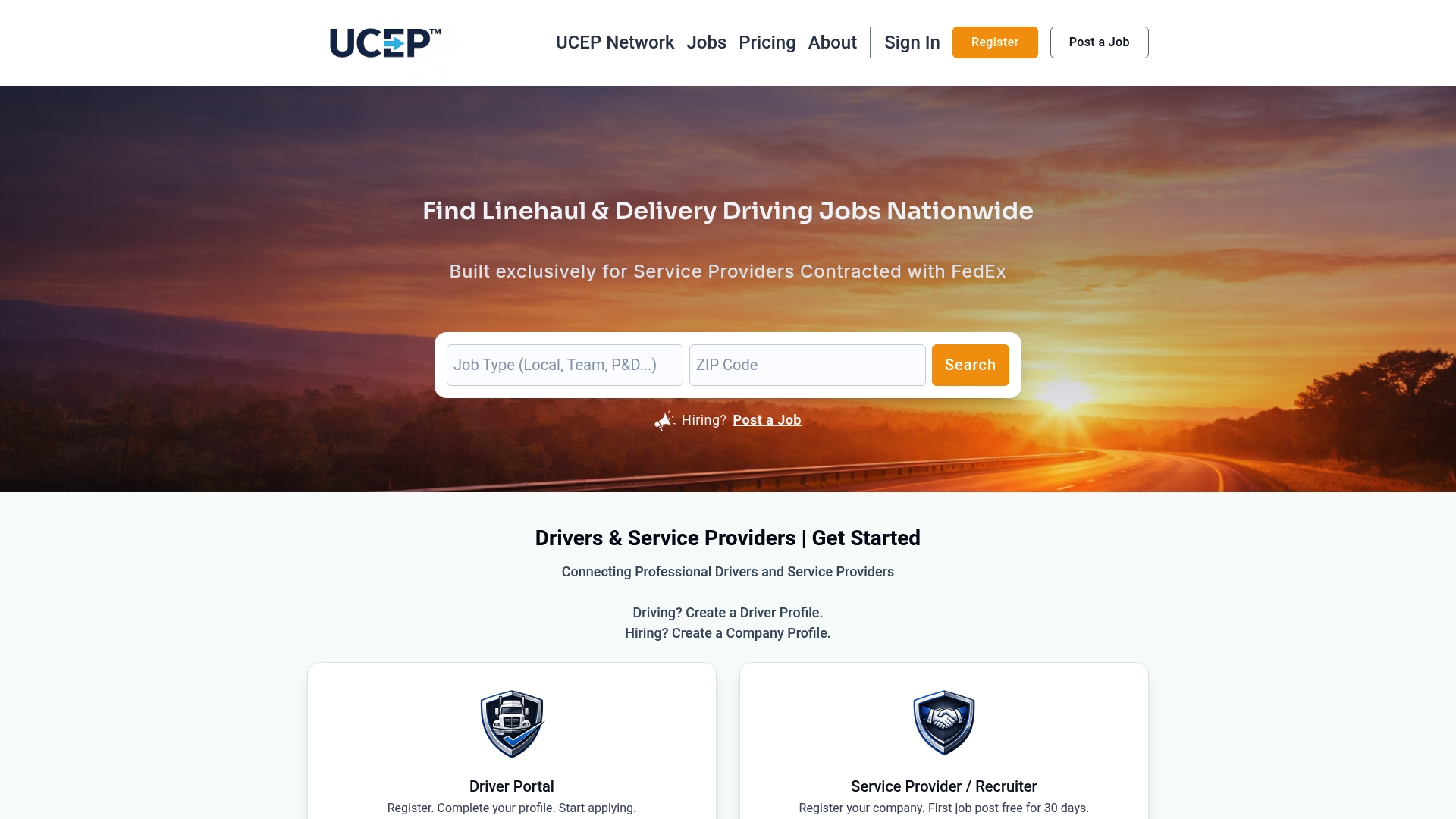
The Ucep platform gives you access to a focused network of drivers and service providers operating within the FedEx system. You can browse the Ucep network to find active service providers and review how other operators have built their driver pools. For fleet managers ready to post open roles, the service provider reviews section shows how your peers are attracting and retaining contractor drivers. Ucep removes the guesswork from contractor pool recruiting and puts qualified candidates in front of the right operators.
FAQ
What are contractor driver pools?
Contractor driver pools are groups of independent or contract drivers that fleet operators engage on a flexible basis to cover variable freight demand. They function as a scalable capacity resource separate from a fleet's permanent W-2 workforce.
Why use contractor pools instead of hiring full-time drivers?
Contractor pools give you flexibility to scale capacity up or down without fixed payroll commitments. They are most effective when combined with a core group of W-2 drivers in a hybrid staffing model.
What is the biggest legal risk with contractor driver pools?
Misclassification is the primary legal risk. If regulators determine your contractors are actually employees, you face back taxes, penalties, and workers' compensation liability under state and federal law.
How do I keep contractor drivers loyal to my fleet?
Transparent settlement timing, consistent freight access, and operational support are the top factors that drive contractor loyalty. Fleets that treat contractors as partners retain them longer than fleets that compete on pay rate alone.
How does Ucep support contractor driver pool management?
Ucep is a dedicated job board and recruiting platform built for FedEx service providers. It connects fleet managers with qualified CDL-A and delivery drivers who are actively seeking FedEx-related opportunities nationwide.
Recommended
- What It Takes to Succeed as a Team Driver for Service Providers Contracted with FedEx | UCEP Meta description - United Contractor Employment Portal
- Why Targeted Job Boards Deliver Better ROI for Service Providers Hiring Drivers - United Contractor Employment Portal
- How UCEP Helps FedEx Service Providers Find Better Driver Candidates - United Contractor Employment Portal