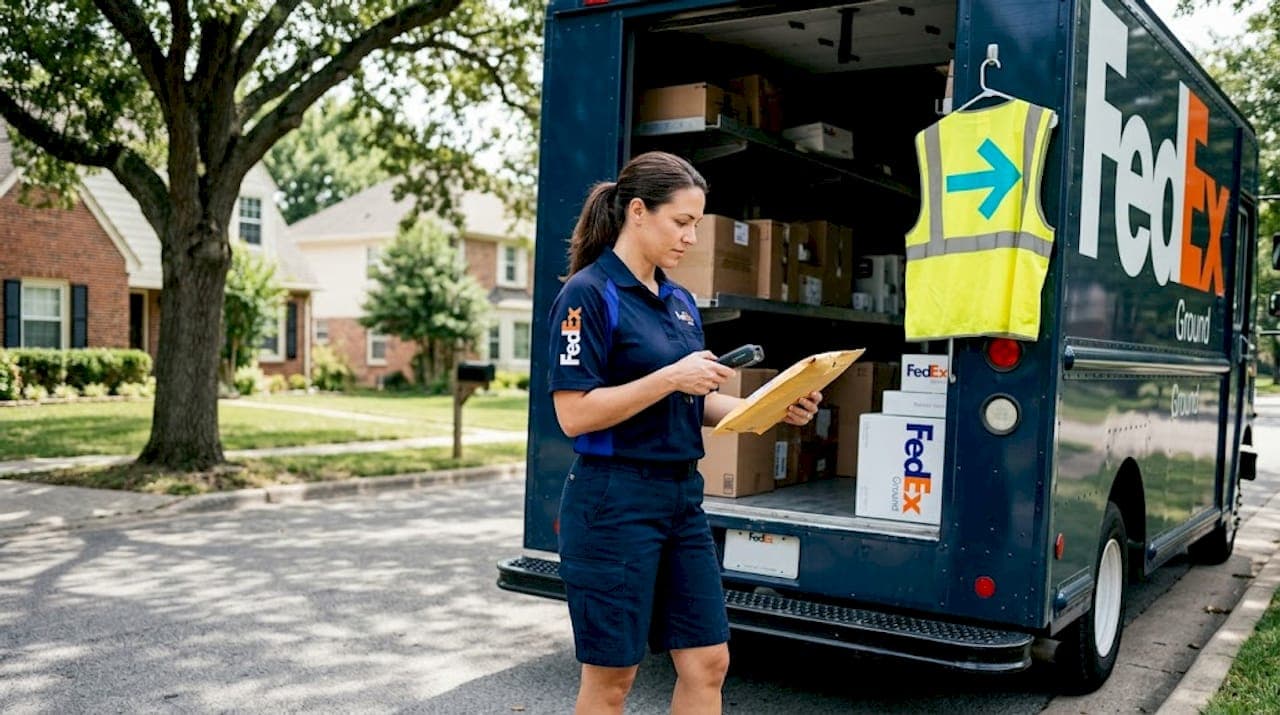
FedEx offers more than one way to get behind the wheel, and the differences between roles go well beyond vehicle size. The types of FedEx driving positions range from last-mile parcel delivery to long-haul freight runs, each with distinct pay structures, scheduling patterns, and employment models. Before you apply, knowing how these roles differ can save you from accepting a position that does not fit your lifestyle, CDL status, or income goals. This guide breaks down every major FedEx driver role so you can compare your options clearly.
Table of Contents
- Key takeaways
- 1. What to consider before choosing a FedEx driving position
- 2. FedEx Express delivery driver
- 3. FedEx Ground delivery driver
- 4. FedEx Courier and Swing driver
- 5. FedEx Freight city driver
- 6. FedEx Freight linehaul driver
- 7. FedEx Freight and Ground: contractor model distinctions
- My take on choosing the right FedEx driving role
- Find your next FedEx driving opportunity with Ucep
- FAQ
Key takeaways
| Point | Details |
|---|---|
| Multiple distinct roles exist | FedEx driving careers span last-mile delivery, freight city routes, linehaul, and swing coverage. |
| Contractor vs. employee status matters | FedEx Ground drivers often work under contractor models; FedEx Express drivers are typically corporate employees. |
| CDL is not always required | Many last-mile jobs use non-CDL vehicles, while freight positions require CDL A or B. |
| Pay varies significantly by role | FedEx Freight city drivers earn $28 to $38 per hour; Courier/Swing drivers start near $24.81 per hour. |
| Role fit depends on lifestyle | Your schedule preferences, physical readiness, and career goals should guide which position you pursue. |
1. What to consider before choosing a FedEx driving position
Not every FedEx driving job is structured the same way. Before comparing specific roles, you need to understand a few key factors that will affect your daily work life.
Employment type. Contractor vs. corporate status is the biggest structural difference across FedEx roles. FedEx Express drivers are typically corporate employees with company benefits. FedEx Ground drivers usually work under a Contractor Service Provider or Independent Service Provider model, meaning your actual employer is a contracted business, not FedEx directly.
CDL requirements. CDL needs vary widely across FedEx driving jobs. Tractor-trailer freight positions generally require a CDL A or B. Many last-mile delivery jobs use step vans or smaller vehicles that do not require a CDL. Knowing your current license status helps narrow your search quickly.
Other factors worth assessing before you apply:
- Vehicle type: Step vans, box trucks, and Class 8 tractors each require different skill sets
- Route patterns: Local daily-return routes vs. terminal-to-terminal overnight runs are very different lifestyles
- Physical demands: Some roles involve lifting packages up to 50 lbs repeatedly throughout a shift
- Schedule predictability: Fixed routes offer consistency; swing roles can change day to day
- Pay structure: Hourly wages, daily flat rates, and contractor pay vary by role and region
- DOT medical exam: Most commercial driving roles require a Department of Transportation physical and drug test
Contractor-driven models also introduce variability in how DOT physicals, drug testing, and benefits are handled. Two drivers with the same FedEx Ground title may have very different experiences depending on their contractor.
Pro Tip: Before accepting any FedEx Ground position, confirm who your legal employer is. The contractor you work for sets your schedule, pay rate, and benefits, not FedEx directly.
2. FedEx Express delivery driver
FedEx Express drivers are corporate employees of FedEx, which means they receive company benefits including health insurance, paid time off, and retirement contributions. This is one of the most stable entry points into FedEx delivery jobs.
Express drivers typically handle time-sensitive deliveries such as overnight and priority packages. Routes are assigned and relatively consistent, which makes scheduling predictable. Most Express vehicles are smaller vans or medium-duty trucks that do not require a CDL. You do need a valid driver's license, a clean driving record, and the ability to pass a background check and DOT medical exam.
Key facts about FedEx Express drivers:
- Direct FedEx employee with full company benefits
- Fixed or rotating routes with structured shift times
- Vehicles typically do not require a CDL
- Deliveries focus on time-sensitive, high-priority packages
- Hourly pay varies by market and tenure
If you want employment stability and a predictable schedule without needing a commercial license, FedEx Express is worth serious consideration.
3. FedEx Ground delivery driver
FedEx Ground drivers operate under a very different model. Ground drivers work for contractors who hold service agreements with FedEx, not for FedEx itself. These contractors, known as Contractor Service Providers, hire and manage their own drivers.
This means your pay, schedule, and benefits depend on the specific contractor you work for. Ground drivers typically earn $135 to $220 per day, though rates vary by region and contractor. Step vans are the standard vehicle for most Ground routes.
| Feature | FedEx Express | FedEx Ground |
|---|---|---|
| Employment type | Corporate employee | Contractor employee |
| Benefits | Full company benefits | Varies by contractor |
| CDL required | Usually no | Usually no |
| Vehicle type | Vans, medium trucks | Step vans |
| Schedule consistency | High | Moderate to high |
| Pay structure | Hourly | Daily rate or hourly |
Ground routes can be physically demanding. Drivers handle high package volumes, often 100 or more stops per shift, and cover residential and commercial areas. The pace is fast.
Pro Tip: Research the specific contractor before accepting a Ground driving job. Reviews and ratings from other drivers can reveal a lot about management quality, route workloads, and pay reliability. Ucep's service provider reviews can help you evaluate contractors before committing.
4. FedEx Courier and Swing driver
Courier and Swing driver roles sit within the FedEx Express corporate network. A Courier handles daily pickups and deliveries on a designated route within a service area. A Swing driver fills in when regular drivers are absent or when route demand exceeds normal staffing levels.
The starting wage for this role is approximately $24.81 per hour, and it comes with corporate benefits since it is a FedEx employee position. Basic requirements include:
- High school diploma or GED
- Age 21 or older
- Valid driver's license with a clean record
- Ability to lift around 50 lbs repeatedly
- Passing a background check and DOT medical exam
Swing drivers are a critical, often overlooked part of FedEx's daily operations. They keep delivery schedules intact when the unexpected happens. The tradeoff is that your route and start time may change daily. You need to be comfortable with that level of variability.
The role is high-pressure in busy periods. Courier and Swing drivers must balance FedEx's speed expectations with DOT safety regulations. You cannot rush at the expense of compliance.
Pro Tip: If you prefer predictability, a Courier route is better than a Swing role. Swing positions are ideal for drivers who adapt quickly and want variety in their day.
5. FedEx Freight city driver
FedEx Freight operates as a less-than-truckload carrier, moving commercial freight rather than consumer parcels. City drivers handle local LTL routes within a terminal's service area and return home at the end of each shift.
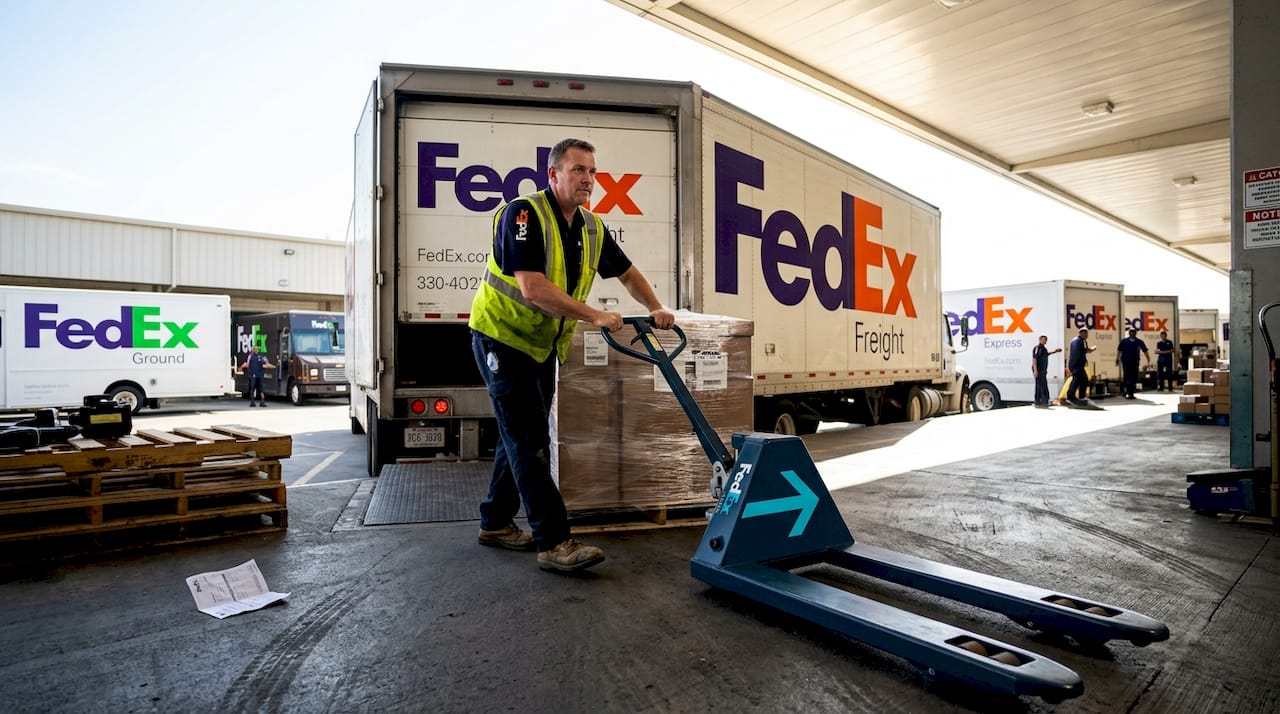
City drivers earn $28 to $38 per hour depending on the market, making this one of the higher-paying FedEx delivery jobs for drivers without long-haul experience. A typical shift includes 10 to 20 or more stops at commercial locations.
| Feature | Details |
|---|---|
| Pay range | $28 to $38 per hour |
| Schedule | Daily return, home each night |
| Stops per shift | 10 to 20+ |
| Vehicle type | Straight trucks and Class 8 tractors |
| CDL required | Yes, typically CDL A or B |
| Freight type | Commercial LTL shipments |
This role is physically active. You handle freight loading and unloading, interact with customers at delivery points, and manage paperwork. FedEx Freight city driving uses a mix of straight trucks and Class 8 tractors, so your equipment comfort level matters.
City driving suits drivers who want the pay of commercial freight work without overnight travel. The home-daily schedule is a major quality-of-life advantage. If you want to explore how FedEx compares to other major logistics employers on local routes, resources at jobs-in-transport.com can provide useful industry context.
6. FedEx Freight linehaul driver
Linehaul is the other major role within FedEx Freight, and it is fundamentally different from city driving. Linehaul drivers move freight from terminal to terminal over longer distances, often overnight or across non-traditional shift windows.
City drivers have home-daily schedules that contrast sharply with linehaul's overnight or multi-leg runs. Linehaul drivers still follow predictable weekly patterns but their hours are less conventional. Early morning departures and late-night arrivals are common.
Key characteristics of linehaul driving:
- Terminal-to-terminal routes with fewer stops
- Overnight or early-morning shift windows
- Class 8 tractor operation, CDL A required
- Higher mileage focus with less physical freight handling compared to city roles
- Consistent weekly schedule despite non-standard hours
Linehaul drivers who want to understand the broader team driver dynamic, particularly for CDL-A paired runs, will find useful background at Ucep's guide on succeeding as a team driver for FedEx service providers.
Pay for linehaul roles is competitive and often includes mileage bonuses on top of base rates. If you prefer highway miles and can work non-traditional hours, linehaul is worth serious consideration.
7. FedEx Freight and Ground: contractor model distinctions
One issue that often confuses job seekers is how the contractor model applies differently across FedEx Freight and FedEx Ground. Understanding this distinction affects your benefits, scheduling rights, and long-term career stability.
FedEx Ground contracts and conditions vary materially between service providers. One contractor may offer paid time off; another may not. One may provide health benefits; another may require you to source your own coverage. The FedEx branding on the truck is consistent. Your employment terms are not.
FedEx Freight is a direct FedEx entity. City and linehaul drivers in that division are FedEx employees with consistent access to company benefits and union protections in many markets.
This matters most when you are comparing total compensation rather than just hourly rate. A Ground driver earning $180 per day with no benefits may net less than an Express driver earning $22 per hour with full health coverage and a retirement match.
My take on choosing the right FedEx driving role
In my experience reviewing how drivers navigate these decisions, the biggest mistakes come from focusing on the hourly rate without asking who the employer actually is. I've seen drivers accept Ground positions expecting FedEx-level benefits, only to discover their contractor offers nothing beyond a paycheck.
I think the most overlooked factor is route predictability. Swing drivers often underestimate how disorienting it is to start each day not knowing their route. That unpredictability compounds over weeks. If you are someone who needs structure to perform well, a fixed route matters more than a slightly higher hourly rate.
My honest take: if you have a CDL A and want the best balance of pay, schedule stability, and benefits, FedEx Freight city driving is the strongest option for most people. If you lack a CDL and want corporate employment, FedEx Express is the cleaner path. Ground driving is viable, but only after you have vetted the specific contractor thoroughly.
CDL requirements also shape your career ceiling. Drivers who invest in a CDL A open access to linehaul and freight roles with meaningfully higher pay. Starting without one is fine, but planning for that upgrade is smart if you want advancement in FedEx driving careers.
— Aaron
Find your next FedEx driving opportunity with Ucep
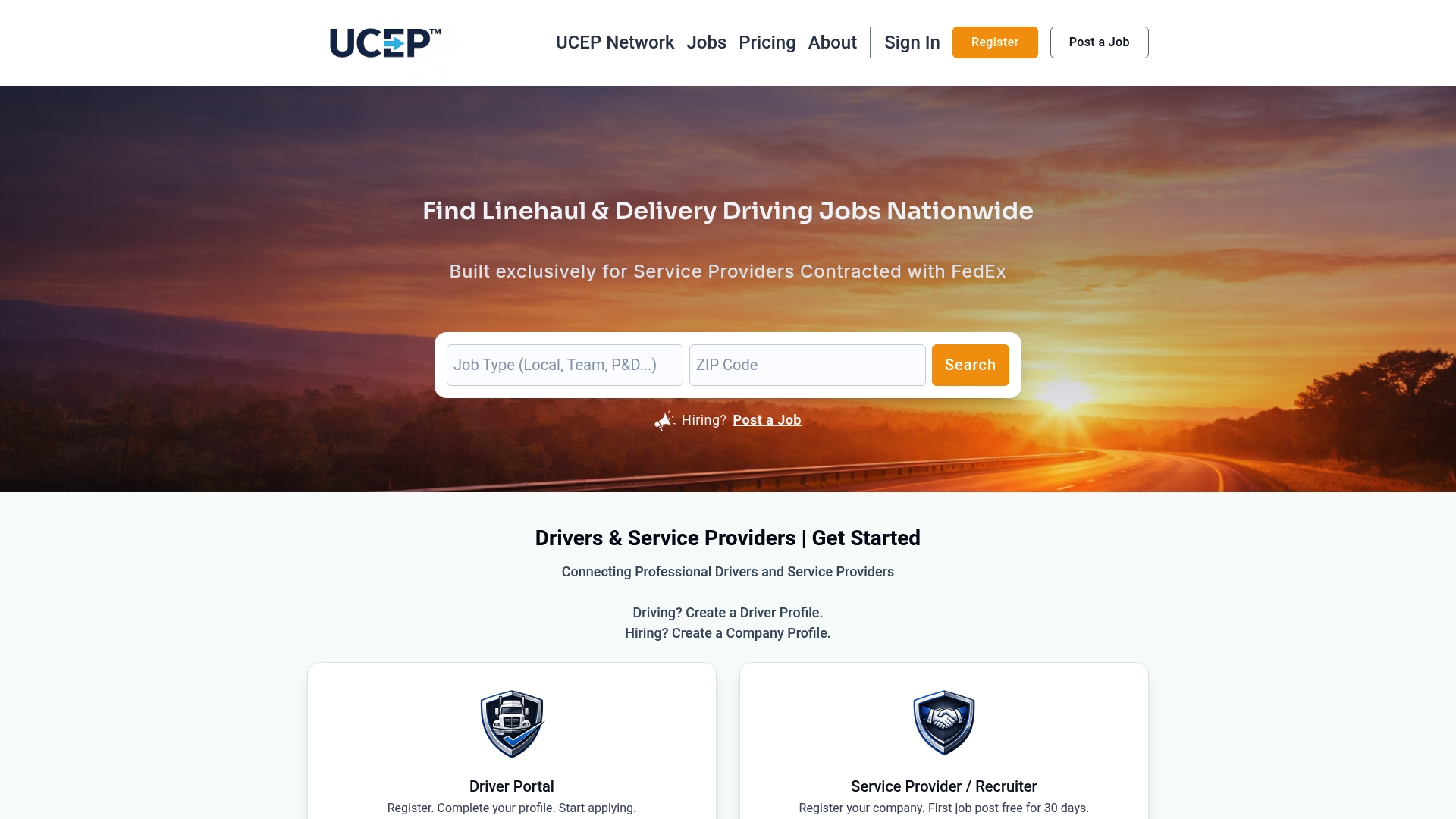
Ucep is a job board and recruiting platform built specifically for drivers and service providers in the FedEx network. Whether you are evaluating contractor opportunities or looking for companies actively hiring, Ucep gives you focused, relevant information in one place.
Start by browsing service provider reviews to compare contractors before you apply. Reviews from real drivers help you assess pay reliability, route workloads, and management quality ahead of time. You can also view companies hiring drivers across linehaul, CDL-A solo, CDL-A team, and pickup and delivery roles nationwide. Ucep removes the guesswork from finding FedEx-contracted positions that match your license type and schedule preferences.
FAQ
What are the main types of FedEx driving positions?
The primary types include FedEx Express Courier, FedEx Ground delivery driver, FedEx Freight city driver, FedEx Freight linehaul driver, and Swing driver. Each differs in employment model, pay structure, CDL requirements, and route type.
Do all FedEx driving jobs require a CDL?
No. Many last-mile positions at FedEx Express and FedEx Ground use non-CDL vehicles such as step vans and cargo vans. FedEx Freight city and linehaul roles typically require a CDL A or CDL B.
Are FedEx Ground drivers employees of FedEx?
No. FedEx Ground drivers are typically employed by independent contractors who hold service agreements with FedEx. Your pay, benefits, and schedule are set by the contractor, not by FedEx directly.
How much do FedEx Freight city drivers earn?
FedEx Freight city drivers earn approximately $28 to $38 per hour depending on market and experience. The role includes daily-return routes and physical freight handling at commercial stops.
What is a FedEx Swing driver?
A Swing driver is a flexible coverage position within the FedEx Express network, filling in for absent drivers or handling overflow routes. The role starts near $24.81 per hour and requires comfort with variable daily schedules and routes.