
A job posting is defined as the primary candidate-facing document in any recruiting pipeline, functioning as a demand signal, a screening tool, and a brand statement all at once. The role of job postings in recruiting extends far beyond announcing a vacancy. According to Employ's 2025 benchmarks, the average position receives 257.6 applications and takes 63.5 days to fill. That volume and timeline are directly shaped by how clearly and accurately you write the posting itself. Platforms like ZipRecruiter and specialized boards such as Ucep demonstrate that posting quality, placement, and language are the levers recruiters control most directly in the early funnel.
What is the role of job postings in recruiting?
Job postings are the first structured signal a candidate receives about a role. In talent acquisition, the term "job posting" refers to the external-facing advertisement, while a "position description" or "job description" is the internal HR document. Recruiters who treat these as interchangeable produce postings that are too long, too technical, or too vague to convert qualified applicants.
The recruitment marketing model frames job postings as the conversion layer in the candidate funnel. Awareness and interest are built through employer branding and social presence. The posting is where that warmed interest turns into an application. Application volume and traffic are the primary KPIs tied directly to posting quality and placement, which means a weak posting wastes every dollar spent on sourcing.
High-performing recruiting teams treat postings as dynamic instruments rather than static ads. They test titles, adjust language, and update requirements based on applicant data. That mindset separates teams that fill roles in 30 days from those stuck at 60-plus.

What are the key components of an effective job posting?
A well-structured job posting contains six core elements. Each one affects whether a qualified candidate reads past the first paragraph.
- Job title: Use the title candidates actually search for. "CDL-A Driver" outperforms "Transportation Specialist I" in search algorithms on Indeed, LinkedIn, and niche boards alike.
- Role summary: Two to three sentences describing what the person does and why the role matters. Skip the company history.
- Key responsibilities: Five to eight bullet points. Lead with action verbs. Cut anything that describes a process rather than an outcome.
- Qualifications: Separate required from preferred. The U.S. Chamber of Commerce advises keeping required qualifications to genuine minimums. Inflated requirements reduce your applicant pool without improving quality.
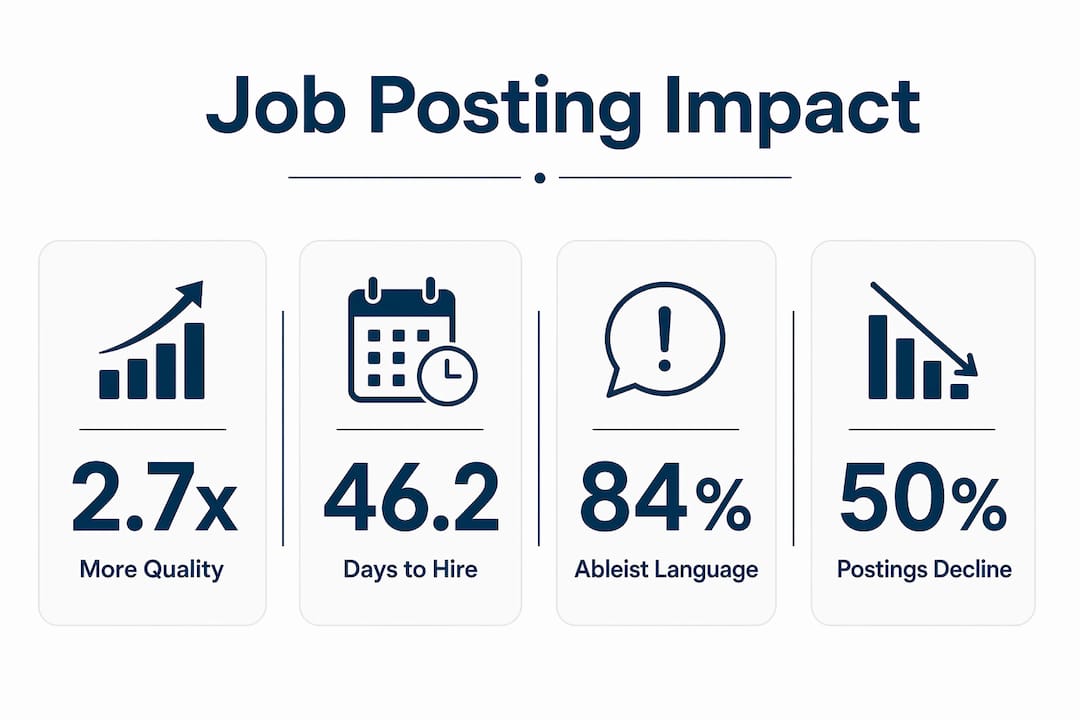
- Salary and compensation: Job listings with salary information are 2.7 times more likely to yield quality candidates. Omitting pay is now treated as a red flag by most active job seekers.
- Work environment and logistics: Location, schedule, remote or on-site status, and reporting structure. Candidates use this to self-screen before applying, which saves your team time.
Pro Tip: Use structured templates from platforms like ZipRecruiter or your applicant tracking system to standardize these six elements across every posting. Consistency reduces the chance that a rushed hiring manager publishes a posting that skips salary or buries the location.
Formatting matters as much as content. Short paragraphs, bullet lists, and clear headers improve readability and search indexing. A wall of text signals disorganization to candidates before they read a single word.
How do job postings influence applicant behavior and hiring outcomes?
Job postings function as labor-market signals. Candidates read them not just for information but to assess whether they belong in your organization. The language you use, the requirements you list, and the details you include or omit all shape who applies and who does not.
A University of Guelph study found that ableist language appears in 84% of job ads and measurably reduces the likelihood that people with disabilities will apply. Only 19% of postings in that study included EEO statements, and fewer than 10% mentioned accommodation. This is not a compliance issue alone. It is a candidate pool issue. Inclusive language expands the qualified applicant base and improves perceived organizational fit across all candidate groups.
"Small wording adjustments in job postings affect who applies and how included they feel before the first interview. That downstream effect on retention is real and measurable."
Pay transparency produces a similar effect. When 56.9% of new hires cite pay as the primary reason they accepted an offer, a posting that omits salary is already misaligned with candidate decision-making. The same data shows that 15% of new hires report the job description barely matched the actual role, and 26% said they would restart their job search because of that mismatch. Accurate postings reduce offer-stage surprises and early turnover.
Pro Tip: Audit your last ten postings for ableist phrases like "fast-paced," "able to lift," or "energetic." Replace them with function-specific language that describes actual job requirements. This single change improves both diversity and applicant quality.
Employ's data confirms that the time from first candidate interaction to accepted offer averages 46.2 days in 2025. Companies with clearer postings see faster cycles and lower first-year turnover, which fell to 12.1% among high-performing teams. Posting clarity is not a soft benefit. It has a direct line to cycle time and retention cost.
How to tailor job postings to different industries and roles
Candidate expectations vary significantly by sector. A posting that works in software engineering will underperform in logistics or healthcare. Tailoring your approach by industry is one of the most practical job listing strategies available to recruiters.
The table below compares posting priorities across four sectors:
| Industry | Title format | Salary display | Key differentiator |
|---|---|---|---|
| Logistics and transportation | Specific and credential-based (e.g., "CDL-A Solo Driver") | Required. Drivers compare pay per mile or weekly gross. | Route details, home time, and equipment type |
| Healthcare | Credential-specific (e.g., "RN, ICU, Night Shift") | Strongly recommended | Shift structure, patient ratio, and unit culture |
| Information technology | Role and seniority level (e.g., "Senior Backend Engineer") | Expected by candidates | Tech stack, remote policy, and team size |
| Manufacturing | Task-based title (e.g., "CNC Machinist, 2nd Shift") | Recommended with shift differential | Physical requirements and safety certifications |
In logistics and transportation, niche job boards consistently outperform general platforms for qualified applicant volume. A CDL-A driver searching for linehaul work is not browsing LinkedIn. They are on boards built for their profession. Posting on a general platform generates volume but not necessarily fit.
Bain's 2026 data shows that internet job postings declined more than 50% in early 2026 in some sectors, with financial services down 28% and healthcare down 22%. HR-related postings fell only 7%. This divergence means recruiters must calibrate their posting activity by function and region rather than assuming macro trends apply uniformly to their roles.
For transportation recruiters specifically, platforms like Ucep and Jobs-in-Transport.com are built around the specific expectations of commercial drivers. A posting on a focused platform reaches candidates who are already pre-qualified by interest, which reduces volume noise and shortens screening time.
What technology trends are reshaping job posting strategies in 2026?
AI and automation have changed how postings are written, distributed, and matched to candidates. The changes are practical and measurable, not theoretical.
- AI-assisted writing tools flag biased language, suggest keyword improvements, and generate first drafts from structured inputs. Recruiters using these tools report faster posting creation without sacrificing accuracy.
- Sponsored listings and syndication: ZipRecruiter data shows that sponsored listings receive six times more applicants in the first 30 days. The platform's Invite to Apply feature generates over seven times the candidate response compared to standard postings.
- AI-powered matching: Platforms use machine learning to surface postings to candidates whose profiles match the role requirements, reducing the gap between posting and qualified application.
- Real-time analytics dashboards: Recruiters can now monitor click-through rates, application starts, and completion rates by posting. This data identifies underperforming postings before they waste budget.
- Screening question automation: Embedded knockout questions filter unqualified applicants at the application stage, reducing manual review time significantly.
The New York Fed found no significant decline in job postings for AI-exposed occupations following the launch of ChatGPT. Labor demand in those fields remained stable. This means AI has reshaped the content and distribution of postings more than it has reduced their volume. Recruiters who expected AI to shrink their workload entirely will find instead that the skill has shifted toward managing tools and interpreting data.
Pro Tip: Use AI tools to draft and audit posting language, but assign a human reviewer to check for accuracy, tone, and inclusivity before publishing. Automated tools still miss context-specific requirements and can introduce generic language that reduces candidate engagement.
The Federal Reserve's analysis of AI adoption and posting behavior reinforces a key point: macro posting volume is an unreliable proxy for actual hiring demand. Segment your forecasts by function, region, and historical baseline to get an accurate read on your specific market.
Key takeaways
Effective job postings are the single most controllable variable in recruiting efficiency, directly shaping applicant quality, cycle time, and first-year retention.
| Point | Details |
|---|---|
| Salary transparency drives quality | Postings with pay information are 2.7 times more likely to attract qualified candidates. |
| Inclusive language expands your pool | Ableist language in 84% of job ads actively reduces applications from qualified candidates. |
| Industry-specific posting matters | Logistics, healthcare, and tech candidates have different expectations; tailor each posting accordingly. |
| Sponsored listings accelerate results | Sponsored postings on platforms like ZipRecruiter receive six times more applicants in 30 days. |
| AI reshapes but does not replace | AI tools improve posting quality and distribution but require human oversight for accuracy and tone. |
What I've learned from watching job postings get ignored
I have reviewed hundreds of job postings across industries, and the pattern is consistent. The postings that fail are not the ones with bad intentions. They are the ones written in a hurry, copied from a previous hire, or drafted by a committee that added every possible requirement to avoid conflict.
The most common mistake I see is treating the posting as a legal document rather than a communication tool. When you list 14 required qualifications for a role that genuinely needs four, you do not protect yourself from bad hires. You filter out the confident, experienced candidates who know they are overqualified for what you are actually offering, and you attract people who apply to everything regardless of fit.
The second mistake is omitting salary. I understand the hesitation, particularly in organizations where pay bands are politically sensitive. But the data is clear. Candidates interpret missing pay information as a signal that the offer will be below market. You lose the candidates you most want before they ever click apply.
The third mistake is ignoring analytics. Every major platform now gives you data on how your posting performs. If your application completion rate is below 40%, the posting has a friction problem. If you are getting high volume but low offer-acceptance rates, the posting is misrepresenting the role. These are fixable problems, but only if you look at the numbers.
The best recruiting teams I have observed treat job postings the same way a product team treats a landing page. They test, measure, and iterate. That discipline, more than any single tactic, is what separates teams that fill roles efficiently from those that are always behind.
— Aaron
How Ucep helps you post smarter and hire faster
Ucep is built specifically for FedEx Service Providers who need to hire qualified CDL-A drivers for linehaul, team, solo, and pickup and delivery roles. If you are recruiting in transportation, a general job board adds noise. Ucep removes it.
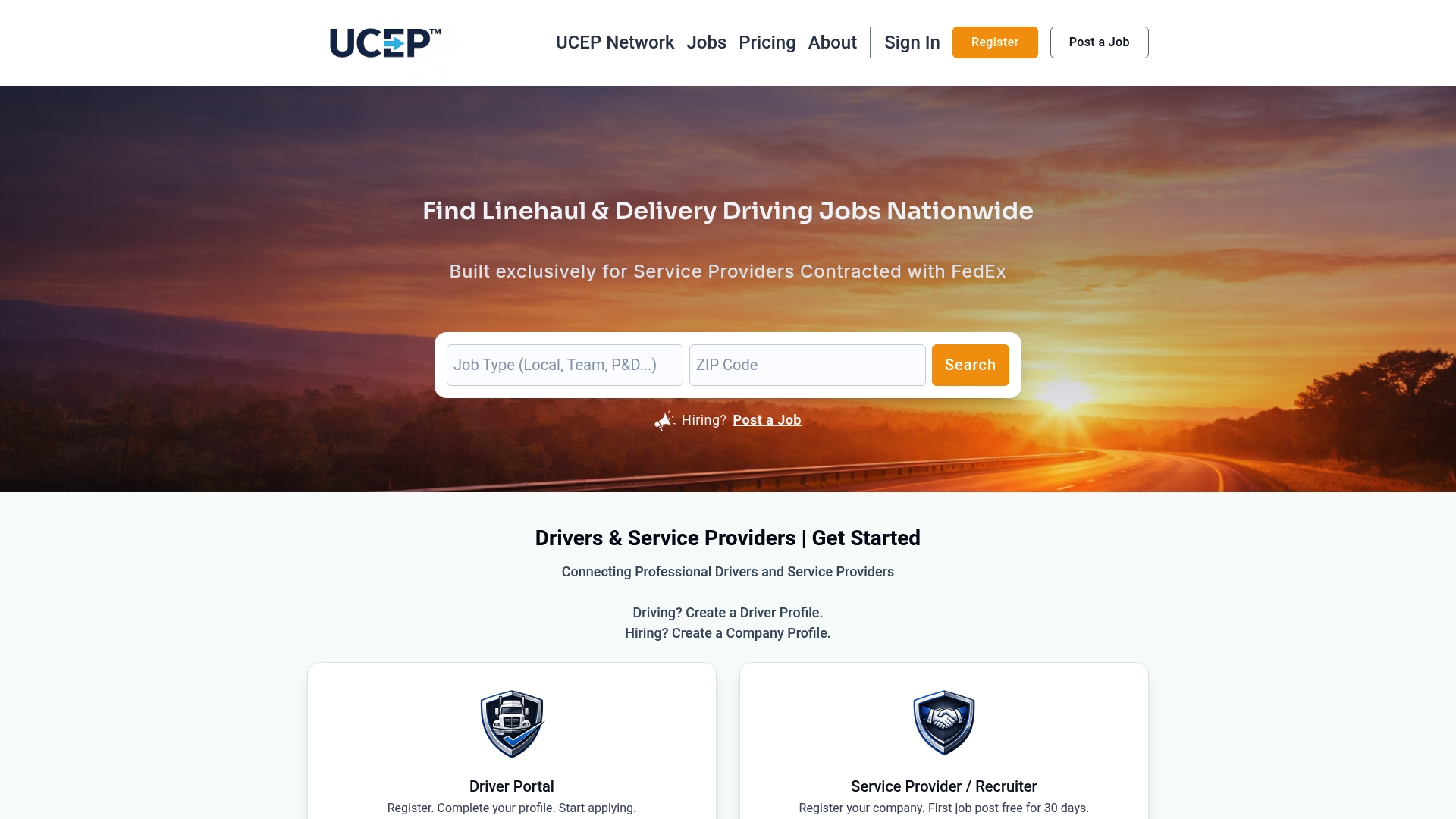
When you post a job on Ucep, your listing reaches drivers who are actively searching for FedEx-contracted opportunities. The platform is structured around the specific details drivers care about: route type, home time, pay structure, and equipment. That focus means your posting reaches a pre-qualified audience, which reduces screening time and improves offer acceptance rates. You can also review service provider profiles to see how other operators in the network structure their postings and attract candidates. Ucep is where transportation recruiting gets specific.
FAQ
What is the primary purpose of a job posting in recruiting?
A job posting serves as the first candidate-facing signal in the recruiting funnel, converting employer demand into qualified applications. It sets role expectations, filters unqualified candidates, and communicates organizational culture before any direct contact occurs.
How does salary transparency affect job posting performance?
Job listings that include salary information are 2.7 times more likely to attract quality candidates. Omitting pay is widely interpreted as a negative signal and reduces application rates among experienced candidates.
Why do niche job boards outperform general platforms for some roles?
Niche boards concentrate candidates who are already pre-qualified by industry interest, which reduces volume noise and shortens screening time. For transportation roles, targeted job boards consistently deliver higher applicant-to-hire conversion rates than general platforms.
How does inclusive language in job postings affect applicant diversity?
A University of Guelph study found that ableist language appears in 84% of job ads and reduces application likelihood for people with disabilities. Replacing function-neutral phrases with specific, requirement-based language expands the qualified applicant pool.
Has AI reduced the number of job postings in the market?
No. The New York Fed found no significant AI-driven decline in postings for AI-exposed occupations. AI has changed how postings are written and distributed, but overall labor demand as measured by posting volume has remained stable.
Recommended
- Why Targeted Job Boards Deliver Better ROI for Service Providers Hiring Drivers - United Contractor Employment Portal
- Post a Job - United Contractor Employment Portal
- Why Niche Job Boards Give High-Volume Recruiters an Edge | UCEP - United Contractor Employment Portal
- How UCEP Helps FedEx Service Providers Find Better Driver Candidates - United Contractor Employment Portal