
What are job alerts and why do they matter in recruiting?
Job alerts are automated notifications sent to candidates or recruiters when a new job posting matches a set of predefined criteria. They deliver matches by email, SMS, or app push notification, removing the need for daily manual searches. The role of job alerts in recruiting is direct: they close the gap between when a position opens and when qualified candidates see it.
Speed is the core advantage. Candidates using job alerts land interviews faster than those who browse manually. Recruiters benefit equally, because a faster candidate response means a shorter time-to-fill and less productivity loss for the hiring team.
Key functions job alerts serve in a recruitment workflow:
- Notify candidates the moment a matching role goes live
- Reduce manual board-checking for both recruiters and job seekers
- Deliver alerts through email, SMS, or in-app push notifications
- Filter results by job title, location, seniority, salary, and job type
- Trigger automated follow-up actions inside ATS and CRM systems
Why recruiters use job alerts in their hiring strategy
Job alerts give recruiters a measurable edge in three areas: speed, reach, and workload.
Speed. Applicants who apply promptly after a posting goes live have materially better interview conversion rates than later applicants with equivalent qualifications. Alerts make that early window accessible without requiring candidates to check boards constantly.

Reach. Alerts extend a recruiter's visibility beyond active job seekers. Passive candidates who have saved a search get notified automatically, expanding the pool without additional sourcing effort.
Workload reduction. Automated alert systems cut the time recruiters and candidates spend manually scanning job boards. That time shifts to higher-value tasks: screening, interviewing, and building candidate relationships.
Specific advantages job alerts provide for recruiters:
- Faster pipeline fill by reaching candidates before competitors post similar roles
- Consistent candidate engagement without manual outreach for every opening
- Broader reach across passive and active candidate segments
- Reduced administrative time spent re-posting or re-promoting open roles
- Better data on which alert configurations generate the most qualified applicants
For recruiters filling CDL-A and logistics roles, where driver shortages make speed critical. Alerts are one of the most direct tools available.
How job alerts work differently for internal vs. external candidates
The mechanics of job alerts shift depending on whether you are targeting employees already inside your organization or candidates in the open market. Both use automated notifications, but the filters, delivery channels, and goals differ.
Internal candidate alerts connect current employees to promotion, transfer, or lateral move opportunities. These alerts typically filter by job family, seniority band, and department rather than open-market keywords. They often route through an internal career portal or HRIS platform rather than a public job board. The goal is retention and mobility, not volume.
External candidate alerts focus on attracting new talent. Filters here are broader: location radius, job title variants, salary floor, and work model (remote, hybrid, on-site). These alerts run through public job boards, company career pages, and aggregators.
Setup and management distinctions between the two:
- Internal alerts require integration with your HRIS or internal ATS, not a public board
- External alerts need Boolean operators and negative keywords to reduce irrelevant matches
- Internal vs. external alert filters differ by location, job family, and seniority requirements
- Internal alerts often carry confidentiality constraints that external alerts do not
- External alerts benefit from real-time delivery; internal alerts can often run on a daily digest without competitive disadvantage
Transportation HR teams monitoring FedEx network hiring signals use a similar split: internal alerts for driver advancement opportunities, external alerts for open CDL-A headcount.
How to optimize job alerts for better recruitment ROI
Poorly configured alerts create noise. Excess alert volume causes disengagement, while curated alerts drive sustained focus from both candidates and recruiters. The goal is precision, not volume.
Use specific keywords and Boolean logic. A broad alert for "driver" returns thousands of irrelevant results. A structured query like "CDL-A" AND "linehaul" NOT "intern" surfaces only the roles worth acting on. Boolean operators and negative keywords prevent irrelevant notifications and keep recruiter focus sharp.
Match alert frequency to role competitiveness. Real-time alerts outperform daily digests in competitive markets. For high-demand roles like CDL-A team drivers, instant delivery matters. For lower-volume or niche roles, a daily digest works without sacrificing much.
Integrate alerts with your ATS and CRM. AI-powered alert systems can trigger automated workflows: creating a new job order, matching candidates from your existing database, and drafting initial outreach. That removes manual steps and keeps your pipeline moving.
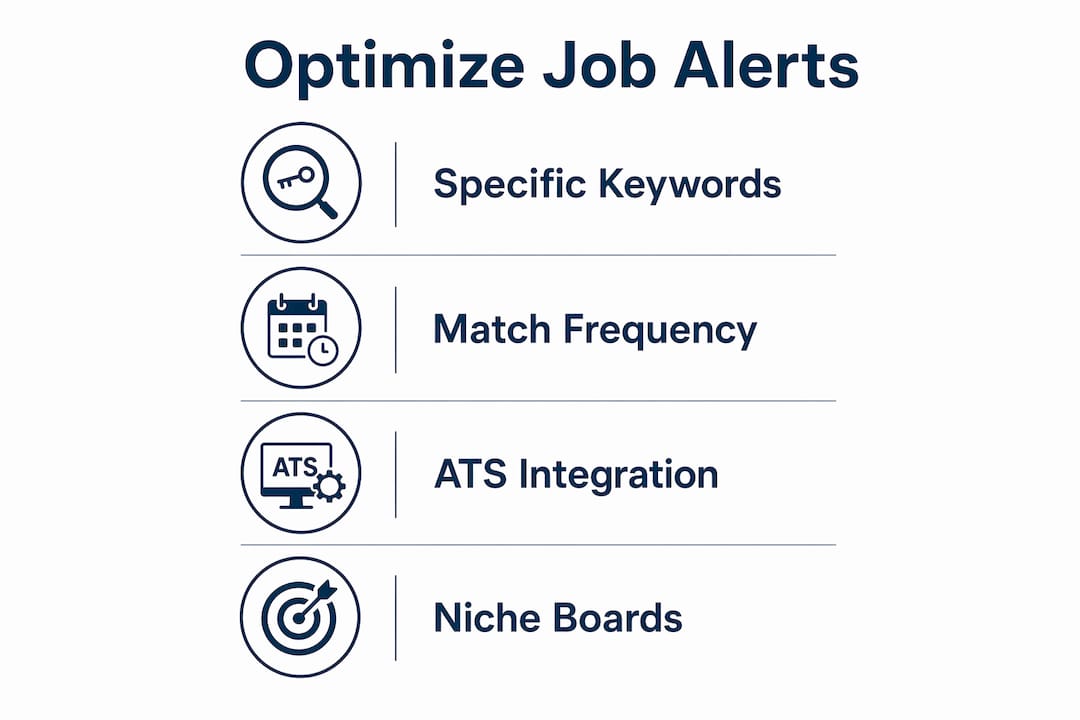
Measure and adjust. Track which alert configurations produce qualified applicants, not just volume. Review and refresh alert criteria every 30 days.
Practical optimization steps:
- Set alerts to "instant" or "real-time" for your highest-priority roles
- Use title families rather than single job titles (e.g., "CDL-A solo," "CDL-A team," "linehaul driver")
- Add salary floors and location radius filters to reduce low-fit matches
- Connect alert triggers to ATS job order creation for zero-lag pipeline entry
- Review alert performance weekly; remove keyword sets generating irrelevant results
- Limit active alert streams to a manageable number so each one stays actionable
Statistic: Candidates applying within 48 hours are 3.1x more likely to receive a recruiter response, based on tracking of application outcomes across major employers.
Recruiters who post roles on niche boards built for their specific candidate pool see better alert-to-application conversion than those relying solely on broad aggregators.
What recent research says about job alert strategy
The evidence on alert timing is consistent. Most job offers go to candidates who apply within the first five days of a posting. Recruiters typically stop reviewing new submissions once they have a viable shortlist, often by day two. That window is narrow, and alerts are the primary tool for getting candidates into it.
Pro Tip: Set your highest-priority role alerts to real-time delivery, then build a response routine around them. When an alert fires, treat it as a trigger for direct engagement, not just an inbox item to review later. Recruiters who move from passive alert reception to active market watching fill roles faster and with less back-and-forth.
AI-powered alert systems add another layer. Advanced alerts act as an intelligence hub, triggering automated workflows in ATS and CRM platforms. This lets smaller recruiting teams compete with larger operations by removing manual steps from the sourcing process.
Balanced alert settings sustain engagement by delivering relevant, manageable notification volume. Candidates who receive too many low-relevance alerts disengage from the system entirely. The practical target is a small number of high-quality notifications per week rather than a daily flood.
Statistic: Candidates applying within 48 hours are 3.1x more likely to receive a recruiter response, and those who set up job alerts land interviews faster than those who browse manually.
For recruiters in logistics and transportation, where niche job boards deliver better ROI than broad aggregators, pairing precise alert configurations with a focused platform produces the strongest results. The combination of targeted alerts and a relevant candidate pool shortens time-to-fill without inflating sourcing costs.
Key Takeaways
Job alerts reduce time-to-fill and improve candidate quality when configured with specific filters, real-time delivery, and ATS integration rather than broad, high-volume defaults.
| Point | Details |
|---|---|
| Speed drives outcomes | Candidates applying within 48 hours are 3.1x more likely to receive a recruiter response. |
| Precision beats volume | Curated alerts with Boolean filters outperform broad alerts that generate noise and disengagement. |
| Real-time delivery matters | Real-time alerts outperform daily digests in competitive markets where early applicants form the shortlist. |
| ATS integration multiplies value | AI-powered alerts that trigger ATS and CRM workflows remove manual steps and keep pipelines moving. |
| Internal and external alerts differ | Internal alerts filter by job family and seniority; external alerts require broader keyword and location logic. |
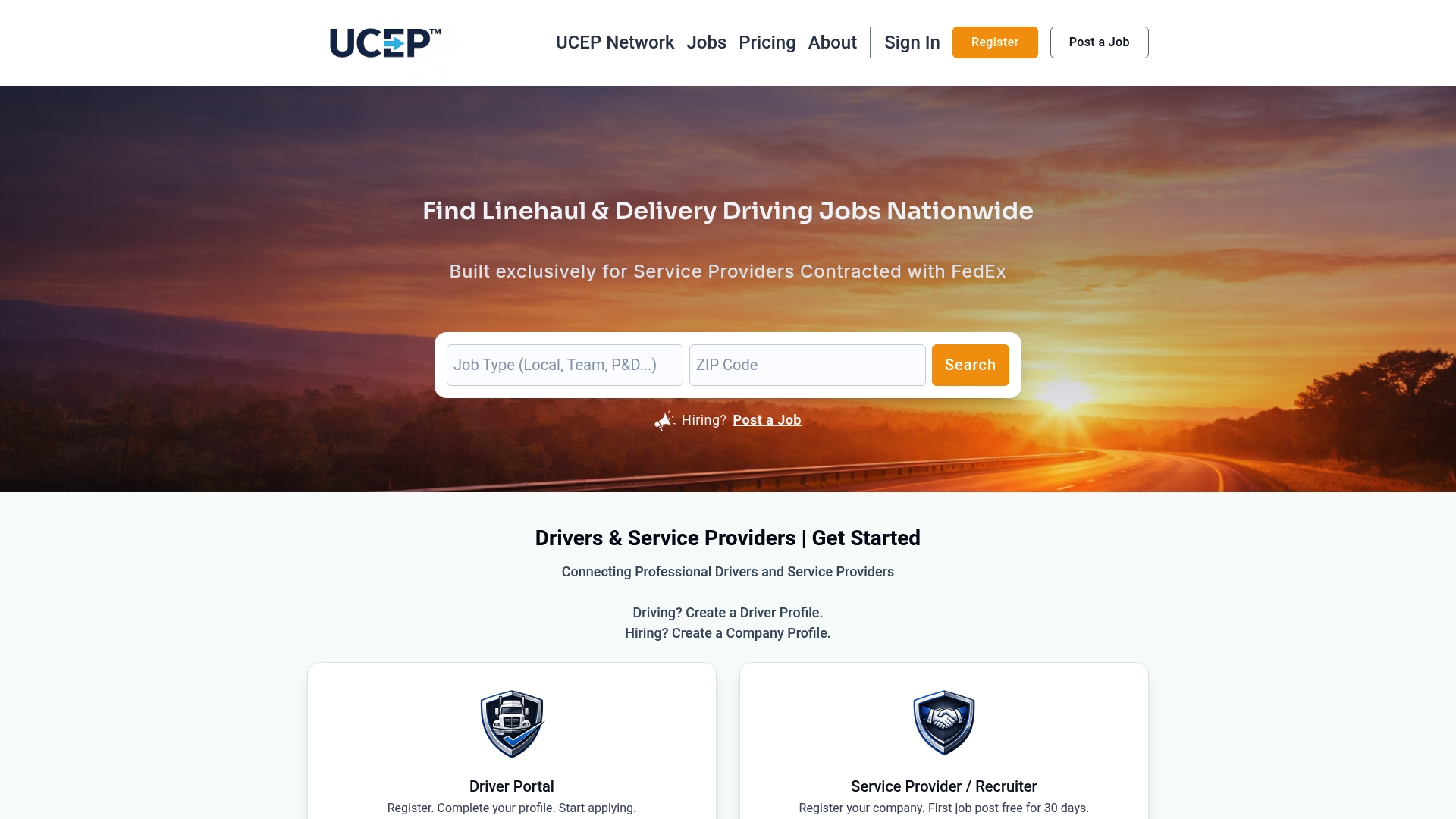
Ucep is built specifically for FedEx Service Providers hiring CDL-A drivers across linehaul, team, solo, and pickup and delivery roles. If you are filling driver positions and want your alerts reaching qualified candidates faster, browse active companies already hiring on the platform or check service provider reviews to see how other operators are building their driver pipelines.
Recommended
- Why Niche Job Boards Give High-Volume Recruiters an Edge | UCEP - United Contractor Employment Portal
- Why Targeted Job Boards Deliver Better ROI for Service Providers Hiring Drivers - United Contractor Employment Portal
- How UCEP Helps FedEx Service Providers Find Better Driver Candidates - United Contractor Employment Portal
- Post a Job - United Contractor Employment Portal