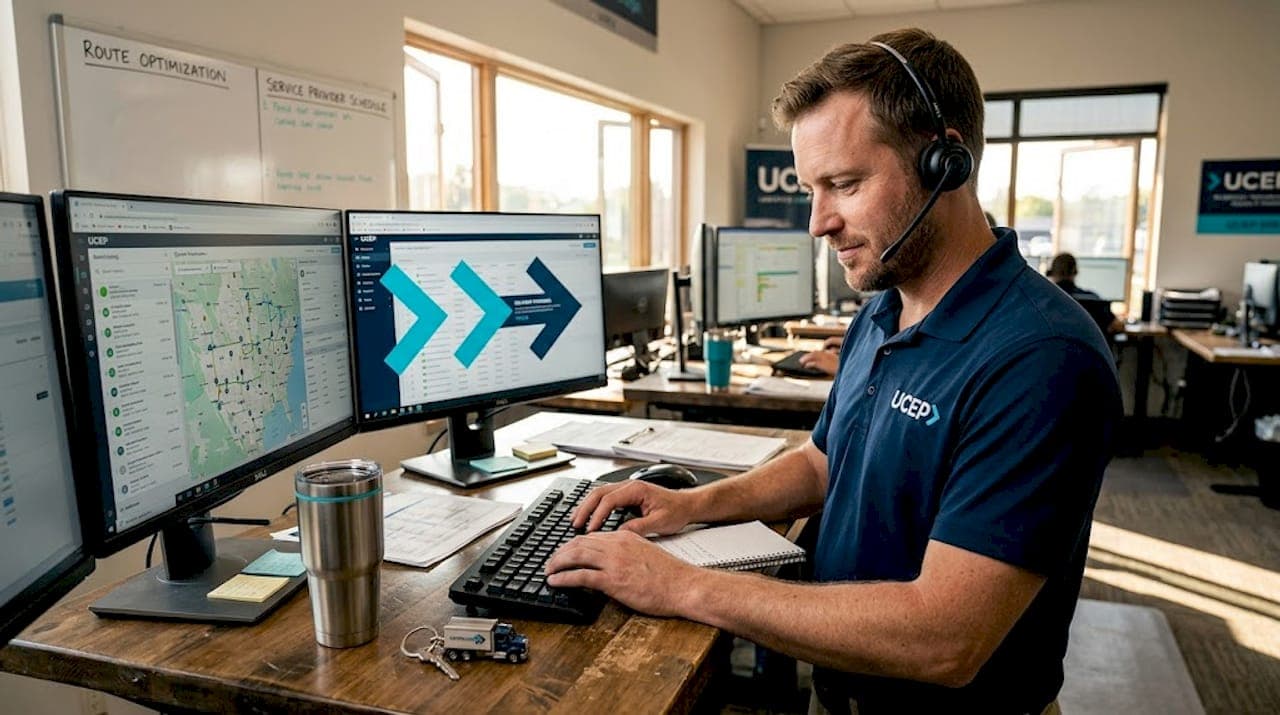
Most CDL drivers have worked with a dispatcher they barely understood, and most logistics professionals have underestimated what a dispatcher actually does. The role of dispatcher for CDL drivers goes far beyond answering phones and assigning loads. A dispatcher is the operational link between drivers on the road, shippers with freight to move, and carriers accountable for delivery. Get this relationship right, and freight moves efficiently, drivers stay compliant, and earnings stay strong. Get it wrong, and you face missed appointments, HOS violations, and burned-out drivers.
Table of Contents
- Key takeaways
- Role of dispatcher for CDL drivers: core responsibilities
- Skills and expertise dispatchers need to support CDL drivers
- Technology tools that dispatchers use in freight operations
- How dispatchers affect CDL driver earnings and safety
- Dispatch service models and after-hours operations
- My take on where dispatching actually stands in trucking
- Find vetted dispatch and driver opportunities through Ucep
- FAQ
Key takeaways
| Point | Details |
|---|---|
| Dispatchers do far more than assign loads | They manage HOS compliance, route planning, rate negotiation, and real-time problem solving every shift. |
| Dispatcher experience with CDL driving matters | Former drivers turned dispatchers communicate more credibly and understand road constraints better. |
| Not all dispatch services are equal | Trained freight specialists consistently outperform general call centers or virtual assistant services. |
| Technology has changed the job significantly | Modern dispatchers use TMS platforms, GPS, ELD data, and load boards to manage freight visibility and compliance. |
| The dispatcher-driver relationship affects your earnings | Strong dispatcher communication directly impacts pay, schedule quality, and on-road safety for CDL drivers. |
Role of dispatcher for CDL drivers: core responsibilities
A common assumption is that dispatchers just make phone calls and enter data. The actual job covers a much wider range of tasks, and core dispatcher tasks include load planning, HOS monitoring, route optimization, and incident management.
Here is what a well-functioning dispatcher handles on a daily basis:
-
Load planning and assignment. The dispatcher reviews available freight, evaluates rates from brokers or direct shippers, and assigns loads that fit the driver's availability, equipment type, and location. This is not just matching a driver to a load. It includes rate negotiation to protect carrier margins and driver pay.
-
Route optimization. Before a driver rolls, the dispatcher calculates the most efficient route. This means reducing deadhead miles (empty miles with no payload) and accounting for weight restrictions, low-clearance roads, and traffic patterns. Fewer deadhead miles directly translate to higher earnings per mile.
-
HOS monitoring and compliance. Hours of Service rules govern when a driver must stop and rest. Dispatchers track active driving hours against federal limits to prevent violations. A missed HOS calculation can trigger fines, disqualify a driver, or cause an accident.
-
Real-time problem solving. Breakdowns, weather delays, dock closures, and appointment changes happen constantly. The dispatcher coordinates between the driver, carrier, shipper, and receiver to find solutions fast. This includes rescheduling deliveries, arranging roadside assistance, and updating all parties in real time.
-
Communication management. The dispatcher serves as the central point of contact across every party in a freight transaction. Drivers report their status to the dispatcher. Brokers check load progress through the dispatcher. Receivers confirm appointment windows with the dispatcher. This central role requires precision and speed.
Pro Tip: If you are a CDL driver and your dispatcher is not confirming load details, weights, and appointment times before you depart, ask them to do so. Catching errors before departure saves hours at the dock.
Skills and expertise dispatchers need to support CDL drivers
Knowing the tasks of dispatching is one thing. Performing them effectively under pressure requires a specific set of skills that not everyone in the role actually has.
Here are the core competencies that separate effective dispatchers from average ones:
- Communication skills. Dispatchers speak with drivers, brokers, shippers, and managers simultaneously. They need to be clear, direct, and calm when situations go sideways.
- Geography and routing knowledge. Understanding road networks, state-specific regulations, and regional freight lanes allows dispatchers to plan routes that drivers can actually run without issues.
- HOS and regulatory knowledge. A dispatcher who does not fully understand federal HOS rules is a liability. This includes knowledge of the 11-hour driving rule, the 14-hour on-duty window, the 30-minute break requirement, and sleeper berth provisions.
- Technology proficiency. Modern dispatch relies on transportation management systems, load boards, ELD platforms, and GPS tools. Dispatchers who cannot navigate these systems slow down operations.
- Problem-solving under pressure. Freight issues rarely happen during business hours. Dispatchers who freeze or escalate every decision create bottlenecks that cost time and money.
One area where experience makes a measurable difference: former CDL drivers who transition into dispatching have clear advantages in understanding HOS constraints and the real challenges drivers face on the road. They speak the same language as drivers, understand what a tight dock window actually means at the wheel, and can identify when a route plan is unrealistic before the driver ever leaves the yard.
Pro Tip: When evaluating a dispatch service for your operation, ask whether their dispatchers have driven commercially. A dispatcher with road experience will plan more realistic schedules and earn driver trust faster.
Trained freight specialists provide consistently better outcomes than general call centers or virtual assistants performing dispatcher functions. Freight dispatch requires specific knowledge that takes months to develop.
Technology tools that dispatchers use in freight operations
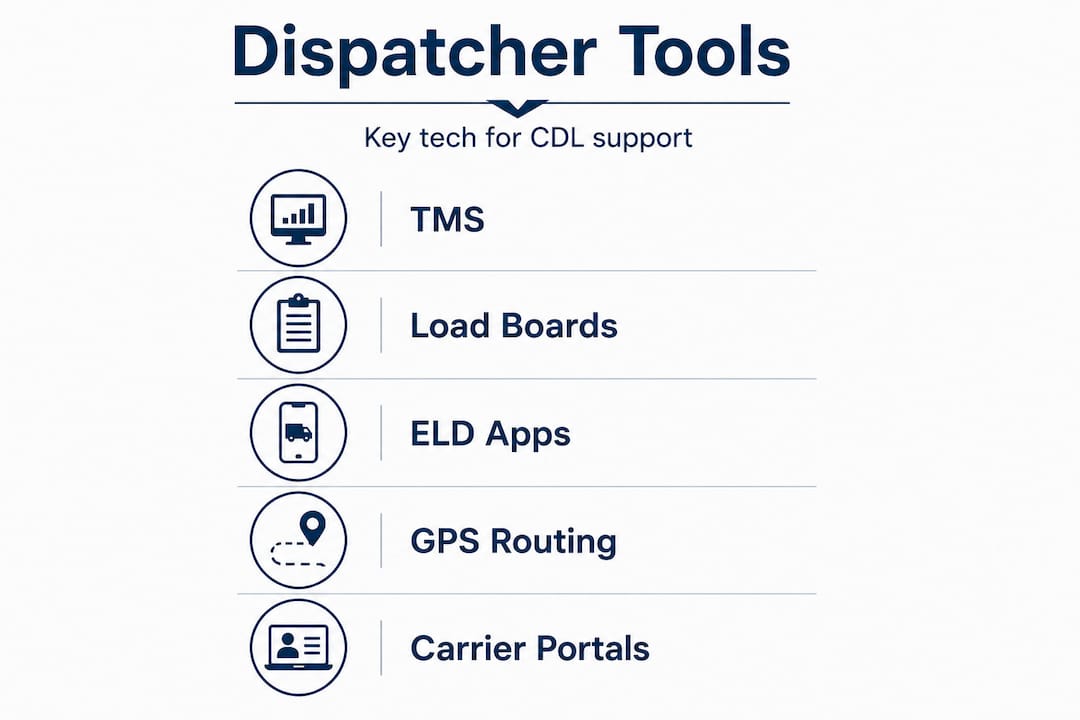
Dispatching used to mean whiteboards, paper manifests, and phone trees. Today, effective dispatchers operate across several integrated platforms. Here is a breakdown of the main tools used and what they accomplish:
| Tool | Function |
|---|---|
| Transportation Management System (TMS) | Manages load assignments, billing, and carrier communication from a central platform |
| Load boards (e.g., DAT) | Provides access to available freight postings and rate data for load sourcing |
| GPS tracking platforms | Offers real-time location data for drivers and gives shippers accurate ETAs |
| ELD (Electronic Logging Device) data | Monitors remaining HOS in real time to prevent violations |
| Dynamic route optimization software | Calculates efficient routes automatically, replacing manual map planning |
The shift to software-based route optimization has changed the dispatcher's daily focus. Instead of building routes manually, dispatchers now use dynamic tools that factor in real-time traffic, weather, and load constraints. This shift allows dispatchers to concentrate on exception handling, which means addressing the loads or drivers that fall outside the plan.
Key benefits this technology enables for CDL drivers:
- Fewer routing errors before departure
- Faster updates when pickup or delivery details change
- More accurate HOS warnings before violations occur
- Better load matching based on equipment type and location
How dispatchers affect CDL driver earnings and safety
This section matters directly to you as a CDL driver. Your dispatcher influences your paycheck, your schedule, and your safety more than most drivers realize.
Dispatcher support affects driver safety, earnings, and job satisfaction. Here is how that plays out in practice:
| Dispatcher behavior | Impact on CDL driver |
|---|---|
| Negotiating higher load rates | Increases driver pay on percentage-based compensation |
| Reducing deadhead miles | Improves earnings per mile and keeps drivers productive |
| Monitoring HOS proactively | Prevents violations that cost drivers their license or job |
| Communicating appointment changes quickly | Reduces unnecessary waiting and stress at docks |
| Advocating for drivers with carriers | Protects driver interests when clients push for unreasonable schedules |
A dispatcher who treats the job transactionally, assigning loads without considering driver wellbeing, creates the conditions for burnout and unsafe driving. A dispatcher who builds a real working relationship with their drivers manages expectations from all sides, including the client's demand for on-time delivery, the carrier's need for fleet utilization, and the driver's need for a safe, profitable, and manageable route.
Pro Tip: Talk openly with your dispatcher about your preferences, your home time needs, and the loads you find most manageable. Dispatchers who know their drivers personally make better assignments. They cannot read your mind.
The CDL driver support role a good dispatcher provides includes acting as your first call when something goes wrong on the road. That means roadside breakdowns, missed loads due to shipper delays, and log questions all flow through the dispatcher before they reach anyone else.

Dispatch service models and after-hours operations
Freight does not stop moving at 5 p.m. Linehaul operations run overnight, across weekends, and through holidays. The structure of a dispatch service determines how well drivers are supported during those hours.
Here is what to look for in professional dispatch operations that cover CDL drivers around the clock:
- Follow-the-sun staffing. This model uses overlapping shifts across time zones to maintain coverage without requiring a single team to work overnight. 24/7 dispatch coverage through a follow-the-sun model, combined with a 3-month onboarding program, sets a high standard for dispatcher readiness.
- Documented escalation procedures. When a night-shift dispatcher encounters a situation beyond their authority, there must be a clear, written escalation path. Escalation protocols and overnight activity logs are requirements in effective after-hours dispatch services, not optional extras.
- Dedicated dispatcher assignment. Rotating anonymous dispatchers create friction. When a driver works with the same dispatcher consistently, that person already knows the driver's equipment, preferences, and history. Continuity reduces errors and speeds up communication.
- Overnight activity logs. Comprehensive logs of all overnight decisions and communications allow the day-shift team to pick up without gaps. Drivers should not have to repeat information that was already communicated six hours earlier.
Carriers that use general staffing agencies or low-cost virtual assistant services for after-hours coverage introduce significant risk. These providers often lack the freight-specific training needed to make safe, compliant decisions when a driver calls at 2 a.m. with a breakdown or a load appointment conflict. When reviewing transport sector career paths, dispatching stands out as a role where training depth directly determines operational outcomes.
My take on where dispatching actually stands in trucking
I've spent years watching the dispatcher role get underestimated by everyone outside of trucking, and sometimes by people inside it. When a load delivers on time and nothing goes wrong, drivers and clients assume the system just worked. What they do not see is the dispatcher who caught a HOS conflict at 11 p.m., rerouted around a closed weigh station, and renegotiated a pickup window with a difficult shipper before the driver ever knew there was a problem.
What I've learned is that the evolution of dispatcher responsibilities from simple radio operator to logistics specialist is real, and it has not been fully recognized in how dispatchers are trained, paid, or respected. Most CDL drivers I've spoken with can name a dispatcher who made their job harder than it needed to be. They can also name one who made them more money and kept them out of trouble. That gap almost always comes down to training and the dispatcher's willingness to actually understand the driver's reality.
My advice for CDL drivers: treat your dispatcher relationship as a professional partnership. Give them the information they need, communicate your constraints clearly, and hold them accountable when they fail you. And for logistics professionals evaluating dispatch services: the cheapest option rarely covers what you actually need at 3 a.m. when a loaded trailer has a blown tire on I-80.
Trust between a driver and dispatcher is not automatic. It is built through consistent communication, accurate information, and mutual respect for the difficulty of each other's job.
— Aaron
Find vetted dispatch and driver opportunities through Ucep
If you are a CDL driver looking for roles where strong dispatcher support is part of the operation, or a service provider trying to connect with qualified drivers for linehaul and CDL-A positions, Ucep is built for exactly that.
Ucep is a dedicated platform for Service Providers contracted with FedEx and the CDL drivers who work with them. You can read service provider reviews to evaluate dispatch quality and operational practices before committing to a carrier or service. You can also browse the UCEP driver network to find hiring companies that match your experience and route preferences. For drivers ready to search open positions, browse companies hiring drivers across linehaul, CDL-A team, and solo roles nationwide.
FAQ
What does a dispatcher do for CDL drivers?
A dispatcher manages load assignments, route planning, HOS monitoring, and real-time problem solving on behalf of CDL drivers. They serve as the primary communication point between drivers, shippers, receivers, and carriers throughout a freight movement.
How does a dispatcher affect a CDL driver's pay?
Dispatchers negotiate load rates, minimize deadhead miles, and manage scheduling to keep drivers productive. Drivers on percentage-based pay benefit directly when dispatchers secure higher-rate loads and reduce unpaid empty miles.
What is the role of dispatcher in linehaul operations?
In linehaul, dispatchers coordinate long-distance freight movement across multiple drivers and relay points, monitoring HOS, managing appointment windows, and responding to incidents that occur overnight or across time zones.
What separates a professional dispatcher from a general call center?
Trained freight dispatchers have specific knowledge of HOS regulations, load board platforms, TMS systems, and routing requirements. General call centers or virtual assistants typically lack this freight-specific training, which creates compliance and safety risks.
Should CDL drivers care about dispatcher experience levels?
Yes. Dispatchers who have driven commercially or completed structured freight training make more realistic route plans and communicate more effectively with drivers. Experience directly correlates with fewer errors and better driver outcomes.