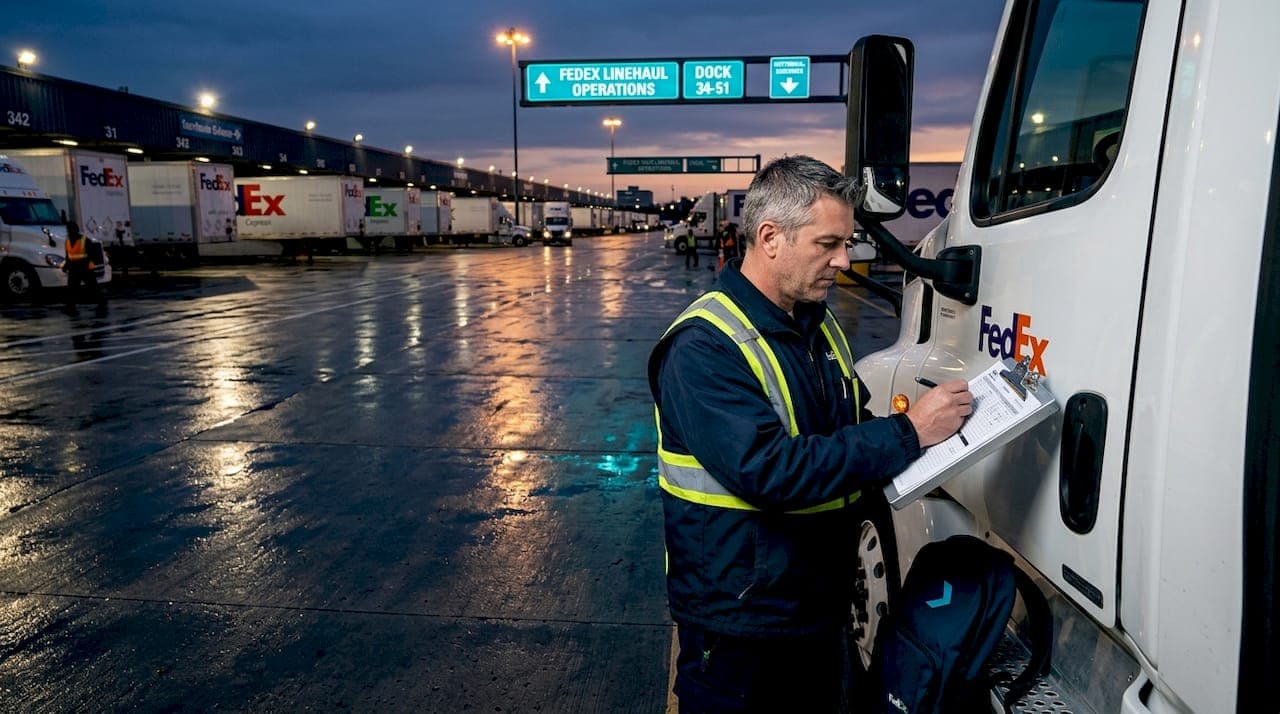
Most people picture linehaul driving as endless weeks away from home, surviving on truck stop food and parking lot naps. That picture does not match reality for FedEx linehaul drivers. Many run dedicated overnight routes and are home daily or weekly, with consistent schedules and competitive pay. FedEx linehaul demand is rising, and both drivers and the service providers who hire them need clear, accurate information to make good decisions. This guide covers job duties, pay benchmarks, qualifications, real risks, and how the hiring process actually works inside the FedEx Independent Service Provider model.
Table of Contents
- What is a linehaul driving job with FedEx?
- What does a FedEx linehaul driver do?
- Qualifications, endorsements, and hiring process
- Pay, schedules, and business upside
- Risks, compliance, and what most people miss
- Why linehaul roles are misunderstood—and what actually matters
- Find the right FedEx linehaul opportunity with UCEP
- Frequently asked questions
Key Takeaways
| Point | Details |
|---|---|
| Clear job structure | FedEx linehaul driving features predictable hub-to-hub routes, mostly run overnight, managed by independent contractors. |
| Competitive compensation | Most solo drivers earn $70,000–$85,000 a year with consistent home time and strong demand. |
| Rigorous compliance | Applicants must have the right license, clean records, and pass background/drug checks for consideration. |
| Business challenges | Contractors face real risks—driver shortages, cost outlays, and complex FMCSA/DOT compliance. |
| Career opportunity | Well-run linehaul operations offer stability and growth for drivers and service providers alike. |
What is a linehaul driving job with FedEx?
Now that we've addressed the key myths, let's define what linehaul work actually entails and how it differs from other roles in the FedEx network.
Linehaul is the segment of freight transport that moves cargo between hubs, terminals, or distribution centers over long distances. Drivers do not stop at customer addresses. The cargo moves point to point between facilities, and local delivery drivers handle the final mile from there. This structure is what makes linehaul distinct from pickup and delivery (P&D) work.
Within the FedEx Ground system, operations run primarily overnight or during evening shifts. This timing is intentional. Overnight runs reduce road congestion and allow freight to arrive at destination hubs in time for morning sorting and same-day or next-day delivery. A driver might depart from Atlanta at 9:00 PM and deliver to a Charlotte terminal by 3:00 AM, then deadhead or take a relay back.
Service providers in this network are Independent Service Providers (ISPs) contracted with FedEx Ground. They own and operate branded fleets, manage fuel and maintenance costs, carry their own insurance, and hire their own drivers. FedEx sets the service standards and assigns routes; the ISP handles everything operationally.
Here is a direct comparison of the main driver roles in the FedEx Ground ecosystem:
| Role | Route type | Customer stops | Typical shift | Home time |
|---|---|---|---|---|
| Linehaul solo | Hub to hub | None | Overnight | Daily or weekly |
| Linehaul team | Hub to hub, longer | None | Overnight/OTR | Weekly |
| P&D driver | Local delivery area | Many per shift | Daytime | Daily |
| OTR (non-FedEx) | Irregular, national | Minimal | Variable | Infrequent |
The key distinction for service providers looking to build a reliable fleet is that linehaul drivers run scheduled, predictable routes rather than variable daily stop lists. Routes fall into three general categories:
- Dedicated routes: A set lane assigned to your operation consistently
- Unassigned routes: Available runs that a contractor bids or accepts on a regular basis
- Spot runs: Fill-in loads when a dedicated contractor cannot cover the lane
Understanding which route type your operation will handle affects everything from driver scheduling to cost planning.
What does a FedEx linehaul driver do?
With the definition in mind, let's look at what a typical shift looks like from start to finish.
A linehaul shift is structured and methodical. It is not unplanned or reactive like local delivery work. The driver arrives at the terminal, conducts a pre-trip inspection, loads or takes possession of a sealed trailer, and departs on a scheduled lane. The work is heavily process-driven.
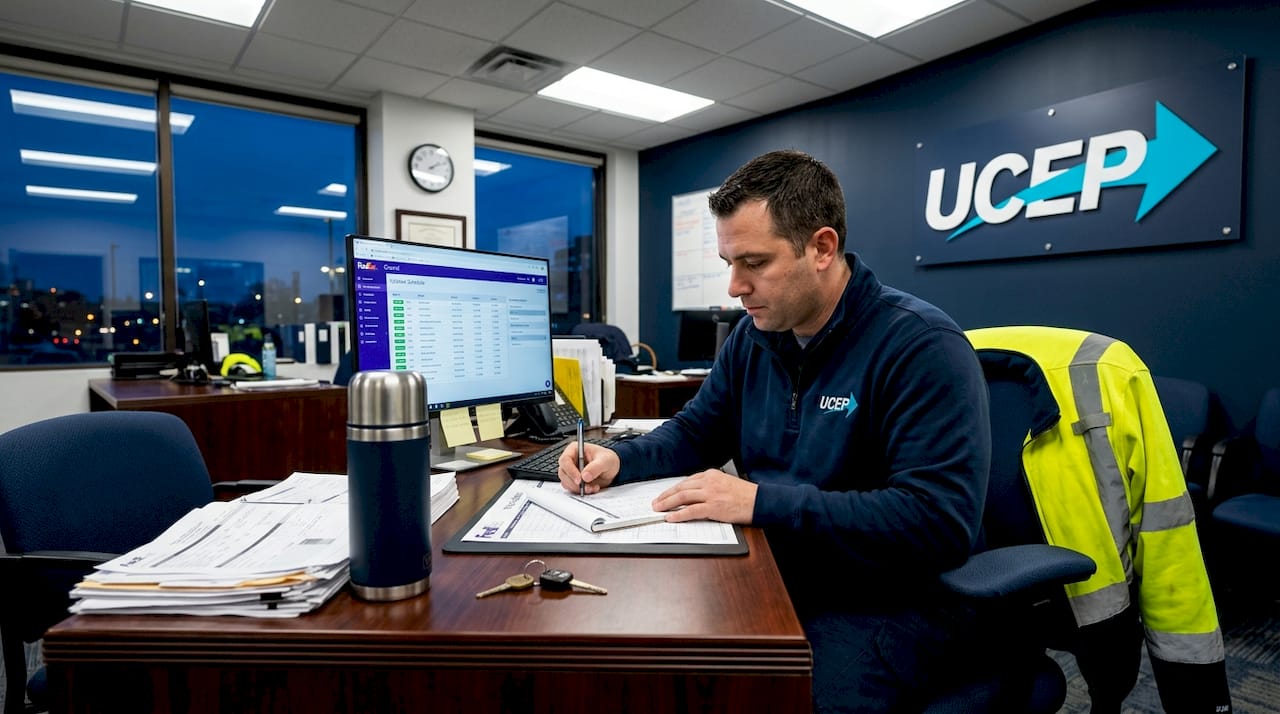
Driver duties include vehicle procedural checks, securing freight and the vehicle, complying with health and safety regulations, route planning, and maintaining communication with dispatch throughout the run. Each of these steps matters for both safety and compliance.
Here is what a standard shift looks like broken into steps:
- Arrive at terminal (30 min before departure): Sign in, receive route paperwork, review any special instructions from dispatch.
- Pre-trip inspection: Walk the tractor and trailer systematically. Check lights, brakes, tires, coupling, and cargo securement. Log it in the ELD (Electronic Logging Device).
- Depart on scheduled lane: Follow the planned route. Account for weather, road conditions, and construction.
- Monitor Hours of Service (HOS): Federal Motor Carrier Safety Administration (FMCSA) rules limit driving to 11 hours within a 14-hour on-duty window. The ELD tracks this automatically.
- Communicate with dispatch: Report any delays, mechanical issues, or DOT inspection stops.
- Arrive at destination terminal: Drop the trailer at the assigned dock door. Complete post-trip inspection. Log out.
Overnight shifts typically run from around 7:30 PM to 6:30 AM depending on the lane length and any layover time. Some shorter relay runs are completed in four to six hours.
Pro Tip: If you are a driver building your resume for linehaul roles, document every ELD system you have used (PeopleNet, Omnitracs, KeepTruckin/Motive) and list your HOS compliance record. Contractors screen heavily for clean compliance history, and specifics stand out.
A comparison of common linehaul run types by distance and time is useful for planning:
| Run type | Typical distance | Drive time | Common departure |
|---|---|---|---|
| Short relay | 150 to 250 miles | 3 to 5 hours | 8:00 PM to 11:00 PM |
| Standard overnight | 300 to 500 miles | 5 to 9 hours | 6:00 PM to 10:00 PM |
| Extended OTR team | 600 to 1,000+ miles | 10+ hours (team) | Variable |
The focus on FedEx linehaul driver roles at the terminal level means drivers interact very little with end customers. This is a meaningful quality-of-life factor for many experienced CDL-A professionals who prefer the consistency and reduced stress of network freight over high-contact delivery work.
Qualifications, endorsements, and hiring process
Understanding the duties is key, but what does it take to qualify and be hired for a linehaul role with a FedEx contractor?
Requirements for FedEx linehaul positions are specific. Qualifications include a valid Class A CDL, a clean motor vehicle record (MVR), a minimum age of 21, at least one year of verifiable tractor-trailer experience, a preferred doubles endorsement (T-endorsement), and the ability to pass both a drug screen and a background check.
Here is the full qualification checklist:
- Valid Class A CDL (commercial driver's license)
- Age 21 or older (federal interstate driving requirement)
- Clean MVR: no DUIs, no reckless driving convictions, limited at-fault accidents
- Minimum 1 year of verifiable tractor-trailer experience (recent preferred)
- Doubles/triples endorsement (T-endorsement): strongly preferred by most contractors
- Ability to pass a pre-employment drug test (DOT five-panel)
- Ability to pass a background check
- Familiarity with ELD systems and federal HOS rules
The doubles endorsement deserves a specific note. Many FedEx Ground linehaul operations pull double 28-foot trailers, not standard 53-foot singles. If you do not have this endorsement, you limit which contractors can place you. Adding it requires a knowledge test at your state's DMV, typically no road test. It is a straightforward add-on that significantly increases your hiring options.
The hiring process does not go through FedEx directly. FedEx Ground contracts with ISPs, and those ISPs recruit, interview, and hire their own drivers. This means you apply to the contractor, not to FedEx corporate.
Here is how the hiring process typically flows:
- Driver identifies open positions through a job board, referral, or direct outreach to a contractor.
- Application submitted with CDL copy, MVR, and work history.
- Contractor conducts a phone or in-person interview.
- Background check and drug screen ordered.
- Motor vehicle record verified through FMCSA's PSP (Pre-employment Screening Program) where applicable.
- Offer made and start date scheduled, often with paid orientation.
Pro Tip: If you are a service provider screening candidates, look at team driving qualifications as a benchmark for what strong linehaul candidates look like. Team experience often signals higher comfort with overnight operations and ELD compliance.
Pay, schedules, and business upside
With requirements clear, the next step is what makes linehaul so attractive: compensation, shift stability, and business impact.
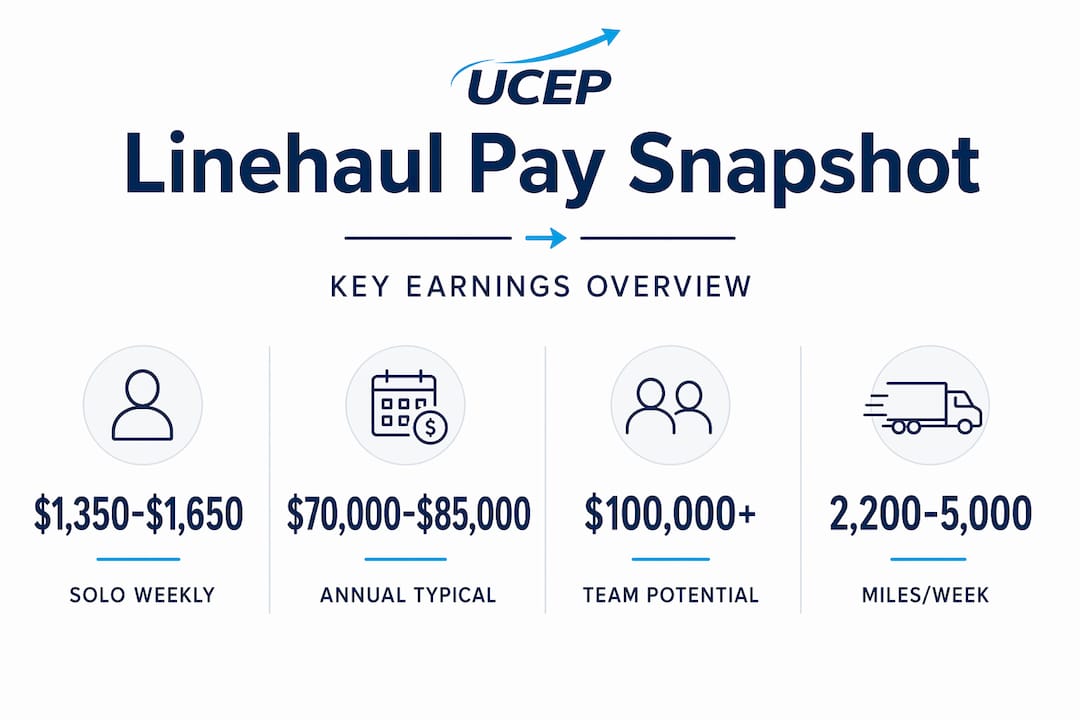
Pay in FedEx linehaul operations is structured and competitive. Solo drivers on home daily or weekly runs typically earn between $1,350 and $1,650 per week on PM shifts covering 2,200 to 2,500 miles. Annualized, that translates to approximately $70,000 to $85,000 per year. Team drivers on OTR runs earn more due to higher mileage.
From the service provider side, the numbers scale significantly. A five-truck dedicated linehaul operation can generate around $2.7 million in gross revenue annually, with net income around $645,000 depending on cost controls. Those figures assume efficient operations, managed fuel costs, and strong driver retention.
Key pay and schedule data points:
| Driver type | Weekly miles | Weekly pay | Annual estimate |
|---|---|---|---|
| Solo PM (home daily) | 2,200 to 2,500 | $1,350 to $1,650 | $70K to $85K |
| OTR team (home weekly) | 4,000 to 5,500+ | $2,000+ per driver | $100K+ |
| Service provider (5 trucks) | N/A | N/A | ~$645K net |
Schedules in linehaul are one of the strongest retention factors for experienced drivers. Unlike irregular OTR freight, FedEx dedicated linehaul lanes run on consistent schedules. A driver might work Sunday through Thursday, departing at 9:30 PM each night and returning home before noon. That predictability is rare in trucking.
Additional factors that affect pay and business performance:
- Route type: Dedicated routes offer more predictable revenue than spot runs
- Equipment quality: Newer, well-maintained trucks reduce downtime and driver turnover
- Driver retention: High turnover raises recruiting costs and risks service failures
- Fuel efficiency: Fuel is one of the largest variable costs for ISPs
The current driver market favors qualified CDL-A professionals. Demand is up, qualified drivers are scarce, and service providers who offer competitive pay and consistent home time have a real hiring advantage.
Risks, compliance, and what most people miss
Knowing the benefits is crucial, but it is equally important to recognize the challenges and operational risks involved in linehaul contracting.
Running a FedEx linehaul operation is a business, not just driving. Driver shortages inflate wages and create real recruitment challenges. FMCSA Hours of Service limits enforced via ELD restrict flexibility. DOT compliance is non-negotiable. Insurance costs are substantial. And route assignments can change.
Key risks every contractor and driver should understand:
- Driver shortages: Finding qualified CDL-A drivers with a clean record and doubles endorsement is an ongoing challenge. Wages trend upward as a result.
- FMCSA HOS compliance: ELD systems log every minute on duty. Violations can result in fines, out-of-service orders, and damaged safety scores.
- Insurance costs: Trucking insurance for a linehaul ISP operation can run $10,000 to $20,000 or more per truck annually.
- Route changes: FedEx Ground can modify, reassign, or discontinue routes. Contractors do not own the routes outright.
- Contract renewal: ISP agreements are periodically reviewed. Non-renewal is a real risk for contractors with poor performance or safety records.
"Before purchasing or operating a FedEx linehaul route, understand that route type, contract structure, and DOT safety history all significantly affect profitability and long-term viability."
Pro Tip: If you are managing an ISP fleet, track your CSA (Compliance, Safety, Accountability) scores monthly. High scores attract better drivers and give you leverage in route negotiations. Declining scores are an early warning sign that needs immediate attention.
One often overlooked risk is equipment depreciation. Linehaul tractors run high annual mileage. A tractor covering 125,000 miles per year needs more frequent maintenance than a comparable P&D vehicle. Build realistic maintenance reserves into your cost model from day one.
Why linehaul roles are misunderstood—and what actually matters
Here is the real story often left out of linehaul job discussions.
The biggest misconception about FedEx linehaul is that it mirrors the hardships of irregular OTR trucking: unpredictable home time, endless highway miles through unfamiliar territory, and isolation. That version of trucking exists, but it is not what the FedEx Ground linehaul network is built around.
FedEx designed its ground network specifically for efficiency and predictability. Lanes are established. Schedules repeat. Drivers learn their routes, their terminals, and their dispatch contacts. That structure is not incidental. It is the operational foundation that makes next-day delivery possible at scale.
From a career perspective, this matters. Drivers who treat a FedEx linehaul position as a defined professional role rather than a stepping stone often build stronger track records. Consistent attendance, clean ELD logs, and low incident rates compound over time into leverage: higher pay, first pick of routes, and preferred status with contractors who value reliability.
For service providers, the business case for investing in driver development is underappreciated. Contractors who retain drivers for two or more years spend significantly less on recruiting, orientation, and service failures. A driver who knows your equipment, your lanes, and your operational standards is a genuine business asset.
The conventional wisdom frames linehaul as a commodity role: hire a CDL-A, put them in the truck, collect revenue. The operations that perform best take the opposite approach. They screen carefully, pay competitively, and build the kind of work environment that makes drivers choose to stay.
Find the right FedEx linehaul opportunity with UCEP
If you are ready to explore top linehaul roles or start hiring, here is how UCEP can provide the support you need.
UCEP is a job board and recruiting platform built specifically for FedEx service providers and the drivers who work with them. You will not wade through unrelated freight listings or generic CDL postings here.
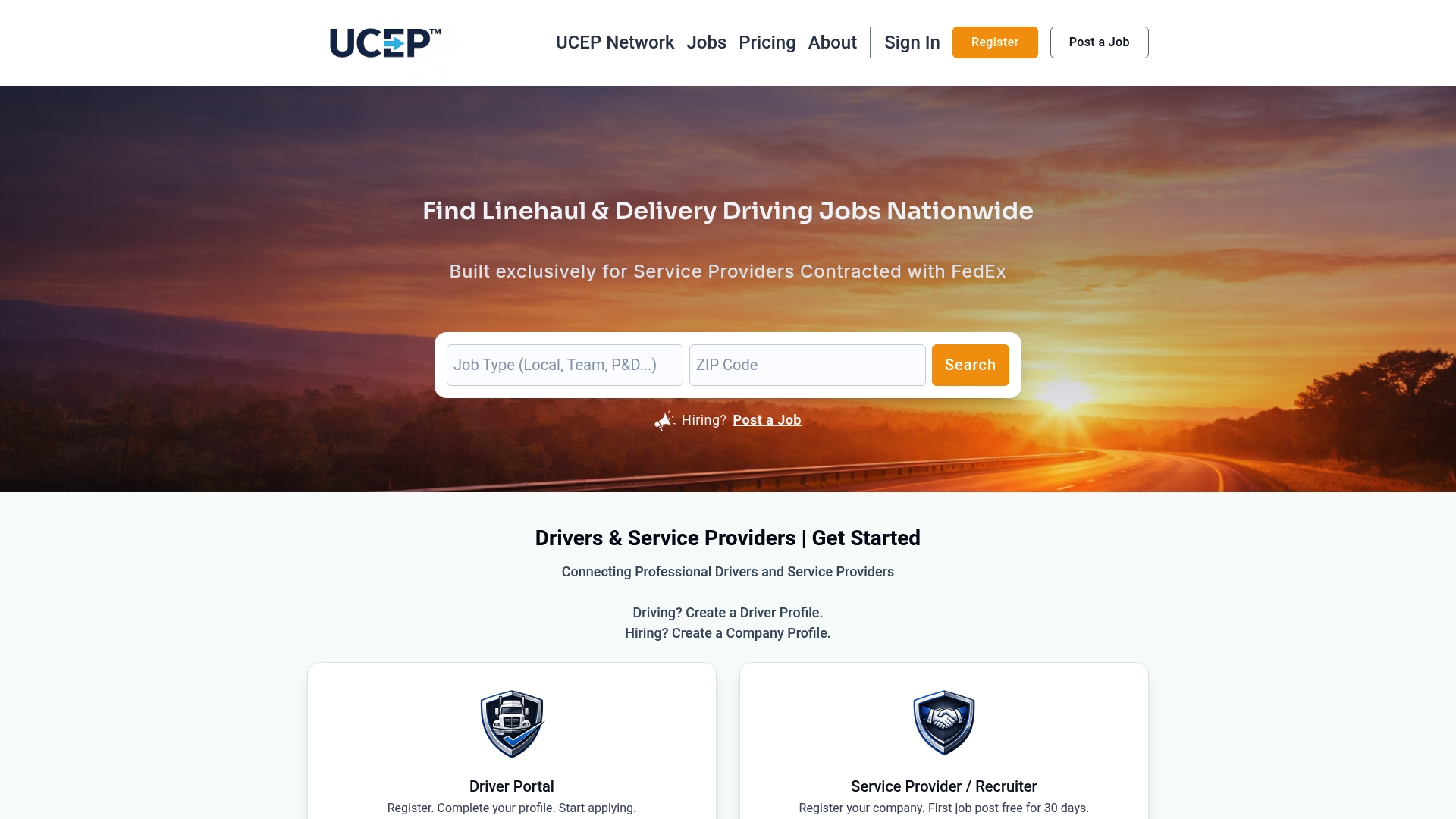
Service providers can post open linehaul positions and connect directly with qualified CDL-A candidates. Drivers can browse active openings across the FedEx network and read verified contractor reviews before applying. The UCEP hiring network gives both sides a focused, efficient way to find the right match. Whether you are filling a dedicated overnight lane or searching for your next driving opportunity, UCEP is built for exactly this.
Frequently asked questions
What is the difference between linehaul and P&D driving at FedEx?
Linehaul drivers focus on long-distance hub-to-hub routes with few or no customer stops, while P&D drivers handle local pickups and deliveries with regular customer interaction and multiple stops per shift.
How are FedEx Ground linehaul drivers paid?
Most solo drivers earn approximately $1,350 to $1,650 per week on PM shifts, which annualizes to $70,000 to $85,000. Team drivers running longer OTR lanes typically earn more per driver.
Do I need a doubles endorsement for FedEx linehaul?
A doubles endorsement is strongly preferred by most FedEx Ground contractors but is not always a hard requirement for every position. Having it significantly broadens your options.
How do FedEx contractors hire linehaul drivers?
Independent Service Providers handle all driver hiring and management. Applicants apply directly to the ISP contractor, not to FedEx Ground or FedEx corporate.
What are common risks in running a FedEx linehaul operation as a contractor?
Contractors face driver shortages, regulatory compliance requirements under FMCSA, high insurance and vehicle costs, and the possibility of route reassignments or contract changes by FedEx Ground.