Relocating for a CDL driving job means moving your home base to access better freight lanes, higher pay, or a specific carrier's terminal network. The decision goes beyond picking a city on a map. You need to understand how freight networks operate, what FMCSA licensing rules require during a state transfer, and whether your new location actually puts you closer to home time or further from it. This guide walks you through evaluating job offers, assessing living conditions, managing the physical move, and avoiding the mistakes that derail drivers in their first year after relocating.
How to evaluate CDL driving job opportunities when relocating
The most important factor when you decide to relocate for a CDL driving job is not the sign-on bonus. It is the carrier's freight network structure. Freight moves over networks, and a carrier with flexible nationwide operations can route you home consistently regardless of where you live. A carrier with rigid, terminal-based lanes may leave you stranded far from home even if you live 20 miles from their yard.
Long-haul, regional, and local jobs each carry different relocation needs
Long-haul CDL drivers often have the most flexibility. Long-haul drivers can work nationwide without being tied to a specific terminal, which means your home location matters less than the carrier's routing capability. Regional drivers typically run within a defined multi-state zone, so living near the center of that zone improves home time significantly. Local CDL jobs require you to live within a short commute of a terminal or distribution hub, making precise relocation more critical.

Questions to ask recruiters before you commit
Recruiters often promise "weekly home time," but actual home time varies by zip code and freight density in your area. Ask the recruiter to describe home time for drivers who live in your specific destination zip code, not the average across the fleet. Ask about freight density on the lanes nearest your new home. Ask how often drivers in your region get routed back within 150 miles of home.
- What is the average home time for drivers based in [your target city]?
- How does the carrier handle routing when freight is light in my home region?
- Is the relocation package a one-time payment or spread across a retention period?
- What happens to the bonus if I leave within 12 months?
- Are there dedicated lanes available near my new home base?
Pro Tip: Ask the recruiter to connect you with a current driver who lives in your target city. A five-minute phone call with that driver tells you more than an hour with any recruiter.
Relocation packages can include financial incentives worth several thousand dollars, but they should never be the deciding factor. A generous bonus tied to a 12-month retention clause can trap you in a poor-fit job. Weigh the package against actual home time, route structure, and freight density before signing anything.
The biggest mistake new drivers make is choosing jobs based on sign-on bonuses or recruiter promises without verifying real conditions. Treat every recruiter conversation as a job interview you are conducting, not one you are sitting for.
What living conditions to assess before you move
Cost of living directly affects how far your CDL pay stretches. Major trucking hubs like Memphis, Tennessee; Dallas, Texas; and Columbus, Ohio offer strong freight density and relatively affordable housing compared to coastal cities. Living near a major freight corridor gives you more job options and better routing back home when you need it.
Regional factors that affect your daily quality of life
Climate matters more than most drivers admit before they move. If you are used to mild winters and relocate to a northern freight hub, winter driving conditions will affect both your commute to the terminal and your on-road schedule. Housing availability near truck-friendly neighborhoods, with space for a personal vehicle and easy highway access, is another practical filter. Proximity to schools, healthcare, and grocery stores matters if you are moving with a family.
- Freight corridor access: Living near I-40, I-80, or I-10 corridors puts you close to the highest freight volume in the country.
- Housing costs: Mid-South and Midwest hubs consistently offer lower rent and home prices than coastal markets.
- Climate: Southern hubs reduce winter weather risk; northern hubs may offer higher pay to offset conditions.
- Family considerations: Research school districts, healthcare facilities, and spousal employment options before committing.
Pro Tip: Search for neighborhoods within 30 minutes of a major distribution center or intermodal facility. That proximity often translates directly into more consistent home time and less deadhead driving.
| City | Relative housing cost | Freight density | Climate risk |
|---|---|---|---|
| Memphis, TN | Low | Very high | Moderate |
| Dallas, TX | Moderate | Very high | Low |
| Columbus, OH | Low | High | Moderate winter |
| Phoenix, AZ | Moderate | High | Low |
| Chicago, IL | High | Very high | High winter |
Drivers with spouses or partners who work remotely have the most flexibility in choosing a destination. Drivers whose partners need local employment should prioritize cities with diverse job markets, not just strong freight corridors.
Step-by-step logistics for relocating to start a CDL job
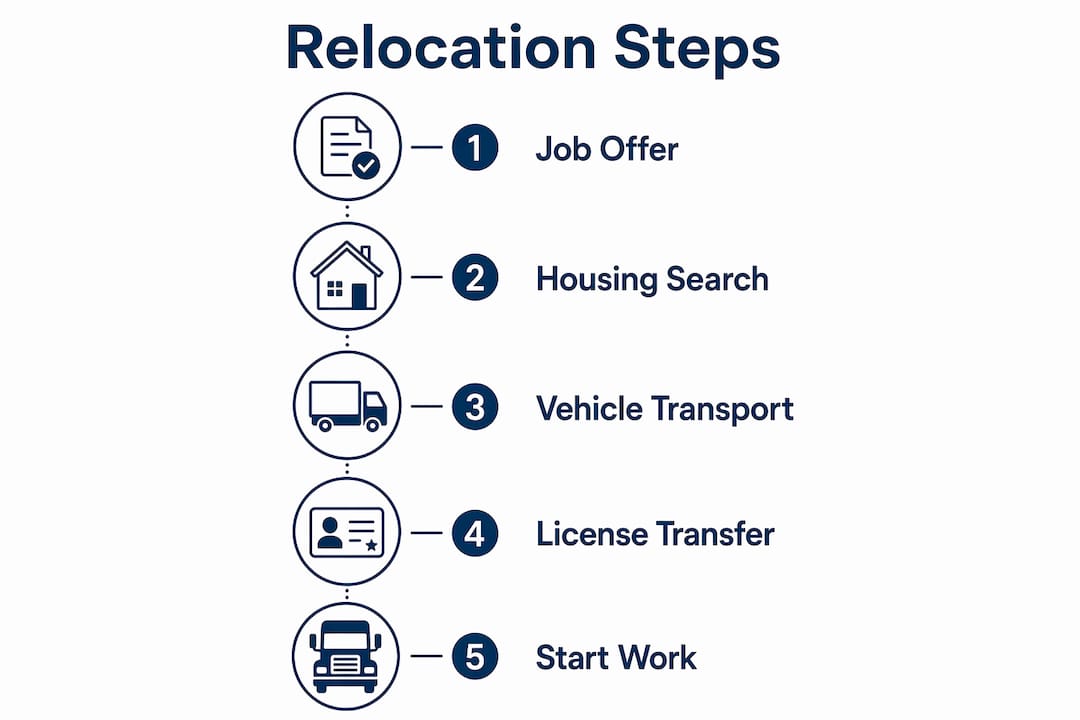
A clean relocation timeline prevents the most common problems: arriving before your housing is ready, or starting a new job before your household goods arrive.
- Confirm your start date in writing. Get the job offer and start date confirmed before booking any moving services. Verbal commitments from recruiters are not binding.
- Secure housing before you move. Use short-term furnished rentals for the first 30–60 days if you cannot visit the destination in person. This gives you time to find permanent housing without pressure.
- Book your household move early. Moving companies fill up fast, especially in spring and summer. Book at least four to six weeks in advance.
- Arrange auto transport with flexible timing. Auto transport depends on route density and can include unexpected delays. Do not schedule your vehicle pickup for the same day you need it at the destination. Build in a buffer of three to five days minimum.
- Transfer your CDL license promptly. CDL license transfer between states is standard practice. Visit your new state's DMV within 30 days of establishing residency. Bring your current CDL, medical certificate, and proof of residency.
- Budget for overlap costs. You may pay rent in two places for 30–45 days. Factor that into your relocation budget before you commit.
- Plan your first week on the job. Arrive at least two days before your start date. Use that time to locate the terminal, meet your dispatcher, and confirm your first assignment.
| Task | Recommended timing | Common mistake |
|---|---|---|
| Confirm job offer in writing | Before any booking | Relying on verbal confirmation |
| Book household movers | 4–6 weeks before move | Booking too late in peak season |
| Arrange auto transport | 2–3 weeks before move | Expecting exact delivery dates |
| Transfer CDL license | Within 30 days of arrival | Waiting until license expires |
| Secure housing | Before move date | Arriving without confirmed address |
Auto transport costs between major cities are typically lower and faster than routes to remote towns, even when the mileage is greater. Route density and carrier capacity drive pricing more than distance alone.
Common challenges when relocating for a CDL job
Misaligned freight lanes are the most frequent complaint from drivers who relocate. You move to a new city expecting consistent home time, but the carrier's lanes run in the opposite direction from your home. Home time and routing effectiveness depend heavily on how a carrier's freight network is designed, not on how close you live to a terminal.
Financial stress compounds quickly during a relocation. Moving costs, security deposits, and the gap between your last paycheck and your first new paycheck can create a cash flow problem. Set aside at least one month of living expenses as a buffer before you start the move.
Mental health is a real factor that drivers underestimate. Moving to a new city while starting a demanding new job creates compounding stress. The mental and physical demands of trucking are significant on their own. Adding relocation stress on top of a new route, new dispatcher, and new home environment requires deliberate recovery time.
Drivers who research their carrier's freight network before relocating report significantly fewer home time problems than those who rely on recruiter promises alone. The freight lane is the job. The address is secondary.
Vehicle shipment delays are common and predictable. Treat your personal vehicle delivery as a variable, not a fixed date. Rent a car for the first week if needed. That cost is far less than the stress of a delayed start date.
Interviewing carriers thoroughly before you commit is the single best way to avoid these problems. Ask for written documentation of home time policies. Ask how the carrier handles drivers who are consistently routed away from home. A carrier that cannot answer those questions clearly is telling you something important.
Key takeaways
Relocating for a CDL driving job requires matching your home location to a carrier's freight network, not just accepting the nearest job offer with the biggest sign-on bonus.
| Point | Details |
|---|---|
| Freight network fit matters most | Choose a carrier whose lanes route you home regularly, regardless of terminal proximity. |
| Verify home time by zip code | Ask recruiters for home time data specific to your destination city, not fleet-wide averages. |
| Build a financial buffer | Set aside one month of living expenses to cover overlap costs and unexpected delays. |
| Transfer your CDL promptly | Visit your new state's DMV within 30 days of establishing residency to avoid license issues. |
| Auto transport needs flexible timing | Plan for a 3–5 day buffer on vehicle delivery; route density drives timing more than distance. |
What I've learned about CDL relocation decisions
The drivers I see struggle most after relocating are the ones who treated the move as a housing decision instead of a business decision. They picked a city they liked, found a job nearby, and assumed the freight would cooperate. It rarely does. The freight network is the job. Your address is just where you sleep between runs.
The right question is not "Where do I want to live?" It is "Which carrier's freight network puts me home consistently from wherever I live?" Those are very different questions, and the second one produces much better outcomes. A CDL license is a business tool, and the carriers you choose to work with are business partners. Evaluate them that way.
Drivers who research carrier operational changes and network structures before committing to a relocation make far fewer costly mistakes. The information is available. Most drivers just do not ask for it until after they have already moved.
My honest advice: do not relocate for a sign-on bonus. Relocate for a freight lane that matches your life. The bonus disappears in 12 months. The freight lane is what you wake up to every day.
— Aaron
CDL driving opportunities worth exploring before you move
Ucep connects CDL drivers with FedEx Service Providers offering linehaul, CDL-A solo, CDL-A team, and pickup and delivery roles across the country. Before you commit to a relocation, it pays to see what opportunities exist in your target region and what drivers are saying about those employers.
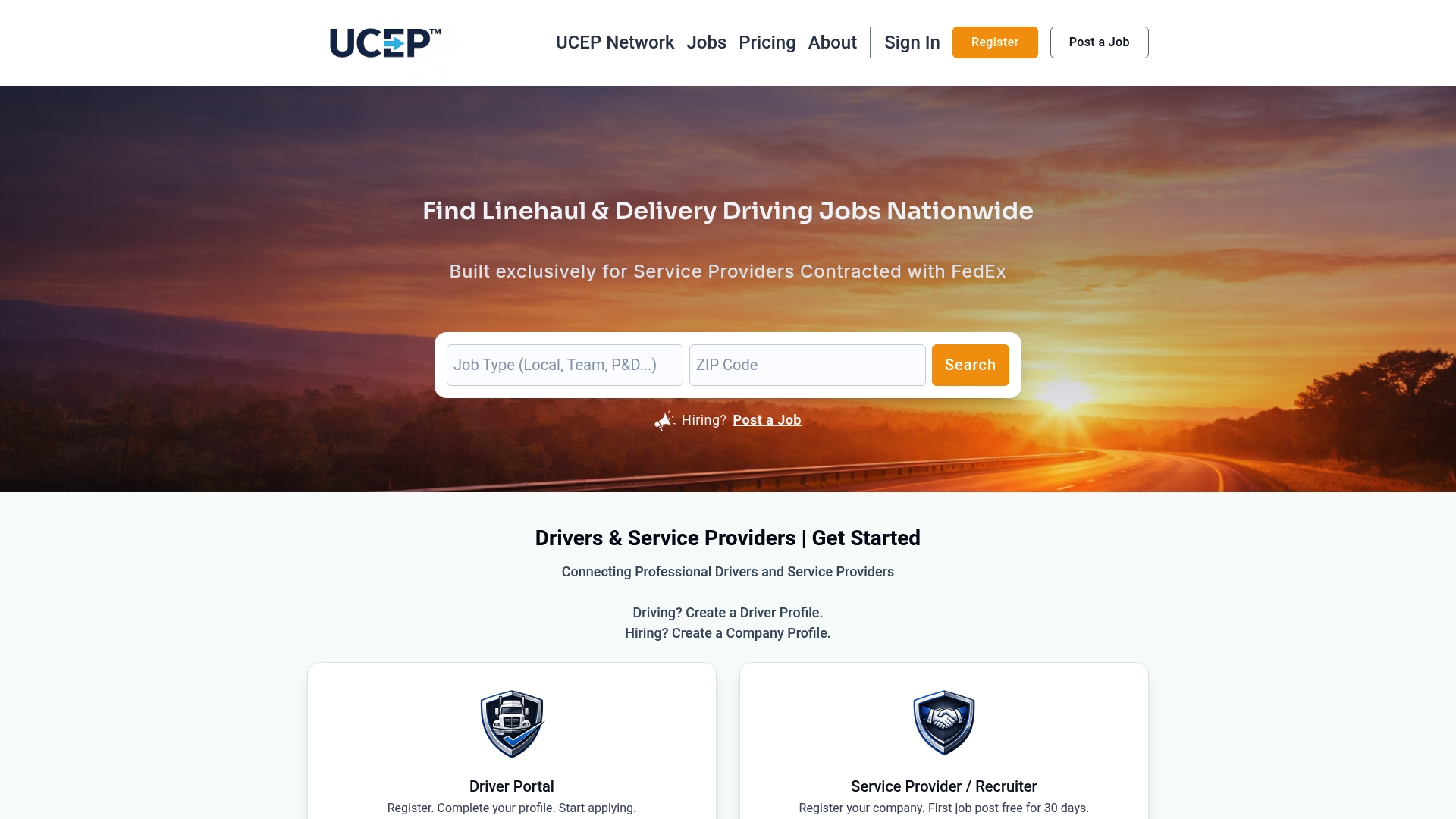
Ucep's service provider reviews give you real driver feedback on home time, route structure, and employer reliability before you sign anything. You can also browse companies hiring drivers to compare opportunities by location and job type. If you want to see the full network of FedEx-contracted positions available nationwide, the Ucep driver job board is the place to start your search.
FAQ
Do I have to relocate to get a CDL driving job?
Not always. Long-haul CDL drivers can work nationwide without relocating near a terminal if the carrier's network supports flexible routing. Relocation becomes necessary mainly for regional and local CDL roles tied to specific terminals or distribution hubs.
Will my CDL transfer if I move to a new state?
Yes. CDL license transfer between states is a standard process. Visit your new state's DMV within 30 days of establishing residency and bring your current CDL, medical certificate, and proof of address.
What should I ask a recruiter about home time before relocating?
Ask for home time data specific to your destination zip code, not fleet averages. Actual home time varies by zip code and freight density, so fleet-wide promises rarely reflect what you will experience from your specific location.
How long does auto transport take when relocating for a trucking job?
Auto transport timelines depend on route density and carrier capacity, not just distance. Moving between major cities is typically faster than shipping to remote areas. Plan for a 3–5 day buffer beyond any quoted delivery window.
Are relocation packages worth taking for CDL jobs?
Relocation packages can be worth taking if the job's freight network and home time align with your lifestyle. Evaluate the full job structure first. A bonus tied to a 12-month retention clause loses its value quickly if the routes do not bring you home consistently.