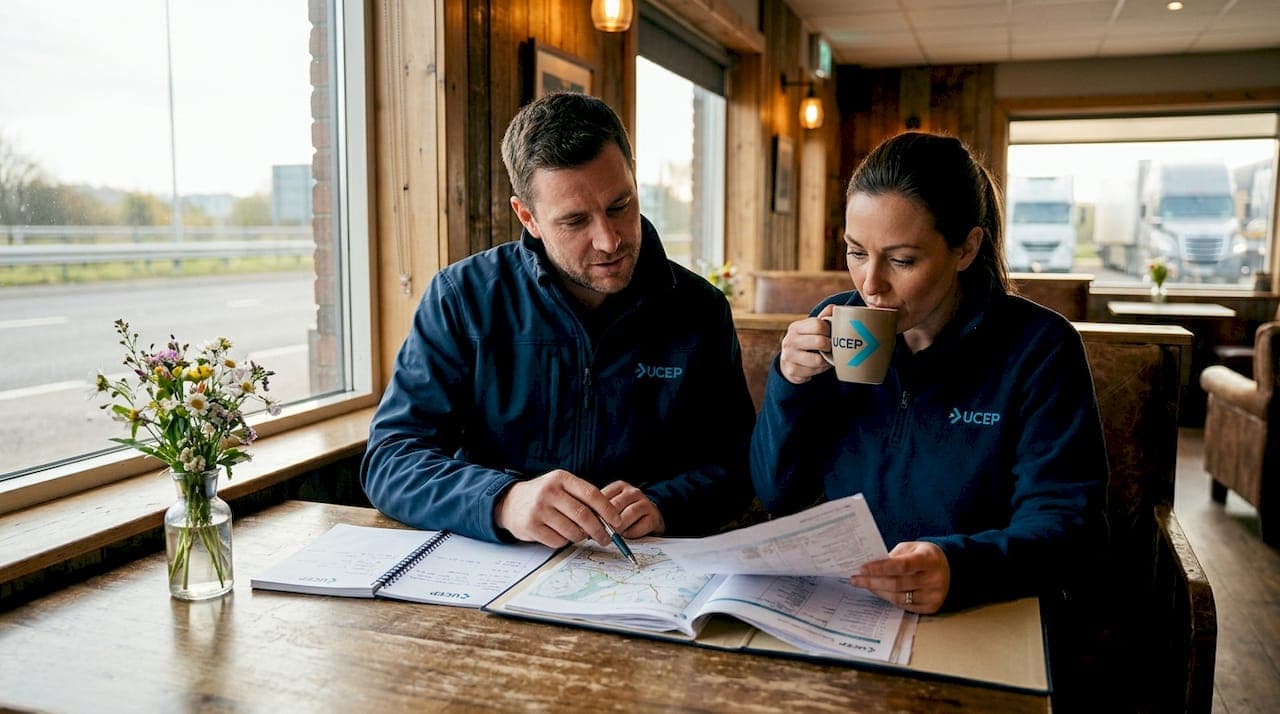
Finding and keeping qualified CDL-A team drivers is one of the most persistent challenges for FedEx-contracted service providers. A single unfilled team position can stall linehaul operations, delay freight, and put contract performance at risk. High turnover compounds the problem. This guide walks you through every stage of the process, from defining exactly who qualifies, to sourcing the right candidates, to screening for compliance, to onboarding drivers who stay. If you run linehaul operations and need a repeatable hiring system that meets FedEx and DOT standards, this is the resource you need.
Table of Contents
- What makes a qualified CDL-A team driver for FedEx linehaul?
- Step-by-step: How to source team driver candidates
- Screening for compliance, endorsements, and team fit
- Onboarding and retaining your CDL-A team drivers
- A recruiter's perspective: Why sourcing for team linehaul is its own art
- Recruit smarter: Accelerate your team driver search with UCEP
- Frequently asked questions
Key Takeaways
| Point | Details |
|---|---|
| Know your requirements | Define experience, endorsement, and background check criteria upfront for efficient team driver hiring. |
| Use targeted sourcing | Specialized job boards and networking increase your chance of finding qualified team drivers. |
| Verify compliance early | Confirm endorsements and clear all screenings before extending offers to avoid onboarding delays. |
| Prioritize retention | Clear communication and robust onboarding keep your team drivers engaged and reduce turnover. |
What makes a qualified CDL-A team driver for FedEx linehaul?
Before diving into sourcing and hiring, it is critical to define what sets a qualified CDL-A team driver for FedEx linehaul apart from other applicants.
Not every CDL-A holder is ready for team linehaul. The role has specific technical requirements, regulatory standards, and operational expectations that narrow the candidate pool considerably. Understanding these requirements upfront saves time and prevents costly hiring mistakes.
Core qualifications at a glance
FedEx team driver listings specify experience, Doubles Endorsement, drug testing, and additional compliance requirements that all candidates must meet. Here is a summary of what you should verify before moving any applicant forward:
| Requirement | Standard |
|---|---|
| License type | Valid CDL-A |
| Experience option 1 | 1 year within the past 3 years |
| Experience option 2 | 5 years within the past 10 years |
| Experience option 3 | 6 months plus FedEx-approved school certificate |
| Doubles Endorsement | Required or must be obtained post-hire |
| Drug test | DOT-compliant pre-employment |
| Background check | Federal background check required |
| Freight type | 100% drop and hook, no-touch |
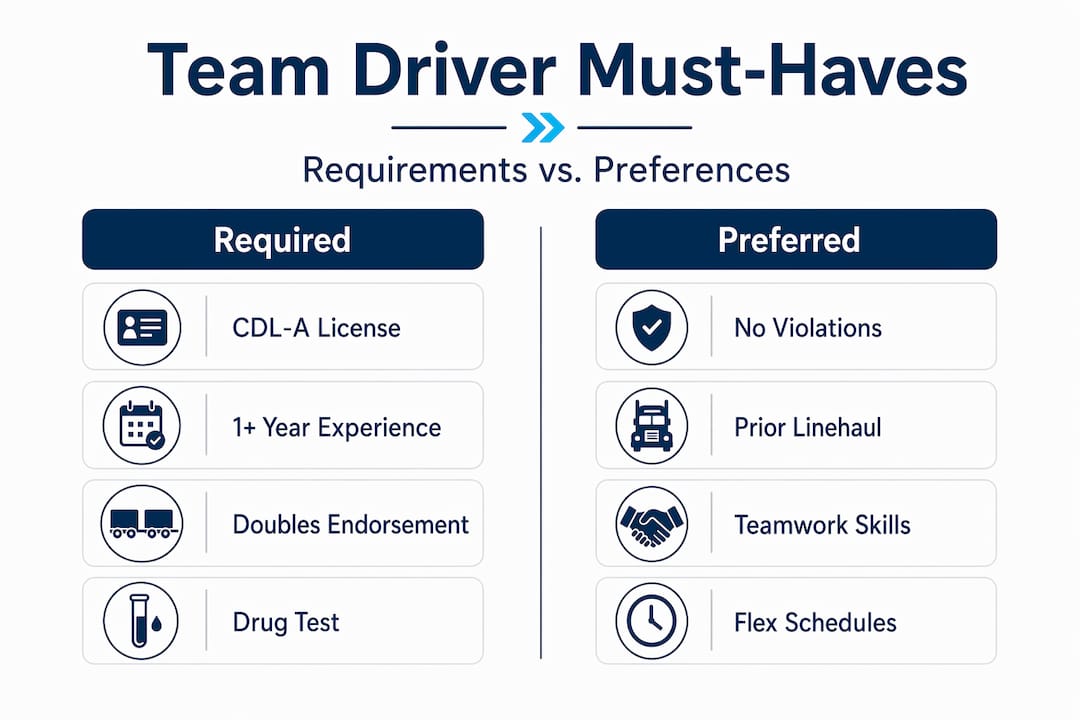
This table gives you a clear hiring baseline. Every candidate who enters your pipeline should be measured against these standards from day one.
What the role actually looks like
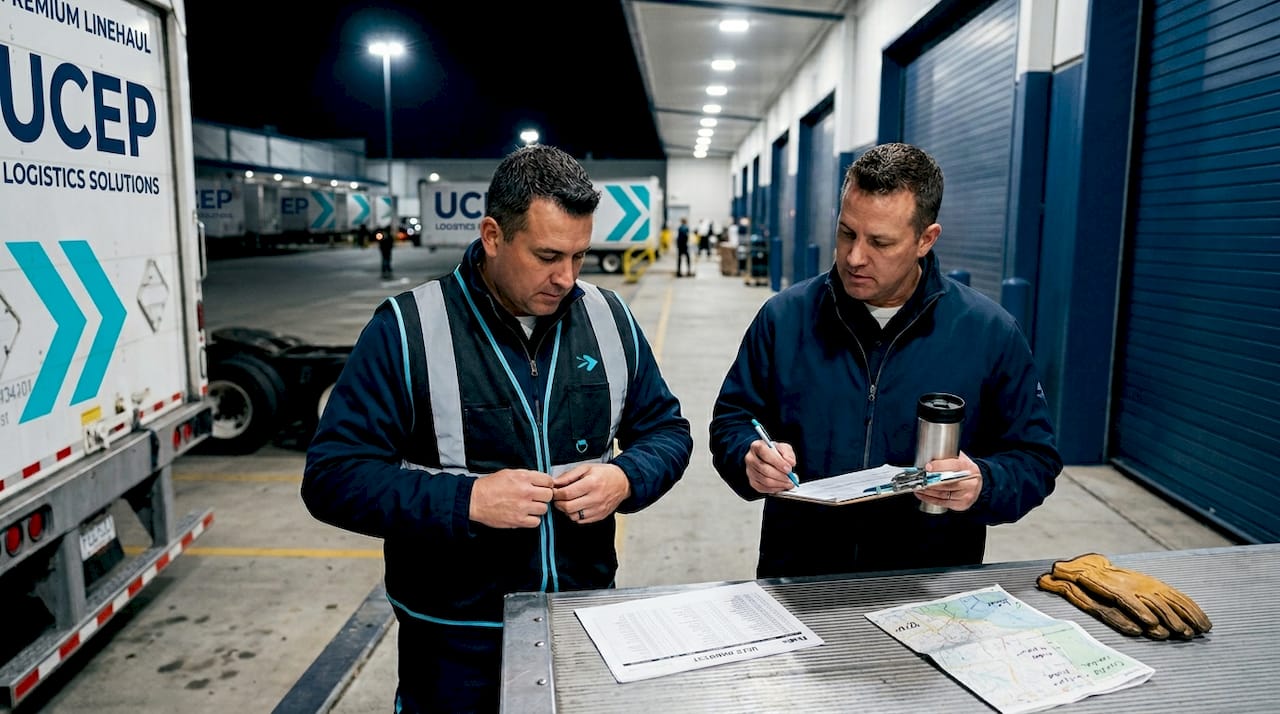
Team linehaul routes for FedEx Ground are structured around efficiency. Drivers operate in pairs, sharing driving duties on long-distance routes. The work is 100% drop and hook with no-touch freight, meaning drivers swap loaded trailers at relay points without physically handling packages. This setup is a genuine selling point for experienced drivers who want to avoid dock work and loading duties.
Key operational characteristics include:
- Long-distance routes that require coordinated driving schedules between partners
- Relay-based operations where trailers are exchanged at designated terminals
- Consistent freight volume tied to FedEx Ground's national network
- Home time structures that vary by route and service provider contract
Understanding the day-to-day reality of the job helps you write better job postings and have more credible conversations with candidates.
Endorsement requirements in detail
The Doubles Endorsement (also called the "T" endorsement) allows drivers to pull double trailers. Most FedEx linehaul team positions require it. However, some team driver qualifications allow a grace period for drivers to obtain the endorsement after hire. This flexibility can open your candidate pool, but it requires careful tracking and a clear written agreement with the driver about the timeline.
Pro Tip: Always confirm specific endorsement and experience requirements directly with your FedEx contract terms before advancing any candidate. Requirements can vary by service provider agreement and route type.
Step-by-step: How to source team driver candidates
Once you know who you need, the next step is deploying the right sourcing methods to reach those qualified candidates.
Sourcing CDL-A team drivers requires a more targeted approach than general trucking recruitment. These drivers have specific experience, often hold or are pursuing endorsements, and are typically evaluating multiple offers at once. Your sourcing strategy needs to reach them where they are and communicate the right information quickly.
Step 1: Post on specialized transport job boards
General job boards produce high application volume but low qualification rates for CDL-A roles. Start with platforms that focus specifically on transportation and freight. Posting on transport job boards that cater to commercial drivers increases the likelihood that applicants already hold a CDL-A and understand linehaul work.
When writing your posting, lead with the details drivers care about most:
- Pay structure (per mile, per run, or salary)
- Home time frequency
- Drop and hook confirmation
- Route type and approximate miles per week
- Endorsement requirements and any flexibility
Listings that highlight no-touch, drop and hook roles consistently attract more experienced team driver applicants because these are the features experienced drivers actively search for.
Step 2: Connect with CDL training schools
Driving schools that offer FedEx-approved certification programs are a direct pipeline for entry-level team driver candidates. These graduates often meet the 6-month-plus-school-certificate experience option. Building a relationship with two or three regional schools gives you a steady flow of candidates who are already oriented toward FedEx-style operations.
Step 3: Build a driver referral program
Your current drivers are your best recruiters. They know other qualified drivers, they understand the job, and a referral from a trusted colleague carries weight in the driver community. A structured referral bonus, paid out after a new hire completes 90 days, creates a financial incentive and a quality filter at the same time.
Step 4: Attend industry networking events
Trucking industry events, CDL job fairs, and regional freight conferences put you in direct contact with active drivers. These settings allow for real conversations about your routes, your service provider culture, and the specifics of your team driver positions. Drivers who attend these events are often actively looking or open to better opportunities.
Sourcing strategy comparison
| Method | Speed | Candidate quality | Cost |
|---|---|---|---|
| Specialized job boards | Medium | High | Low to medium |
| CDL training schools | Slow | Medium to high | Low |
| Driver referral program | Medium | Very high | Low (bonus-based) |
| Industry networking events | Slow | High | Medium |
| General job boards | Fast | Low to medium | Low |
Pro Tip: Build a referral system among your active drivers before you have an urgent opening. Waiting until you are short-staffed to launch a referral program reduces its effectiveness significantly.
Screening for compliance, endorsements, and team fit
Now that you have a stack of applicants, it is crucial to run a rigorous but efficient screening and vetting process.
Speed matters in driver recruiting. Qualified CDL-A team drivers receive multiple offers. A slow screening process loses candidates to competitors. The goal is to move quickly without skipping any compliance steps.
The screening sequence
Follow this order to maximize efficiency and minimize compliance risk:
-
Review the application for baseline qualifications. Confirm valid CDL-A, verify which experience window the driver meets, and check whether they hold a Doubles Endorsement. Candidates who do not meet any experience option should be declined immediately.
-
Conduct a brief phone screen. Ask about current endorsement status, availability, and interest in team operation. This conversation takes 10 to 15 minutes and filters out candidates who are not genuinely interested in team linehaul.
-
Request documentation. Collect a copy of the CDL, MVR (motor vehicle record), and any school certificates. Review the MVR for disqualifying violations before investing more time.
-
Schedule DOT drug testing. Applicants must pass DOT drug testing, a federal background check, and meet or commit to obtaining the Doubles Endorsement before employment begins. Use a certified third-party testing provider to stay compliant.
-
Run the federal background check. This step is non-negotiable. Any disqualifying criminal history or falsified employment records should result in immediate disqualification.
-
Assess team compatibility. Ask about previous team driving experience, how the driver handled disagreements with a co-driver, and what their preferred communication style is on long runs. Team dynamics directly affect safety and performance.
Important: Endorsement lead times can create unexpected delays. In most states, obtaining a Doubles Endorsement requires passing a knowledge test at the DMV. Processing times vary. If a candidate does not already hold the endorsement, get a written commitment and a realistic timeline before extending a conditional offer.
What to look for in team fit
Team linehaul is not the same as solo driving. Two drivers share a cab for extended periods, coordinate rest schedules, and must communicate clearly about route conditions and handoffs. During your screening, look for:
- Consistent work history with previous employers, indicating reliability
- Previous team driving experience, which dramatically reduces the adjustment period
- Clear communication style, which you can assess during the phone screen
- Flexibility with scheduling, since team routes often involve irregular departure times
Rushing this step to fill a seat quickly is one of the most common and costly mistakes in team driver recruiting.
Onboarding and retaining your CDL-A team drivers
With a compliance-cleared driver ready to start, smooth onboarding and retention can make all the difference in long-term success.
Hiring a qualified driver is only half the work. The onboarding experience shapes how quickly a new driver becomes productive and whether they stay past the first 90 days. In a competitive market, poor onboarding is a direct cause of early turnover.
Onboarding essentials
Your onboarding process should cover the following areas clearly and completely:
- Regulatory training documentation. Record all required DOT training, hours-of-service orientation, and safety briefings. Keep signed copies in the driver file.
- Route and procedure orientation. Walk new drivers through the specific routes they will run, the relay terminal locations, and the drop and hook procedures at each stop. 100% drop and hook, no-touch linehaul work is a major FedEx Ground selling point and should be featured prominently in onboarding so drivers understand exactly what to expect.
- Safety standards review. Cover pre-trip inspection requirements, reporting procedures for incidents, and communication protocols with dispatch.
- Equipment familiarization. Ensure drivers are comfortable with the specific tractors and trailers in your fleet before their first run.
Using peer onboarding to accelerate integration
Pairing a new driver with a veteran team driver for the first two to three runs is one of the most effective onboarding tools available. The veteran driver provides real-world context that no orientation manual can replicate. They can answer route-specific questions, demonstrate relay procedures, and model the communication habits that make team driving work.
This approach also reduces the administrative burden on your operations staff, since the veteran driver handles much of the practical training.
Retention strategies that work
Retention in team linehaul requires ongoing attention, not just a strong start. Consider these practical approaches:
- Open feedback channels. Schedule brief check-ins at 30, 60, and 90 days. Ask drivers what is working and what is not. Act on what you hear.
- Retention bonuses. A structured bonus paid at 6 months and 12 months of continuous team operation gives drivers a financial reason to stay and signals that you value their commitment.
- Consistent communication. Drivers who feel informed about schedule changes, route updates, and company news are less likely to look elsewhere.
- Recognize performance. Acknowledge drivers who maintain clean safety records and consistent on-time performance. Recognition does not need to be costly to be effective.
Pro Tip: Regularly communicate open feedback channels and offer retention bonuses tied specifically to continuous team operation. Drivers who work well as a pair are significantly harder to replace than solo drivers, so keeping good teams together is worth the investment.
A recruiter's perspective: Why sourcing for team linehaul is its own art
Looking beyond the basic hiring steps, there is an art to recruiting for CDL-A team linehaul roles that only experience reveals.
Solo driver recruiting and team driver recruiting look similar on the surface. Both require CDL-A verification, DOT compliance, and background checks. But the differences matter more than most recruiters realize until they have made a few costly mistakes.
The first difference is the endorsement variable. Doubles Endorsement requirements often appear strict but may allow pending acquisition. The problem is that recruiters sometimes assume a candidate will get the endorsement quickly and extend an offer without confirming the actual timeline. Then the driver takes four to six weeks to schedule and pass the knowledge test, and the route sits unfilled. Ask about endorsement status on the very first call. Do not wait for the formal application stage.
The second difference is team compatibility. You are not just hiring a driver. You are hiring half of a working partnership. A driver who is technically qualified but difficult to work with will burn through co-drivers and create turnover at twice the rate. The screening process needs to include at least one direct conversation about how the driver approaches conflict, communication, and shared decision-making in the cab.
The third difference is communication speed. Qualified team drivers are in demand. They compare offers quickly and make decisions within days, not weeks. If your process takes two weeks to move from application to offer, you will lose the best candidates consistently. Build your pipeline before you have an urgent need, and keep candidates informed at every step. A brief update message every two to three days keeps candidates engaged and signals that you are organized and serious.
Read more about team driver insights to understand what experienced team drivers value most in a service provider relationship.
The recruiters who consistently fill team linehaul positions are the ones who treat endorsement verification as step one, not an afterthought, and who move fast enough to compete for the candidates that every other provider also wants.
Recruit smarter: Accelerate your team driver search with UCEP
Ready to put these strategies to work? UCEP makes every step more efficient and driver-focused.
UCEP is built exclusively for FedEx-contracted service providers and the professional drivers who work with them. You will not find generic job board noise here. Every feature is designed around the specific needs of linehaul recruiting.
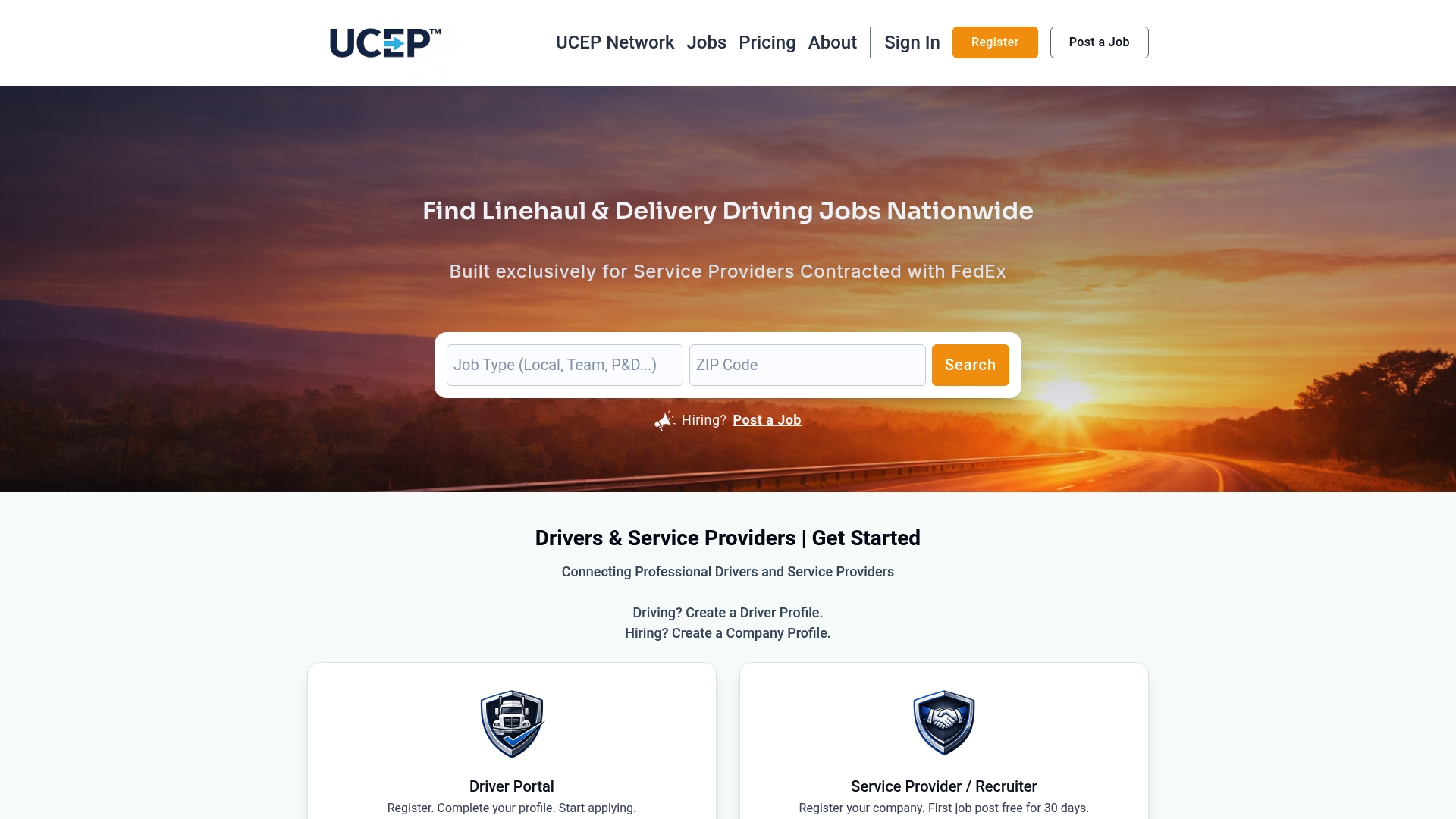
Browse companies hiring CDL-A drivers to see how other service providers are positioning their openings, or post your own team driver positions directly to an audience that is already oriented toward FedEx-related work. Use service provider reviews to build your reputation and attract higher-quality applicants who research providers before applying. When you are ready to scale your recruiting efforts, explore driver recruitment packages that match your hiring volume and budget. UCEP puts the right tools in one focused place so you can spend less time searching and more time hiring.
Frequently asked questions
What experience do CDL-A team drivers need for FedEx linehaul?
Drivers must meet one of three experience windows: at least 1 year within the past 3 years, 5 years within the past 10 years, or 6 months combined with a FedEx-approved driving school certificate. Confirming which window a candidate meets should happen at the application review stage.
Is a Doubles Endorsement mandatory before applying for FedEx team positions?
A Doubles Endorsement is typically required, but some service providers allow candidates to obtain it after hire within an agreed timeline. Always confirm the specific terms of your contract before offering this flexibility.
What background checks are conducted for CDL-A team driver hires?
All applicants must clear DOT drug testing and a federal background check before employment begins. These are non-negotiable requirements under DOT regulations and FedEx contractor standards.
Are all linehaul positions truly no-touch freight?
FedEx Ground linehaul team roles are structured as 100% drop and hook with no-touch freight, meaning drivers exchange trailers at relay points without handling packages directly. This is a consistent feature across FedEx Ground linehaul operations and a key selling point in your job postings.