
Keeping FedEx linehaul and delivery routes fully staffed is one of the most persistent operational challenges service providers face. Many contractors post a job ad, wait for applications, and hope for the best. That approach leads to empty seats, missed pickups, and revenue loss. The real solution is treating CDL-A driver recruitment as a repeatable business system, not a one-time task. This guide walks you through every stage of that system: understanding role requirements, building a sourcing process, evaluating candidates, and retaining the drivers you hire.
Table of Contents
- Understanding FedEx route driver requirements
- Building a repeatable CDL-A recruitment system
- Evaluating candidates: qualifications, fit, and compliance
- Retention strategies: keeping CDL-A drivers on your routes
- Why most FedEx contractors fail at CDL-A driver recruitment (and how to do it right))
- Find and keep top CDL-A drivers with expert support
- Frequently asked questions
Key Takeaways
| Point | Details |
|---|---|
| Define driver roles precisely | Clearly stating licensing, physical, and route-specific requirements is critical for effective recruitment. |
| Use multiple candidate sources | A mix of job boards, referrals, and networks attracts more reliable and experienced CDL-A drivers. |
| Screen rigorously for fit and compliance | Check credentials, driving history, and physical readiness to ensure candidates meet FedEx and DOT standards. |
| Create retention-focused systems | Ongoing onboarding, incentives, and organized workflows reduce turnover and support long-term staffing. |
| Systematize recruitment to boost profitability | Treating hiring as a repeatable system rather than a task keeps routes reliably staffed. |
Understanding FedEx route driver requirements
Before launching your recruitment campaign, it's critical to clarify exactly who you need and what the role truly requires.
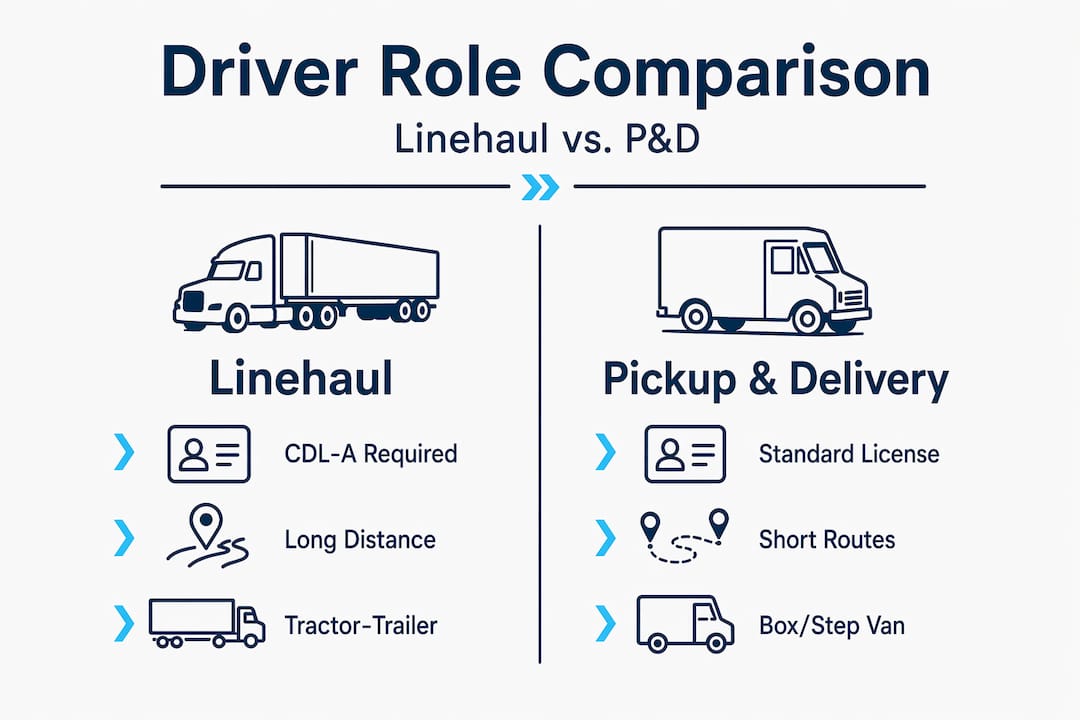
Not all FedEx routes are the same. Linehaul and pickup and delivery (P&D) routes have different licensing requirements, vehicle types, and physical demands. Mixing up these requirements in a job posting wastes your time and attracts the wrong candidates.
Hiring strategies for FedEx Ground make clear that contractors must build and manage their own workforce, and that linehaul roles require a CDL-A while P&D routes may only need a standard driver's license. Knowing this distinction before you write a single job post saves significant time.
Linehaul routes
Linehaul routes involve driving tractor-trailers over long distances between FedEx hubs and terminals. These runs are typically overnight or early morning, covering hundreds of miles per shift. Drivers must hold a valid CDL-A and often need doubles and triples endorsements. DOT physical certification and a clean Motor Vehicle Record (MVR) are standard requirements. Experience with 53-foot trailers is a strong plus.
Pickup and delivery routes
P&D routes focus on last-mile delivery within a defined service area. Drivers operate box trucks or step vans and are responsible for delivering high daily package volumes. FedEx Ground delivery roles through independent service providers often involve 100 or more stops per day and significant physical handling. CDL-A is not always required for these positions, but physical stamina and route execution skills are critical.
Comparison table: linehaul vs. P&D driver requirements
| Requirement | Linehaul | Pickup and delivery |
|---|---|---|
| License type | CDL-A required | Standard license (CDL-A not always required) |
| Vehicle | Tractor-trailer (53 ft) | Box truck or step van |
| Endorsements | Doubles/triples common | Not typically required |
| DOT physical | Required | Required |
| Route type | Long-haul, hub-to-hub | Local, high-stop delivery |
| Physical demands | Moderate (driving focused) | High (lifting, repeated stops) |
| Shift type | Overnight or early AM | Daytime |
Understanding these differences also helps you write better job descriptions. Drivers who are great at linehaul may not want a P&D role, and vice versa. Targeting the right candidate from the start reduces drop-off during the application process. For a closer look at what the linehaul role demands, review what goes into succeeding as a FedEx team driver before you finalize your job posting.
Building a repeatable CDL-A recruitment system
Once you know the profile of your ideal driver, it's time to set up a system that works every time you have a seat to fill.

A repeatable system means you are not starting from scratch every time a driver leaves. You have defined steps, active sourcing channels, and a clear screening process ready to go. Contractor-side recruiting is a hiring-systems problem, not just a job-posting problem. The guidance is consistent: define roles clearly, use multiple channels, and screen for fit.
Steps to build your recruitment funnel
-
Define the role in detail. Write a job description that includes daily expectations, vehicle type, shift hours, physical requirements, and pay structure. Vague postings attract unqualified applicants.
-
Set your sourcing channels. Use a mix of niche job boards, driver referral programs, and local CDL school partnerships. Relying on a single channel limits your candidate pool. The ROI of niche job boards is measurably higher when the platform is built for your specific driver type.
-
Create a screening checklist. Before the first phone call, confirm CDL-A status, endorsements, MVR history, and availability. This filters out unqualified candidates early and saves interview time.
-
Conduct structured interviews. Use the same set of questions for every candidate. Ask about their experience with specific vehicle types, how they handle delays, and what their safety record looks like. Consistency makes comparison easier.
-
Run background and DOT compliance checks. Verify all credentials before making an offer. This includes MVR, criminal background, and DOT physical certification.
-
Onboard with a structured plan. A clear first-week schedule, route orientation, and introduction to your team sets the tone for a long-term working relationship.
Pro Tip: Niche driver job boards consistently outperform general job sites for CDL-A recruitment because the candidate pool is already filtered by industry. You spend less time reviewing unqualified applications.
Sourcing and screening touchpoints
| Stage | Action | Goal |
|---|---|---|
| Role definition | Write detailed job description | Attract qualified candidates only |
| Sourcing | Post on niche boards, activate referrals | Fill top of funnel |
| Initial screen | Confirm CDL-A, endorsements, availability | Eliminate unqualified leads |
| Phone interview | Assess experience, attitude, reliability | Narrow to top candidates |
| In-person interview | Evaluate fit, route knowledge, safety mindset | Select finalists |
| Background check | MVR, criminal, DOT compliance | Verify credentials |
| Onboarding | Structured first week | Reduce early turnover |
Building this funnel once means you can activate it quickly whenever you need to hire. That speed matters because empty routes cost money every day they go unfilled.
Evaluating candidates: qualifications, fit, and compliance
With strong candidates in your pipeline, the next step is thorough evaluation to ensure only qualified drivers advance.
Evaluation is where many service providers cut corners. They skip steps when they are short-staffed and desperate to fill a seat. That shortcut often leads to a bad hire that costs more in turnover, accidents, or compliance issues than the original vacancy.
Linehaul tractor-trailer hiring typically targets CDL-A candidates with doubles and triples endorsements and a clear experience threshold. P&D roles emphasize route execution, high stops per day, and physical stamina. Knowing which standard applies to your open role keeps your evaluation focused.
Candidate evaluation checklist
Use this checklist for every candidate you advance past the initial screen:
- CDL-A verification: Confirm the license is current and valid in the state where routes operate.
- Endorsements: Check for doubles/triples (linehaul) or any required endorsements for your specific routes.
- MVR review: Look for moving violations, DUI history, or at-fault accidents in the past three to five years.
- DOT physical: Confirm the candidate holds a current DOT medical certificate.
- Employment history: Verify at least two to three years of relevant driving experience.
- Reference checks: Contact previous employers to confirm reliability, attendance, and safety record.
- Background check: Run a criminal background check consistent with your state's hiring laws.
- Drug and alcohol screening: Required for CDL-A roles under DOT regulations.
Interview questions that reveal fit
Beyond credentials, you want to assess whether a candidate will show up consistently, handle pressure, and prioritize safety. Ask questions like:
- "Walk me through how you handle a route delay or unexpected road closure."
- "Describe a time you identified a safety issue with your vehicle before a shift. What did you do?"
- "How do you manage fatigue on overnight linehaul runs?"
These questions reveal practical judgment, not just technical qualifications. A driver with a perfect record but poor problem-solving instincts can still create operational headaches.
Pro Tip: For P&D routes, ask candidates directly about their experience with high-stop volume. Drivers used to 30 to 40 stops per day may struggle with the physical and logistical demands of 100-plus stops. Review safe delivery driving practices to understand the physical and operational standards your drivers need to meet.
Compliance documentation should be collected and filed before a driver's first shift. This includes the signed job offer, DOT physical certificate, CDL copy, drug test results, and any FedEx-specific contractor paperwork your agreement requires.
Retention strategies: keeping CDL-A drivers on your routes
Even after a successful hire, the journey isn't over. Retaining skilled CDL-A drivers is essential to running sustainable routes.
Turnover is expensive. Replacing a CDL-A driver costs time, money, and operational disruption. Every time a driver leaves, you restart the recruitment funnel, lose institutional route knowledge, and risk service gaps. Route owners should expect turnover to materially affect profitability, and the recommended approach is building repeatable hiring and retention systems rather than relying on ad-hoc recruiting.
"Building repeatable hiring and retention systems, including role definition, multi-channel sourcing, fit screening, and pay and incentive design, is the recommended approach for FedEx contractors, not relying on ad-hoc recruiting." — Route Consultant, Hiring Strategies for FedEx Ground
Steps to build a strong retention system
-
Structured onboarding. The first two weeks set the tone. Assign a route mentor, provide clear documentation, and check in daily. Drivers who feel supported early are far more likely to stay past 90 days.
-
Competitive pay and incentives. Research what other service providers in your area pay for comparable routes. Offer performance bonuses for on-time delivery rates, safety records, or tenure milestones. Pay is not the only retention factor, but it is often the first reason drivers leave.
-
Regular feedback loops. Schedule brief weekly or biweekly check-ins. Ask drivers what is working and what isn't. Drivers who feel heard are more likely to raise concerns before they become resignation letters.
-
Clear advancement paths. If a P&D driver wants to move into linehaul, create a pathway for that transition. Showing drivers a future within your operation increases long-term commitment.
-
Culture and communication. Keep drivers informed about route changes, policy updates, and company performance. Isolation and poor communication are common reasons experienced drivers leave smaller contractors.
For more on what keeps team drivers engaged and productive, review the resources on FedEx team driver retention. You can also browse FedEx contractor retention FAQs for answers to common questions service providers ask about keeping drivers on staff.
Retention is not a soft issue. It is a direct profitability driver. Every driver you keep for 12 months or more is a driver you did not have to recruit, screen, and onboard again.
Why most FedEx contractors fail at CDL-A driver recruitment (and how to do it right)
Most service providers treat driver recruitment as a cost to minimize rather than a system to invest in. When a driver leaves, they post a job, take the first qualified applicant, and move on. That reactive approach is exactly why turnover stays high and routes stay unstable.
The contractors who run the most reliable operations do something different. They build a recruitment infrastructure before they need it. They maintain relationships with CDL schools, keep a short list of pre-screened candidates, and run structured onboarding regardless of how busy the operation is. They treat every new hire as a long-term investment, not a short-term fix.
Here is the uncomfortable reality: turnover among CDL-A drivers is not going away. The driver market is competitive, and experienced linehaul drivers have options. Trying to eliminate turnover entirely is the wrong goal. The right goal is making your operation the one drivers choose to stay with.
That means paying competitively, communicating clearly, and creating a work environment where drivers feel respected and informed. It also means having a team driver recruitment strategy that you can activate quickly when a seat opens up.
The service providers who grow their route portfolios are not the ones who get lucky with great hires. They are the ones who built systems that consistently attract, qualify, and retain the right drivers. That is a choice you can make starting today.
Find and keep top CDL-A drivers with expert support
Ready to put all this into action and streamline your recruitment?
UCEP is built specifically for FedEx service providers who need to find qualified CDL-A drivers for linehaul, team, solo, and P&D routes. You can post open positions to a targeted audience of drivers who are actively looking for FedEx-related work, not general trucking jobs.
Browse service provider reviews to see how other contractors are using the platform to build their driver pipelines. When you're ready to post, view pricing and packages to find the option that fits your operation. Whether you're filling one seat or managing a multi-route portfolio, UCEP gives you the tools to recruit more efficiently and retain drivers longer.
Frequently asked questions
Do all FedEx delivery routes require CDL-A drivers?
No, CDL-A is mandatory for linehaul tractor-trailer routes, but many P&D routes use step vans or box trucks that do not require a CDL-A. FedEx Ground delivery roles through independent service providers often prioritize physical stamina and route execution over commercial licensing.
What are the most effective channels for finding qualified CDL-A drivers for FedEx routes?
Specialized job boards, referrals, and driver networks work best. Using multiple channels increases your chances of finding reliable drivers and reduces time-to-fill when a seat opens unexpectedly.
How can service providers reduce turnover among CDL-A drivers on FedEx routes?
Building repeatable hiring and retention systems, including structured onboarding, competitive incentives, and regular driver feedback, reduces turnover and directly improves route profitability.
What licensing and record requirements must CDL-A candidates meet for FedEx linehaul routes?
FedEx linehaul drivers must hold a valid CDL-A with relevant endorsements and a clean driving record. Linehaul tractor-trailer hiring typically requires doubles and triples endorsements along with a verifiable experience threshold that meets DOT and company safety standards.