
The fastest way to find executive chef jobs right now is to search Indeed, LinkedIn, Glassdoor, Culinary Agents, and Poached simultaneously, then layer in hospitality-specific boards like HCareers and a specialist recruiter for senior roles. Start here:
- Open first: Indeed and LinkedIn for volume; Culinary Agents and Poached for restaurant-focused roles; HCareers for hotel, resort, and corporate banquet positions.
- Check trust signals immediately: verified employer badges on Indeed and LinkedIn listings, recent posting dates (within 7–14 days), and Glassdoor company ratings before you apply.
- Set salary filters: Glassdoor estimates the U.S. median total pay for an executive chef at roughly $87,436 per year, so filter out listings that fall significantly below that without a clear reason.
Three quick steps to start applying today:
- Search "executive chef" plus your target city or state on Indeed and LinkedIn. Add filters for "Full-time" and "Posted in last 14 days."
- Create job alerts on at least two platforms so new listings reach your inbox daily.
- For any listing that skips a salary range, check the employer's Glassdoor profile and cross-reference with HospitalityCareerPaths before investing time in a full application.
Key Takeaways
The best executive chef job searches combine national boards for volume, hospitality-specific platforms for role fit, and a specialist recruiter for senior or confidential placements.
| Point | Details |
|---|---|
| Start with three platforms | Open Indeed, LinkedIn, and Culinary Agents or HCareers first, depending on your target operation type. |
| Anchor salary negotiations | Use the $95,000–$98,000 hotel/resort median from HospitalityCareerPaths and the $87,436 Glassdoor total-pay figure as your benchmarks. |
| Lead applications with numbers | Quantify P&L influence, food cost %, and labor % improvements before listing job titles or credentials. |
| Use a recruiter for senior roles | Goodwin Recruiting and Sharp Spoon Network are worth contacting for confidential or director-level searches. |
| Ucep for logistics-adjacent roles | If you are also exploring culinary or foodservice roles tied to contracted carrier facilities, Ucep's employer directory lists service providers and logistics operators hiring across the U.S. |
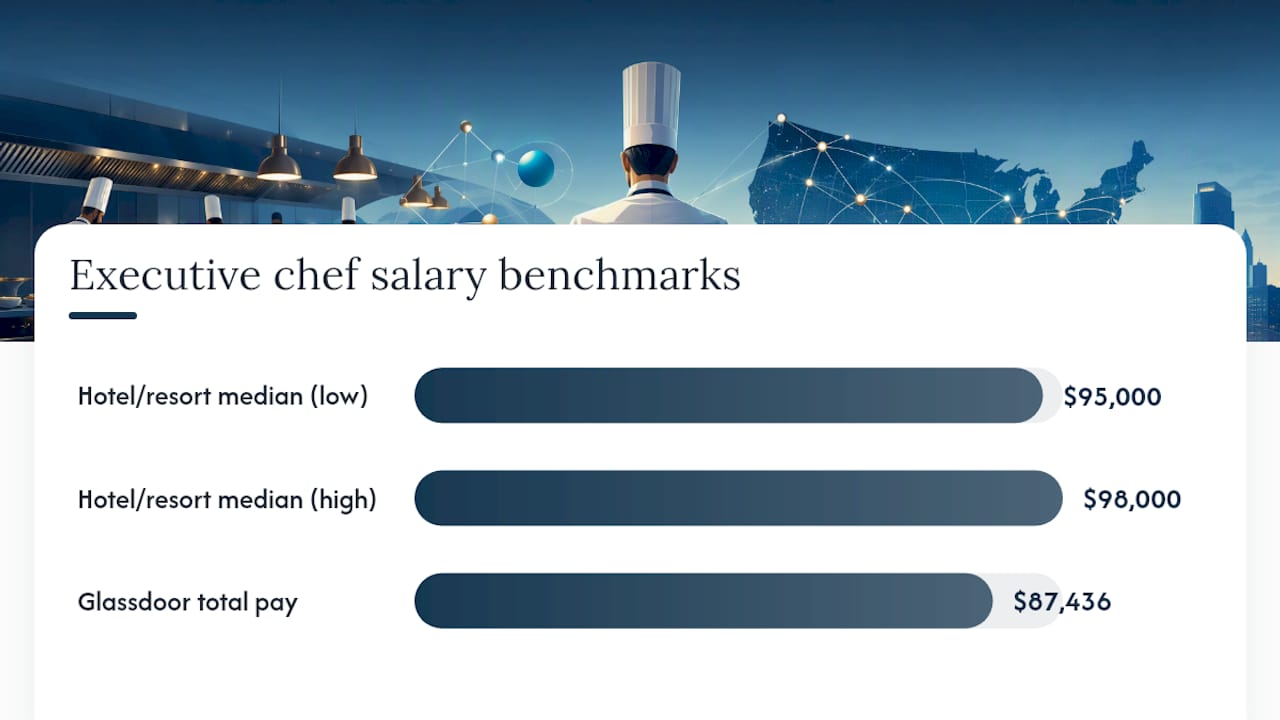
Table of Contents
- Where should you look for executive chef jobs?
- What does executive chef pay look like across U.S. operations?
- What does an executive chef do, and what do employers require?
- How do you apply and interview for executive chef roles?
- When does using a hospitality recruiter make sense?
- What do hiring managers actually look for in applications?
- What red flags should you watch for in job postings?
- Ucep connects you to employer listings in contracted service operations
- Sources
Where should you look for executive chef jobs?
The right platform depends on the type of operation you are targeting. The table below maps each channel to the role type it serves best.
Use Culinary Agents and Poached when you are targeting chef-driven independent restaurants or urban fine dining. Switch to HCareers and employer career portals (Marriott International, Caesars Entertainment, Aramark, Flik Hospitality Group) for hotel, resort, casino, and corporate banquet roles. For healthcare and education dining, go directly to Morrison Healthcare, Aramark, and Chartwells Higher Education Dining Services career pages. Goodwin Recruiting and Sharp Spoon Network are worth contacting when you are pursuing senior or confidential placements.

Pro Tip: Track every application in a spreadsheet with the platform, posting date, and employer name. Aggregators like Indeed often pull the same listing that also appears on the employer's own career page. Applying through both creates duplicate records in the employer's ATS and can flag your profile.
What does executive chef pay look like across U.S. operations?
Glassdoor's user-reported data puts the U.S. median total pay for an executive chef at roughly $87,436 per year, with an average base salary near $72,852 and additional pay averaging about $14,584. That additional pay typically includes performance bonuses, profit sharing, and sometimes meal or housing stipends.
Salary range by operation type: Hotel/resort and casino roles trend toward the higher end. HospitalityCareerPaths compensation data shows median base figures near $95,000–$98,000 for hotel and banquet-focused roles. Luxury properties push further: a MINA Group posting for a luxury hotel executive chef lists a range of $100,000–$120,000. Independent restaurant roles typically land below the hotel/resort median.
Compensation by sector at a glance:
- Hotel/resort/casino: $95,000–$120,000+ base, plus performance bonuses and sometimes housing allowances
- Fine dining (independent): $72,000–$95,000 base, often with profit-sharing arrangements
- Healthcare/education dining: $70,000–$90,000 base, with strong benefits packages and predictable schedules
- Corporate banquet/contract catering (Aramark, Flik Hospitality Group, Chartwells): $80,000–$100,000 base, structured bonus programs
Pro Tip: Ask early in the process whether the posted figure is base only or total compensation. Glassdoor's own model shows a gap of roughly $14,500 between base and total pay once bonuses and profit sharing are counted. That gap is negotiable.
What does an executive chef do, and what do employers require?
The Institute of Culinary Education defines the executive chef as the senior culinary leader accountable for the entire food program: menu development, financial oversight (budgets, inventory, labor costs), staff recruitment and training, and health/safety compliance across the operation. At this level, technical cooking skill is assumed. What hiring managers screen for is operational judgment.
Core day-to-day responsibilities include:
- Menu strategy and seasonal engineering tied to cost-per-cover targets
- Labor cost management and scheduling across kitchen teams
- Vendor negotiation and purchasing oversight
- Food safety compliance (HACCP, Department of Health standards)
- Cross-functional collaboration with front-of-house managers and GMs to protect service flow
- Budget forecasting and P&L reporting to ownership or corporate leadership
Typical qualifications employers list:
- 3–5+ years of progressive kitchen leadership, with at least 2 years in an executive or sous chef role
- American Culinary Federation Certified Executive Chef (ACF CEC) credential, though practical tenure often carries more weight than the certificate alone
- Demonstrated cost control results (food cost %, labor %, waste reduction)
- Banquet or union collective bargaining experience for large hotel, casino, or contract-catering roles
Pro Tip: Lead your resume with operational results, not job titles. Save the ACF credential for the certifications section, not the headline.
How do you apply and interview for executive chef roles?
A strong application for a head chef position goes beyond a standard resume. Hiring managers at hotels, restaurant groups, and contract operators screen for measurable business impact before they invite anyone to a tasting.
Resume and portfolio checklist:
- Open with a two-line summary that names your operation type, volume (covers per day or annual revenue), and one quantified result.
- List P&L influence: revenue managed, food cost %, labor %, and any budget you controlled directly.
- Include a menu engineering example: a dish or menu change that improved margin or drove a measurable revenue increase.
- Note volume: covers per service, banquet capacity, or number of outlets you oversaw.
- Add certifications (ACF CEC, ServSafe Manager) in a dedicated section, not the headline.
Cover letter by employer type:
- Hotel/resort/casino: Emphasize banquet throughput, union experience if applicable, and multi-outlet coordination.
- Independent restaurant: Lead with culinary vision and a specific menu or concept you built from scratch.
- Healthcare/education (Morrison Healthcare, Chartwells): Highlight compliance, dietary accommodation experience, and volume consistency.
Typical hiring timeline: Phone screen (1 week), in-kitchen trial or tasting (week 2–3), leadership interview with GM or ownership (week 3–4), offer (week 4–6). Luxury and corporate roles often add a second leadership round.
Negotiation tips:
- Anchor to the $95,000–$98,000 median for hotel/resort roles from HospitalityCareerPaths when negotiating with larger operators.
- Ask for the full compensation breakdown: base, bonus structure, meal allowance, relocation, and PTO.
- Counter housing or relocation allowances separately from base salary so neither figure gets compressed.
Pro Tip: Bring a one-page "culinary vision" document to the leadership interview. It shows you think beyond the line and signals readiness for the business side of the role.
When does using a hospitality recruiter make sense?
Recruiters add the most value in three situations: senior hotel or casino placements where roles are rarely posted publicly, confidential searches where the employer cannot advertise the opening, and multi-site corporate leadership roles where the hiring process involves multiple stakeholders.
Situations where a recruiter is worth contacting:
- You are targeting a director-level or VP of culinary role at a branded hotel group
- You are currently employed and need a confidential search
- You want access to Marriott International, Caesars Entertainment, or large contract operators before openings go public
Recruiter selection checklist:
- Specialization in hospitality or food and beverage (not general staffing)
- Verifiable employer relationships with the type of operation you are targeting
- Clear communication about whether they work on contingency or retainer
- Confidentiality practices: ask explicitly how they share your profile before submitting it
Goodwin Recruiting and Sharp Spoon Network both operate in the hospitality leadership space. Contingency recruiters (paid only on placement) are the norm for most executive chef searches; retained searches are reserved for VP-level and above.
Pro Tip: A recruiter who cannot name three specific employers they have placed executive chefs with in the past 12 months is not a specialist. Ask that question in the first call.
What do hiring managers actually look for in applications?
At the executive level, ICE notes that technical skill is assumed. The differentiator is operational judgment backed by numbers. Hiring managers and recruiters consistently prioritize candidates who demonstrate a business-first mindset: inventory control, labor productivity, and fiscal budgeting.
Measurable achievements to include on your resume or in interviews:
- Reduced labor cost percentage from X% to Y% over a defined period
- Improved food cost by renegotiating vendor contracts or reducing waste
- Increased revenue-per-cover through menu engineering
- Managed banquet operations for [X] covers per event with [Y]% on-time delivery
- Implemented HACCP protocols that passed Department of Health inspections without citations
Sample achievement bullet you can adapt:
Keywords that pass ATS screening and resonate with hiring managers:
- Cost-per-cover, labor productivity, food cost %, HACCP, inventory yield management
- Menu engineering, P&L oversight, banquet operations, collective bargaining (where applicable)
- Staff development, cross-functional collaboration, vendor management
What red flags should you watch for in job postings?
Vague job descriptions are the clearest warning sign. A posting that lists "manage kitchen operations" without specifying outlet count, volume, or reporting structure often signals an employer who has not defined the role internally. That ambiguity becomes your problem after you start.
Other red flags to check before applying:
- No reporting line listed (who does the executive chef report to: GM, VP of F&B, ownership?)
- Unrealistic turnover expectations ("immediate start" for a role that requires 30–60 days' notice from any serious candidate)
- Missing or inconsistent salary range across platforms
- Recent Glassdoor or Indeed reviews mentioning high kitchen turnover or ownership interference in menu decisions
One quick action: search the employer name on Glassdoor and filter reviews by "current employee" and "food and beverage." Look at the most recent 10 reviews, not the overall rating. A 3.8-star average with five recent 2-star reviews from kitchen staff tells a different story than the aggregate.
Ucep connects you to employer listings in contracted service operations
There are other routes to culinary leadership roles beyond the platforms covered here. If your career includes foodservice, catering, or dining operations tied to contracted carrier facilities or logistics hubs, Ucep offers a different path.
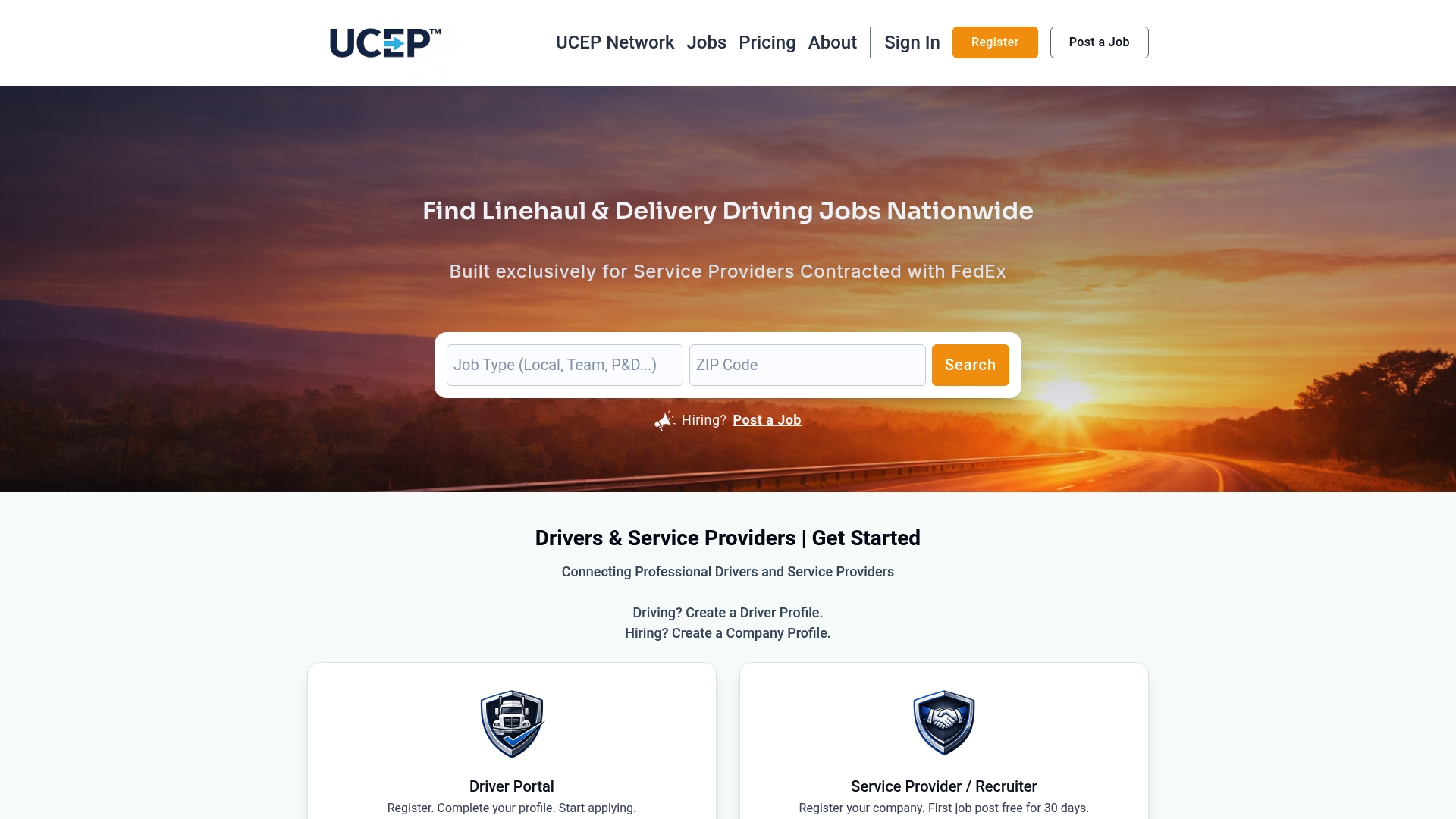
Ucep is a dedicated job board and recruiting platform built for contracted service operations across the U.S. Where general boards surface thousands of unfiltered listings, Ucep focuses on verified employer profiles and structured applicant tracking so you can research an employer before you apply. The Ucep service provider reviews page lets you read internal employer feedback, a trust signal most general boards do not offer. If you work in or near logistics-facing foodservice, browse the Ucep employer directory to see which contracted operators are actively hiring in your area.
Sources
Cross-check salary figures across at least two sources before entering any negotiation. No single dataset covers every operation type.
- Institute of Culinary Education — Executive chef career resources
- Glassdoor — Executive Chef salary (United States)
- HospitalityCareerPaths — Executive Chef compensation insights