
Qualified drivers scroll fast. Drivers scan 20 to 50 postings per session and spend only 10 to 15 seconds on each one, which means your posting either earns their attention in the first few lines or loses them entirely. Most postings fail not because the job is bad, but because the posting is vague, poorly formatted, or buries the details drivers care most about. Following driver job posting best practices gives you a direct advantage: more qualified applicants, faster time to hire, and lower turnover because candidates know exactly what they are signing up for.
Table of Contents
- Key takeaways
- Key criteria for high-converting driver job postings
- 1. Use searchable, specific job titles
- 2. Lead with pay, home time, and equipment
- 3. Format for mobile readability
- 4. State benefits clearly and specifically
- 5. Simplify the application process
- 6. Include authentic multimedia
- 7. Avoid common copy mistakes
- Where you post matters as much as what you post
- Measuring and optimizing your posting performance
- My take on driver job posting strategy
- Post smarter driver jobs with Ucep
- FAQ
Key takeaways
| Point | Details |
|---|---|
| Pay transparency drives applications | Postings with specific pay rates receive 30 to 50% more applications than those using vague language. |
| Mobile format is non-negotiable | About 70% of drivers search on mobile, so short paragraphs and bullet points are required, not optional. |
| Speed of response matters | Recruiters who contact applicants within 60 minutes see significantly better conversion rates. |
| Multi-channel distribution wins | Combining niche boards, social media, and referrals creates more consistent and reliable candidate pipelines. |
| Posting freshness affects visibility | Google for Jobs downgrades postings older than 30 days, so regular updates are necessary to maintain ranking. |
Key criteria for high-converting driver job postings
Before you write a single word, know what drivers actually look for. When a driver opens your posting, they are asking three questions immediately: How much does it pay? When do I get home? What am I driving? If those answers are not visible within the first scroll, most drivers move on.
Here are the core elements every effective driver job description must include:
- Pay details: State the exact CPM rate, weekly salary range, or percentage. Never use phrases like "competitive pay" without a number attached. Vague pay terms reduce your applicant pool by 40 to 70%.
- Home time: Specify the schedule clearly. "Home weekends" means different things to different carriers. State whether it means Friday night or Saturday afternoon.
- Equipment: List the truck make, model, age, and any driver comfort features like APUs, inverters, or automatic transmissions.
- Route and freight type: Identify whether the role is OTR, regional, or local. Include the freight category, such as dry van, flatbed, or refrigerated.
- Requirements vs. compensation balance: If you require five years of experience, the pay must reflect that. Mismatched expectations deter qualified applicants before they even apply.
- Mobile-optimized formatting: Keep total posting length between 400 and 600 words. Use short paragraphs and bullet points. Mobile-optimized content is non-negotiable for reaching drivers who browse primarily on phones with limited connectivity.
Pro Tip: Place your pay rate, home time, and equipment details within the first 150 words of every posting. Most drivers will not scroll past the first screen on mobile, so the most important information must appear before they lose interest.
1. Use searchable, specific job titles
Generic titles like "Truck Driver Needed" perform poorly in search. Include the CDL class, route type, and any distinguishing feature in the title itself. Examples: "CDL-A OTR Driver, Dry Van, $0.58 CPM" or "CDL-A Team Driver, Regional, Home Weekly." Specific titles appear in more relevant searches and attract drivers who already match your requirements, which reduces unqualified applications.
2. Lead with pay, home time, and equipment
Key information must appear in the initial 150 words because most drivers will not scroll past the first screen on mobile. Write your opening paragraph as if it is the only thing a driver will read. State the pay rate, home time schedule, and truck details immediately. Then expand on benefits and requirements below.
3. Format for mobile readability
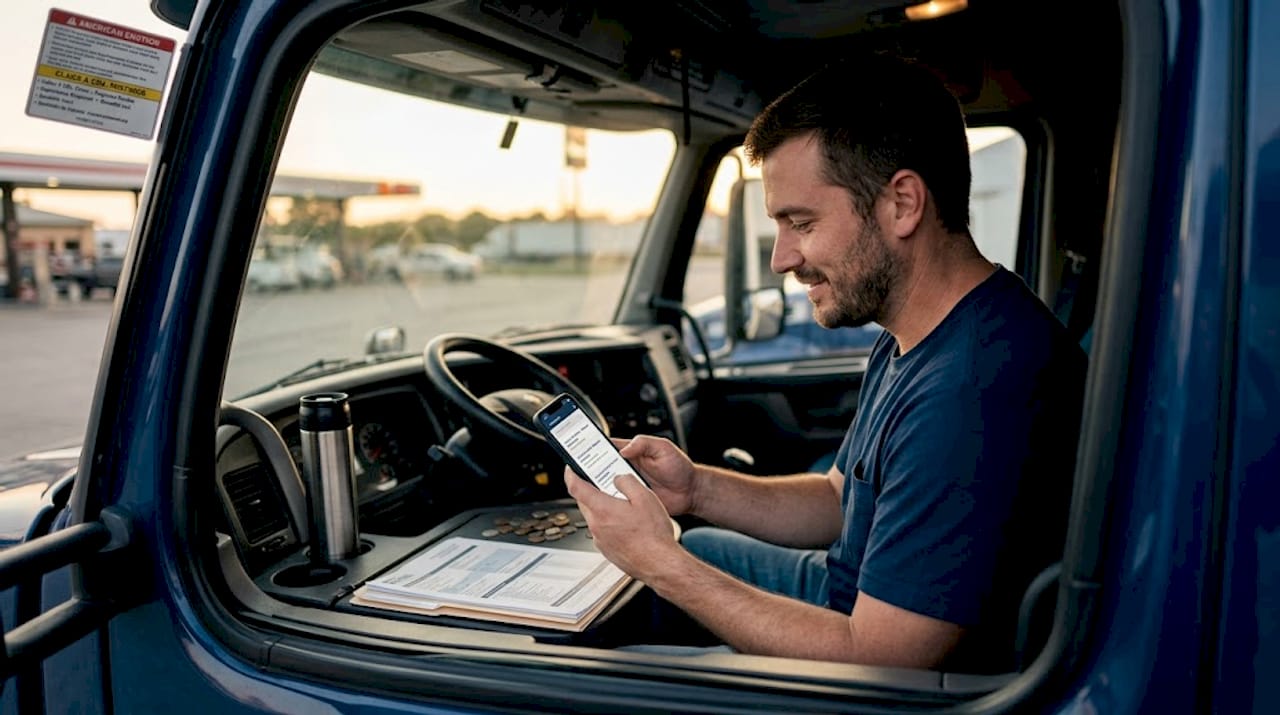
About 70% of drivers search for jobs on mobile devices. Long paragraphs, dense text blocks, and complex formatting break the reading experience on a small screen. Use bullet points for requirements and benefits. Keep sentences short. Break up text with white space. Test your posting on a phone before publishing it.
4. State benefits clearly and specifically
Go beyond base pay. Drivers compare total compensation packages, not just CPM rates. List every benefit with specifics: sign-on bonuses (top carriers offer up to $7,000), health insurance details, 401(k) matching, paid time off, and any tuition reimbursement. Generic benefit lists like "great benefits package" add no value and signal that you may be hiding weak offerings.
5. Simplify the application process
Long or complex application steps cause 60 to 80% abandonment on mobile devices. Ask only for the information you genuinely need at the initial stage: name, contact info, CDL class, and years of experience. Collect detailed employment history and references after initial contact. Every extra field you add reduces the number of completed applications you receive.
Pro Tip: Use a one-page or single-screen apply option whenever possible. If your application requires multiple steps, show a progress indicator so drivers know how close they are to finishing.
6. Include authentic multimedia
Video and driver testimonials increase engagement significantly when included with postings or recruitment campaigns. A 60-second day-in-the-life video showing the actual truck, the route area, and a real driver talking about their schedule does more to build trust than three paragraphs of copy. Drivers spend substantial time on video platforms, which makes this format especially effective for recruitment content.
7. Avoid common copy mistakes
Vague language is the most common reason a posting fails. "Excellent opportunity" and "join our team" are filler phrases that communicate nothing. Every sentence should answer a question a driver might have. Avoid listing requirements that exceed what the compensation supports. If you list five years of experience as required but pay entry-level rates, qualified drivers recognize the mismatch immediately and move on.
Where you post matters as much as what you post
Not all job boards deliver the same results. Understanding where qualified drivers actually search helps you allocate your posting budget and effort more effectively.
| Channel | Strengths | Best use case |
|---|---|---|
| Niche driver job boards | Targeted audience, lower noise, higher intent | CDL-A roles, specialized freight, FedEx SP routes |
| General job boards | High volume, broad reach | Entry-level roles, high-urgency fills |
| Social media groups | Community trust, referral potential | Local and regional driver hiring |
| Carrier-branded pages | Brand recognition, retention-focused candidates | Long-term hiring, culture-fit candidates |
| Employee referrals | High quality, lower cost per hire | Experienced driver recruitment |
Multi-channel strategies that combine job boards, social media, and referrals consistently outperform reliance on any single source. Niche boards focused specifically on commercial drivers, like Ucep for FedEx Service Providers, reduce noise and connect you with drivers who are already searching within your specific segment of the market.
Facebook groups targeting truck driver communities remain underused by many recruiters. Drivers in these groups share postings with peers, which creates organic reach beyond your paid spend. Pair social media activity with a referral program and you build a self-sustaining pipeline that generates candidates even when you are not actively posting. The ROI of niche job boards is well documented for Service Providers who need CDL-qualified drivers without competing against national carriers on general platforms.
Pro Tip: Post on at least three channels simultaneously and track which source each applicant came from. After 60 days, you will have enough data to identify which channels deliver the best quality candidates, not just the most volume.
Measuring and optimizing your posting performance
Posting a job and waiting is not a strategy. You need to track performance and make adjustments based on real data. Here are the metrics to monitor:
- Application volume: How many completed applications are you receiving per week per posting?
- Conversion rate: What percentage of drivers who view your posting actually apply?
- Time to hire: How many days pass between posting and a signed offer?
- Source quality: Which channels produce drivers who stay past 90 days?
- Response speed: Are you contacting applicants within the critical window? Recruiters who respond within 60 minutes see significantly better hiring outcomes compared to those who wait 24 hours or more.
Posting freshness directly affects search visibility. Google for Jobs downgrades postings older than 30 days without a refresh, which means a posting you wrote in January may be essentially invisible by March. Set a calendar reminder to refresh or repost every 20 to 25 days.
Use your applicant tracking system to automate initial acknowledgment messages. Drivers who receive an immediate confirmation that their application was received are far more likely to stay engaged while you complete your screening process. Automation handles volume. Personal follow-up closes the hire.
My take on driver job posting strategy
I've reviewed hundreds of driver job postings over the years, and the same problem keeps appearing: recruiters write postings for themselves, not for drivers. They list company history, mission statements, and lengthy qualification paragraphs before ever mentioning pay. That is backwards.
In my experience, the postings that perform best are almost uncomfortably direct. They open with a number. They explain the schedule in plain terms. They describe the truck. Nothing is dressed up. And that directness is exactly what builds trust with experienced drivers who have been burned by overpromising carriers before.
I also believe most recruiters underestimate how much mobile experience affects outcomes. I've seen well-written postings lose applicants simply because the formatting broke on a phone screen. A driver sitting in a truck stop with 3 minutes and a 4G connection is not going to pinch-zoom through dense text to find the pay rate.
One more thing: human engagement remains decisive even as AI tools become more available. Automated screening saves time, but a recruiter who calls within the hour and speaks knowledgeably about the route and equipment will close candidates that a slow automated funnel loses. Speed and authenticity are your competitive advantages.
— Aaron
Post smarter driver jobs with Ucep
If you are a FedEx Service Provider hiring CDL-A drivers for linehaul, team, solo, or pickup and delivery roles, Ucep is built specifically for your recruiting needs.
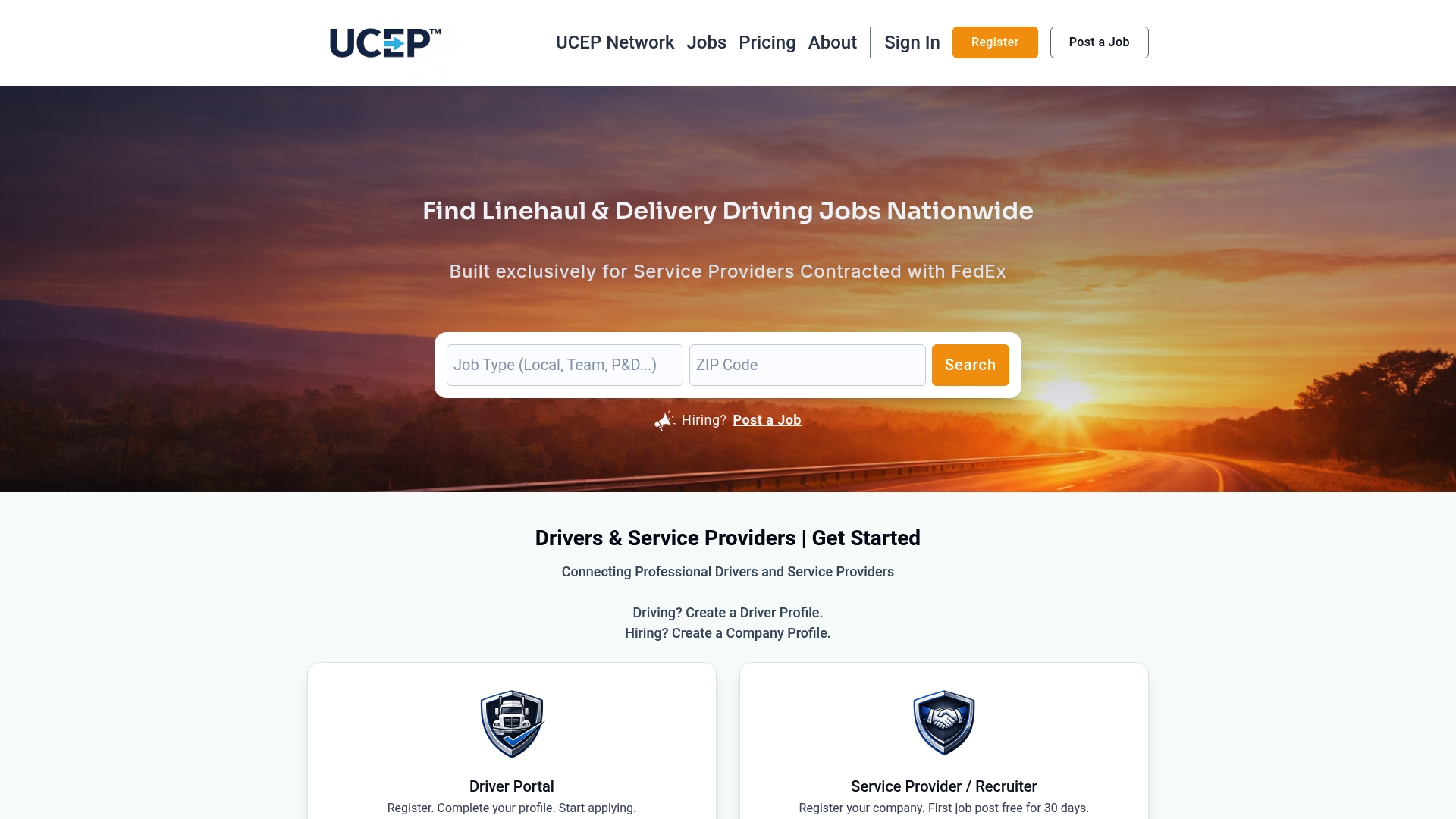
Ucep is a dedicated job board and recruiting platform for Service Providers contracted with FedEx. Every driver on the platform is searching specifically for FedEx-related driving opportunities, which means your postings reach a focused, qualified audience rather than a general crowd. You can post a job on Ucep today and connect with drivers who are already looking for the type of role you are offering. The platform supports mobile-optimized listings, straightforward application flows, and the kind of niche visibility that general boards cannot match for this specific segment of the market.
FAQ
What makes a driver job posting more effective?
Pay transparency, mobile-friendly formatting, and clear home time details are the most impactful factors. Postings with specific pay rates receive up to 50% more applications than vague listings.
How long should a driver job posting be?
The ideal length is 400 to 600 words. Keep paragraphs short and use bullet points to support readability on mobile devices, where the majority of drivers search for jobs.
Which job boards work best for hiring CDL drivers?
Niche boards focused on commercial drivers outperform general platforms for CDL-A roles because they attract higher-intent candidates. Combining niche boards with social media and referrals produces the most consistent pipeline.
How quickly should I respond to driver applicants?
Within 60 minutes whenever possible. Recruiters who contact applicants within that window see significantly better conversion rates compared to those who follow up the next day.
How often should I update or repost a driver job listing?
Refresh or repost every 20 to 25 days. Search platforms like Google for Jobs reduce visibility for postings older than 30 days that have not been updated.